March 28 in History

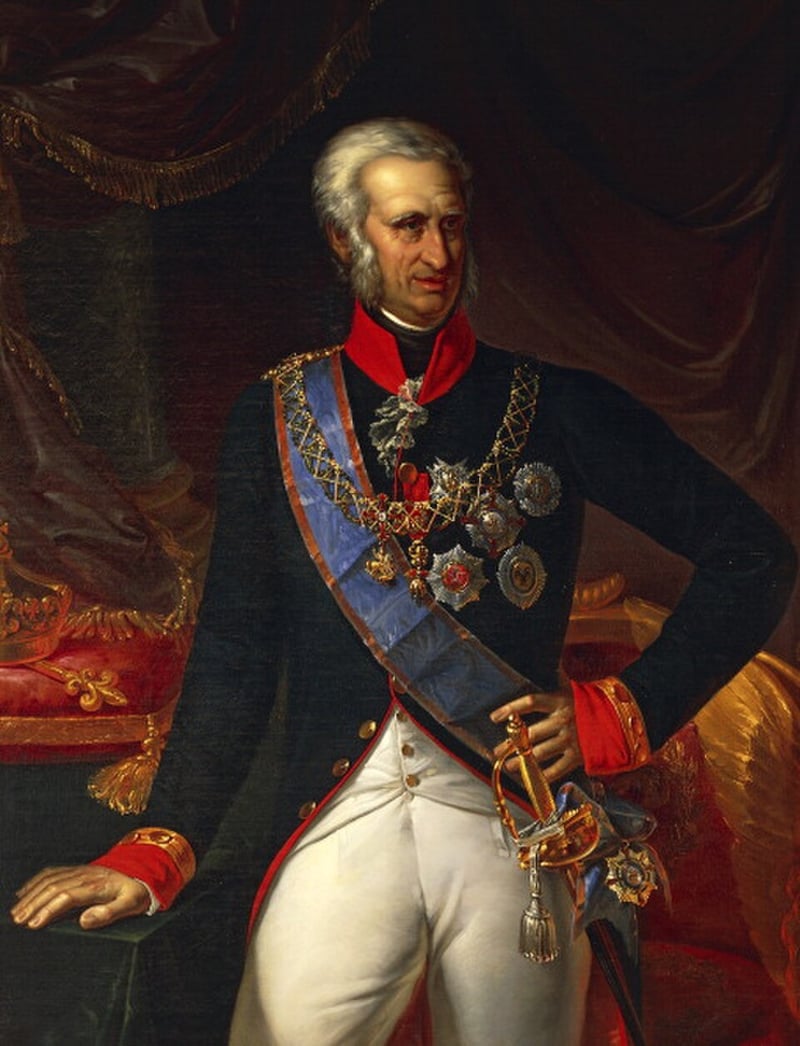
Treaty of Florence is signed, ending the war between the French Republic and the

1801 — Treaty of Florence is signed, ending the war between the French Republic and the Kingdom of Naples

March 28 spans 44 recorded events across recorded history, from 37 to 2025. Below is a curated digest of the most significant moments tied to this date.

By · Wikipedia

Historical Events 44 events 37 – 2025

More major events on March 28

The featured story and these ranked highlights form a quick summary. Every recorded event remains available in the chronology below.

  1. 1994 In South Africa, African National Congress security guards kill dozens of Inkatha Freedom Party protesters. Source
  2. 1963 Civil rights movement: Over one hundred high school students conduct a sit-in protest in Rome, Georgia. Source
  3. 2006 At least one million union members, students and unemployed take to the streets in France in protest at the government's proposed First Employment Contract law. Source

Did you know

The French Republic was founded on 21 September 1792 during the French Revolution.
Did you know

Napoléon Bonaparte declared the First Empire on 18 May 1804, ending the First Republic.

Did you know

The Kingdom of Naples was a major power in Southern Italy during the 18th and 19th centuries.

Did you know

The Treaty of Florence marked a significant diplomatic achievement for the French Republic in 1801.

Did you know

The French Revolution led to the establishment of the First Republic, which lasted for nearly 12 years.

30s
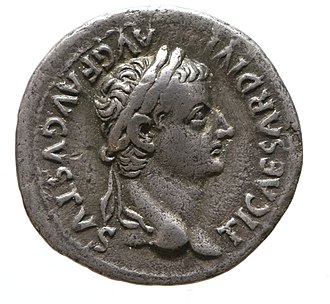
Roman emperor Caligula accepts the titles of the Principate, bestowed on him by the Senate.
Fourth decade of the first century AD
The 30s decade ran from January 1, AD 30, to December 31, AD 39.
37
Assassination
After assassinating the Roman Emperor Pertinax, his Praetorian Guards auction off the throne to Didius Julianus.
Willful killing of a prominent person
Assassination is the willful killing, by a sudden or secret attack, of a person—especially a prominent or important one—typically for political, social, or ideological reasons. Assassinations may be ordered by both individuals and organizations and carried out by their accomplices. Acts of assassination have been performed since ancient times. A person who carries out an assassination is called an assassin.
193
Valentinian_I
Roman Emperor Valentinian I appoints his brother Flavius Valens co-emperor.
Roman emperor from 364 to 375
Valentinian I, sometimes known as Valentinian the Great, was Roman emperor from 364 to 375. He is the second-last emperor to govern the empire as a whole, albeit only from February to March of 364, after which he appointed Valens to rule over the Eastern half the empire, while he remained in control of the West. The founder of the Valentinian dynasty, he is noted for his successful campaigns on the Rhine and Danube frontiers.
364
The Great German Pilgrimage, which had been under attack by Bedouin bandits for three days, is rescued by the Fatimid governor of Ramla.
Pilgrimage to Jerusalem
The Great German Pilgrimage of 1064–1065 was a large pilgrimage to Jerusalem which took place a generation before the First Crusade.
1065
Valletta
The foundation stone of Valletta, Malta's capital city, is laid by Jean Parisot de Valette, Grand Master of the Sovereign Military Order of Malta.
Capital of Malta
Valletta, also known as Città Umilissima, is the capital city of Malta and one of its 68 council areas. Located between the Grand Harbour to the east and Marsamxett Harbour to the west, its population as of 2021 was 5,157. As Malta's capital city, it is a commercial centre for shopping, bars, dining, and café life. It is also the southernmost capital of Europe, and, at just 0.61 square kilometres (0.24 sq mi), it is the European Union's smallest capital city.
1566
War_of_the_Austrian_Succession
War of the Austrian Succession: In the Battle of Vilshofen, Austrian forces defeat French forces.
1740–1748 war between European powers
The War of the Austrian Succession, 1740 to 1748, was a conflict between the European great powers, fought primarily in Europe, the Atlantic Ocean and Mediterranean Sea. Related conflicts include King George's War, the War of Jenkins' Ear, the First Carnatic War, and the First and Second Silesian Wars.
1745
Juan_Bautista_de_Anza
Juan Bautista de Anza finds the site for the Presidio of San Francisco.
18th-century Basque explorer and governor within the Spanish Empire
Juan Bautista de Anza Bezerra known more simply as "Juan Bautista de Anza" was a Spanish expeditionary leader, military officer, and politician primarily in California and New Mexico under the Spanish Empire. He is credited as one of the founding fathers of Spanish California and served as an official within New Spain as Governor of the province of New Mexico. Later, as governor of the Spanish colony of Santa Fe de Nuevo México, he put an end to the wars with the Comanche, overseeing the peace treaty of 1786.
1776
Partitions_of_Poland
Partitions of Poland: The Duchy of Courland and Semigallia, a northern fief of the Polish–Lithuanian Commonwealth, ceases to exist and becomes part of Imperial Russia.
18th-century forced partitions of the Polish–Lithuanian Commonwealth
The Partitions of Poland were three partitions of the Polish–Lithuanian Commonwealth that took place between 1772 and 1795, toward the end of the 18th century. The partitions ended the existence of the state, resulting in the elimination of sovereign Poland and Lithuania for 123 years. The partitions were conducted by the Habsburg monarchy, the Kingdom of Prussia, and the Russian Empire, which divided up the Commonwealth lands among themselves progressively in the process of territorial seizures and annexations.
1795
Heinrich_Wilhelm_Matthias_Olbers
Heinrich Wilhelm Matthäus Olbers discovers 2 Pallas, the second asteroid ever to be discovered.
German astronomer (1758–1840)
Heinrich Wilhelm Matthias Olbers was a German astronomer. He found a convenient method of calculating the orbit of comets, and in 1802 and 1807, discovered the second and the fourth asteroids Pallas and Vesta.
1802
Peninsular_War
Peninsular War: France defeats Spain in the Battle of Medellín.
1807–1814 war against Napoleon in Iberia
The Peninsular War (1808–1814) was fought in the Iberian Peninsula by the Iberian nations Spain and Portugal, along with the United Kingdom, against the invading and occupying forces of the First French Empire during the Napoleonic Wars. In Spain, it is considered to overlap with the Spanish War of Independence. It overlapped with the War of the Fifth Coalition (1809) and the War of the Sixth Coalition (1812–1814).
1809
War_of_1812
War of 1812: In the Battle of Valparaíso, two American naval vessels are captured by two Royal Navy vessels.
1812–1815 conflict in North America
The War of 1812 was a conflict initiated by the United States against the United Kingdom and its allies fought mainly in North America and at sea during the wider Napoleonic Wars. The United States declared war on Britain on 18 June 1812. Although peace terms were agreed upon in the December 1814 Treaty of Ghent, the war did not officially end until the peace treaty was ratified by the United States Senate on 17 February 1815.
1814
Vienna_Philharmonic
First concert of the Vienna Philharmonic Orchestra, conducted by Otto Nicolai.
Orchestra based in Vienna, Austria
Vienna Philharmonic is an orchestra that was founded in 1842 and has been considered to be one of the finest in the world.
1842
Crimean_War
Crimean War: France and Britain declare war on Russia.
Tenth conflict of the Russo-Turkish wars (1853–1856)
The Crimean War was fought between Russia and an alliance of the Ottoman Empire, France, the United Kingdom, and Sardinia from October 1853 to February 1856. Geopolitical causes of the war included the Eastern question, the expansion of Russia in the preceding Russo-Turkish wars, and the British and French preference to preserve the Ottoman Empire to maintain the balance of power in the Concert of Europe.
1854
First Taranaki War: The Battle of Waireka begins.
1860s war between Māori and the New Zealand government
The First Taranaki War was an armed conflict over land ownership and sovereignty that took place between Māori and the Colony of New Zealand in the Taranaki region of New Zealand's North Island from March 1860 to March 1861.
1860
American_Civil_War
American Civil War: In the Battle of Glorieta Pass, Union forces stop the Confederate invasion of the New Mexico Territory.
The battle began on March 26.
The American Civil War was a civil war in the United States between the Union and the Confederacy, which was formed in 1861 by states that had seceded from the Union to preserve slavery in the United States. The South saw slavery as threatened because of the election of Abraham Lincoln and the growing abolitionist movement in the North. The war ended with Union victory, the dissolution of the Confederacy and the abolition of slavery, freeing four million African Americans.
1862
Henri_Fabre
Henri Fabre becomes the first person to fly a seaplane, the Fabre Hydravion, after taking off from water runway Étang le Barre, near Marseille.
19/20th-century French aviator and inventor of the seaplane
Henri Fabre was a French aviator and the inventor of the first successful seaplane, the Fabre Hydravion.
1910
General John J.
Pershing, during World War I, cancels 42nd 'Rainbow' Division's orders to Rolampont for further training and diverted it to the occupy the Baccarat sector. Rainbow Division becomes "the first American division to take over an entire sector on its own, which it held longer than any other American division-occupied sector alone for a period of three months".
In the United States military, a general is the most senior general-grade officer; it is the highest achievable commissioned officer rank that may be attained in the United States Armed Forces, with exception of the Navy and Coast Guard, which have the equivalent rank of admiral instead. The official and formal insignia of "general" is defined by its four stars.
1918
Finnish_Civil_War
Finnish Civil War: On the so-called "Bloody Maundy Thursday of Tampere", the Whites force the Reds to attack the city center, where the city's fiercest battles being fought in Kalevankangas with large casualties on both sides.
During the same day, an explosion at the Red headquarters of Tampere kills several commanders.
The Finnish Civil War was a civil war in 1918 fought for the leadership and control of recently independent Finland between White Finland and the Finnish Socialist Workers' Republic. The clashes took place in the context of the national, political, and social turmoil caused by World War I in Europe. The belligerents were the paramilitary Red Guards, led by a section of the Social Democratic Party with backup of the Russian bolsheviks, and the paramilitary White Guards of the senate. General C. G. E. Mannerheim led the White Guards with major assistance by both the Finnish Jäger Battalion trained in Germany and the German Imperial Army, along the German goal to control Fennoscandia and Petrograd of Russia. The Reds, composed of industrial and agrarian working class people, controlled the cities and industrial centres of southern Finland. The Whites, composed of land owners and the middle and upper class, controlled the rural central and northern Finland.
1918
1920_Palm_Sunday_tornado_outbreak
Palm Sunday tornado outbreak of 1920 affects the Great Lakes region and Deep South states.
Windstorms in the Midwest and Southern United States
On March 28, 1920, a large outbreak of at least 37 tornadoes, 31 of which were significant, took place across the Midwestern and Southern United States. The tornadoes left at least 153 dead and at least 1,215 injured. Many communities and farmers alike were caught off-guard as the storms moved to the northeast at speeds that reached over 60 mph (97 km/h). Most of the fatalities occurred in Georgia (37), Ohio (28), and Indiana (21), while the other states had lesser totals. Little is known about many of the specific tornadoes that occurred, and the list below is only partial.
1920
Imperial_Airways
The Imperial Airways biplane City of Liverpool is believed to be the first airliner lost to sabotage when a passenger sets a fire on board.
Long-range airline of the United Kingdom (1924–1939)
Imperial Airways was an early British commercial long-range airline, operating from 1924 to 1939 and principally serving the British Empire routes to South Africa, India, Australia and the Far East, including Malaya and Hong Kong. Passengers were typically businessmen or colonial administrators, and most flights carried about 20 passengers or fewer. Accidents were frequent: in the first six years, 32 people died in seven incidents. Imperial Airways never achieved the levels of technological innovation of its competitors and was merged into the British Overseas Airways Corporation (BOAC) in 1939. BOAC in turn merged with the British European Airways (BEA) in 1974 to form British Airways.
1933
Spanish_Civil_War
Spanish Civil War: Generalissimo Francisco Franco conquers Madrid after a three-year siege.
1936–1939 civil war in Spain
The Spanish Civil War was fought from 1936 to 1939 between the Republicans and the Nationalist rebels. Republicans loyal to the left-leaning Popular Front government of the Second Spanish Republic included socialists, anarchists, communists, and separatists, supported by the Soviet Union. The opposing Nationalists were an alliance of fascist Falangists, monarchists, conservatives, and traditionalists, supported by Nazi Germany and Fascist Italy. Initially led by a military junta, until General Francisco Franco was appointed supreme leader on 1 October 1936 of what he called the Spanish State. Due to the international political climate at the time, the war was variously viewed as class struggle, religious struggle, or struggle between republican democracy and dictatorship, revolution and counterrevolution, or between fascism and communism. The Nationalists won the war in early 1939, and ruled Spain until Franco's death in November 1975.
1939
World_War_II
World War II: First day of the Battle of Cape Matapan in Greece between the navies of the United Kingdom and Australia, and the Royal Italian navy.
Global conflict (1939–1945)
World War II, or the Second World War, was a global conflict between two coalitions: the Allies and the Axis powers. Nearly all of the world's countries participated. World War II was the deadliest conflict in history, causing the death of 60 to 75 million people. Millions died as a result of massacres, starvation, disease, and genocides, including the Holocaust. After the Allied victory, Germany, Austria, Japan, and Korea were occupied, and German and Japanese leaders were tried for war crimes.
1941
Combined_Operations_Headquarters
World War II: A British combined force permanently disables the Louis Joubert Lock in Saint-Nazaire in order to keep the German battleship Tirpitz away from the mid-ocean convoy lanes.
WWII British War Office department
Combined Operations Headquarters was a department of the British War Office set up during Second World War to harass the Germans on the European continent by means of raids carried out by use of combined naval and army forces.
1942
Cold_War
Cold War: The United States Department of State releases the Acheson–Lilienthal Report, outlining a plan for the international control of nuclear power.
1947–1991 geopolitical rivalry between US and USSR
The Cold War was a period of international geopolitical rivalry between the United States (US) and the Soviet Union (USSR) and their respective allies, the capitalist Western Bloc and communist Eastern Bloc. It began in the aftermath of the Second World War and ended with the dissolution of the Soviet Union in 1991. The term cold war is used because there was no direct fighting between the two superpowers, though each supported opposing sides in regional conflicts known as proxy wars. In addition to the struggle for ideological and economic influence and an arms race in both conventional and nuclear weapons, the Cold War was expressed through technological rivalries such as the Space Race, espionage, propaganda campaigns, embargoes, and sports diplomacy.
1946
State_Council_of_China
The State Council of the People's Republic of China dissolves the government of Tibet.
Chief administrative authority of China
The State Council of the People's Republic of China, synonymous with Central People's Government, is the supreme administrative organ of the country's unified state apparatus and the executive organ of the National People's Congress (NPC), the supreme organ of state power. It is composed of a premier, vice premiers, state councilors, ministers, chairpersons of commissions, an auditor-general, the governor of the People's Bank of China, and a secretary-general.
1959
ČSA_Flight_511_(March_1961)
ČSA Flight 511 crashes in Igensdorf, Germany, killing 52.
1961 aviation accident
Czechoslovak Airlines (ČSA) Flight 511 was a flight operated by an Ilyushin Il-18 that crashed in Igensdorf near Nuremberg on 28 March 1961 while flying across West Germany.
1961
Civil_rights_movement
Civil rights movement: Over one hundred high school students conduct a sit-in protest in Rome, Georgia.
1954–1968 U.S. social movement
The civil rights movement was a social movement in the United States from 1954 to 1968 which aimed to abolish legalized racial segregation, discrimination, and disenfranchisement in the country, which most commonly affected African Americans. The movement had origins in the Reconstruction era in the late 19th century, and modern roots in the 1940s and in Mohandas Gandhi's nonviolent movement in India. After years of nonviolent protests and civil disobedience campaigns, the civil rights movement achieved many of its legislative goals in the 1960s, during which it secured new protections in federal law for the civil rights of all Americans, including the Civil Rights Act of 1964, the Voting Rights Act of 1965, and the Civil Rights Act of 1968.
1963
An Mw 7.4 earthquake in Chile sets off a series of tailings dam failures, burying the town of El Cobre and killing at least 500 people.
Earthquake and mining disaster in Chile
The 1965 La Ligua earthquake struck near La Ligua in Aconcagua Province, Chile, about 140 km (87 mi) from the capital Santiago on Sunday, March 28 at 12:33 local time. The moment magnitude (Mw) 7.4–7.6 earthquake killed 400–500 people and inflicted US$1 billion in damage. Many deaths were from El Cobre, a mining location that was wiped out after a series of dam failures caused by the earthquake spilled mineral waste onto the area, burying hundreds of residents. The shock was felt throughout the country and along the Atlantic coast of Argentina.
1965
Edson_Luís_de_Lima_Souto
Brazilian high school student Edson Luís de Lima Souto is killed by military police at a student protest.
Brazilian student protester killed by military police in 1968
Edson Luís de Lima Souto was a Brazilian teenage student killed by the military police of Rio de Janeiro after a confrontation in the restaurant Calabouço, in downtown Rio de Janeiro. Edson was one of the first students to be killed by the Brazilian military government, and the aftermath of his death marked the beginning of a turbulent year for the regime, which ended with the enactment of AI-5, a decree restricting most of the basic human rights guarantees.
1968
Nobel_Prize_in_Literature
Greek poet and Nobel Prize laureate Giorgos Seferis makes a famous statement on the BBC World Service opposing the junta in Greece.
Prize established in 1895 by Alfred Nobel
The Nobel Prize in Literature, here meaning for Literature, is a Swedish literature prize that is awarded annually to an author from any country who has, in the words of Alfred Nobel, "in the field of literature, produced the most outstanding work in an idealistic direction". Though individual works are sometimes cited as being particularly noteworthy, the award is based on an author's body of work as a whole. The Swedish Academy decides who, if anyone, will receive the prize.
1969
An earthquake strikes western Turkey at about 23:05 local time, killing 1,086 and injuring at least 1,200.
7.2 magnitude earthquake in western Turkey
The 1970 Gediz earthquake, also known as the 1970 Kütahya-Gediz earthquake struck western Turkey on 28 March at about 23:02 local time with an estimated magnitude of 7.2 on the Mw scale.
1970
Supreme_Court_of_the_United_States
The US Supreme Court hands down 5–3 decision in Stump v.
Sparkman, a controversial case involving involuntary sterilization and judicial immunity.
The Supreme Court of the United States (SCOTUS) is the highest court in the federal judiciary of the United States. It has ultimate appellate jurisdiction over all U.S. federal court cases, and over state court cases that turn on questions of U.S. constitutional or federal law. It also has original jurisdiction over a narrow range of cases, specifically "all Cases affecting Ambassadors, other public Ministers and Consuls, and those in which a State shall be Party". In 1803, the court asserted itself the power of judicial review, the ability to invalidate a statute for violating a provision of the Constitution. It is also able to strike down presidential directives for violating either the Constitution or statutory law.
1978
Three_Mile_Island_Nuclear_Generating_Station
A coolant leak at the Three Mile Island's Unit 2 nuclear reactor outside Harrisburg, Pennsylvania leads to the core overheating and a partial meltdown.
Closed power plant in Pennsylvania, US
Three Mile Island Nuclear Generating Station, is a shut-down nuclear power plant on Three Mile Island in Pennsylvania, US, on the Susquehanna River just south of Harrisburg. It has two separate units, Unit 1 (TMI-1) and Unit 2 (TMI-2).
1979
House_of_Commons_of_the_United_Kingdom
The British House of Commons passes a vote of no confidence against James Callaghan's government by one vote, precipitating a general election.
Lower house of the UK Parliament
The House of Commons is the lower house of the Parliament of the United Kingdom. Like the upper house, the House of Lords, it meets in the Palace of Westminster in London, England. The House of Commons is an elected body consisting of 650 members known as members of Parliament (MPs), who are elected to represent constituencies by the first-past-the-post system and hold their seats until Parliament is dissolved.
1979
George_H._W._Bush
United States President George H.
W. Bush posthumously awards Jesse Owens the Congressional Gold Medal.
George Herbert Walker Bush was the 41st president of the United States, serving from 1989 to 1993. Bush was the 43rd vice President of the United States serving under Ronald Reagan from 1981 to 1989. He was the father of George W. Bush, the 43rd president of the United States.
1990
African_National_Congress
In South Africa, African National Congress security guards kill dozens of Inkatha Freedom Party protesters.
Political party in South Africa
The African National Congress (ANC) is a political party in South Africa. It originated as a liberation movement known for its opposition to apartheid and has governed the country since 1994, when the first post-apartheid election resulted in Nelson Mandela being elected as President of South Africa. Cyril Ramaphosa, the incumbent national president, has served as president of the ANC since 18 December 2017.
1994
Kosovo_War
Kosovo War: Serb paramilitary and military forces kill at least 130 Kosovo Albanians in Izbica.
1998–1999 armed conflict in the Balkans
The Kosovo War was an armed conflict in Kosovo that lasted from 28 February 1998 until 11 June 1999. It was fought between the forces of the Federal Republic of Yugoslavia (FRY), which controlled Kosovo before the war, and the Kosovo Albanian separatist militia known as the Kosovo Liberation Army (KLA). The conflict ended when the North Atlantic Treaty Organization (NATO) intervened by beginning air strikes in March 1999 which resulted in Yugoslav forces withdrawing from Kosovo.
1999
Athens_International_Airport
Athens International Airport Eleftherios Venizelos begins operation.
International airport serving Athens, Greece
Athens International Airport Eleftherios Venizelos, commonly initialised as AIA, is the largest international airport in Greece, serving the city of Athens and region of Attica. It began operation on 28 March 2001 and is the main base of Aegean Airlines, as well as other smaller Greek airlines. It replaced the old Ellinikon International Airport.
2001
Friendly_fire
In a friendly fire incident, two American A-10 Thunderbolt II aircraft attack British tanks participating in the 2003 invasion of Iraq, killing one soldier.
Accidental attack on friendly forces
In military terminology, friendly fire or fratricide is an attack by belligerent or neutral forces on friendly troops while attempting to attack enemy or hostile targets. Examples include misidentifying the target as hostile, cross-fire while engaging an enemy, long range ranging errors or inaccuracy. Accidental fire not intended to attack enemy or hostile targets, and deliberate firing on one's own troops for disciplinary reasons is not called friendly fire, and neither is unintentional harm to civilian or neutral targets, which is sometimes referred to as collateral damage. Training accidents and bloodless incidents also do not qualify as friendly fire in terms of casualty reporting.
2003
2005_Nias–Simeulue_earthquake
An earthquake shakes northern Sumatra with a magnitude of 8.6 and killing over 1000 people.
2005 earthquake in Sumatra, Indonesia
On 28 March 2005, at 23:09:37 WIB, a Mw 8.6–8.7 earthquake struck the Banyak Islands, located off the coast of Aceh, Indonesia. It was the most powerful earthquake globally since the 2004 Indian Ocean earthquake three months prior, and is tied with the 2012 Indian Ocean, 1957 Andreanof Islands, 1950 Assam–Tibet and 1946 Aleutian Islands earthquakes as the tenth-largest earthquake ever recorded by seismometers.
2005
2006_youth_protests_in_France
At least one million union members, students and unemployed take to the streets in France in protest at the government's proposed First Employment Contract law.
Protest movement opposing changes to labor law
Nationwide protests occurred in France from February to April 2006 in opposition to a measure set to deregulate labour. Young people were the primary participants in the protests as the bill would have directly affected their future jobs in a way that they considered negative.
2006
Uusimaa
The region of Uusimaa (with the capital city Helsinki) is temporarily isolated from the rest of Finland due to increased COVID-19 infections.
Region of Finland
Uusimaa is a region of Finland. It borders the regions of Southwest Finland, Kanta-Häme, Päijät-Häme, and Kymenlaakso. Finland's capital and largest city, Helsinki, along with its surrounding metropolitan area, is located in the Uusimaa region, which is Finland's most populous region. Its population is 1,734,000.
2020
2025_Myanmar_earthquake
An earthquake strikes close to Mandalay, Myanmar with a magnitude of 7.7, killing over 5400 people.
Earthquake impacting Myanmar and Thailand
On 28 March 2025, at 12:50:52 MMT, a moment magnitude (Mw) 7.7–7.9 earthquake struck the Sagaing Region of Myanmar, with an epicenter close to Mandalay, the country's second-largest city. The shaking caused by this strike-slip shock reached a maximum Modified Mercalli intensity of X (Extreme). It was the most powerful earthquake to strike Myanmar since 1912, and the second deadliest in Myanmar's modern history, surpassed only by upper estimates of the 1930 Bago earthquake. The earthquake caused extensive damage in Myanmar, particularly in areas near the rupture, and significant damage in neighboring Thailand. Hundreds of homes were also damaged in Yunnan, China, while more than 400 apartments were affected in Ho Chi Minh City, Vietnam.
2025

History runs on facts, and this project runs on coffee!

Your support is incredibly helpful and genuinely appreciated.

Support with a coffee ☕