November 9 in History

Capital punishment in the United Kingdom, already abolished for murder, is compl

1998 — Capital punishment in the United Kingdom, already abolished for murder, is completely abolished for all remaining capital offences

November 9 spans 75 recorded events across recorded history, from 694 to 2023. Below is a curated digest of the most significant moments tied to this date.

By · Wikipedia

Historical Events 75 events 694 – 2023

More major events on November 9

The featured story and these ranked highlights form a quick summary. Every recorded event remains available in the chronology below.

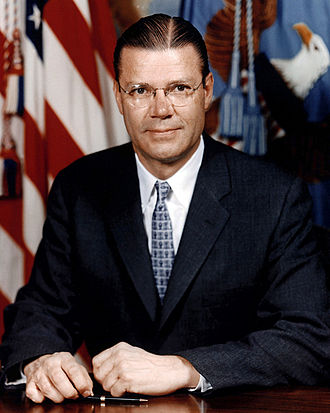
  1. 1960 Robert McNamara is named president of the Ford Motor Company, becoming the first non-Ford family member to serve in that post. He resigns a month later to join the newly elected John F. Kennedy administration. Source
  2. 1719 In a treaty between Sweden and Hanover at the close of the Great Northern War, Sweden cedes the Duchies of Bremen and Verden (in northern Germany) to Hanover. Source
  3. 1967 Apollo program: NASA launches the unmanned Apollo 4 test spacecraft, atop the first Saturn V rocket, from Florida's Cape Kennedy. Source

Did you know

In 1998, Capital punishment in the United Kingdom, already abolished for murder, is completely abolished for all remaining capital offences. This featured entry focuses on the immediate decision and its direct historical impact.

Did you know

Capital punishment in the United Kingdom predates the formation of the UK, having been used in Britain and Ireland from ancient times until the second half of the 20th century. This helps explain why the event mattered beyond the initial announcement.

Did you know

The last executions in the United Kingdom were by hanging, and took place in 1964; capital punishment for murder was suspended in 1965 and finally abolished in 1969. This clarifies the institutional and public response around the event.

Did you know

Although unused, the death penalty remained a legally defined punishment for certain offences such as treason until it was completely abolished in 1998; the last person to be executed for treason was William Joyce, in 1946. This shows how the event shaped policy and public communication in the same period.

Did you know

In 1998, Capital punishment in the United Kingdom, already abolished for murder, is completely abolished for all remaining capital offences had consequences that extended beyond the first headline. The key context is the institutions involved, the policy shift, and how the public response evolved afterward.


At the Seventeenth Council of Toledo, Egica, a king of the Visigoths of Hispania, accuses Jews of aiding Muslims, sentencing all Jews to slavery.
694 AD synod under Iberian king Egica
The Seventeenth Council of Toledo first met on 9 November 694 under Visigothic King Egica. It was the king's third council and primarily directed, as was the Sixteenth, against the Jews, for whom Egica seems to have had a profound distrust and dislike.
694
Battle_of_Fujigawa
The Battle of Fujigawa: Minamoto forces (30,000 men) under Minamoto no Yoritomo defeat Taira no Koremori during a night attack near the Fuji River but he escapes safely with the routed army.
Battle in 1180 in Japan
The Battle of Fujigawa was a battle of the Genpei War of the Heian period of Japanese history. It took place in 1180, in what is now Shizuoka Prefecture.
1180
Treaty_of_Aberconwy
The Treaty of Aberconwy, a humiliating settlement forced on Llywelyn ap Gruffudd by King Edward I of England, brings a temporary end to the Welsh Wars.
1277 treaty between England and Wales
The Treaty of Aberconwy was signed on the 10th of November 1277, and was made between King Edward I of England and Llywelyn ap Gruffudd, Prince of Wales. It followed Edward's invasion of Llywelyn's territories earlier that year. The treaty re-established peace between the two but also essentially guaranteed that Welsh self-rule would end upon Llywelyn's death and represented the completion of the first stage of the Conquest of Wales by Edward I.
1277
Knights_Templar
Knights Templar officer Hugues de Pairaud is forced to confess during the Trials of the Knights Templar.
He was persecuted on the charges of false idolism and sodomy.
The Poor Fellow-Soldiers of Christ and of the Temple of Solomon, mainly known as the Knights Templar, was a military order of the Catholic faith, and one of the most important military orders in Western Christianity. They were founded in 1118 to defend pilgrims on their way to Jerusalem, with their headquarters located there on the Temple Mount, and existed for nearly two centuries during the Middle Ages.
1307
Louis_IV,_Holy_Roman_Emperor
Louis the Bavarian defeats his cousin Frederick I of Austria at the Battle of Gammelsdorf.
Holy Roman Emperor from 1328 to 1347
Louis IV, called the Bavarian, was King of the Romans from 1314, King of Italy from 1327, and Holy Roman Emperor from 1328 until his death in 1347.
1313
Siege of Warangal: Prataparudra surrenders to Muhammad bin Tughlaq, officially marking the end of the Kakatiya dynasty.
1323 siege in India
In 1323, the Delhi Sultanate ruler Ghiyath al-Din Tughluq sent an army led by his son Ulugh Khan to the Kakatiya capital Warangal, after the Kakatiya ruler Prataparudra refused to make tribute payments. Ulugh Khan's first siege of Warangal failed because of a rebellion resulting from a false rumour about Ghiyath al-Din's death in Delhi. Ulugh Khan had to retreat to Devagiri, but he returned to Warangal within four months, this time with reinforcements from Delhi. Prataparudra was defeated and taken captive, resulting in the end of the Kakatiya dynasty.
1323
Battle_of_Posada
At the Battle of Posada, Basarab I of Wallachia defeats the Hungarian army of Charles I Robert.
1330 battle between Wallachian and Hungarian armies
The Battle of Posada was fought between Basarab I of Wallachia and Charles I of Hungary . The small Wallachian army led by Basarab, formed of cavalry and foot archers, as well as local peasants, managed to ambush and defeat the 30,000-strong Hungarian army, in a mountainous region.
1330
Trần_Duệ_Tông
Trần Duệ Tông succeeds his brother Trần Nghệ Tông as King of Vietnam.
Emperor of Đại Việt
Trần Duệ Tông, real name Trần Kính (陳曔), was the ninth emperor of the Trần dynasty who reigned Vietnam from 1373 to 1377. Duệ Tông succeeded the throne from his brother Trần Nghệ Tông who was credited with the re-establishment of Trần clan's ruling in Vietnam from Hôn Đức Công. During his short-lived reign, Duệ Tông had to witness the rising of Hồ Quý Ly in the imperial court and several consecutive attacks in Vietnam from Chế Bồng Nga, king of Champa. In 1377 Duệ Tông decided to personally command a major military campaign against Champa, this campaign was ended by the disastrous defeat of Trần's army in Battle of Vijaya where Duệ Tông himself was killed in action with many other high-ranking mandarins and generals of Vietnam. Duệ Tông's death was one of the main events that led to the collapse of Trần Dynasty in 1400.
1372
Battle_of_Ilava
The Battle of Ilava: The Hungarians defeat the Hussite army.
1431 battle of the Hussite Wars
The Battle of Ilava took place during the Hussite Wars between the Hussites and the Hungarian-Royalists army near Ilava in Upper Hungary (Slovakia) on November 9, 1431.
1431
Ulrich_II,_Count_of_Celje
Ulrich II, Count of Celje, last ruler of the County of Cilli, is assassinated in Belgrade.
15th-century Slovenian nobleman and feudal lord
Ulrich II, or Ulrich of Celje, was the last Princely Count of Celje. At the time of his death, he was captain general and de facto regent of Hungary, ban (governor) of Slavonia, Croatia and Dalmatia and feudal lord of vast areas in present-day Slovenia, Croatia, Bosnia, Austria, and Slovakia. He was also a claimant to the Bosnian throne. He was killed by agents of the Hunyadi clan under unknown circumstances, which plunged Hungary into civil unrest that was resolved a year later by the sudden death of king Ladislas the Posthumous and the election of Matthias Corvinus, the son of John Hunyadi and Ulrich's son-in-law, as king. Ulrich's possessions in the Holy Roman Empire were inherited by Emperor Frederick III, while his possessions in Hungary were reverted to the crown.
1456
Stockholm_Bloodbath
More than 50 people are sentenced and executed in the Stockholm Bloodbath.
1520 trial and executions
The Stockholm Bloodbath was a trial that led to a series of executions in Stockholm between 7 and 9 November 1520. The event is also known as the Stockholm massacre. The events occurred after the coronation of Christian II as the new king of Sweden, when guests in the crowning party were invited to a meeting at Tre Kronor castle. Archbishop Gustav Trolle, demanding economic compensation for things such as the demolition of Almarestäket's fortress, questioned whether the former Swedish regent Sten Sture the Younger and his supporters had been guilty of heresy.
1520
Second Desmond Rebellion: The Siege of Smerwick ends with the Catholic garrison surrendering to the English forces under Arthur Grey.
The majority of the garrison is massacred the next day.
The Second Desmond Rebellion (1579–1583) was the more widespread and bloody of the two Desmond Rebellions in Ireland launched by the FitzGerald Dynasty of Desmond in Munster against English rule. The second rebellion began in July 1579 when James FitzMaurice FitzGerald landed in Ireland with a force of Papal troops, triggering an insurrection across the south of Ireland on the part of the Desmond dynasty, their allies, and others who were dissatisfied for various reasons with English government of the country. The rebellion ended with the 1583 death of Gerald FitzGerald, 14th Earl of Desmond, and the defeat of the rebels.
1580
Wrocław
The Bohemian King Frederick I flees Prague to Vratislav one day after the defeat of his troops in the Battle of White Mountain.
Historical capital and largest city of Silesia, located in southwestern Poland
Wrocław is a city in southwestern Poland, and the capital of the Lower Silesian Voivodeship. It is the largest city and historical capital of the region of Silesia. It lies on the banks of the Oder (Odra) River in the Silesian Lowlands. In 2025, the official population of Wrocław was 672,545, making it the third-largest city in Poland. The population of the Wrocław metropolitan area is around 1.25 million.
1620
Glorious_Revolution
Glorious Revolution: William of Orange captures Exeter.
British revolution of 1688
The Glorious Revolution was the deposition of King James II in November 1688. He was replaced by his daughter Mary II and her Dutch husband, James's nephew William III of Orange. The two ruled as joint monarchs of England, Scotland, and Ireland until Mary's death in 1694, when William became ruler in his own right. Jacobitism, the political movement that aimed to restore the exiled James or his descendants of the House of Stuart to the throne, persisted into the late 18th century. Some historians consider William's invasion the last successful invasion of England.
1688
In a treaty between Sweden and Hanover at the close of the Great Northern War, Sweden cedes the Duchies of Bremen and Verden (in northern Germany) to Hanover.
1719 and 1720 peace treaties between Sweden and allied Hanover and Prussia
The Treaties of Stockholm were two treaties signed in 1719 and 1720 that ended the war between Sweden and an alliance of Hanover and Prussia.
1719
The synagogue of Judah HeHasid is burned down by Arab creditors, leading to the expulsion of the Ashkenazim from Jerusalem.
17th-century Jewish preacher
Judah he-Hasid Segal ha-Levi was a Jewish preacher who led the largest organized group of Jewish immigrants to the Land of Israel in the 17th and 18th centuries.
1720
Treaty_of_Seville
Spain, France and Great Britain sign the Treaty of Seville.
1729 treaty ending the Anglo-Spanish War of 1727–29
The Treaty of Seville was signed on 9 November 1729 between Britain, France, and Spain, formally ending the 1727–1729 Anglo-Spanish War; the Dutch Republic joined the Treaty on 29 November.
1729
American_Revolutionary_War
American Revolutionary War: In the Battle of Fishdam Ford a force of British and Loyalist troops fail in a surprise attack against the South Carolina Patriot militia under Brigadier General Thomas Sumter.
1775–1783 conflict in North America
The American Revolutionary War, also known as the Revolutionary War or American War of Independence or simply the American Revolution, was the armed conflict that comprised the final eight years of the broader American Revolution, in which American Patriot forces organized as the Continental Army and commanded by George Washington defeated the British Army. The conflict was fought in North America, the Caribbean, and the Atlantic Ocean. The war's outcome seemed uncertain for most of the war, but Washington and the Continental Army's decisive victory in the Siege of Yorktown in 1781 led King George III and the Kingdom of Great Britain to negotiate an end to the war. In 1783, in the Treaty of Paris, the British monarchy acknowledged the independence of the Thirteen Colonies, leading to the establishment of the United States as an independent and sovereign nation.
1780
Society_of_United_Irishmen
The Dublin Society of United Irishmen is founded.
Political party in Ireland
The Society of United Irishmen was a sworn association, formed in the wake of the French Revolution, to secure representative government in Ireland. Despairing of constitutional reform, and in defiance both of British Crown forces and of Irish sectarian division, in 1798 the United Irishmen instigated a republican rebellion. Their suppression was a prelude to the abolition of the Irish Parliament in Dublin and to Ireland's incorporation in a United Kingdom with Great Britain.
1791
Coup_of_18_Brumaire
Napoleon Bonaparte leads the Coup of 18 Brumaire ending the Directory government, and becoming First Consul of the successor Consulate Government.
1799 coup in Revolutionary France that brought Napoleon to power
The Coup of 18 Brumaire brought Napoleon Bonaparte to power as First Consul of the French First Republic. In the view of most historians, it ended the French Revolution and would soon lead to the coronation of Napoleon as Emperor of the French. This bloodless coup d'état overthrew the Directory, replacing it with the French Consulate. This occurred on 9 November 1799, which was 18 Brumaire, Year VIII, under the short-lived French Republican calendar system.
1799
Kentucky
Kentucky marshals abduct abolitionist minister Calvin Fairbank from Jeffersonville, Indiana, and take him to Kentucky to stand trial for helping a slave escape.
U.S. state
Kentucky, officially the Commonwealth of Kentucky, is a landlocked state in the Southeastern region of the United States. It borders Illinois, Indiana, and Ohio to the north, West Virginia to the northeast, Virginia to the east, Tennessee to the south, and Missouri to the west. Its northern border is defined by the Ohio River. Its capital is Frankfort and its most populous city is Louisville. As of 2024, the state's population was approximately 4.6 million.
1851
American_Civil_War
American Civil War: Union General Ambrose Burnside assumes command of the Army of the Potomac, after George B.
McClellan is removed.
The American Civil War was a civil war in the United States between the Union and the Confederacy, which was formed in 1861 by states that had seceded from the Union to preserve slavery in the United States. The South saw slavery as threatened because of the election of Abraham Lincoln and the growing abolitionist movement in the North. The war ended with Union victory, the dissolution of the Confederacy and the abolition of slavery, freeing four million African Americans.
1862
Tokugawa_shogunate
The Tokugawa shogunate hands back power to the Emperor of Japan, starting the Meiji Restoration.
1603–1868 Japanese military government (Edo Jidai)
The Tokugawa shogunate, also known as the Edo shogunate, was the military government of Japan during the Edo period from 1603 to 1868.
1867
Battle_of_Coulmiers
The Battle of Coulmiers ends in a Pyrrhic victory for the French army during the Franco-German War of 1870.
Franco-Prussian War, 9 Nov 1870
The Battle of Coulmiers was fought on 9 November 1870 between French and Bavarian forces during the Franco-Prussian War, ending in French victory.
1870
Great_Boston_Fire_of_1872
The Great Boston Fire of 1872.
Largest fire in Boston, Massachusetts, US
The Great Boston Fire of 1872 stands as the largest fire in the history of Boston, Massachusetts, and ranks as one of the most costly fire-related property losses in American history. The conflagration began at 7:20 p.m. on November 9, 1872, in the basement of a commercial warehouse at 83–87 Summer Street. The fire was finally contained around midday on November 10, after it had consumed about 65 acres (26 ha) of Boston's downtown, 776 buildings, and much of the financial district. It caused $73.5 million in damage —buildings losses totaled $13.5 million and the personal property loss was valued at $60 million. The number of fatalities is believed to have been 26 to "at least 30", depending on source, including 11 or 12 firefighters.
1872
1880_Zagreb_earthquake
A major earthquake strikes Zagreb and destroys many buildings, including Zagreb Cathedral.
Strong earthquake in Croatia
The 1880 earthquake which struck Zagreb, and is also known as The Great Zagreb earthquake, occurred with a moment magnitude of 6.3 on 9 November 1880. Its epicenter was in the Medvednica mountain north of Zagreb. Although only one person was killed in the earthquake, it destroyed or damaged many buildings and spurred a renovation program in the city's historic center. It remained the most severe quake to hit the city for 140 years, until the 2020 Zagreb earthquake.
1880
Mapuche rebels attack the fortified Chilean settlement of Temuco.
Ethnic uprising in Chile
The last major rebellion of the indigenous Mapuches of Araucanía took place in 1881, during the last phase of the Occupation of Araucanía (1861–1883) by the Chilean state. It was planned by Mapuche chiefs in March 1881 to be launched in November the same year. Mapuche support for the uprising was not unanimous: Some Mapuche factions sided with the Chileans and others declared themselves neutral. The organizers of the uprising did however succeed in involving Mapuche factions that had not previously been at war with Chile. With most of the attacks repelled within a matters of days Chile went on the next years to consolidate its conquests.
1881
Pearl_Harbor
The United States receives rights to Pearl Harbor, Hawaii.
Harbor on the island of Oahu, Hawaii
Pearl Harbor is a lagoon harbor on the island of Oʻahu, Hawaii, United States, west of Honolulu. It was often visited by the naval fleet of the United States before it was acquired from the Hawaiian Kingdom by the U.S. with the signing of the Reciprocity Treaty of 1875. Much of the harbor and surrounding lands are now a United States Navy deep-water naval base. It is also the headquarters of the United States Pacific Fleet. The U.S. government first obtained exclusive use of the inlet and the right to maintain a repair and coaling station for ships here in 1887. The surprise attack on the harbor by the Imperial Japanese Navy on December 7, 1941, led the United States to declare war on the Empire of Japan, marking the United States' entry into World War II.
1887
Jack_the_Ripper
Jack the Ripper murders Mary Jane Kelly, his final victim in the Whitechapel murders.
Unidentified serial killer in London in 1888
Jack the Ripper was an unidentified serial killer active in and around the impoverished Whitechapel district of London, England, in 1888. In both criminal case files and the contemporaneous journalistic accounts, the killer was also called the Whitechapel Murderer and Leather Apron.
1888
Russian_invasion_of_Manchuria
Russian invasion of Manchuria: Russia completes its occupation of Manchuria with 100,000 troops.
1900 military conflict in East Asia
The Russian invasion of Manchuria or Chinese expedition occurred in the aftermath of the First Sino-Japanese War (1894–1895) when concerns regarding Qing China's defeat by the Empire of Japan, and Japan's brief occupation of Liaodong, caused the Russian Empire to speed up their long held designs for imperial expansion across Eurasia.
1900
Prince George, Duke of Cornwall (later George V of the United Kingdom), becomes Prince of Wales and Earl of Chester.
Title in the Peerage of England
Duke of Cornwall is a title in the Peerage of England, traditionally held by the eldest son of the reigning British monarch, previously the English monarch. The Duchy of Cornwall was the first duchy created in England and was established in a royal charter in 1337 by King Edward III. In 2022, Prince William became Duke of Cornwall with the accession to the throne of his father, King Charles III; William's wife, Catherine, became Duchess of Cornwall.
1901
Alberta
The Province of Alberta, Canada, holds its first general election.
Province of Canada
Alberta is a province in Canada. It is a part of Western Canada and is one of the three prairie provinces. Alberta is bordered by British Columbia to its west, Saskatchewan to its east, the Northwest Territories to its north, and the U.S. state of Montana to its south. Alberta and Saskatchewan are the only two landlocked provinces. The eastern part of the province is occupied by the Great Plains, while the western part borders the Rocky Mountains. The province has a predominantly continental climate, but seasonal temperatures tend to swing rapidly due to its aridity. Those swings are less pronounced in western Alberta because of its occasional Chinook winds. Alberta is Canada's fourth-largest province by area, at 661,848 square kilometres (255,541 sq mi), and the fourth-most populous, with 4,262,635 residents. Alberta's capital is Edmonton; its largest city is Calgary. The two cities are Alberta's largest census metropolitan areas. More than half of Albertans live in Edmonton or Calgary, which encourages a continuing rivalry between the two cities. English is the province's official language. In 2016, 76.0% of Albertans were anglophone, 1.8% were francophone, and 22.2% were allophone.
1905
Theodore_Roosevelt
Theodore Roosevelt is the first sitting President of the United States to make an official trip outside the country, doing so to inspect progress on the Panama Canal.
President of the United States from 1901 to 1909
Theodore Roosevelt Jr. was the 26th president of the United States, serving from 1901 to 1909. Previously serving for six months as vice president under William McKinley, Roosevelt became president after McKinley's assassination in 1901. He was 42 years old upon his first inauguration, making him the youngest person to hold the office.
1906
Cullinan_Diamond
The Cullinan Diamond is presented to King Edward VII on his birthday.
Largest gem-quality diamond ever discovered
The Cullinan Diamond is the largest gem-quality rough diamond ever found, weighing 3,106 carats (621.20 g), discovered at the Premier No.2 mine in Cullinan, South Africa, on 26 January 1905. It was named after Thomas Cullinan, the owner of the mine. In April 1905, it was put on sale in London, but despite considerable interest, it was still unsold after two years. In 1907, the Transvaal Colony government bought the Cullinan and Prime Minister Louis Botha presented it to Edward VII. It was then cut by Joseph Asscher & Co. in Amsterdam.
1907
Great_Lakes_Storm_of_1913
The Great Lakes Storm of 1913, the most destructive natural disaster ever to hit the lakes, reaches its greatest intensity after beginning two days earlier.
The storm destroys 19 ships and kills more than 250 people.
The Great Lakes Storm of 1913, historically referred to as the Big Blow, the Freshwater Fury and the White Hurricane, was a blizzard with hurricane-force winds that devastated the Great Lakes region in the Midwestern United States and Southwestern Ontario, Canada, between November 7 and 10, 1913. The storm was at its most powerful on November 9, battering and overturning ships on four of the five Great Lakes, particularly Lake Huron.
1913
SMS_Emden
SMS Emden is sunk by HMAS Sydney in the Battle of Cocos.
Light cruiser of the German Imperial Navy
SMS Emden was the second and final member of the Dresden class of light cruisers built for the German Kaiserliche Marine. Named for the town of Emden, she was laid down at the Kaiserliche Werft in Danzig in 1906. The hull was launched in May 1908, and completed in July 1909. She had one sister ship, Dresden. Like the preceding Königsberg-class cruisers, Emden was armed with ten 10.5 cm (4.1 in) guns and two torpedo tubes.
1914
Balfour_Declaration
The Balfour Declaration is published in The Times newspaper.
British government statement of 1917
The Balfour Declaration was a public statement issued by the British Government in 1917 during the First World War announcing its support for the establishment of a "national home for the Jewish people" in Palestine, then an Ottoman region with a small Jewish minority among an overwhelming Arab majority, mostly Muslim but also including Christians. The declaration was contained in a letter dated 2 November 1917 from Arthur Balfour, the British foreign secretary, to Lord Rothschild, a leader of the British Jewish community, for transmission to the Zionist Federation of Great Britain and Ireland. The text of the declaration was published in the press on 9 November 1917.
1917
Kaiser
Kaiser Wilhelm II of Germany abdicates after the German Revolution, and Germany is proclaimed a Republic.
German word for "emperor", associated with rulers of the German Empire (1871–1918)
Kaiser is the title historically used by German and Austrian emperors. In German, the title in principle applies to rulers anywhere in the world above the rank of king. In English, the word kaiser is mainly applied to the emperors of the unified German Empire (1871–1918) and the emperors of the Austrian Empire (1804–1918). During the First World War, anti-German sentiment was at its zenith; the term kaiser—especially as applied to Wilhelm II, German Emperor—thus gained considerable negative connotations in English-speaking countries.
1918
National_Fascist_Party
The National Fascist Party (Partito Nazionale Fascista or PNF) is founded in Italy.
Italian political party (1921–1943)
The National Fascist Party was a far-right political party in Italy, created by Benito Mussolini as the political expression of Italian fascism and as a reorganisation of the previous Italian Fasces of Combat. The party ruled the Kingdom of Italy from 1922, when Fascists took power with the March on Rome, until the fall of the Fascist regime in 1943, when Mussolini was deposed by the Grand Council of Fascism. The National Fascist Party was succeeded by the Republican Fascist Party in the territories under the control of the Italian Social Republic, and it was ultimately dissolved at the end of World War II.
1921
Munich
In Munich, police and government troops crush the Nazi Beer Hall Putsch.
Capital of Bavaria, Germany
Munich is the capital and most populous city of Bavaria, Germany. As of 30 November 2024, its population was 1,604,384, making it the third-largest city in Germany after Berlin and Hamburg. Munich is the largest city in Germany that is not a state of its own, and it ranks as the 11th-largest city in the European Union (EU). The metropolitan area has around 3 million inhabitants, and the broader Munich Metropolitan Region is home to about 6.2 million people. It is the third largest metropolitan region by GDP in the EU. Munich is located on the river Isar north of the Alps. It is the seat of the Upper Bavarian administrative region. With 4,800 people per km2, Munich is Germany's most densely populated municipality. It is also the second-largest city in the Bavarian dialect area after Vienna.
1923
Congress_of_Industrial_Organizations
The Committee for Industrial Organization, the precursor to the Congress of Industrial Organizations, is founded in Atlantic City, New Jersey, by eight trade unions belonging to the American Federation of Labor.
North American federation of labor unions from 1935 to 1955
The Congress of Industrial Organizations (CIO) was a federation of unions that organized workers in industrial unions in the United States and Canada from 1935 to 1955. Originally created in 1935 as a committee within the American Federation of Labor (AFL) by John L. Lewis, a leader of the United Mine Workers (UMW), and called the Committee for Industrial Organization. Its name was changed in 1938 when it broke away from the AFL. It focused on organizing 'unskilled' workers, who had been ignored by most of the AFL unions.
1935
Ruth_Harkness
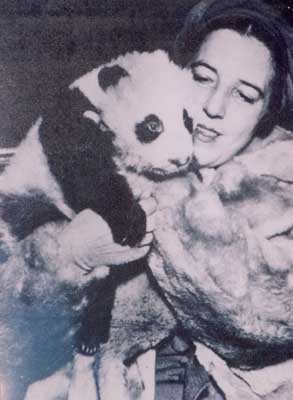
American fashion designer Ruth Harkness seeks and captures a nine-week-old panda cub in Sichuan; named Su Lin, he becomes the first live giant panda to enter the United States.
American fashion designer, socialite, and panda owner
Ruth Elizabeth Harkness was an American fashion designer and socialite who traveled to China in 1936 and brought the first live giant panda to the United States.
1936
Second_Sino-Japanese_War
Second Sino-Japanese War: The Chinese Army withdraws from the Battle of Shanghai.
1937–1945 conflict in East Asia
The Second Sino-Japanese War, known in China as the War of Resistance Against Japan, was fought between the Republic of China and the Empire of Japan and its puppet states between 1937 and 1945, following a period of war localized to Manchuria that started in 1931. It is often regarded as the beginning of World War II in Asia, as the wars became heavily intertwined after Japan attacked the United States. It was the largest Asian war in the 20th century.
1937
Kristallnacht
Kristallnacht occurs, instigated by the Nazis using the killing of German diplomat Ernst vom Rath by Herschel Grynszpan as justification.
1938 anti-Jewish pogroms in Nazi Germany
Kristallnacht (German: [kʁɪsˈtalnaχt] ; lit. 'crystal night') or the Night of Broken Glass, also called the November pogrom(s) (German: Novemberpogrome ), was a pogrom against Jews carried out by the Nazi Party's Sturmabteilung (SA) and Schutzstaffel (SS) paramilitary forces along with some participation from the Hitler Youth and German civilians throughout Nazi Germany on 9–10 November 1938. The German authorities looked on without intervening. The euphemistic name Kristallnacht comes from the shards of broken glass that littered the streets after the windows of Jewish-owned stores, buildings, and synagogues were smashed. The pretext for the attacks was the assassination, on 9 November 1938, of the German diplomat Ernst vom Rath by Herschel Grynszpan, a 17-year-old German-born Polish Jew living in Paris.
1938
Warsaw
Warsaw is awarded the Virtuti Militari by the Polish government-in-exile.
Capital and largest city of Poland
Warsaw, officially the Capital City of Warsaw, is the capital and most populous city of Poland. The metropolis stands on the river Vistula in east-central Poland. Its population is officially estimated at 1.87 million residents within a greater metropolitan area of around 3.5 million residents, which makes Warsaw the 7th most populous city in the European Union. The city area measures 517 square kilometres and comprises 18 districts, while the metropolitan area covers 6,100 square kilometres. Warsaw is classified as an alpha global city, a major political, economic and cultural hub, and the country's seat of government. It is also the capital of the Masovian Voivodeship.
1940
Battle_of_Stalingrad
Battle of Stalingrad: German forces of the 6th Army under general Friedrich Paulus reach the river bank of the Volga, capturing 90% of the ruined city of Stalingrad and splitting the remaining Soviet forces into two narrow pockets.
Major World War II battle from 1942 to 1943
The Battle of Stalingrad was a major battle on the Eastern Front of World War II in which Nazi Germany and its Axis allies fought the Soviet Union for control of the city of Stalingrad in southern Russia. Marked by intense close-quarters combat and heavy civilian losses during aerial bombardment, the battle is considered the largest and deadliest urban battle in military history and the largest battle in World War II. By the end of the fighting, the German 6th Army had been destroyed, the 4th Panzer Army had suffered severe losses, and Army Group B was routed. The defeat ended Germany’s 1942 summer offensive and passed the strategic initiative on the Eastern Front to the Soviet Union. The Soviet victory at Stalingrad is generally regarded as the pivotal turning point of the European theatre of the war.
1942
White_House
An agreement for the founding of the United Nations Relief and Rehabilitation Administration is signed by 44 countries in the White House, Washington, D.C.
Residence and workplace of the US president
The White House is the official residence and workplace of the president of the United States. Located at 1600 Pennsylvania Avenue NW in Washington, D.C., it has served as the residence of every U.S. president since John Adams in 1800 when the national capital was moved from Philadelphia. The White House is also a metonym for the Executive Office of the President.
1943
Soo Bahk Do and Moo Duk Kwan martial arts are founded in Korea.
Korean martial art
Soo Bahk Do (수박도) is a martial art founded by Kwan Jang Nim Hwang Kee, and now is taught by Kwan Jang Nim Hwang Hyun Chul, known as H.C. Hwang, and instructors who are certified by member organizations of the World Moo Duk Kwan, Inc. This martial art was originally claimed to be the ancient martial art of Korea. Hwang Kee created Moo Duk Kwan with influence from Okinawan Karate and Shaolin Long Fist, and Taijiquan.
1945
Cambodia
Cambodia gains independence from France.
Country in Southeast Asia
Cambodia, officially the Kingdom of Cambodia, is a country in Mainland Southeast Asia. It is bordered by Thailand to the northwest, Laos to the north, and Vietnam to the east, and has a coastline along the Gulf of Thailand in the southwest. It spans an area of about 181,035 km2 (69,898 sq mi), dominated by a low-lying plain and the confluence of the Mekong river and Tonlé Sap, Southeast Asia's largest lake. It is dominated by a tropical climate. Cambodia has a population of about 17 million people, the majority of which are ethnically Khmer. Its capital and most populous city is Phnom Penh, followed by Siem Reap and Battambang.
1953
Robert_McNamara
Robert McNamara is named president of the Ford Motor Company, becoming the first non-Ford family member to serve in that post.
He resigns a month later to join the newly elected John F. Kennedy administration.
Robert Strange McNamara, also known by his initials RSM, was an American businessman and government official who served as the eighth United States secretary of defense from 1961 to 1968 under presidents John F. Kennedy and Lyndon B. Johnson at the height of the Cold War. He remains the longest-serving secretary of defense, having remained in office over seven years. He played a major role in promoting the U.S. involvement in the Vietnam War. McNamara was responsible for the institution of systems analysis in public policy, which developed into the discipline known today as policy analysis.
1960
Miike_coal_mine
At a coal mine in Miike, Japan, an explosion kills 458 and hospitalises 839 with carbon monoxide poisoning.
Defunct coal mine in Kyushu, Japan
Miike coal mine , also known as the Mitsui Miike Coal Mine , was the largest coal mine in Japan, located in the area of the city of Ōmuta, Fukuoka and Arao, Kumamoto, Japan.
1963
Tsurumi_rail_accident
The Tsurumi rail accident on the Tōkaidō Main Line in Yokohama kills 162 people.
1963 train accident in Japan
The Tsurumi rail accident occurred on November 9, 1963, between Tsurumi and Shin-Koyasu stations on the Tōkaidō Main Line in Yokohama, Japan, about 30 kilometres (20 mi) south of Tokyo, when two passenger trains collided with a derailed freight train, killing 162 people.
1963
Power_outage
Several U.S.
states and parts of Canada are hit by a series of blackouts lasting up to 13 hours in the Northeast blackout of 1965.
A power outage, also called a blackout, a power failure, a power blackout, a power loss, a power cut, a power out or a power drought is the complete loss of the electrical power network supply to an end user.
1965
Catholic_Worker_Movement
A Catholic Worker Movement member, Roger Allen LaPorte, protesting against the Vietnam War, sets himself on fire in front of the United Nations building.
Autonomous communities of Catholics and their associates
The Catholic Worker Movement is a collection of autonomous communities founded by Dorothy Day and Peter Maurin in the United States in 1933. Its aim is to "live in accordance with the justice and charity of Jesus Christ". One of its guiding principles is hospitality towards those on the margin of society, based on the principles of communitarianism and personalism. To this end, the movement claims over 240 local Catholic Worker communities providing social services. Each house has a different mission, going about the work of social justice in its own way, suited to its local region.
1965
Apollo_program
Apollo program: NASA launches the unmanned Apollo 4 test spacecraft, atop the first Saturn V rocket, from Florida's Cape Kennedy.
1961–1972 American crewed lunar exploration program
The Apollo program, also known as Project Apollo, was the United States human spaceflight program led by NASA, which landed the first humans on the Moon in 1969. Apollo was conceived in 1960 in the Dwight D. Eisenhower presidency during Project Mercury and executed after Project Gemini. Apollo was later dedicated to President John F. Kennedy's national goal, "before this decade is out, of landing a man on the Moon and returning him safely to the Earth" in his address to the U.S. Congress on May 25, 1961.
1967
Vietnam_War
Vietnam War: The Supreme Court of the United States votes 6–3 against hearing a case to allow Massachusetts to enforce its law granting residents the right to refuse military service in an undeclared war.
1955–1975 war in Southeast Asia
The Vietnam War was an armed conflict in Vietnam, Laos, and Cambodia fought between North Vietnam and South Vietnam and their allies. North Vietnam was supported by the Soviet Union and China, while South Vietnam was supported by the United States and other anti-communist nations. The conflict was the second of the Indochina wars and a proxy war of the Cold War. The Vietnam War was one of the postcolonial wars of national liberation, a theater in the Cold War, and a civil war, with civil warfare a defining feature from the outset. Direct US military involvement escalated from 1965 until US forces were withdrawn in 1973. The fighting spilled into the Laotian and Cambodian civil wars, which ended with all three countries becoming communist in 1975.
1970
John_List_(murderer)
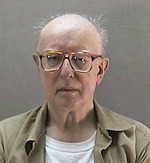
American banker John List murdered his wife, mother, and three children with a pair of handguns.
American mass murderer (1925–2008)
John Emil List was an American mass murderer and long-time fugitive. On November 9, 1971, he killed his wife, mother, and three children in their Westfield, New Jersey home, then disappeared. He had planned the murders so meticulously that nearly a month passed before anyone suspected that something was amiss.
1971
Cold_War
Cold War: Nuclear false alarm: The NORAD computers and the Alternate National Military Command Center in Fort Ritchie, Maryland, detect a purported massive Soviet nuclear strike.
After reviewing the raw data from satellites and checking the early-warning radars, the alert is cancelled.
The Cold War was a period of international geopolitical rivalry between the United States (US) and the Soviet Union (USSR) and their respective allies, the capitalist Western Bloc and communist Eastern Bloc. It began in the aftermath of the Second World War and ended with the dissolution of the Soviet Union in 1991. The term cold war is used because there was no direct fighting between the two superpowers, though each supported opposing sides in regional conflicts known as proxy wars. In addition to the struggle for ideological and economic influence and an arms race in both conventional and nuclear weapons, the Cold War was expressed through technological rivalries such as the Space Race, espionage, propaganda campaigns, embargoes, and sports diplomacy.
1979
Garry_Kasparov
Garry Kasparov, 22, of the Soviet Union, becomes the youngest World Chess Champion by beating fellow Soviet Anatoly Karpov.
Russian chess grandmaster (born 1963)
Garry Kimovich Kasparov is a Russian chess grandmaster, political activist, and writer, who was the World Chess Champion from 1985 to 2000. His peak FIDE chess rating of 2851, achieved in 1999, was the highest recorded until being surpassed by Magnus Carlsen in 2013. From 1984 until his retirement from regular competitive chess in 2005, Kasparov was ranked the world's No. 1 player for a record 255 months overall. Kasparov also holds records for the most consecutive professional tournament victories (15) and Chess Oscars (11).
1985
Fall_of_the_Berlin_Wall
Cold War: Fall of the Berlin Wall: East Germany opens checkpoints in the Berlin Wall, allowing its citizens to travel to West Berlin.
1989 destruction of the Berlin Wall
The Berlin Wall fell on 9 November 1989 during the Peaceful Revolution, marking the beginning of the destruction of the figurative Iron Curtain, as East Berlin transit restrictions were overwhelmed and discarded. Sections of the wall were breached, and planned deconstruction began the following June. It was one of the series of events that started the fall of communism in Central and Eastern Europe. The fall of the inner German border took place shortly afterward. An end to the Cold War was declared at the Malta Summit in early December, and German reunification took place in October the following year.
1989
Stari_Most
Stari Most, the "old bridge" in the Bosnian city of Mostar, built in 1566, collapses after several days of bombing by Croat forces during the Croat–Bosniak War.
Bridge in Mostar, Bosnia and Herzegovina
The Old Bridge, also known as the Mostar Bridge, is a rebuilt 16th-century Ottoman bridge in the city of Mostar in Bosnia and Herzegovina. It crosses the river Neretva and connects the two parts of the city, which is named after the bridge keepers who guarded the Old Bridge during the Ottoman era. Commissioned by Suleiman the Magnificent in 1557 and designed by Mimar Hayruddin, a student and apprentice of the architect Mimar Sinan, the Old Bridge is an exemplary piece of Balkan Islamic architecture.
1993
Chemical_element
The chemical element darmstadtium is discovered.
Chemical substance not composed of simpler ones
A chemical element is a species of atom defined by its number of protons. The number of protons is called the atomic number of that element. For example, oxygen has an atomic number of 8: each oxygen atom has 8 protons in its nucleus. Atoms of the same element can have different numbers of neutrons in their nuclei, known as isotopes of the element. Atoms of one element can be transformed into atoms of a different element in nuclear reactions, which change an atom's atomic number. Almost all baryonic matter in the universe is composed of elements.
1994
Nasdaq
A U.S.
federal judge, in the largest civil settlement in American history, orders 37 U.S. brokerage houses to pay US$1.03 billion to cheated NASDAQ investors to compensate for price fixing.
The Nasdaq Stock Market is an American stock exchange. It is the second-largest stock exchange by market capitalization and the first fully electronic stock market. Based in Manhattan, New York City, the exchange is among the most active stock trading venues by volume in the United States.
1998
TAESA_Flight_725
TAESA Flight 725 crashes after takeoff from Uruapan International Airport in Uruapan, Michoacán, Mexico, killing all 18 people on board.
1999 aviation accident in Mexico
TAESA Flight 725 was a scheduled flight originating in Tijuana International Airport and ending at Mexico City International Airport with intermediate stopovers in Guadalajara and Uruapan, that crashed shortly after departure from the latter city's airport on November 9, 1999, killing all 18 passengers and crew on board. The crash led TAESA to ground its fleet and suspend operations a year later in 2000.
1999
Uttarakhand
Uttarakhand officially becomes the 27th state of India, formed from thirteen districts of northwestern Uttar Pradesh.
State in northern India
Uttarakhand, previously known as Uttaranchal, is a state in northern India. It shares international boundaries with Tibet to the north and Nepal to the east, while the Indian states of Himachal Pradesh and Uttar Pradesh border it to the west and south, respectively. Uttarakhand has a total area of 53,483 km2 (20,650 sq mi), equal to 1.6 per cent of the total area of India. Dehradun serves as the state winter capital, with Bhararisain being the summer capital and Nainital being the judicial capital. The state is divided into two divisions, Garhwal and Kumaon, with a total of 13 districts. The state is renowned for its mountainous terrain, with the Himalayas covering most of its area and serving as the source of several major river systems.
2000
Firefox
Firefox 1.0 is released.
Web browser made by Mozilla
Mozilla Firefox, or simply Firefox, is a free and open-source web browser developed by the Mozilla Foundation and its subsidiary, the Mozilla Corporation. It uses the Gecko rendering engine to display web pages, which implements current and anticipated web standards. The software is available for Windows, macOS, and Linux systems, with unofficial ports for other platforms, as well as a mobile version for Android and iOS.
2004
Venus_Express
The Venus Express mission of the European Space Agency is launched from the Baikonur Cosmodrome in Kazakhstan.
European orbiter mission to Venus (2005–2015)
Venus Express (VEX) was the first Venus exploration mission of the European Space Agency (ESA). Launched in November 2005, it arrived at Venus in April 2006 and began continuously sending back science data from its polar orbit around Venus. Equipped with seven scientific instruments, the main objective of the mission was the long term observation of the Venusian atmosphere. The observation over such long periods of time had never been done in previous missions to Venus, and was key to a better understanding of the atmospheric dynamics. ESA concluded the mission in December 2014.
2005
2005_Amman_bombings
Suicide bombers attack three hotels in Amman, Jordan, killing at least 60 people.
2005 terrorist attack in Amman, Jordan
The 2005 Amman bombings were a series of coordinated suicide bomb attacks on three hotel lobbies in Amman, Jordan, on 9 November 2005. The explosions at the Grand Hyatt Hotel, the Radisson SAS Hotel, and the Days Inn started at around 20:50 local time at the Grand Hyatt. The three hotels were frequented by foreign diplomats. The bomb at the Radisson SAS exploded in the Philadelphia Ballroom, where a Palestinian wedding hosting hundreds of guests was taking place. The attacks killed 57 people and injured 115 others.
2005
Emergency_Alert_System
The first national test of the Emergency Alert System is activated in the United States at 2:00 p.m.
EST.
The Emergency Alert System (EAS) is a national warning system in the United States designed to allow authorized officials to broadcast emergency alerts and warning messages to the public via cable, satellite and broadcast television and AM, FM and satellite radio. Informally, Emergency Alert System is sometimes conflated with its mobile phone counterpart Wireless Emergency Alerts (WEA), a different but related system. However, both the EAS and WEA, among other systems, are coordinated under the Integrated Public Alert and Warning System (IPAWS).
2011
A train carrying liquid fuel crashes and bursts into flames in northern Myanmar, killing 27 people and injuring 80 others.
This is a list of rail accidents which occurred between 2010 and 2019. For a list of terrorist incidents involving trains, see List of terrorist incidents involving railway systems.
2012
At least 27 people are killed and dozens are wounded in conflicts between inmates and guards at Welikada prison in Colombo.
Prison riot in Colombo, Sri Lanka
The Welikada prison riot was a prison riot that occurred on 9 November 2012 at Welikada Prison in Sri Lanka. The riot broke out during a search for illegal arms. The riot left 27 people dead and 40 injured. The government has appointed a committee to investigate the riot. Welikada Prison, which has around 4,000 prisoners, has witnessed a number of violent riots in its history. This prison riot was the worst in Sri Lanka's history since the 1983 riot, also at Welikada Prison, which left 53 prisoners dead.
2012
2014_Catalan_self-determination_referendum
A non-binding self-determination consultation is held in Catalonia, asking Catalan citizens their opinion on whether Catalonia should become a state and, if so, whether it should be an independent state.
Referendum in the Spanish region of Catalonia
A non-binding Catalan self-determination referendum, also known as the Citizen Participation Process on the Political Future of Catalonia, was held on Sunday, 9 November 2014, to gauge support on the political future of Catalonia. While also referred to as "Catalan independence referendum", the vote was rebranded as a "participation process" by the Government of Catalonia, after a "non-referendum popular consultation" on the same topic and for the same date had been suspended by the Constitutional Court of Spain.
2014
Second_Nagorno-Karabakh_War
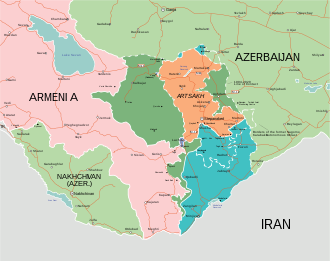
Second Nagorno-Karabakh War: An armistice agreement is signed by Armenia, Azerbaijan and Russia.
Conflict between Armenia and Azerbaijan (2020)
The Second Nagorno-Karabakh War was an armed conflict in 2020 that took place in the disputed region of Nagorno-Karabakh and the surrounding occupied territories. It was a major escalation of an unresolved conflict over the region, involving Azerbaijan, Armenia and the self-declared Armenian breakaway state of Artsakh. The war lasted for 44 days and resulted in Azerbaijani victory, with the defeat igniting anti-government protests in Armenia. Post-war skirmishes continued in the region, including substantial clashes in 2022.
2020
NYU_Langone_Health
U.S.
surgeons at NYU Langone Health announce the world's first whole eye transplant.
NYU Langone Health is an integrated academic health system located in New York City, New York, United States. The health system consists of the NYU Grossman School of Medicine and NYU Grossman Long Island School of Medicine, both part of New York University (NYU), and more than 330 locations throughout the New York City Region and in Florida, including seven inpatient facilities: Tisch Hospital; Kimmel Pavilion; NYU Langone Orthopedic Hospital; Hassenfeld Children's Hospital; NYU Langone Hospital — Brooklyn; NYU Langone Hospital — Long Island; and NYU Langone Hospital — Suffolk. It is also home to Rusk Rehabilitation. NYU Langone Health is one of the largest healthcare systems in the Northeast, with more than 54,000 employees.
2023

History runs on facts, and this project runs on coffee!

Your support is incredibly helpful and genuinely appreciated.

Support with a coffee ☕