October 11 in History

In Washington, D.C., the Daughters of the American Revolution is founded.

1890 — In Washington, D

C., the Daughters of the American Revolution is founded.

October 11 spans 41 recorded events across recorded history, from 1138 to 2018. Below is a curated digest of the most significant moments tied to this date.

By · Wikipedia

Historical Events 41 events 1138 – 2018

More major events on October 11

The featured story and these ranked highlights form a quick summary. Every recorded event remains available in the chronology below.

  1. 1958 NASA launches Pioneer 1, its first space probe, although it fails to achieve a stable orbit. Source
  2. 1968 NASA launches Apollo 7, the first successful crewed Apollo mission. Source
  3. 1811 The Juliana begins operation as the first steam-powered ferry in New York harbor. Source

Did you know

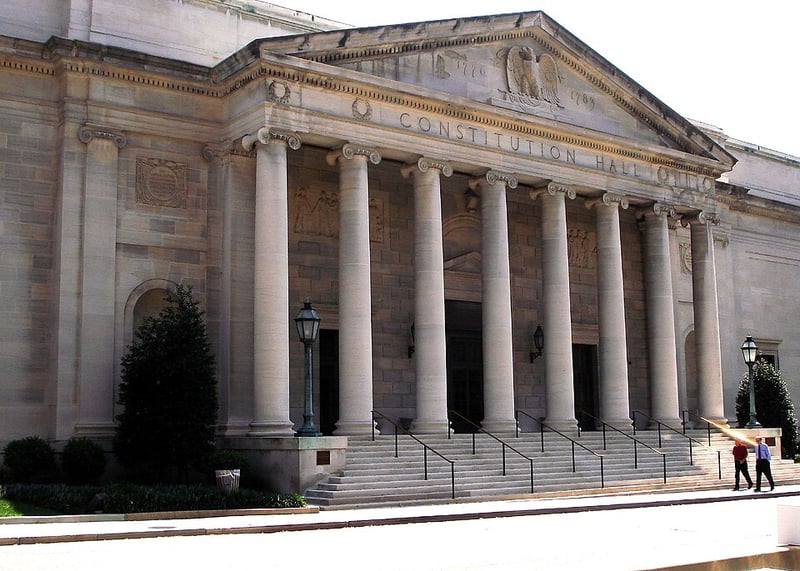
In 1890, In Washington, D.C., the Daughters of the American Revolution is founded. This featured entry focuses on the immediate decision and its direct historical impact.
Did you know

The National Society Daughters of the American Revolution is a federally chartered lineage-based membership service organization for women who are directly descended from a patriot of the American Revolution. This helps explain why the event mattered beyond the initial announcement.

Did you know

A non-profit and non-political group, the organization promotes historical preservation, education and patriotism. This clarifies the institutional and public response around the event.

Did you know

Its membership is limited to direct lineal descendants of soldiers or others of the American Revolution era who aided the revolution and its subsequent war. This shows how the event shaped policy and public communication in the same period.

Did you know

Applicants must be at least 18 years of age. This helps explain why the event mattered beyond the initial announcement.


A massive earthquake strikes Aleppo; it is one of the most destructive earthquakes ever.
12th-century earthquake in Syria
The 1138 Aleppo earthquake was among the deadliest earthquakes in history. Its name was taken from the city of Aleppo, in northern Syria, where the most casualties were sustained. The earthquake also caused damage and chaos to many other places in the area around Aleppo. The earthquake occurred on 11 October 1138 and was preceded by a smaller quake on the 10th. It is frequently listed as the third deadliest earthquake in history, following on from the Shensi and Tangshan earthquakes in China. However, the figure of 230,000 deaths reported by Ibn Taghribirdi in the fifteenth century is most likely based on a historical conflation of this earthquake with earthquakes in November 1137 on the Jazira plain and the large seismic event of 30 September 1139 in the Transcaucasian city of Ganja.
1138
Treaty_of_Shaoxing
A peace treaty ends the Jin–Song wars.
1141 peace treaty between Jin and Southern Song
The Treaty of Shaoxing was the agreement and truce that ended the protracted military conflicts between the Jin dynasty and the Southern Song dynasty. It also legally drew up the boundaries of the two countries and forced the Song dynasty to renounce all claims to its former territories north of the Qinling Huaihe Line, which included its former capital of Kaifeng. Emperor Gaozong of Song subsequently executed the anti-Jin faction general Yue Fei after the treaty.
1142
England
The peerage and clergy restrict the authority of English kings with the Ordinances of 1311.
Country within the United Kingdom
England is a country that is part of the United Kingdom. It is located on the island of Great Britain, of which it covers about 62%, and more than 100 smaller adjacent islands. England shares a land border with Scotland to the north and another land border with Wales to the west, and is surrounded by the North Sea to the east, the English Channel to the south, the Celtic Sea to the south-west, and the Irish Sea to the west. Continental Europe lies to the south-east, and Ireland to the west. The population was 56,490,048 according to the 2021 census, with nine million inhabitants in its largest city, London.
1311
New_Netherland_Company
The New Netherland Company applies to the States General of the Netherlands for exclusive trading rights in what is now the northeastern United States.
Chartered company of Dutch merchants (1600s)
New Netherland Company was a chartered company of Dutch merchants.
1614
Burchardi_flood
The Burchardi flood kills around 15,000 in North Friesland, Denmark and Germany.
Storm tide that struck 17th century North Frisia and Dithmarschen
The Burchardi flood was a storm tide that struck the North Sea coast of North Frisia, Dithmarschen and southwest Jutland on the night between 11 and 12 October 1634. Overrunning dikes, it shattered the coastline and caused thousands of deaths and catastrophic material damage. Much of the island of Strand washed away, forming the islands Nordstrand, Pellworm and several halligen.
1634
Sack_of_Wexford
Cromwell's New Model Army sacks Wexford, killing over 2,000 Irish Confederate troops and 1,500 civilians.
Part of the Cromwellian conquest of Ireland
The Sack of Wexford took place from 2 to 11 October 1649, during the Cromwellian conquest of Ireland, part of the 1641–1653 Irish Confederate Wars. English Commonwealth forces under Oliver Cromwell stormed the town after negotiations broke down, killing most of the Irish Confederate and Royalist garrison. Many civilians also died, either during the sack, or drowned attempting to escape across the River Slaney.
1649
American_Revolution
American Revolution: A fleet of American boats on Lake Champlain is defeated by the Royal Navy, but delays the British advance until 1777.
Founding of the United States
The American Revolution (1765–1789) was a political movement in the Thirteen Colonies of Great Britain. It began as a rebellion and turned into a revolution eventually creating the sovereign United States, which was the outcome of the associated American Revolutionary War (1775-1783). The Second Continental Congress, as the provisional government, established the Continental Army and appointed George Washington as its commander-in-chief in 1775. The following year, the Congress passed the Lee Resolution on July 2nd and unanimously adopted the Declaration of Independence on July 4th. Throughout most of the war, the outcome appeared uncertain, but a 1781 victory by Washington and the Continental Army in the Siege of Yorktown led King George III and the Fox–North coalition in government to negotiate the cessation of colonial rule and the acknowledgment of American sovereignty, which was formalized in the Treaty of Paris, signed on September 3, 1783. The Constitution took effect in 1789 and the Bill of Rights was ratified in 1791.
1776
Battle_of_Camperdown
The Royal Navy decisively defeats the Batavian Navy at Camperdown during the French Revolutionary Wars.
1797 War of the First Coalition battle
The Battle of Camperdown was fought on 11 October 1797 between the Royal Navy's North Sea Fleet under Admiral of the Blue Adam Duncan and a Batavian Navy fleet led by Vice-admiral Jan Willem de Winter. Duncan's fleet won a complete victory over de Winter's in what was the most significant engagement between British and Batavian forces during the French Revolutionary Wars, capturing eleven ships without losing any of their own.
1797
John_Stevens_(inventor,_born_1749)
The Juliana begins operation as the first steam-powered ferry in New York harbor.
American lawyer, engineer and inventor (1749–1838)
Col. John Stevens, III was an American lawyer, engineer, and inventor who constructed the first U.S. steam locomotive, first steam-powered ferry, and first U.S. commercial ferry service from his estate in Hoboken. He was influential in the creation of U.S. patent law.
1811
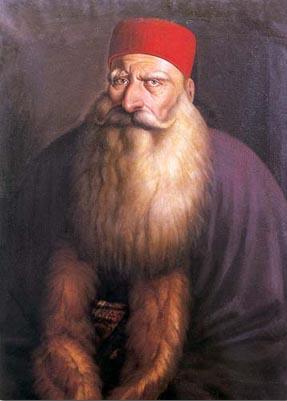
Bashir_Shihab_II
The Maronite leader Bashir Shihab II surrenders to the Ottoman Empire and later is sent to Malta in exile.
Emir of Lebanon from 1789 to 1840
Bashir Shihab II was a Lebanese emir who ruled the Emirate of Mount Lebanon between 1788 –1840. Born to a branch of the Shihab family which had converted from Sunni Islam, the religion of previous Shihabi emirs, he was the only Maronite ruler of the Mount Lebanon Emirate.
1840
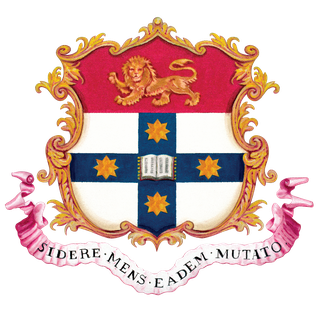
University_of_Sydney
The University of Sydney, Australia's oldest university, is inaugurated in Sydney.
Public research university in Australia
The University of Sydney (USYD) is a public research university in Sydney, Australia. Founded in 1850, it is the oldest university in both Australia and Oceania. One of Australia's six sandstone universities, it was one of the world's first universities to admit students solely on academic merit, and opened its doors to women on the same basis as men. The university comprises eight academic faculties and university schools, through which it offers bachelor, master and doctoral degrees.
1852
American_Civil_War
American Civil War: Confederate troops conduct a raid on Chambersburg, Pennsylvania.
1861–1865 conflict in the United States
The American Civil War was a civil war in the United States between the Union and the Confederacy, which was formed in 1861 by states that had seceded from the Union to preserve slavery in the United States. The South saw slavery as threatened because of the election of Abraham Lincoln and the growing abolitionist movement in the North. The war ended with Union victory, the dissolution of the Confederacy and the abolition of slavery, freeing four million African Americans.
1862
Morant_Bay_rebellion
Hundreds of black men and women march in Jamaica, starting the Morant Bay rebellion.
1865 rebellion in Morant Bay, Jamaica
The Morant Bay Rebellion began with a protest march to the courthouse in Morant Bay, Jamaica by hundreds of people led by preacher Paul Bogle. Some were armed with sticks and stones. After seven men were shot and killed by the volunteer militia, the protesters attacked and burned the courthouse and nearby buildings. Twenty-five people died. Over the next two days, poor freedmen rose in rebellion across most of St. Thomas-in-the-East parish.
1865
Second_Boer_War
The Second Boer War erupts in South Africa between the British-ruled Cape Colony, and the Boer-ruled Transvaal and Orange Free State.
1899–1902 war in South Africa
The Second Boer War was a conflict fought between the British Empire and the Boer republics over Britain's influence in Southern Africa.
1899
San Francisco sparks a diplomatic crisis between the United States and Japan by ordering segregated schools for Japanese students.
Informal agreement between Japan and the U.S.
The Gentlemen's Agreement of 1907 was an informal agreement between the United States of America and the Empire of Japan whereby Japan would not allow further emigration of laborers to the United States and the United States would not impose restrictions on Japanese immigrants already present in the country. The goal was to reduce tensions between the two Pacific nations such as those that followed the Pacific Coast race riots of 1907 and the segregation of Japanese students in public schools. The agreement was not a treaty and so was not voted on by the United States Congress. It was superseded by the Immigration Act of 1924.
1906
Archibald_Hoxsey
Piloted by Arch Hoxsey, Theodore Roosevelt becomes the first U.S.
president to fly in an airplane.
Archibald Hoxsey was an American aviator who worked for the Wright brothers.
1910
First_Balkan_War
First Balkan War: The day after the Battle of Sarantaporo, Greek troops liberate the city of Kozani.
1912–1913 war between the Balkan League and the Ottoman Empire
The First Balkan War lasted from October 1912 to May 1913 and involved actions of the Balkan League against the Ottoman Empire. The Balkan states' combined armies overcame the initially numerically inferior and strategically disadvantaged Ottoman armies, achieving rapid success.
1912
The 7.1 Mw San Fermín earthquake shakes Puerto Rico.
The quake and resulting tsunami kill up to 116 people.
Seismic magnitude scales are used to describe the overall strength or "size" of an earthquake. These are distinguished from seismic intensity scales that categorize the intensity or severity of ground shaking (quaking) caused by an earthquake at a given location. Magnitudes are usually determined from measurements of an earthquake's seismic waves as recorded on a seismogram. Magnitude scales vary based on what aspect of the seismic waves are measured and how they are measured. Different magnitude scales are necessary because of differences in earthquakes, the information available, and the purposes for which the magnitudes are used.
1918
Edward_VIII
The Duke and Duchess of Windsor tour Nazi Germany for 12 days and meet Adolf Hitler on 22 October.
King of the United Kingdom in 1936
Edward VIII, later known as the Duke of Windsor, was King of the United Kingdom and the Dominions of the British Commonwealth, as well as Emperor of India, from 20 January 1936 until his abdication in December of the same year.
1937
World_War_II_in_Yugoslav_Macedonia
Beginning of the National Liberation War of Macedonia.
Part of World War II in Yugoslavia
World War II in Yugoslav Macedonia started with the Axis invasion of Yugoslavia in April 1941. Under the pressure of the Yugoslav Partisan movement, part of the Macedonian communists began in October 1941 a political and military campaign to resist the occupation of Vardar Macedonia. Officially, the area was called then Vardar Banovina, because the use of very name Macedonia was avoided in the Kingdom of Yugoslavia. Most of its territory was occupied by Bulgaria, while its westernmost part was ceded to Albania, both aided by German and Italian troops. Initially, there was no organised resistance in the region because the majority of the Macedonian Slavs nurtured strong pro-Bulgarian sentiments, although this was an effect from the previous repressive Kingdom of Yugoslavia rule which had negative impact on the majority of the population. Even the local Communists, separated from the Yugoslav and joined the Bulgarian Communist Party. However, even those Macedonians who felt that they were Bulgarians soon discovered that the Bulgarians from Bulgaria were suspicious of them and considered them "backward Bulgarians" or second-class Bulgarians. In fact, Bulgarian authorities began a process of oppressive Bulgarianization as they realised that only part of the Macedonian population felt Bulgarian or was pro-Bulgarian. The occupation troops acted just as viciously and arrogantly toward the local population as did the officials. Thus, they soon became an object of disgust from the population, especially the great majority that felt themselves Macedonians developed strong resentment towards the Bulgarian regime as it acted the same way as the Serbian one before.
1941
World_War_II
World War II: Off Guadalcanal, United States Navy ships intercept and defeat a Japanese force.
Global conflict (1939–1945)
World War II, or the Second World War, was a global conflict between two coalitions: the Allies and the Axis powers. Nearly all of the world's countries participated, with many engaging in total war on an unprecedented scale. World War II was the deadliest conflict in history, causing the deaths of 60 to 75 million people, a majority of whom were civilians. Millions died as a result of massacres, starvation, disease, and genocides including the Holocaust. After the Allied victory, Germany, Austria, Japan, and Korea were occupied, and German and Japanese leaders were tried for war crimes.
1942
Tuvan_People's_Republic
The Tuvan People's Republic is annexed by the Soviet Union.
Partially recognized socialist republic (1921–1944)
The Tuvan People's Republic (TPR), known simply as Tuva, was a partially recognized socialist republic that existed between 1921 and 1944 in North Asia. It was located in the same territory as the former Russian protectorate of Uriankhai Krai, northwest of Mongolia, and now corresponds to the Republic of Tuva, a republic of Russia.
1944
CBS's field-sequential color system for television is the first to be licensed for broadcast by the U.S.
Federal Communications Commission.
A field-sequential color system (FSC) is a color television system in which the primary color information is transmitted in successive images and which relies on the human vision system to fuse the successive images into a color picture. One field-sequential system was developed in 1940 by Guillermo González Camarena. The Federal Communications Commission adopted it on October 11, 1950, as the standard for color television in the United States. Its regular broadcast debut was on June 25, 1951. However, a few months later, CBS ended color broadcasting on October 20, 1951. In March 1953, CBS withdrew its color system as a standard, creating an opening for all-electronic color systems from other manufacturers.
1950
1954_Geneva_Conference
In accord with the 1954 Geneva Conference, French troops complete their withdrawal from North Vietnam.
International conference on dismantling French Indochina
The Geneva Conference was intended to settle outstanding issues resulting from the Korean War and the First Indochina War and involved several nations. It took place in Geneva, Switzerland, from 26 April to 21 July 1954. The part of the conference on the Korean question ended without adopting any declarations or proposals and so is generally considered less relevant. On the other hand, the Geneva Accords that dealt with the dismantling of French Indochina proved to have long-lasting repercussions.
1954
Pioneer_1
NASA launches Pioneer 1, its first space probe, although it fails to achieve a stable orbit.
Failed NASA orbiter mission to the Moon (1958)
Pioneer 1 was an American space probe, the first under the auspices of NASA, which was launched by a Thor-Able rocket on 11 October 1958. It was intended to orbit the Moon and make scientific measurements, but due to a guidance error failed to achieve lunar orbit and was ultimately destroyed upon reentering Earth's atmosphere. The flight, which lasted 43 hours and reached an apogee of 113,800 km, was the second and most successful of the three Thor-Able space probes.
1958
Second_Vatican_Council
The Second Vatican Council becomes the first ecumenical council of the Roman Catholic Church in 92 years.
Most recent Catholic ecumenical council (1962–1965)
The Second Ecumenical Council of the Vatican, commonly known as the Second Vatican Council or Vatican II, was the twenty-first and most recent ecumenical council of the Catholic Church. It met in St. Peter's Basilica in Vatican City from 11 October 1962 to 8 December 1965, during the pontificates of Pope John XXIII and Pope Paul VI.
1962
Apollo_7
NASA launches Apollo 7, the first successful crewed Apollo mission.
First crewed flight of the Apollo space program
Apollo 7 was the first crewed flight in NASA's Apollo program, and saw the resumption of human spaceflight by the agency after the fire that killed the three Apollo 1 astronauts during a launch rehearsal test on January 27, 1967. The Apollo 7 crew was commanded by Walter M. Schirra, with Command Module Pilot Donn F. Eisele and Lunar Module pilot R. Walter Cunningham.
1968
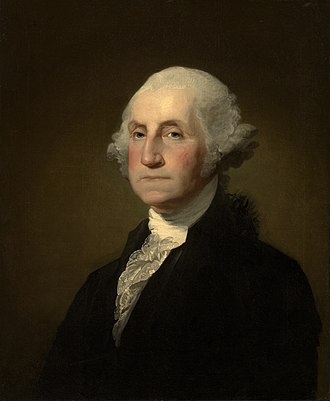
George_Washington
George Washington is posthumously promoted to the grade of General of the Armies.
U.S. Founding Father and president from 1789 to 1797
George Washington was a Founding Father and the first president of the United States, serving from 1789 to 1797. As commander of the Continental Army, Washington led Patriot forces to victory in the American Revolutionary War against the British Empire. He is commonly known as the Father of His Country for his role in bringing about American independence.
1976
Kathryn_D._Sullivan
Aboard the Space Shuttle Challenger, astronaut Kathryn D.
Sullivan becomes the first American woman to perform a space walk.
Kathryn Dwyer Sullivan is an American geologist, oceanographer, and former NASA astronaut and US Navy officer. She was a crew member on three Space Shuttle missions.
1984
Aeroflot_Flight_3352
Aeroflot Flight 3352 crashes into maintenance vehicles upon landing in Omsk, Russia, killing 178.
1984 plane crash in Omsk, Russia
Aeroflot Flight 3352 was a regularly scheduled Aeroflot domestic flight in the Soviet Union from Krasnodar to Novosibirsk, with an intermediate landing in Omsk. While landing at Omsk Airport on Thursday, 11 October 1984, the Tupolev Tu-154 crashed into maintenance vehicles on the runway, killing 174 people on board and four on the ground. While a chain of mistakes in airport operations contributed to the accident, its major cause was an air traffic controller falling asleep on duty.
1984
Ronald_Reagan
Ronald Reagan and Mikhail Gorbachev meet in Iceland to continue discussions about scaling back IRBM arsenals in Europe.
President of the United States from 1981 to 1989
Ronald Wilson Reagan was an American politician and actor who served as the 40th president of the United States from 1981 to 1989. A member of the Republican Party, he became an important figure in the American conservative movement. The period encompassing his presidency is known as the Reagan era.
1986
NAMES_Project_AIDS_Memorial_Quilt
The AIDS Memorial Quilt is first displayed during the Second National March on Washington for Lesbian and Gay Rights.
Memorial quilt project honoring lives lost to AIDS-related causes
The NAMES Project AIDS Memorial Quilt, often abbreviated to AIDS Memorial Quilt or AIDS Quilt, is a memorial to celebrate the lives of people who have died of AIDS-related causes. Weighing an estimated 54 tons, it is the largest piece of community folk art in the world, as of 2020. Conceived in 1985, during the early years of the AIDS pandemic, when social stigma prevented many AIDS victims from receiving funerals, it has been displayed several times on the Mall in Washington, D.C.. In 2020, it returned to San Francisco, where it is cared for by the National AIDS Memorial. The quilt has an approximate area of 1,300,000 ft2 (120,000 m2) and can be seen virtually.
1987
Start of Operation Pawan by Indian forces in Sri Lanka.
Thousands of civilians, insurgents, soldiers die.
Operation Pawan was the code name assigned to the operation by the Indian Peace Keeping Force (IPKF) to take control of Jaffna from the Liberation Tigers of Tamil Eelam (LTTE), better known as the Tamil Tigers, in late 1987 to enforce the disarmament of the LTTE as a part of the Indo-Sri Lanka Accord. In brutal fighting lasting about three weeks, the IPKF took control of the Jaffna Peninsula from the LTTE, something that the Sri Lankan Army had tried but failed to do. Supported by Indian Army tanks, helicopter gunships and heavy artillery, the IPKF routed the LTTE at the cost of 214 soldiers and officers.
1987
Anita_Hill
Prof.
Anita Hill delivers her televised testimony concerning sexual harassment during the Clarence Thomas Supreme Court nomination.
Anita Faye Hill is an American lawyer, educator and author. She is a professor of social policy, law, and women's studies at Brandeis University and a faculty member of the university's Heller School for Social Policy and Management. She became a national figure in 1991 when she accused then-U.S. Supreme Court nominee Clarence Thomas, her supervisor at the United States Department of Education and the Equal Employment Opportunity Commission, of sexual harassment.
1991
Air Botswana pilot Chris Phatswe steals an ATR 42 from Sir Seretse Khama International Airport and later crashes it into two other aircraft at the airport, killing himself.
State-owned flag carrier of Botswana
Air Botswana Corporation is Botswana's state-owned national flag carrier, with its headquarters located in Gaborone. It operates scheduled domestic and regional flights from its main base at Sir Seretse Khama International Airport. Air Botswana has been loss-making for several years, and there have been various attempts to privatise the company, and frequent changes to the corporation's management and board, so far without reducing the losses.
1999
STS-92
NASA launches STS-92, the 100th Space Shuttle mission.
2000 American crewed spaceflight to the ISS
STS-92 was a Space Shuttle mission to the International Space Station (ISS) flown by Space Shuttle Discovery. STS-92 marked the 100th mission of the Space Shuttle and Discovery's 28th flight. It was launched from Kennedy Space Center, Florida, 11 October 2000.
2000
Polaroid_Corporation
The Polaroid Corporation files for federal bankruptcy protection.
American film and camera company (1937–2002)
Polaroid Corporation was an American company that made instant film and cameras, which survives as a brand for consumer electronics. The company was founded in 1937 by Edwin H. Land, to exploit his Polaroid polarizing polymer. Land and Polaroid created the first instant camera, the Land Camera, in 1948.
2001
Myyrmanni_bombing
A bomb attack in a Myyrmanni shopping mall in Vantaa, Finland kills seven.
2002 bombing in Myyrmäki, Finland
The Myyrmanni bombing took place on October 11, 2002, in Myyrmäki, Vantaa, Finland, in Greater Helsinki, at the Myyrmanni shopping mall. A bomb hidden in a backpack exploded in the center of a shopping center killing seven people including the bomber. The blast left a 10-cm deep crater in the floor and blew out the glass dome of the mall. The dead included two teenagers and a seven-year-old. 159 people were injured, including 10 children. 66 victims required hospitalization while the remainder were treated and released at the scene. The bombing took place during the pre-weekend shopping surge late on a Friday afternoon, with 1,000–2,000 people in the shopping center, including many children who had come to see a clown performance.
2002
A migrant boat sinks in the Channel of Sicily, with at least 359 people drowning.
Fatal maritime incident near Italy
On 3 October 2013, a boat carrying migrants from Libya to Italy sank off the Italian island of Lampedusa. It was reported that the boat had sailed from Misrata, Libya, but that many of the migrants were originally from Eritrea, Somalia and Ghana. An emergency response involving the Italian Coast Guard resulted in the rescue of 155 survivors. On 12 October it was reported that the confirmed death toll after searching the boat was 359, but that further bodies were still missing; a figure of "more than 360" deaths was later reported.
2013
Soyuz_MS-10
Soyuz MS-10, launching an intended crew for the ISS, suffers an in-flight abort.
The crew lands safely.
Soyuz MS-10 was a crewed Soyuz MS spaceflight that aborted shortly after launch on 11 October 2018 due to a failure of the Soyuz-FG launch vehicle boosters. MS-10 was the 139th flight of a Soyuz spacecraft. It was intended to transport two members of the Expedition 57 crew to the International Space Station.
2018

History runs on facts, and this project runs on coffee!

Your support is incredibly helpful and genuinely appreciated.

Support with a coffee ☕