October 14 in History

World War II: The Second Philippine Republic, a puppet state of Japan, is inaugu

1943 — World War II: The Second Philippine Republic, a puppet state of Japan, is inaugurated with José P

Laurel as its president.

October 14 spans 66 recorded events across recorded history, from 1066 to 2025. Below is a curated digest of the most significant moments tied to this date.

By · Wikipedia

Historical Events 66 events 1066 – 2025

More major events on October 14

The featured story and these ranked highlights form a quick summary. Every recorded event remains available in the chronology below.

  1. 1981 Vice President Hosni Mubarak is elected as the President of Egypt, one week after the assassination of Anwar Sadat. Source
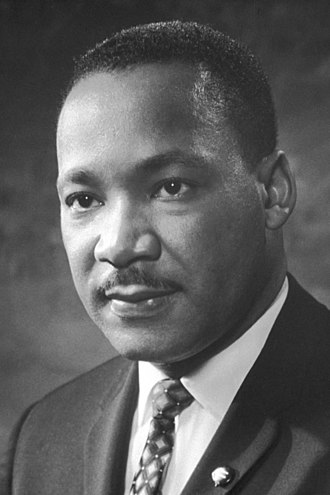
  2. 1964 Martin Luther King Jr. receives the Nobel Peace Prize for combating racial inequality through nonviolence. Source
  3. 1322 Robert the Bruce of Scotland defeats King Edward II of England at the Battle of Old Byland, forcing Edward to accept Scotland's independence. Source

Did you know

The Second Philippine Republic was established on October 14, 1943, and lasted until August 17, 1945, when Japan surrendered to the Allied Powers.

Did you know

José P. Laurel, the president of the Second Philippine Republic, was a former Supreme Court justice and a prominent Filipino politician.

Did you know

The Japanese-sponsored government had its capital in Manila, the largest city in the Philippines.

Did you know

The Second Philippine Republic was recognized by Japan, Germany, and other Axis powers, but not by the United States or other Allied nations.

Did you know

The establishment of the Second Philippine Republic led to the formation of the Hukbalahap, a communist guerrilla movement that opposed the Japanese occupation.


Norman_Conquest
The Norman conquest of England begins with the Battle of Hastings.
11th-century invasion of England
The Norman Conquest of England was an 11th-century invasion by an army made up of thousands of Norman, French, Flemish, and Breton troops, all led by the Duke of Normandy, later styled William the Conqueror.
1066
Robert_the_Bruce
Robert the Bruce of Scotland defeats King Edward II of England at the Battle of Old Byland, forcing Edward to accept Scotland's independence.
King of Scotland from 1306 to 1329
Robert I, popularly known as Robert the Bruce, was King of Scots from 1306 until his death in 1329. Robert led Scotland during the First War of Scottish Independence against England. He fought successfully during his reign to restore Scotland to an independent kingdom and is regarded in Scotland as a national hero. Robert was a fourth-great-grandson of King David I of Scotland, and his grandfather, Robert de Brus, 5th Lord of Annandale, was one of the claimants to the Scottish throne during the "Great Cause".
1322
Mary,_Queen_of_Scots
Mary, Queen of Scots, goes on trial for conspiracy against Queen Elizabeth I of England.
Queen of Scotland from 1542 to 1567
Mary, Queen of Scots, also known as Mary Stuart or Mary I of Scotland, was Queen of Scotland from 14 December 1542 until her forced abdication on 24 July 1567.
1586
Massachusetts_General_Court
The General Court of the Massachusetts Bay Colony enacts the first punitive legislation against the Religious Society of Friends.
State legislature of Massachusetts
The Massachusetts General Court, formally the General Court of Massachusetts, is the bicameral state legislature of the Commonwealth of Massachusetts located in the state capital of Boston. The name "General Court" is a holdover from the earliest days of the Massachusetts Bay Colony, when the colonial assembly, in addition to making laws, sat also as a judicial court of appeals. Before the adoption of the state constitution in 1780, it was called the Great and General Court, but the official title was shortened in the drafting of the state constitution by John Adams. It is a general legislature with plenary power to make law in and for Massachusetts. It is a bicameral parliament derived in some respects from the Westminster model. The upper house is the Massachusetts Senate, comprising 40 members. The lower house, the Massachusetts House of Representatives, has 160 members. It meets in the Massachusetts State House on Beacon Hill in Boston.
1656
Seven_Years'_War
Seven Years' War: Frederick the Great suffers a rare defeat at the Battle of Hochkirch.
Global war among European powers (1756–1763)
The Seven Years' War, 1756 to 1763, was a global war fought by numerous great powers, primarily in Europe, with significant subsidiary campaigns in North America and the Indian subcontinent. The primary warring states were Great Britain and Prussia fighting against France and Austria, with other countries joining these coalitions: Portugal, Spain, Sweden, and Russia, plus Saxony and many other minor states of the Holy Roman Empire. Related conflicts include the Third Silesian War, French and Indian War, Third Carnatic War, Anglo-Spanish War (1762–1763), and Spanish–Portuguese War.
1758
Commission_of_National_Education
The first recorded ministry of education, the Commission of National Education, is formed in the Polish–Lithuanian Commonwealth.
Central education authority of the Polish-Lithuanian Commonwealth
The Commission of National Education was the central educational authority in the Polish–Lithuanian Commonwealth, created by the Sejm and King Stanisław II August on October 14, 1773. Because of its vast authority and autonomy, it is considered the first education ministry in European history and an important achievement of the Polish Enlightenment.
1773
American_Revolution
American Revolution: The First Continental Congress denounces the British Parliament's Intolerable Acts and demands British concessions.
Founding of the United States
The American Revolution (1765–1789) was a political movement in the Thirteen Colonies of Great Britain. It began as a rebellion and turned into a revolution eventually creating the sovereign United States, which was the outcome of the associated American Revolutionary War (1775-1783). The Second Continental Congress, as the provisional government, established the Continental Army and appointed George Washington as its commander-in-chief in 1775. The following year, the Congress passed the Lee Resolution on July 2nd and unanimously adopted the Declaration of Independence on July 4th. Throughout most of the war, the outcome appeared uncertain, but a 1781 victory by Washington and the Continental Army in the Siege of Yorktown led King George III and the Fox–North coalition in government to negotiate the cessation of colonial rule and the acknowledgment of American sovereignty, which was formalized in the Treaty of Paris, signed on September 3, 1783. The Constitution took effect in 1789 and the Bill of Rights was ratified in 1791.
1774
Society_of_United_Irishmen
The revolutionary group the United Irishmen is formed in Belfast, Ireland leading to the Irish Rebellion of 1798.
Political party in Ireland
The Society of United Irishmen was a sworn association, formed in the wake of the French Revolution, to secure representative government in Ireland. Despairing of constitutional reform, and in defiance both of British Crown forces and of Irish sectarian division, in 1798 the United Irishmen instigated a republican rebellion. Their suppression was a prelude to the abolition of the Irish Parliament in Dublin and to Ireland's incorporation in a United Kingdom with Great Britain.
1791
War_of_the_Third_Coalition
War of the Third Coalition: A French corps defeats an Austrian attempt to escape encirclement at Ulm.
1805–1806 conflict during the Napoleonic Wars
The War of the Third Coalition was a European conflict lasting from 1805 to 1806 and was the first conflict of the Napoleonic Wars. During the war, France and its client states under Napoleon I and its ally Spain opposed an alliance, the Third Coalition, which was made up of the United Kingdom, the Austrian Empire, the Russian Empire, Naples, Sicily, and Sweden. Prussia remained neutral during the war.
1805
War_of_the_Fourth_Coalition
War of the Fourth Coalition: Napoleon decisively defeats Prussia at the Battle of Jena–Auerstedt.
1806–1807 conflict of the Napoleonic Wars
The War of the Fourth Coalition was a war spanning 1806–1807 that saw a multinational coalition fight against Napoleon's French Empire, subsequently being defeated. The main coalition partners were Prussia and Russia with Saxony, Sweden, and Great Britain also contributing. Excluding Prussia, some members of the coalition had previously been fighting France as part of the Third Coalition, and there was no intervening period of general peace. On 9 October 1806, Prussia declared war on France and joined a renewed coalition, fearing the rise in French power after the defeat of Austria and establishment of the French-sponsored Confederation of the Rhine in addition to having learned of French plans to cede Prussian-desired Hanover to Britain in exchange for peace. Prussia and Russia mobilized for a fresh campaign with France, massing troops in Saxony.
1806
Republic_of_Ragusa
The Republic of Ragusa is annexed by France.
1358–1808 maritime republic in Southern Europe (Dalmatia)
The Republic of Ragusa was an aristocratic maritime republic centered on the city of Dubrovnik in South Dalmatia in Southern Europe. It carried that name from 1358 until 1808, reaching its commercial peak in the 15th and the 16th centuries. The republic was conquered by Napoleon's French Empire in 1806 and formally annexed by the Napoleonic Kingdom of Italy in 1808. By then it had a population of about 30,000 people, of whom 5,000 lived within the city walls. Its motto was "Non bene pro toto libertas venditur auro", a Latin phrase which can be translated as "Liberty is not well sold for all the gold".
1808
Treaty_of_Schönbrunn
The Treaty of Schönbrunn is signed, ending the War of the Fifth Coalition, the final successful war in Napoleon Bonaparte's military career.
Peace treaty between France and Austria signed on 14 October 1809
The Treaty of Schönbrunn, sometimes known as the Peace of Schönbrunn or the Treaty of Vienna, was signed between France and Austria at Schönbrunn Palace near Vienna on 14 October 1809. The treaty ended the Fifth Coalition during the Napoleonic Wars, after Austria had been defeated at the decisive Battle of Wagram on 5–6 July.
1809
Daniel_O'Connell
Irish nationalist Daniel O'Connell is arrested by the British on charges of criminal conspiracy.
Irish political leader (1775–1847)
Daniel O'Connell, hailed in his time as The Liberator, was the acknowledged political leader of Ireland's Roman Catholic majority in the first half of the 19th century. His mobilisation of Catholic Ireland, down to the poorest class of tenant farmers, secured the final installment of Catholic emancipation in 1829 and allowed him to take a seat in the United Kingdom Parliament to which he had been twice elected.
1843
American_Civil_War
American Civil War: Confederate troops under the command of A.
P. Hill fail to drive the Union Army completely out of Virginia.
The American Civil War was a civil war in the United States between the Union and the Confederacy, which was formed in 1861 by states that had seceded from the Union to preserve slavery in the United States. The South saw slavery as threatened because of the election of Abraham Lincoln and the growing abolitionist movement in the North. The war ended with Union victory, the dissolution of the Confederacy and the abolition of slavery, freeing four million African Americans.
1863
George_Eastman
George Eastman receives a U.S.
Government patent on his new paper-strip photographic film.
George Eastman was an American innovator and entrepreneur who founded the Eastman Kodak Company and helped to bring the photographic use of roll film into the mainstream. After a decade of experiments in photography, he patented and sold a roll film camera, making amateur photography accessible to the general public for the first time. Working as the treasurer and later president of Kodak, he oversaw the expansion of the company and the film industry.
1884
Louis_Le_Prince
Louis Le Prince films the first motion picture, Roundhay Garden Scene.
French motion-picture pioneer (1841–1890s)
Louis Aimé Augustin Le Prince was a French artist, cinematographer and the inventor of an early motion-picture camera, and director of Roundhay Garden Scene. He was possibly the first person to shoot a moving picture sequence using a single lens camera and a strip of (paper) film. He has been credited as the "Father of Cinematography" but, due to his disappearance in 1890, his work did not influence the commercial development of cinema.
1888
SS_Mohegan
The steam ship SS Mohegan sinks near the Lizard peninsula, Cornwall, killing 106.
British steamship wrecked off of Cornwall in 1898
SS Mohegan was a steamer which sank off the coast of the Lizard Peninsula, Cornwall, on her second voyage. She hit The Manacles on 14 October 1898 with the loss of 106 out of 157 on board.
1898
Chicago_Cubs
The Chicago Cubs defeat the Detroit Tigers, 2–0, clinching the 1908 World Series; this would be their last until winning the 2016 World Series.
Major League Baseball franchise
The Chicago Cubs are an American professional baseball team based in Chicago. The Cubs compete in Major League Baseball (MLB) as a member club of the National League (NL) Central Division. The club plays its home games at Wrigley Field, which is located on Chicago's North Side. They are one of two major league teams based in Chicago, alongside the American League (AL)’s Chicago White Sox. The Cubs, first known as the White Stockings, were founded in 1870 and are one of two remaining NL charter franchises that debuted in 1876. They have been known as the Chicago Cubs since 1903.
1908
Claude_Grahame-White
English aviator Claude Grahame-White lands his aircraft on Executive Avenue near the White House in Washington, D.C.
19/20th-century English aviator
Claude Grahame-White was an English pioneer of aviation, and the first to make a night flight, during the Daily Mail-sponsored 1910 London to Manchester air race.
1910
Theodore_Roosevelt
Former president Theodore Roosevelt is shot and mildly wounded by John Flammang Schrank in Milwaukee, Wisconsin.
With the fresh wound in his chest, and the bullet still within it, Roosevelt delivers his scheduled speech.
Theodore Roosevelt Jr. was the 26th president of the United States, serving from 1901 to 1909. Previously serving for six months as vice president under William McKinley, Roosevelt became president after McKinley's assassination in 1901. He was 42 years old upon his first inauguration, making him the youngest person to hold the office.
1912
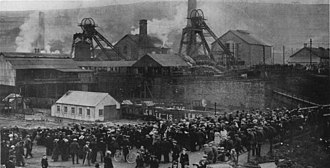
Senghenydd_colliery_disaster
Senghenydd colliery disaster, the United Kingdom's worst coal mining accident, claims the lives of 439 miners.
1913 mining explosion in Wales
The Senghenydd colliery disaster, also known as the Senghenydd explosion, occurred at the Universal Colliery in Senghenydd, near Caerphilly, Glamorgan, Wales, on 14 October 1913. The explosion, which killed 439 coal miners and a rescuer, is the worst mining accident in the United Kingdom. Universal Colliery, on the South Wales Coalfield, extracted steam coal, which was much in demand. Some of the region's coal seams contained high quantities of firedamp, a highly explosive gas consisting of methane and hydrogen.
1913
World_War_I
World War I: Bulgaria joins the Central Powers.
Global conflict from 1914 to 1918
World War I, or the First World War, also known as the Great War, was a global conflict between two coalitions: the Allies and the Central Powers. Major theatres of war included Europe and the Middle East, and well as parts of Africa and the Asia-Pacific. One of the deadliest conflicts in history, World War I resulted in an estimated 15 to 22 million deaths, including in mass war crimes against civilians and genocides. The conflict saw important developments in weaponry, including the first large-scale use of machine guns, artillery, aircraft, chemical weapons, and tanks, and was a major factor in the deadly Spanish flu pandemic.
1915
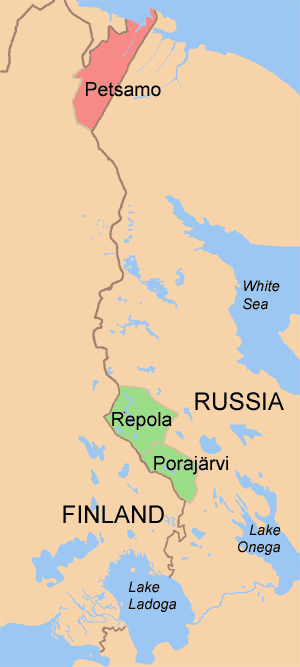
Treaty_of_Tartu_(Finland–Russia)
Finland and Soviet Russia sign the Treaty of Tartu, exchanging some territories.
1920 border treaty between Finland and Soviet Russia
The Treaty of Tartu was signed on 14 October 1920 between Finland and Soviet Russia after negotiations that lasted nearly five months. The treaty confirmed the border between Finland and Soviet Russia after the Finnish Civil War and Finnish volunteer expeditions in Russian East Karelia that resulted in annexation of several Russian districts.
1920
Irish_Civil_War
After the Irish Civil War the 1923 Irish hunger strikes were undertaken by thousands of Irish republican prisoners protesting the continuation of their internment without trial.
1922–1923 conflict between factions of the IRA
The Irish Civil War was a conflict that followed the Irish War of Independence and accompanied the establishment of the Irish Free State, an entity independent from the United Kingdom but within the British Empire.
1923
President_of_Finland
The former and first President of Finland, K.
J. Ståhlberg, and his wife, Ester Ståhlberg, are kidnapped from their home by members of the far-right Lapua Movement.
The president of the Republic of Finland is the head of state of Finland. The incumbent president is Alexander Stubb, since 1 March 2024. He was elected president for the first time in 2024.
1930
League_of_Nations
Germany withdraws from the League of Nations and World Disarmament Conference.
Intergovernmental organisation (1920–1946)
The League of Nations was the first worldwide intergovernmental organisation whose principal mission was to maintain world peace. It was founded on 10 January 1920 by the Paris Peace Conference that ended the First World War. The main organisation ceased operations on 18 April 1946 when many of its components were relocated into the new United Nations (UN) which was created in the aftermath of the Second World War. The League of Nations was the precursor organisation to the United Nations.
1933
World_War_II
World War II: The German submarine U-47 sinks the British battleship HMS Royal Oak within her harbour at Scapa Flow, Scotland.
Global conflict (1939–1945)
World War II, or the Second World War, was a global conflict between two coalitions: the Allies and the Axis powers. Nearly all of the world's countries participated. World War II was the deadliest conflict in history, causing the death of 60 to 75 million people. Millions died as a result of massacres, starvation, disease, and genocides, including the Holocaust. After the Allied victory, Germany, Austria, Japan, and Korea were occupied, and German and Japanese leaders were tried for war crimes.
1939
Balham_station
World War II: The Balham underground station disaster kills sixty-six people during the London Blitz.
London Underground and railway station
Balham is an interchange station in south-west London. It is located in central Balham in the London Borough of Wandsworth for London Underground and National Rail services.
1940
German_submarine_U-69_(1940)
World War II: The German submarine U-69 (1940) sinks the Canadian passenger ferry SS Caribou approximately 20 nautical miles southwest of Port aux Basques, Newfoundland.
German World War II submarine
German submarine U-69 was the first Type VIIC U-boat of the German Navy (Kriegsmarine) during World War II. This meant that compared to previous U-boats, she could travel further afield for longer, with a payload of fourteen torpedoes, an 8.8 cm (3.5 in) deck gun for smaller vessels and a flak gun for use against aircraft. U-69 was very successful, sinking over 72,000 gross register tons (GRT) of Allied shipping in a career lasting two years, making her one of the longest surviving, continuously serving, U-boats. Her most notable attack was on the civilian ferry SS Caribou, which sank off the coast of Newfoundland five minutes after being torpedoed in October 1942, killing 137 men, women and children. She was rammed and sunk by HMS Fame on 17 February 1943.
1942
Sobibor_extermination_camp
World War II: Prisoners at Sobibor extermination camp covertly assassinate most of the on-duty SS officers and then stage a mass breakout.
Nazi extermination camp in Poland (1942–1943)
Sobibor was an extermination camp built and operated by Nazi Germany as part of Operation Reinhard. It was located in the forest near the village of Żłobek Duży in the General Government region of German-occupied Poland.
1943
Eighth_Air_Force
World War II: The United States Eighth Air Force loses 60 of 291 B-17 Flying Fortresses during the Second Raid on Schweinfurt.
Numbered air force of the United States Air Force
The Eighth Air Force (Air Forces Strategic) is a numbered air force (NAF) of the United States Air Force's Air Force Global Strike Command (AFGSC). It is headquartered at Barksdale Air Force Base, Louisiana. The command serves as Air Forces Strategic – Global Strike, one of the air components of United States Strategic Command (USSTRATCOM). The Eighth Air Force includes the heart of America's heavy bomber force: the Northrop Grumman B-2 Spirit stealth bomber, the Rockwell B-1 Lancer supersonic bomber, and the Boeing B-52 Stratofortress heavy bomber aircraft.
1943
Bell_X-1
Flying the Bell X-1 over Muroc Army Air Field in California, Captain Chuck Yeager breaks the sound barrier in level flight, reaching Mach 1.05.
Experimental rocket-powered aircraft
The Bell X-1 is a rocket engine–powered aircraft, designated originally as the XS-1, and was a joint National Advisory Committee for Aeronautics–U.S. Army Air Forces–U.S. Air Force supersonic research project built by Bell Aircraft. Conceived during 1944 and designed and built in 1945, it achieved a speed of nearly 1,000 miles per hour in 1948. A derivative of this same design, the Bell X-1A, having greater fuel capacity and hence longer rocket burning time, exceeded 1,600 miles per hour in 1954. The X-1 aircraft #46-062, nicknamed Glamorous Glennis and flown by Chuck Yeager, was the first piloted airplane to exceed the speed of sound in level flight and was the first of the X-planes, a series of American experimental rocket planes designed for testing new technologies.
1947
Smith_Act_trials_of_Communist_Party_leaders
The Smith Act trials of Communist Party leaders in the United States convicts eleven defendants of conspiring to advocate the violent overthrow of the federal government.
U.S. federal prosecutions, 1949–1958
The Smith Act trials of Communist Party leaders were a series of trials held from 1949 to 1958 in which leaders of the Communist Party of the United States (CPUSA) were accused of violating the Smith Act, a 1940 statute that set penalties for advocating the violent overthrow of the government. The defendants argued that they advocated a peaceful transition to socialism, and that the First Amendment's guarantee of freedom of speech and of association protected their membership in a political party. Appeals from these trials reached the US Supreme Court, which ruled on issues in Dennis v. United States (1951) and Yates v. United States (1957).
1949
Korean_War
Korean War: The Battle of Triangle Hill is the biggest and bloodiest battle of 1952.
1950–1953 conflict on the Korean Peninsula
The Korean War was an armed conflict fought on the Korean Peninsula between North Korea and South Korea and their allies. North Korea was supported by China and the Soviet Union, while South Korea was supported by the United Nations led by the United States under the auspices of the United Nations Command (UNC).
1952
B._R._Ambedkar
Dr.
B. R. Ambedkar, leader of India's Untouchable caste, converts to Buddhism along with 385,000 of his followers (see Neo-Buddhism).
Bhimrao Ramji Ambedkar was an Indian jurist, economist, social reformer and politician who chaired the committee that drafted the Constitution of India based on the debates of the Constituent Assembly of India and the first draft of Sir Benegal Narsing Rau. Ambedkar served as Law and Justice minister in the first cabinet of Jawaharlal Nehru. He later renounced Hinduism and converted to Buddhism, inspiring the Dalit Buddhist movement. He was also a member of the Simon Commission in British India.
1956
23rd_Canadian_Parliament
The 23rd Canadian Parliament becomes the only one to be personally opened by the Queen of Canada.
1957–58 national legislative term
The 23rd Canadian Parliament was in session from October 14, 1957, until February 1, 1958. The membership was set by the 1957 federal election on June 10, 1957, and it changed only somewhat due to resignations and by-elections until it was dissolved prior to the 1958 election.
1957
1957_Valencia_flood
At least 81 people are killed in the most devastating flood in the history of the Spanish city of Valencia.
Fatal natural disaster in Spain
A flood on 14 October 1957 in Valencia, Spain, resulted in significant damage to property and caused the deaths of at least 81 people. In response to the tragedy, the Spanish government devised and enacted the Plan Sur, which rerouted the city's main river, the Turia.
1957
Cuban_Missile_Crisis
The Cuban Missile Crisis begins when an American reconnaissance aircraft takes photographs of Soviet ballistic missiles being installed in Cuba.
1962 confrontation between the US and USSR
The Cuban Missile Crisis, also known as the October Crisis in Cuba, or the Caribbean Crisis, was a 13-day confrontation between the governments of the United States and the Soviet Union, when American deployments of nuclear missiles in the United Kingdom, Italy and Turkey were matched by Soviet deployments of nuclear missiles in Cuba. The crisis lasted from 16 to 28 October 1962. The confrontation is widely considered the closest the Cold War came to escalating into full-scale nuclear war.
1962
Martin_Luther_King_Jr.
Martin Luther King Jr.
receives the Nobel Peace Prize for combating racial inequality through nonviolence.
Martin Luther King Jr. was an American civil rights activist and Baptist minister who was a prominent leader of the civil rights movement from 1955 until his assassination in 1968. He advanced civil rights for people of color in the United States through the use of nonviolent resistance and civil disobedience against Jim Crow laws and other forms of legalized discrimination, which most commonly affected African Americans.
1964
Presidium_of_the_Supreme_Soviet_of_the_Soviet_Union
The Soviet Presidium and the Communist Party Central Committee each vote to accept Nikita Khrushchev's "voluntary" request to retire from his offices.
Former legislature of the USSR (1938–90)
The Presidium of the Supreme Soviet was the standing organ of the highest body of state authority in the Union of Soviet Socialist Republics (USSR). The presidium was elected by joint session of both houses of the Supreme Soviet to act on its behalf while the Supreme Soviet was not in session. By the 1936 and 1977 Soviet Constitution, the Presidium of the Supreme Soviet served as the collective head of state of the USSR. In all its activities, the Presidium was accountable to the Supreme Soviet of the USSR.
1964
Montreal
The city of Montreal begins the operation of its underground Montreal Metro rapid transit system.
Largest city in Quebec, Canada
Montreal is the largest city in the province of Quebec, the second-largest in Canada, and the eighth-largest in North America. Founded in 1642 as Ville-Marie, or "City of Mary", it now takes its name from Mount Royal, the triple-peaked mountain around which the early settlement was built. The city is centred on the Island of Montreal and a few, much smaller, peripheral islands, the largest of which is Île Bizard. It lies 196 kilometres (122 mi) east of the national capital, Ottawa, and 258 kilometres (160 mi) southwest of the provincial capital, Quebec City.
1966
Cals_cabinet
The Dutch Cals cabinet fell after Norbert Schmelzer, the leader of the government party, filed a successful motion against the budget, in what later became known as the Night of Schmelzer.
Dutch cabinet, 1965 to 1966
The Cals cabinet was the executive branch of the Dutch Government from 14 April 1965 until 22 November 1966. The cabinet was formed by the Christian-democratic Catholic People's Party (KVP) and Anti-Revolutionary Party (ARP) and the social-democratic Labour Party (PvdA) after the fall of the previous Cabinet Marijnen. The cabinet was a Centre-left coalition and had a substantial majority in the House of Representatives; prominent Catholic politician Jo Cals, a former Minister of Education, served as Prime Minister. Labour Leader Anne Vondeling served as Deputy Prime Minister and Minister of Finance, Protestant Leader Barend Biesheuvel continued as Deputy Prime Minister, Minister of Agriculture and Fisheries and the responsibility for Suriname and Netherlands Antilles Affairs from previous cabinet.
1966
Apollo_program
Apollo program: The first live television broadcast by American astronauts in orbit is performed by the Apollo 7 crew.
1961–1972 American crewed lunar exploration program
The Apollo program, also known as Project Apollo, was the United States human spaceflight program led by NASA, which landed the first humans on the Moon in 1969. Apollo was conceived in 1960 in the Dwight D. Eisenhower presidency during Project Mercury and executed after Project Gemini. Apollo was later dedicated to President John F. Kennedy's national goal, "before this decade is out, of landing a man on the Moon and returning him safely to the Earth" in his address to the U.S. Congress on May 25, 1961.
1968
1968_Meckering_earthquake
The 6.5 Mw Meckering earthquake shakes the southwest portion of Western Australia with a maximum Mercalli intensity of IX (Violent), causing $2.2 million in damage and leaving 20–28 people injured.
Magnitude 6.5 earthquake in Australia
The Western Australian town of Meckering was struck by an earthquake on 14 October 1968. The earthquake occurred at 10:58:52 local time, with a moment magnitude of 6.5 and a maximum Mercalli intensity of IX (Violent). Total damage amounted to $2.2 million with 20–28 injured. Monday, October 14, 1968, also happened to be a public holiday in Western Australia observing the Queen's Birthday.
1968
Jim_Hines
Jim Hines becomes the first man ever to break the so-called "ten-second barrier" in the 100-meter sprint with a time of 9.95 seconds.
American athletics sprinter (1946–2023)
James Ray Hines was an American track and field athlete and National Football League (NFL) player, who held the 100-meter world record for 15 years. In 1968, he became the first man to officially break the 10-second barrier in the 100 meters, and won individual and relay gold at the Mexico City Olympics.
1968
1973_Thai_popular_uprising
In the Thammasat student uprising, over 100,000 people protest in Thailand against the military government.
Seventy-seven are killed and 857 are injured by soldiers.
The popular uprising of 14 October 1973 was a watershed event in Thailand's history. The uprising resulted in the end of the ruling military dictatorship of anti-communist Thanom Kittikachorn and altered the Thai political system. Notably, it highlighted the growing influence of Thai university students in politics.
1973
Royal_Air_Force
An RAF Avro Vulcan bomber explodes and crashes over Żabbar, Malta after an aborted landing, killing five crew members and one person on the ground.
Air and space warfare force of the United Kingdom
The Royal Air Force (RAF) is the air and space force of the United Kingdom, British Overseas Territories and Crown Dependencies. It was formed towards the end of the First World War on 1 April 1918 through the merger of the Royal Flying Corps (RFC) and the Royal Naval Air Service (RNAS). Following the Allied victory over the Central Powers in 1918, the RAF emerged as the largest air force in the world. Since its formation, the RAF has played a significant role in British military history. In particular, during the Second World War, the RAF defeated the German Luftwaffe's efforts to establish air superiority over England during the Battle of Britain, and played a key role in the Combined Bomber Offensive alongside the USAAF.
1975
The first National March on Washington for Lesbian and Gay Rights draws approximately 100,000 people.
1979 political rally
The first National March on Washington for Lesbian and Gay Rights was a large political rally that took place in Washington, D.C., on October 14, 1979. The first such march on Washington, it drew between 75,000 and 125,000 gay men, lesbians, bisexual people, and straight allies to demand equal civil rights and urge the passage of protective civil rights legislation.
1979
6th_Congress_of_the_Workers'_Party_of_Korea
The 6th Congress of the Workers' Party ended, having anointed North Korean President Kim Il Sung's son Kim Jong Il as his successor.
1980 party conference in North Korea
The 6th Congress of the Workers' Party of Korea (WPK) was held in the February 8 House of Culture in Pyongyang, North Korea, from 10 to 14 October 1980. The congress is the highest organ of the party, and is stipulated to be held every four years. 3,062 delegates represented the party's membership; 117 foreign delegates attended the congress, without the right to speak. The congress saw the reappointment of Kim Il Sung as WPK General Secretary and the Presidium of the Politburo established as the highest organ of the party between congresses.
1980
Hosni_Mubarak
Vice President Hosni Mubarak is elected as the President of Egypt, one week after the assassination of Anwar Sadat.
President of Egypt from 1981 to 2011
Muhammad Hosni El Sayed Mubarak was an Egyptian politician and military officer who served as the 4th president of Egypt from 1981 until his resignation in 2011, following the Egyptian revolution. He was previously the 7th vice president under President Anwar Sadat from 1975 until his accession to the presidency, and the 41st prime minister from 1981 to 1982. Before he entered politics, Mubarak was a career officer in the Egyptian Air Force. He served as its commander from 1972 to 1975 and rose to the rank of air chief marshal in 1973.
1981
Ronald_Reagan
U.S.
President Ronald Reagan proclaims a war on drugs.
Ronald Wilson Reagan was an American politician and actor who served as the 40th president of the United States from 1981 to 1989. A member of the Republican Party, he became an important figure in the American conservative movement. The period encompassing his presidency is known as the Reagan era.
1982
Aung_San_Suu_Kyi
Burmese opposition leader Aung San Suu Kyi is awarded the Nobel Peace Prize.
Burmese politician (born 1945)
Aung San Suu Kyi is a Burmese politician, diplomat and author who served as State Counsellor of Myanmar and Minister of Foreign Affairs from 2016 to 2021. She has served as the general secretary of the National League for Democracy (NLD) since the party's founding in 1988 and was registered as its chairperson while it was a legal party from 2011 to 2023. She played a vital role in Myanmar's transition from military junta to partial democracy in the 2010s. She has been widely described as the de facto leader of Myanmar from 2016 to 2021. She was awarded the 1991 Nobel Peace Prize.
1991
Yasser_Arafat
Yasser Arafat, Yitzhak Rabin and Shimon Peres receive the Nobel Peace Prize for their role in the establishment of the Oslo Accords and the framing of future Palestinian self government.
President of Palestine from 1989 to 2004
Yasser Arafat, also popularly known by his kunya Abu Ammar, was a Palestinian political leader. He was chairman of the Palestine Liberation Organization (PLO) from 1969 to 2004, President of Palestine from 1989 to 2004 and President of the Palestinian Authority (PNA) from 1994 to 2004. Ideologically an Arab nationalist and a socialist, Arafat was a founding member of the Fatah political party, which he led from 1959 until 2004.
1994
Eric_Rudolph
Eric Rudolph is charged with six bombings, including the 1996 Centennial Olympic Park bombing in Atlanta, Georgia.
American domestic terrorist (born 1966)
Eric Robert Rudolph, also known as the Olympic Park Bomber, is an American right-wing domestic terrorist convicted of a series of bombings across the Southern United States between 1996 and 1998, which killed two people and injured over 100 others, including the Centennial Olympic Park bombing at the 1996 Summer Olympics in Atlanta. His stated motive was opposition to "the ideals of global socialism" and "abortion on demand", both of which he claimed were condoned by the United States government. Rudolph was listed as one of the FBI Ten Most Wanted Fugitives for five years, until he was caught in 2003.
1998
The Steve Bartman Incident takes place at Wrigley Field in Chicago, Illinois.
Baseball game incident in 2003
The Steve Bartman incident was a controversial play that occurred during a baseball game between the Chicago Cubs and the Florida Marlins on October 14, 2003, at Wrigley Field in Chicago, Illinois, during Major League Baseball's (MLB) 2003 postseason. The play involved multiple spectators attempting to catch a fly ball and potentially affecting the outcome of the game.
2003
MK_Airlines_Flight_1602
MK Airlines Flight 1602 crashes during takeoff from Halifax Stanfield International Airport, killing all seven people on board.
2004 aviation accident in Canada
MK Airlines Flight 1602 was an MK Airlines Boeing 747-200 cargo flight on a flight from Halifax Stanfield International Airport, Nova Scotia, Canada, to Zaragoza Airport, Spain. On 14 October 2004, it crashed on take-off from Halifax, killing the crew of 7. It was the fourth accident for MK Airlines.
2004
Pinnacle_Airlines_Flight_3701
Pinnacle Airlines Flight 3701 crashes in Jefferson City, Missouri.
The two pilots (the aircraft's only occupants) are killed.
On October 14, 2004, Pinnacle Airlines Flight 3701, a Bombardier CRJ200 on a repositioning flight from Little Rock to Minneapolis, crashed while attempting an emergency approach to Jefferson City Memorial Airport in Missouri, United States. Both pilots, the only two people on board, were killed. The aircraft was originally scheduled to fly a passenger flight from Little Rock to Minneapolis earlier that day, but a mechanical issue forced the flight to be delayed. Since the aircraft was still needed for Pinnacle Airlines operations out of Minneapolis the next day, the airline elected to ferry the aircraft to Minneapolis. The two pilots on board made the aircraft climb to 41,000 ft (12,000 m), the maximum operating altitude of the CRJ200, but did not ensure a safe airspeed for the high altitude they were flying at. Due to the low energy state of the aircraft, it subsequently stalled and, due to interrupted airflow, both engines flamed out. The crew failed to execute the proper dual engine failure checklists and did not glide the aircraft to a suitable airport. The plane crashed in a residential area short of the runway and was destroyed.
2004
Felix_Baumgartner
Felix Baumgartner successfully jumps to Earth from a balloon in the stratosphere.
Austrian skydiver and extreme sportsman (1969–2025)
Felix Baumgartner was an Austrian skydiver, extreme sportsman, and BASE jumper. He was widely known for jumping to Earth from a helium balloon in the stratosphere on 14 October 2012 and landing in New Mexico, United States, as part of the Red Bull Stratos project. By doing so, he set world records for skydiving an estimated 39 km (24 mi), reaching an estimated top speed of 1,357.64 km/h (843.6 mph), or Mach 1.25. He became the first person to break the sound barrier relative to the surface without vehicular power on his descent. He broke skydiving records for exit altitude, vertical freefall distance without a drogue parachute, and vertical speed without a drogue. Although his name is still attached to the last two records, his exit altitude record was broken two years later, when on 24 October 2014, Alan Eustace jumped from 135,890 feet with a drogue.
2012
2014_Nepal_snowstorm_disaster
A snowstorm and avalanche in the Nepalese Himalayas triggered by the remnants of Cyclone Hudhud kills 43 people.
Fatal natural disaster
The 2014 Nepal snowstorm disaster occurred in central Nepal on 14 October 2014 and resulted in the deaths of at least 43 people of various nationalities, including at least 21 trekkers. Injuries and fatalities resulted from unusually severe snowstorms and avalanches on and around the mountains of Annapurna and Dhaulagiri. The incident was said to be Nepal's worst trekking disaster.
2014
Serbia_v_Albania_(UEFA_Euro_2016_qualifying)
The Serbia vs.
Albania UEFA qualifying match is canceled after 42 minutes due to several incidents on and off the pitch. Albania is eventually awarded a win.
A UEFA Euro 2016 qualifying match involving the national association football teams of Serbia and Albania took place on 14 October 2014 at the Partizan Stadium in Belgrade, Serbia. The match was abandoned after several incidents of hooliganism took place both on and off the field. Serbian fans had chanted "Ubij, ubij Šiptara", and threw flares and other objects on the pitch. At that point a drone quadcopter carrying an Albanian nationalist banner with an image of Greater Albania appeared on the pitch.
2014
2015_Tonsa_bombing
A suicide bomb attack in Tonsa, Pakistan kills at least seven people and injures 13 others.
2015 Islamist terror attack Punjab, Pakistan
On 14 October 2015, a suicide bombing killed at least 7 people and injured thirteen others in Taunsa Sharif, Punjab, Pakistan. The attack took place inside the political office of Pakistan Muslim League (N) MNA Sardar Amjad Farooq Khan Khosa, who was not present. Sardar Khosa, who was attending a meeting in Islamabad, said he did not receive any threat or alert prior to the blast. A Tehrik-i-Taliban Pakistan splinter group, Jamaat-ul-Ahrar, claimed responsibility for the attack.
2015
Al-Shabaab_(militant_group)
An Al-Shabaab suicide bomber detonated a massive truck bomb at the Zobe junction in Somalia's capital, Mogadishu, killing 587 people, injuring 316 others, and leaving more than 500 missing.
Somalia-based Wahhabi militant group
Harakat al-Shabaab al-Mujahideen, simply known as Al-Shabaab, is a transnational Wahhabi-Salafi Jihadist militant organization. It is involved in the ongoing Somali Civil War and controls non-contiguous territory in southern Somalia, primarily rural areas, considered by some to be a quasi-state. The group has invoked takfir to rationalize its terrorist attacks on Somali civilians and civil servants. It is, in a more limited capacity, active elsewhere in East Africa, and is allied to the militant organization al-Qaeda. It has also forged ties with other insurgent groups like AQIM and AQAP. Al-Shabaab has been designated as a terrorist organization by numerous countries, including the United States, the United Kingdom, Australia, and Canada, as well as several EAC and EU member-states. The militant group remains subject to international sanctions imposed by the United Nations Security Council, the European Union, and other jurisdictions.
2017
John_Deere
About 10,000 American employees of John Deere go on strike.
American agricultural and industrial auto manufacturing corporation
Deere & Company, is an American corporation that manufactures agricultural machinery, heavy equipment, forestry machinery, diesel engines, drivetrains used in heavy equipment and lawn care equipment. It also provides financial services and other related activities.
2021
2023_Australian_Indigenous_Voice_referendum
Australians vote to reject a constitutional amendment that would have established an Indigenous Voice to Parliament.
The 2023 Australian Indigenous Voice referendum was a constitutional referendum held on 14 October 2023 in which the proposed Aboriginal and Torres Strait Islander Voice was rejected. Voters were asked to approve an alteration to the Australian Constitution that would recognise Indigenous Australians in the document through prescribing a body called the Aboriginal and Torres Strait Islander Voice that would have been able to make representations to Federal Parliament and the executive government on "matters relating to Aboriginal and Torres Strait Islander peoples".
2023
A coup d'état successfully overthrows Malagasy president Andry Rajoelina.
2025 military coup in Madagascar
On 12 October 2025, CAPSAT, an elite unit of the Madagascar Armed Forces, overthrew the government of President Andry Rajoelina, the culmination of a protest movement which began in late September. The unit urged the rest of the military to join them and the capital Antananarivo was seized with little resistance. Later that day, the president of the Senate was removed and CAPSAT's nominee for chief of the armed forces was accepted by the civilian authorities.
2025

History runs on facts, and this project runs on coffee!

Your support is incredibly helpful and genuinely appreciated.

Support with a coffee ☕