September 15 in History

The Soviet Zond 5 spaceship is launched, becoming the first spacecraft to fly ar

1968 — The Soviet Zond 5 spaceship is launched, becoming the first spacecraft to fly around the Moon and re-enter the Earth's atmosphere

September 15 spans 57 recorded events across recorded history, from 994 to 2020. Below is a curated digest of the most significant moments tied to this date.

By · Wikipedia

Historical Events 57 events 994 – 2020

More major events on September 15

The featured story and these ranked highlights form a quick summary. Every recorded event remains available in the chronology below.

  1. 1789 The United States "Department of Foreign Affairs", established by law in July, is renamed the Department of State and given a variety of domestic duties. Source
  2. 1894 First Sino-Japanese War: Japan defeats the Qing dynasty in the Battle of Pyongyang, causing the Qing army to withdraw to the Chinese border with Korea. Source
  3. 1940 World War II: The climax of the Battle of Britain, when the Luftwaffe launches its largest and most concentrated attack of the entire campaign. Source

Did you know

In 1968, The Soviet Zond 5 spaceship is launched, becoming the first spacecraft to fly around the Moon and re-enter the Earth's atmosphere. This featured entry focuses on the immediate decision and its direct historical impact.

Did you know

The Soviet Union, officially the Union of Soviet Socialist Republics (USSR), was a transcontinental country that spanned much of Eurasia from its formation in 1922 until its dissolution in 1991. This helps explain why the event mattered beyond the initial announcement.

Did you know

It was the world's third-most populous country, the largest by area, and bordered twelve other countries. This clarifies the institutional and public response around the event.

Did you know

A diverse multinational state, it was organized as a federal union of national republics, with the largest and most populous being the Russian Soviet Federative Socialist Republic (SFSR). This shows how the event shaped policy and public communication in the same period.

Did you know

The world's flagship communist state, it was governed by the Communist Party under Marxism–Leninism, through soviet councils. This helps explain why the event mattered beyond the initial announcement.


Fatimid_Caliphate
Major Fatimid victory over the Byzantine Empire at the Battle of the Orontes.
Fourth Islamic caliphate (909–1171)
The Fatimid Caliphate, also known as the Fatimid Empire, was a caliphate that existed from the tenth to the twelfth centuries CE under the rule of the Fatimids, an Isma'ili Shi'a dynasty. Spanning a large area of North Africa and West Asia, it ranged from the western Mediterranean in the west to the Red Sea in the east. The Fatimids traced their ancestry to the Islamic prophet Muhammad's daughter Fatima and her husband Ali, the first Shi'a imam. The Fatimids were acknowledged as the rightful imams by different Isma'ili communities as well as by denominations in many other Muslim lands and adjacent regions. Starting in Ifriqiya during the Abbasid Caliphate, the Fatimids overthrew the Aghlabids and extended their rule across the Mediterranean coast and ultimately made Egypt the centre of the caliphate. At its height, the caliphate included—in addition to Egypt—varying areas of the Maghreb, Sicily, the Levant, and the Hejaz.
994
Gilles_de_Rais
Gilles de Rais, one of the earliest known serial killers, is taken into custody upon an accusation brought against him by Jean de Malestroit, Bishop of Nantes.
Medieval French nobleman and convicted serial killer
Gilles de Rais, Baron de Rais was a French knight and lord who possessed extensive estates in Brittany, Anjou and Poitou. He served as one of the captains in the French royal army during the Hundred Years' War, notably taking part in the same military campaigns as Joan of Arc in 1429, up until the failed siege of Paris. He is chiefly known for his conviction on charges of raping and murdering numerous children.
1440
Saint_Dominic_in_Soriano
Appearance of the miraculous portrait of Saint Dominic in Soriano in Soriano Calabro, Calabria, Italy; commemorated as a feast day by the Roman Catholic Church 1644–1912.
1530 painting
Saint Dominic in Soriano was a portrait of Saint Dominic (1170–1221) kept in the Dominican friary at Soriano Calabro in southern Italy. It is known to have been present at the friary from the early 17th century. According to legend the painting had been delivered to Soriano Calabro in 1530 by a delegation from heaven, and was associated with many miracles. It was the subject of a Roman Catholic feast day celebrated on 15 September from 1644 to 1913. Its miraculous origin was the subject of several 17th-century paintings. Several ecclesiastical buildings have been named after it.
1530
Vlissingen
Departing from Vlissingen, ex-Holy Roman Emperor Charles V returns to Spain.
Municipality in Zeeland, Netherlands
Vlissingen is a municipality and a city in the southwestern Netherlands on the island of Walcheren. With its strategic location between the Scheldt river and the North Sea, Vlissingen has been an important harbour for centuries. It was granted city rights in 1315. In the 17th century the roadstead of Vlissingen was a main harbour for ships of the Dutch East India Company (VOC). It is also known as the birthplace of Lieutenant-Admiral Michiel de Ruyter.
1556
Seven_Years'_War
Seven Years' War: Battle of Signal Hill.
Global war among European powers (1756–1763)
The Seven Years' War, 1756 to 1763, was a global war fought by numerous great powers, primarily in Europe, with significant subsidiary campaigns in North America and the Indian subcontinent. The primary warring states were Great Britain and Prussia fighting against France and Austria, with other countries joining these coalitions: Portugal, Spain, Sweden, and Russia, plus Saxony and many other minor states of the Holy Roman Empire. Related conflicts include the Third Silesian War, French and Indian War, Third Carnatic War, Anglo-Spanish War (1762–1763), and Spanish–Portuguese War.
1762
American_Revolutionary_War
American Revolutionary War: British forces successfully land at Kip's Bay, forcing the Continental Army, which was already withdrawing from New York City, to cede control of the lower half of Manhattan Island.
1775–1783 conflict in North America
The American Revolutionary War, also known as the Revolutionary War or American War of Independence or simply the American Revolution, was the armed conflict that comprised the final eight years of the broader American Revolution, in which American Patriot forces organized as the Continental Army and commanded by George Washington defeated the British Army. The conflict was fought in North America, the Caribbean, and the Atlantic Ocean. The war's outcome seemed uncertain for most of the war, but Washington and the Continental Army's decisive victory in the Siege of Yorktown in 1781 led King George III and the Kingdom of Great Britain to negotiate an end to the war. In 1783, in the Treaty of Paris, the British monarchy acknowledged the independence of the Thirteen Colonies, leading to the establishment of the United States as an independent and sovereign nation.
1776
United_States_Department_of_State
The United States "Department of Foreign Affairs", established by law in July, is renamed the Department of State and given a variety of domestic duties.
Executive department of the U.S. federal government
The United States Department of State (DOS), or simply the State Department, is an executive department of the U.S. federal government responsible for the country's foreign policy and relations. Equivalent to the ministry of foreign affairs of other countries, its primary duties are advising the U.S. president on international relations, administering diplomatic missions, negotiating international treaties and agreements, protecting citizens abroad and representing the U.S. at the United Nations. The department is headquartered in the Harry S Truman Building, a few blocks from the White House, in the Foggy Bottom neighborhood of Washington, D.C.; "Foggy Bottom" is thus sometimes used as a metonym.
1789
French_Revolutionary_Wars
French Revolutionary Wars: Arthur Wellesley (later Duke of Wellington) sees his first combat at the Battle of Boxtel during the Flanders Campaign.
1792–1802 wars
The French Revolutionary Wars were a series of sweeping military conflicts resulting from the French Revolution that lasted from 1792 until 1802. They pitted France against Great Britain, Austria, Prussia, Russia, and several other countries. The wars are divided into two periods: the War of the First Coalition (1792–1797) and the War of the Second Coalition (1798–1802). Initially confined to Europe, the fighting gradually assumed a global dimension. After a decade of constant warfare and aggressive diplomacy, France had conquered territories in the Italian peninsula, the Low Countries, and the Rhineland with its very large and powerful military which had been totally mobilized for war against most of Europe with mass conscription of the vast French population. French success in these conflicts ensured military occupation and the spread of revolutionary principles over much of Europe.
1794
Invasion_of_the_Cape_Colony
Britain seizes the Dutch Cape Colony in southern Africa to prevent its use by the Batavian Republic.
1795 invasion of the War of the First Coalition
The invasion of the Cape Colony, also known as the Battle of Muizenberg, was a British military expedition launched in 1795 against the Dutch Cape Colony at the Cape of Good Hope. The Dutch colony at the Cape, established and controlled by the United East India Company in the seventeenth century, was at the time the only viable South African port for ships making the journey from Europe to the European colonies in the East Indies. It therefore held vital strategic importance, although it was otherwise economically insignificant.
1795
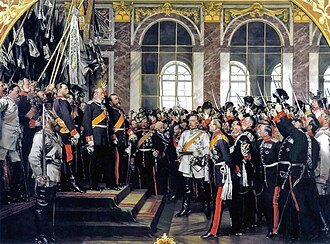
The Grande Armée under Napoleon reaches the Kremlin in Moscow during the failed French invasion of Russia.
Field army of the French Imperial Army
The Grande Armée was the primary field army of the French Imperial Army during the Napoleonic Wars. Commanded by Napoleon, from 1804 to 1812 it won a series of military victories that allowed the First French Empire to exercise unprecedented control over most of Europe. Widely acknowledged to be one of the greatest fighting forces ever assembled, it suffered catastrophic losses during the disastrous French invasion of Russia, after which it never recovered its strategic superiority and ended its military career with a total defeat during the Hundred Days in 1815.
1812
War_of_1812
War of 1812: A second supply train sent to relieve Fort Harrison is ambushed in the Attack at the Narrows.
1812–1815 conflict in North America
The War of 1812 was a conflict initiated by the United States against the United Kingdom and its allies fought mainly in North America and at sea during the wider Napoleonic Wars. The United States declared war on Britain on 18 June 1812. Although peace terms were agreed upon in the December 1814 Treaty of Ghent, the war did not officially end until the peace treaty was ratified by the United States Senate on 17 February 1815.
1812
Followers of the Eight Trigram Sect loyal to Lin Qing attack the Forbidden City in a failed attempt to oust the Jiaqing Emperor of the Qing dynasty.
Network of Chinese folk religious sects
Baguadao or Eight Trigram Teaching (八卦教) or Attain Origin Sect (收元教) or Pure Water Sect (清水教) is a network of Chinese folk religious sects, one of the most extended in northern China. The tradition dates back to the late 17th century Ming dynasty, and was heavily persecuted during the following Qing dynasty when affiliated sects organised an uprising in 1813, led by Lin Qing. Affiliated sects appeared under various names, but during the latter half of the 18th century they adopted Bagua Jiao as their common designation.
1813
HMS Whiting runs aground on the Doom Bar.
Pilot schooner
HMS Whiting, built in 1811 by Thomas Kemp as a Baltimore pilot schooner, was launched as Arrow. On 8 May 1812 a British navy vessel seized her under Orders in Council, for trading with the French. The Royal Navy re-fitted her and then took her into service under the name HMS Whiting. In 1816, after four years service, Whiting was sent to patrol the Irish Sea for smugglers. She grounded on the Doom Bar. When the tide rose, she became flooded and was deemed impossible to refloat.
1816
Constitutionalist revolution in Lisbon, Portugal.
The history of Portugal can be traced from circa 400,000 years ago, when the region of present-day Portugal was inhabited by Homo heidelbergensis.
1820
Captaincy_General_of_Guatemala
The Captaincy General of Guatemala declares independence from Spain.
1609–1821 Spanish colony in Central America
The Captaincy General of Guatemala, also known as the Kingdom of Guatemala, was an administrative division of the Spanish Empire, under the viceroyalty of New Spain in Central America, including present-day Costa Rica, Nicaragua, Honduras, El Salvador, Guatemala, and the Mexican state of Chiapas. The governor-captain general was also president of the Royal Audiencia of Guatemala, the superior court.
1821
Opening_of_the_Liverpool_and_Manchester_Railway
The Liverpool to Manchester railway line opens; British MP William Huskisson becomes the first widely reported railway passenger fatality when he is struck and killed by the locomotive Rocket.
1830 railway opening in England
The Liverpool and Manchester Railway (L&M) opened on 15 September 1830. Work on the L&M had begun in the 1820s, to connect the textile mills of the city of Manchester with the nearest deep water port at the Port of Liverpool, 35 miles (56 km) away. Although horse-drawn railways already existed elsewhere, the Stockton and Darlington Railway had been running for five years, and a few industrial sites already used primitive steam locomotives for bulk haulage, the L&M was the first locomotive-hauled railway to connect two major cities, and the first to provide a scheduled passenger service. The opening day was a major public event. Arthur Wellesley, Duke of Wellington, the prime minister, rode on one of the eight inaugural trains, as did many other dignitaries and notable figures of the day. Huge crowds lined the track at Liverpool to watch the trains depart for Manchester.
1830
HMS_Beagle
HMS Beagle, with Charles Darwin aboard, reaches the Galápagos Islands.
The ship lands at Chatham or San Cristobal, the easternmost of the archipelago.
HMS Beagle was a Cherokee-class 10-gun brig-sloop of the Royal Navy, one of more than 100 ships of this class. The vessel, constructed at a cost of £7,803, was launched on 11 May 1820 from the Woolwich Dockyard on the River Thames. Later reports say the ship took part in celebrations of the coronation of George IV, passing under the old London Bridge, and was the first rigged man-of-war afloat upriver of the bridge. There was no immediate need for Beagle, so she "lay in ordinary", moored afloat but without masts or rigging. She was then adapted as a survey barque and took part in three survey expeditions.
1835
American_Civil_War
American Civil War: Confederate forces capture Harpers Ferry, Virginia.
1861–1865 conflict in the United States
The American Civil War was a civil war in the United States between the Union and the Confederacy, which was formed in 1861 by states that had seceded from the Union to preserve slavery in the United States. The South saw slavery as threatened because of the election of Abraham Lincoln and the growing abolitionist movement in the North. The war ended with Union victory, the dissolution of the Confederacy and the abolition of slavery, freeing four million African Americans.
1862
Franco-Prussian_War
Franco-Prussian War: The last Imperial German Army troops leave France upon completion of payment of indemnity.
War from 1870 to 1871
The Franco-Prussian War, occasionally known as the Franco-German War, and sometimes referred to in France as the War of 1870, was a conflict between France and the North German Confederation led by Prussia. Lasting from 19 July 1870 to 28 January 1871, the conflict was caused primarily by France's determination to reassert its dominant position in continental Europe, which appeared in question following the decisive Prussian victory over Austria in 1866.
1873
First_Sino-Japanese_War
First Sino-Japanese War: Japan defeats the Qing dynasty in the Battle of Pyongyang, causing the Qing army to withdraw to the Chinese border with Korea.
1894–1895 war between China and Japan
The First Sino-Japanese War, or the First China–Japan War, was a conflict between the Qing dynasty of China and the Empire of Japan primarily for influence over Korea. In China it is commonly known as the Jiawu War. After 6 to 7 months of unbroken successes by Japanese land and naval forces and the loss of the ports of Lüshunkou and Weihaiwei, the Qing government sued for peace in February 1895 and signed the Treaty of Shimonoseki two months later, ending the war.
1894
New Culture Movement: Chen Duxiu establishes the New Youth magazine in Shanghai.
Early 20th-century revolt against traditional Chinese values
The New Culture Movement was a progressive sociopolitical movement in China during the 1910s and 1920s. Participants criticized many aspects of traditional Chinese society, favoring their substitution with new formulations of Chinese culture informed by modern and contemporary ideals of mass political participation. Arising out of disillusionment with traditional Chinese culture following the failure of the Republic of China to address China's problems, it featured scholars such as Chen Duxiu, Cai Yuanpei, Chen Hengzhe, Li Dazhao, Lu Xun, Zhou Zuoren, He Dong, Qian Xuantong, Liu Bannong, Bing Xin and Hu Shih, many of whom were classically educated, who led a revolt against Confucianism. The movement was launched by the writers of New Youth magazine, where these intellectuals promoted a new society based on unconstrained individuals rather than the traditional Confucian system. In 1917, Hu Shih put forward his famous "eight principles", which advocated for abandoning ancient traditional writing methods for ones that more accurately represented vernacular speech.
1915
World_War_I
World War I: Tanks are used for the first time in battle, at the Battle of the Somme.
Global conflict from 1914 to 1918
World War I, or the First World War, also known as the Great War, was a global conflict between two coalitions: the Allies and the Central Powers. Major theatres of war included Europe and the Middle East, and well as parts of Africa and the Asia-Pacific. One of the deadliest conflicts in history, World War I resulted in an estimated 15 to 22 million deaths, including in mass war crimes against civilians and genocides. The conflict saw important developments in weaponry, including the first large-scale use of machine guns, artillery, aircraft, chemical weapons, and tanks, and was a major factor in the deadly Spanish flu pandemic.
1916
Battle_of_Dobro_Pole
World War I: Allied troops break through the Bulgarian defenses on the Macedonian front.
1918 battle in the Balkans Campaign of World War I
The Battle of Dobro Pole, also known as the Breakthrough at Dobro Pole, was a World War I battle fought between 15 and 18 September 1918. The battle was fought in the initial stage of the Vardar offensive, in the Balkan Front. On 15 September, a combined force of Serbian, French and Greek troops attacked the Bulgarian-held trenches in Dobro Pole, at the time part of the Bulgarian-occupied Kingdom of Serbia and the Kingdom of Greece. The offensive and the preceding artillery preparation had devastating effects on Bulgarian morale, eventually leading to mass desertions.
1918
Nazi_Germany
Nazi Germany adopts a new national flag bearing the swastika.
German state from 1933 to 1945
Nazi Germany, officially the German Reich and later the Greater German Reich, was the German state between 1933 and 1945, when Adolf Hitler and the Nazi Party controlled the country, transforming it into a totalitarian dictatorship. The Third Reich, meaning "Third Realm" or "Third Empire", referred to the Nazi claim that Nazi Germany was the successor to the Holy Roman Empire (800–1806) and the German Empire (1871–1918). The Third Reich, which the Nazis referred to as the Thousand-Year Reich, ended in May 1945, after 12 years, when the Allies defeated Germany and entered the capital, Berlin, ending World War II in Europe.
1935
World_War_II
World War II: The climax of the Battle of Britain, when the Luftwaffe launches its largest and most concentrated attack of the entire campaign.
Global conflict (1939–1945)
World War II, or the Second World War, was a global conflict between two coalitions: the Allies and the Axis powers. Nearly all of the world's countries participated, with many engaging in total war on an unprecedented scale. World War II was the deadliest conflict in history, causing the deaths of 60 to 75 million people, a majority of whom were civilians. Millions died as a result of massacres, starvation, disease, and genocides including the Holocaust. After the Allied victory, Germany, Austria, Japan, and Korea were occupied, and German and Japanese leaders were tried for war crimes.
1940
United_States_Navy
World War II: U.S.
Navy aircraft carrier USS Wasp is sunk by Japanese torpedoes at Guadalcanal.
The United States Navy (USN) is the maritime service branch of the United States Armed Forces and is designated as the navy of the United States in the Constitution. With 290 combat vessels, it is the world's second largest navy, behind the People's Liberation Army Navy, and by far the largest by displacement, at 4.5 million tons in 2021. It has the world's largest aircraft carrier fleet, with eleven in service, one undergoing trials, two new carriers under construction, and six other carriers planned as of 2024. The Navy is a part of the Department of Defense and is one of six armed forces and eight uniformed services of the United States.
1942
Franklin_D._Roosevelt
Franklin D.
Roosevelt and Winston Churchill meet in Quebec as part of the Octagon Conference to discuss strategy.
Franklin Delano Roosevelt, also known as FDR, was the 32nd president of the United States, serving from 1933 until his death in 1945. He is the longest-serving US president and the only one to have served more than two terms. His first two terms were centered on combating the Great Depression, while his third and fourth focused on US involvement in World War II. A member of the Democratic Party, Roosevelt served in the New York State Senate from 1911 to 1913 and as the 44th governor of New York from 1929 to 1932.
1944
Battle_of_Peleliu
World War II: The Battle of Peleliu begins as the United States Marine Corps' 1st Marine Division and the United States Army's 81st Infantry Division hit White and Orange beaches under heavy fire from Japanese infantry and artillery.
World War II battle in the Pacific theater
The Battle of Peleliu, codenamed Operation Stalemate II by the US military, was fought between the United States and Japan during the Mariana and Palau Islands campaign of World War II, from 15 September to 27 November 1944, on the island of Peleliu.
1944
1945_Homestead_hurricane
A hurricane strikes southern Florida and the Bahamas, destroying 366 airplanes and 25 blimps at Naval Air Station Richmond.
Category 4 Atlantic hurricane
The 1945 Homestead hurricane, known informally as Kappler's hurricane, was the most intense tropical cyclone to strike the U.S. state of Florida since 1935. The ninth tropical storm, third hurricane, and third major hurricane of the season, it developed east-northeast of the Leeward Islands on September 12. Moving briskly west-northwestward, the storm became a major hurricane on September 13. The system moved over the Turks and Caicos Islands the following day and then Andros on September 15. Later that day, the storm peaked as a Category 4 hurricane on the modern-day Saffir–Simpson scale with winds of 130 mph (215 km/h). Late on September 15, the hurricane made landfall on Key Largo and then in southern Dade County, Florida.
1945
Typhoon_Kathleen
Typhoon Kathleen hits the Kantō region, in Japan killing around 1,000-2,000 people.
Pacific typhoon in 1947
Typhoon Kathleen was a typhoon that approached Japan in September 1947. Kathleen brought record heavy rain at the time, causing major destruction in the Kanto region.
1947
Indian_Army
The Indian Army captures the towns of Jalna, Latur, Mominabad, Surriapet and Narkatpalli as part of Operation Polo.
Land service branch of the Indian Armed Forces
The Indian Army (IA) is the land-based branch and largest component of the Indian Armed Forces. The President of India is the Supreme Commander of the Indian Army, and its professional head is the Chief of the Army Staff (COAS). The Indian Army was established on 1 April 1895 alongside the long established presidency armies of the East India Company, which too were absorbed into it in 1903. Some princely states maintained their own armies which formed the Imperial Service Troops which, along with the Indian Army formed the land component of the Armed Forces of the Crown of India, responsible for the defence of the Indian Empire. The Imperial Service Troops were merged into the Indian Army after independence. The units and regiments of the Indian Army have diverse histories and have participated in several battles and campaigns around the world, earning many battle and theatre honours before and after Independence.
1948
North_American_F-86_Sabre
The F-86 Sabre sets the world aircraft speed record at 671 miles per hour (1,080 km/h).
Family of US fighter aircraft
The North American F-86 Sabre, sometimes called the Sabrejet, is a transonic, jet-powered fighter aircraft. Produced by North American Aviation, the Sabre is best known as the United States' first swept-wing fighter that could counter the swept-wing Soviet MiG-15 in high-speed dogfights in the skies of the Korean War (1950–1953), fighting some of the earliest jet-to-jet battles. Considered one of the best and most important fighter aircraft in that war, the F-86 is also rated highly in comparison with fighters of other eras. Although it was developed in the late 1940s and was outdated by the end of the 1950s, the Sabre proved versatile and adaptable and continued as a front-line fighter in numerous air forces.
1948
Korean_War
Korean War: The U.S.
X Corps lands at Inchon.
The Korean War was an armed conflict fought on the Korean Peninsula between North Korea and South Korea and their allies. North Korea was supported by China and the Soviet Union, while South Korea was supported by the United Nations led by the United States under the auspices of the United Nations Command (UNC).
1950
United_Nations
The United Nations cedes Eritrea to Ethiopia.
Global intergovernmental organization
The United Nations (UN) is a global intergovernmental organization established by the signing of the Charter of the United Nations on 26 June 1945 with the articulated mission of maintaining international peace and security, to develop friendly relations among states, to promote international cooperation, and to serve as a centre for harmonizing the actions of states in achieving those goals.
1952
Marilyn_Monroe
Marilyn Monroe's iconic skirt scene is shot during filming for The Seven Year Itch.
American actress and model (1926–1962)
Marilyn Monroe was an American actress and model. Known for playing comic "Blonde bombshell" characters, she became one of the most popular sex symbols of the 1950s and early 1960s, as well as an emblem of the era's sexual revolution. She was a top-billed actress for a decade, and her films grossed $200 million by her death in 1962.
1954
Central_Railroad_of_New_Jersey
A Central Railroad of New Jersey commuter train runs through an open drawbridge at the Newark Bay, killing 48.
Defunct Class I railroad in the U.S. state of New Jersey (1839–1976)
The Central Railroad of New Jersey, also known as the Jersey Central, Jersey Central Lines or New Jersey Central, was a Class I railroad with origins in the 1830s. It was absorbed into Conrail in April 1976 along with several other prominent bankrupt railroads of the northeastern United States.
1958
Nikita_Khrushchev
Nikita Khrushchev becomes the first Soviet leader to visit the United States.
Leader of the Soviet Union from 1953 to 1964
Nikita Sergeyevich Khrushchev was the First Secretary of the Communist Party of the Soviet Union from 1953 to 1964 and the Chairman of the Council of Ministers from 1958 to 1964. As leader of the Soviet Union, he shocked the world by denouncing his predecessor Joseph Stalin, embarking on a campaign of de-Stalinization, and presiding over the Cuban Missile Crisis in 1962.
1959
Soviet_Union
The Soviet ship Poltava heads toward Cuba, one of the events that sets into motion the Cuban Missile Crisis.
Country in Eurasia from 1922 to 1991
The Soviet Union, officially the Union of Soviet Socialist Republics (USSR), was a transcontinental country that spanned much of Eurasia from its formation in 1922 until its dissolution in 1991. It was the world's third-most populous country, the largest by area, and bordered twelve other countries. A diverse multinational state, it was organized as a federal union of national republics, with the largest and most populous being the Russian Soviet Federative Socialist Republic (SFSR). The world's flagship communist state, it was governed by the Communist Party under Marxism–Leninism, through soviet councils. The Soviet economy was also centrally planned. Its capital and largest city was Moscow.
1962
16th_Street_Baptist_Church_bombing
Baptist Church bombing: Four children are killed in the bombing of an African-American church in Birmingham, Alabama, United States.
1963 terrorist attack in Birmingham, Alabama
The 16th Street Baptist Church bombing was a terrorist bombing of the 16th Street Baptist Church in Birmingham, Alabama, on September 15, 1963. The bombing was committed by the white supremacist terrorist group the Ku Klux Klan (KKK). Four members of a local KKK chapter planted 19 sticks of dynamite attached to a timing device beneath the steps located on the east side of the church.
1963
Lyndon_B._Johnson
U.S.
President Lyndon B. Johnson, responding to a sniper attack at the University of Texas at Austin, writes a letter to Congress urging the enactment of gun control legislation.
Lyndon Baines Johnson, also known as LBJ, was the 36th president of the United States from 1963 to 1969. Johnson was vice president under John F. Kennedy from 1961 until Kennedy's assassination in 1963, when he assumed the presidency. Before becoming vice president, he served in both houses of the U.S. Congress, representing Texas as a member of the Democratic Party.
1966
Greenpeace
The first Greenpeace ship departs from Vancouver to protest against the upcoming Cannikin nuclear weapon test in Alaska.
Environmental non-governmental organization
Greenpeace is a global campaigning network, founded in Canada in 1971 by a group of environmental activists. Greenpeace states its goal is to "ensure the ability of the Earth to nurture life in all its diversity", and focuses its campaigning on worldwide issues such as climate change, deforestation, overfishing, commercial whaling, genetic engineering, anti-war, and anti-nuclear issues. It uses direct action, advocacy, research, and ecotage to achieve its goals. The network comprises 26 independent national/regional organisations in over 55 countries across Europe, the Americas, Africa, Asia, Australia and the Pacific, as well as a coordinating body, Greenpeace International, based in Amsterdam, Netherlands.
1971
Scandinavian_Airlines
A Scandinavian Airlines System domestic flight from Gothenburg to Stockholm is hijacked and flown to Malmö Bulltofta Airport.
National airline of Denmark, Norway, and Sweden
The Scandinavian Airlines System (SAS), commonly known as Scandinavian Airlines, is the joint flag carrier airline of Denmark, Norway, and Sweden. It is part of SAS Group and is headquartered in Solna, Sweden.
1972
Air_Vietnam_Flight_706
Air Vietnam Flight 706 is hijacked, then crashes while attempting to land with 75 on board.
1974 aircraft hijacking
Air Vietnam Flight 706 was a Boeing 727 that crashed on September 15, 1974, after three hijackers detonated hand grenades as it was approaching Phan Rang Air Base in South Vietnam for an emergency landing. All 67 passengers and 8 crew members aboard the aircraft were killed in the crash.
1974
Departments_of_France
The French department of "Corse" (the entire island of Corsica) is divided into two: Haute-Corse (Upper Corsica) and Corse-du-Sud (Southern Corsica).
Administrative subdivision in France
In the administrative divisions of France, the department is one of the three levels of government under the national level, between the administrative regions and the communes. There are a total of 101 departments, consisting of ninety-six departments in metropolitan France, and five overseas departments, which are also classified as overseas regions. Departments are further subdivided into 333 arrondissements and 2,054 cantons. These last two levels of government have no political autonomy, instead serving as the administrative basis for the local organisation of police, fire departments, and, in certain cases, elections.
1975
Caesars_Superdome
At the Superdome in New Orleans, Muhammad Ali outpoints Leon Spinks in a rematch to become the first boxer to win the world heavyweight title three times.
Stadium in New Orleans, Louisiana
Caesars Superdome, commonly known as the Superdome, is a domed multi-purpose stadium in New Orleans, Louisiana, in the Southern United States. It has served as the home venue of the New Orleans Saints of the National Football League (NFL) since its opening in 1975.
1978
United_States_Senate_Committee_on_the_Judiciary
The Senate Judiciary Committee unanimously approves Sandra Day O'Connor to become the first female justice of the Supreme Court of the United States.
Standing committee of the U.S. Senate
The United States Senate Committee on the Judiciary, informally known as the Senate Judiciary Committee, is a standing committee of 22 U.S. senators whose role is to oversee the Department of Justice (DOJ), consider executive and judicial nominations, and review pending legislation.
1981
John_Bull_(locomotive)
The John Bull becomes the oldest operable steam locomotive in the world when the Smithsonian Institution operates it under its own power outside Washington, D.C.
British-built railroad steam locomotive
John Bull is a historic British-built steam locomotive that operated in the United States. It was operated for the first time on September 15, 1831, and became the oldest operable steam locomotive in the world when the Smithsonian Institution ran it under its own steam in 1981. Built by Robert Stephenson and Company, it was initially purchased by and operated for the Camden and Amboy Railroad, the first railroad in New Jersey, which gave it the number 1 and its first name, "Stevens". The C&A used it heavily from 1833 until 1866, when it was removed from active service and placed in storage.
1981
Israel
Israeli premier Menachem Begin resigns.
Country in West Asia
Israel, officially the State of Israel, is a country in the Southern Levant region of West Asia. It is bordered by Lebanon to the north, Syria to the northeast, Jordan to the east, and Egypt to the southwest. Israel's western coast lies on the Mediterranean Sea, its southern tip reaches the Red Sea, and to the east is Earth's lowest point near the Dead Sea. Jerusalem is the government seat and proclaimed capital, while Tel Aviv is Israel's largest urban area and economic centre.
1983
Malaysia_Airlines_Flight_2133
Malaysia Airlines Flight 2133 crashes at Tawau Airport in Malaysia, killing 34.
Fatal aviation accident in 1995
Malaysia Airlines Flight 2133 (MH2133/MAS2133) was a scheduled domestic passenger flight from Kota Kinabalu to Tawau, operated by Malaysia's flag carrier Malaysia Airlines. On 15 September 1995, the Fokker 50 carrying 53 people overran the runway, continuing into a shanty town after the pilots failed to stop the aircraft while landing in Tawau, killing 32 of the 49 passengers and 2 of the 4 crew on board. This was the first hull loss of a Fokker 50.
1995
Championship_Auto_Racing_Teams
During a CART race at the Lausitzring in Germany, former Formula One driver Alex Zanardi suffers a heavy accident resulting in him losing both his legs.
Defunct North American open-wheel auto racing organization
Championship Auto Racing Teams (CART) was a sanctioning body for American open-wheel car racing that operated from 1979 until dissolving after the 2003 season. CART was founded in 1979 by team owners formerly from the United States Auto Club (USAC) Championship Car division. The owners disagreed with the direction and leadership of USAC. They developed a then-novel business model of team owners sanctioning and promoting their own series collectively rather than relying on a neutral governing body to do so.
2001
National_Hockey_League
National Hockey League commissioner Gary Bettman announces lockout of the players' union and cessation of operations by the NHL head office.
North American professional ice hockey league
The National Hockey League is a professional ice hockey league in North America composed of 32 teams, 25 in the United States and 7 in Canada. The NHL is one of the major professional sports leagues in the United States and Canada and is considered the premier professional ice hockey league in the world. The Stanley Cup, the oldest professional sports trophy in North America, is awarded annually to the league playoff champion at the end of each season. The International Ice Hockey Federation (IIHF) views the Stanley Cup as one of the "most important championships available to the sport". The league's headquarters have been in New York City since 1989, when it moved from Montreal; the league also has offices in Toronto and Montreal.
2004
Lehman_Brothers
Lehman Brothers files for Chapter 11 bankruptcy, the largest bankruptcy filing in U.S.
history.
Lehman Brothers Holdings Inc. was an American global financial services firm founded in 1850. Before filing for bankruptcy in 2008, Lehman was the fourth-largest investment bank in the United States, with about 25,000 employees worldwide. It did business in investment banking, equity, fixed-income and derivatives sales and trading, research, investment management, private equity, and private banking. Lehman was operational for 158 years from its founding in 1850 until 2008.
2008
Four miners are killed in the Gleision Colliery mining accident in the Swansea Valley, Wales.
Mining accident
The Gleision Colliery mining accident was a mining accident which occurred on 15 September 2011 at the Gleision Colliery, a drift mine at Cilybebyll in Neath Port Talbot, in Wales. The accident occurred while seven miners were working with explosives on a narrow coal seam. Following a blasting operation into a separate disused flooded mine network to increase air-circulation, the tunnel in which the miners were working began to fill with water. Three of the miners escaped, with one being taken to hospital with life-threatening injuries, while the others were trapped underground. A search and rescue operation was launched to locate the four remaining miners, but they were found deceased the following day. The incident is the worst mining disaster to occur in Wales for three decades.
2011
Parsons_Green_train_bombing
The Parsons Green bombing takes place in London.
2017 terrorist explosion in England
On 15 September 2017, at around 08:20 BST, an explosion occurred on a District line train at Parsons Green Underground station, in London, England. Thirty people were treated in hospital or an urgent care centre for injuries, mostly burns, caused by a crudely assembled "bucket bomb" with a timer containing shrapnel and the explosive TATP that failed to detonate fully. Police arrested the main suspect, 18-year-old Iraqi asylum seeker Ahmed Hassan, in a departure area of the Port of Dover the next day, and subsequently raided several addresses, including the foster home of an elderly couple in Sunbury-on-Thames where Hassan lived following his arrival in the United Kingdom two years earlier claiming to be an asylum seeker.
2017
Bahrain–Israel_normalization_agreement
Signing of the Bahrain–Israel normalization agreement occurs in Washington, D.C., normalizing relations between Israel and two Arab nations, the United Arab Emirates and Bahrain.
2020 normalization of diplomatic relations
The Bahrain–Israel normalization agreement, officially Abraham Accords: Declaration of Peace, Cooperation, and Constructive Diplomatic and Friendly Relations, is an agreement to normalize diplomatic and other relations between Bahrain and Israel. The agreement was announced by President Donald Trump on September 11, 2020, and followed on from a joint statement, officially referred to as the Abraham Accords, by the United States, Israel and the United Arab Emirates (UAE) on August 13, 2020. It was formally signed on September 15, 2020, at the White House in Washington, D.C., and made Bahrain the fourth Arab state to recognize Israel and the second within a month.
2020

History runs on facts, and this project runs on coffee!

Your support is incredibly helpful and genuinely appreciated.

Support with a coffee ☕