September 20 in History

Six days after a referendum, King Christian X of Denmark annuls the declaration

1946 — Six days after a referendum, King Christian X of Denmark annuls the declaration of independence of the Faroe Islands

September 20 spans 51 recorded events across recorded history, from 1058 to 2019. Below is a curated digest of the most significant moments tied to this date.

By · Wikipedia

Historical Events 51 events 1058 – 2019

More major events on September 20

The featured story and these ranked highlights form a quick summary. Every recorded event remains available in the chronology below.

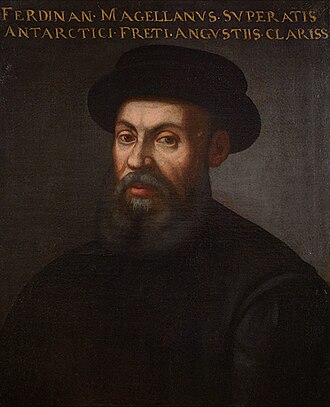
  1. 1519 Ferdinand Magellan sets sail from Sanlúcar de Barrameda with about 270 men on his expedition which ultimately culminates in the first circumnavigation of the globe. Source
  2. 1697 The Treaty of Ryswick is signed by France, England, Spain, the Holy Roman Empire and the Dutch Republic, ending the Nine Years' War. Source
  3. 1946 The first Cannes Film Festival is held, having been delayed for seven years due to World War II. Source

Did you know

In 1946, Six days after a referendum, King Christian X of Denmark annuls the declaration of independence of the Faroe Islands. This featured entry focuses on the immediate decision and its direct historical impact.

Did you know

An independence referendum was held in the Faroe Islands, an autonomous territory of the Kingdom of Denmark, on 14 September 1946. This helps explain why the event mattered beyond the initial announcement.

Did you know

Although a narrow majority of valid votes were cast in favour of the proposal (50.7%), the number of invalid votes exceeded the winning margin. This clarifies the institutional and public response around the event.

Did you know

Although independence was declared by the Speaker of the Løgting on 18 September 1946, the declaration was not recognised by Denmark. This shows how the event shaped policy and public communication in the same period.

Did you know

King Christian X of Denmark dissolved the Løgting and called fresh elections, which were won by unionist parties. This helps explain why the event mattered beyond the initial announcement.


Agnes_of_Poitou
Agnes of Poitou and Andrew I of Hungary meet to negotiate about the border territory of Burgenland.
Holy Roman Empress from 1046 to 1056
Agnes of Poitou was the queen of Germany from 1043 and empress of the Holy Roman Empire from 1046 until 1056 as the wife of Emperor Henry III. From 1056 to 1061, she ruled the Holy Roman Empire as regent during the minority of their son Henry IV.
1058
Battle_of_Fulford
At the Battle of Fulford, Harald Hardrada defeats earls Morcar and Edwin.
1066 battle near York, England
The Battle of Fulford was fought on the outskirts of the village of Fulford, just south of York in England, on 20 September 1066. King Harald III of Norway, also known as Harald Hardrada, a claimant to the English throne, and Tostig Godwinson, his English ally, fought and defeated the Northern Earls Edwin and Morcar.
1066
Saladin
Saladin begins the Siege of Jerusalem.
Founder of the Ayyubid dynasty (c. 1137 – 1193)
Salah ad-Din Yusuf ibn Ayyub, commonly known as Saladin, was a Kurdish commander and political leader. He was the founder of the Ayyubid dynasty and the first sultan of both Egypt and Syria. An important figure of the Third Crusade, he spearheaded the Muslim military effort against the Crusader states in the Levant. At the height of his power, the Ayyubid realm spanned Egypt, Syria, Upper Mesopotamia, the Hejaz, Yemen, and Nubia.
1187
Prussian_uprisings
The Great Prussian Uprising among the old Prussians begins against the Teutonic Knights.
13th-century revolts by Old Prussians against the Teutonic Knights
The Prussian uprisings were two major and three smaller uprisings by the Old Prussians, one of the Baltic tribes, against the Teutonic Knights that took place in the 13th century during the Prussian Crusade. The crusading military order, supported by the Popes and Christian Europe, sought to conquer and convert the pagan Prussians. In the first ten years of the crusade, five of the seven major Prussian clans fell under the control of the less numerous Teutonic Knights. However, the Prussians rose against their conquerors on five occasions.
1260
Antipope_Clement_VII
Cardinal Robert of Geneva is elected as Pope Clement VII, beginning the Papal schism.
Antipope from 1378 to 1394
Robert of Geneva was elected to the papacy as Clement VII by the cardinals who opposed Pope Urban VI and was the first antipope residing in Avignon, France. His election led to the Western Schism.
1378
1498_Meiō_earthquake
The Nankai tsunami washes away the building housing the Great Buddha at Kōtoku-in; it has been located outside ever since.
8.6 Ms earthquake and tsunami off the coast of Japan
The 1498 Meiō earthquake struck off the coast of Nankaidō, Japan, at approximately 08:00 local time on September 20, 1498. With an estimated magnitude of 8.6 Ms, it triggered a massive tsunami. The exact death toll from this event remains uncertain, but reports range from 5,000 to 41,000 casualties. The tsunami, caused by the Meiō Nankaidō earthquake, washed away the building that housed the statue of the Great Buddha at Kōtoku-in in Kamakura, although the statue itself remained intact.
1498
Ferdinand_Magellan
Ferdinand Magellan sets sail from Sanlúcar de Barrameda with about 270 men on his expedition which ultimately culminates in the first circumnavigation of the globe.
Portuguese explorer (1480–1521)
Ferdinand Magellan was a Portuguese explorer best known for planning and leading the 1519–1522 Spanish expedition to the East Indies. During this expedition, he became the first European to encounter the Strait of Magellan, performed the first European crossing of the Pacific Ocean, and made the first known European contact with the Philippines. Magellan was killed in battle in the Philippines in 1521, but his crew, commanded by Spanish navigator Juan Sebastián Elcano, completed the return trip to Spain in 1522, achieving the first circumnavigation of Earth in history.
1519
Babington_Plot
A number of conspirators in the Babington Plot are hanged, drawn and quartered.
1586 plot to assassinate Elizabeth I
The Babington Plot was a plan in 1586 to assassinate Queen Elizabeth I, a Protestant, and put Mary, Queen of Scots, her Catholic cousin, on the English throne. It led to Mary's execution, a result of a letter sent by Mary in which she consented to the assassination of Elizabeth.
1586
Grave,_Netherlands
The Spanish-held Dutch town of Grave capitulates to a besieging Dutch and English army under the command of Maurice of Orange.
City and former municipality in North Brabant, Netherlands
Grave is a city and former municipality in the Dutch province of North Brabant. The former municipality had a population of 12,486 in 2021. Grave is a member of the Dutch Association of Fortified Cities.
1602
Peace_of_Ryswick
The Treaty of Ryswick is signed by France, England, Spain, the Holy Roman Empire and the Dutch Republic, ending the Nine Years' War.
1697 peace treaties
The Peace of Ryswick, or Rijswijk, were a series of treaties signed in the Dutch city of Rijswijk between 20 September and 30 October 1697. They ended the 1688 to 1697 Nine Years' War between France and the Grand Alliance, which included the Dutch Republic, the Holy Roman Empire, England, Scotland, and Spain.
1697
Walking_Purchase
The Walking Purchase concludes, which forces the cession of 1.2 million acres (4,900 km2) of Lenape-Delaware tribal land to the Pennsylvania Colony.
1737 agreement between the Penn family and the Lenape Native Americans
The Walking Purchase, also known as the Walking Treaty, was a 1737 agreement between the family of William Penn, the original proprietor of the Province of Pennsylvania, and the Lenape native Indians. In the purchase, the Penn family and proprietors produced a deed to claim that a 1686 treaty with the Lenape ceded an area of 1,200,000 acres (4,860 km2) in present-day Lehigh Valley and Northeastern Pennsylvania in colonial Pennsylvania, which included a western land boundary extending as far west as a man could walk in a day and a half - its namesake.
1737
Battle_of_Valmy
French troops stop an allied invasion of France at the Battle of Valmy.
1792 battle during the War of the First Coalition
The Battle of Valmy, also known as the Cannonade of Valmy, was the first major victory by the army of France during the Revolutionary Wars that followed the French Revolution. The battle took place on 20 September 1792 as Prussian troops commanded by the Duke of Brunswick attempted to march on Paris. Generals François Kellermann and Charles Dumouriez stopped the advance near the northern village of Valmy in Champagne-Ardenne.
1792
Ragamuffin_War
The decade-long Ragamuffin War starts when rebels capture Porto Alegre in Brazil.
1835–45 Republican uprising in southern Brazil
The Ragamuffin War, also known as the Ragamuffin Revolution or Heroic Decade, was a republican uprising that began in southern Brazil during the regency period, centered in the province of Rio Grande do Sul and, for a time, extending into neighboring Santa Catarina. It began on 20 September 1835, when rebel forces seized Porto Alegre, and soon turned into a wider confrontation between Brazil's imperial government and an opposition coalition led by influential regional leaders, such as Bento Gonçalves and Antônio de Sousa Neto, who proclaimed the secession of the province and the creation of the Riograndense Republic following the rebel victory at the battle of Seival in 1836.
1835
American_Association_for_the_Advancement_of_Science
The American Association for the Advancement of Science is created.
International nonprofit organization
The American Association for the Advancement of Science (AAAS) is a United States–based international nonprofit with the stated mission of promoting cooperation among scientists, defending scientific freedom, encouraging scientific responsibility, and supporting scientific education and science outreach for the betterment of all humanity. AAAS was the first permanent organization established to promote science and engineering nationally and to represent the interests of American researchers from across all scientific fields. It is the world's largest general scientific society, with over 120,000 members, and is the publisher of the well-known scientific journal Science.
1848
Crimean_War
Crimean War: British and French troops defeat Russians at the Battle of Alma.
Tenth conflict of the Russo-Turkish wars (1853–1856)
The Crimean War was fought between Russia and an alliance of the Ottoman Empire, France, the United Kingdom, and Sardinia from October 1853 to February 1856. Geopolitical causes of the war included the Eastern question, the expansion of Russia in the preceding Russo-Turkish wars, and the British and French preference to preserve the Ottoman Empire to maintain the balance of power in the Concert of Europe.
1854
Indian_Rebellion_of_1857
The Indian Rebellion of 1857 ends with the recapture of Delhi by troops loyal to the East India Company.
Uprising against British Company rule
The Indian Rebellion of 1857 was a major uprising in India in 1857–58 against the rule of the British East India Company, which functioned as a sovereign power, including military forces, on behalf of the British Crown. The rebellion began on 10 May 1857 as a mutiny of sepoys of the company's garrison in Meerut, a town 40 miles (64 km) northeast of Delhi. It then erupted into other mutinies and civilian rebellions, chiefly in the upper Gangetic plain and central India, though incidents of revolt also occurred farther north and east. The rebellion posed a military threat to British power in that region, and was contained only with the rebels' defeat in Gwalior on 20 June 1858. On 1 November 1858, the British granted amnesty to all rebels not involved in murder, though they did not declare the hostilities to have formally ended until 8 July 1859.
1857
Edward_VII
The future King Edward VII of the United Kingdom begins the first visit to North America by a Prince of Wales.
King of the United Kingdom from 1901 to 1910
Edward VII was King of the United Kingdom and the British Dominions, and Emperor of India, from 22 January 1901 until his death in 1910.
1860
American_Civil_War
American Civil War: The Battle of Chickamauga, in northwestern Georgia, ends in a Confederate victory.
1861–1865 conflict in the United States
The American Civil War was a civil war in the United States between the Union and the Confederacy, which was formed in 1861 by states that had seceded from the Union to preserve slavery in the United States. The South saw slavery as threatened because of the election of Abraham Lincoln and the growing abolitionist movement in the North. The war ended with Union victory, the dissolution of the Confederacy and the abolition of slavery, freeing four million African Americans.
1863
Capture_of_Rome
The Bersaglieri corps enter Rome through the Porta Pia, and complete the unification of Italy.
1870 completion of Italian unification
The capture of Rome occurred on 20 September 1870, as forces of the Kingdom of Italy took control of the city and of the Papal States. After a plebiscite held on 2 October 1870, Rome was officially made capital of Italy on 3 February 1871, completing the unification of Italy (Risorgimento).
1870
John_Patteson_(bishop)
Bishop John Coleridge Patteson, first bishop of Melanesia, is martyred on Nukapu, now in the Solomon Islands.
19th-century English Anglican bishop and missionary (1827–1871)
John Coleridge Patteson was an English Anglican bishop, missionary to the South Sea Islands, and an accomplished linguist, learning 23 of the islands' more than 1,000 languages.
1871
Chester_A._Arthur
U.S.
President Chester A. Arthur is sworn in upon the death of James A. Garfield the previous day.
Chester Alan Arthur was the 21st president of the United States, serving from 1881 to 1885. A Republican from New York, he served as the 20th vice president under President James A. Garfield in 1881, assuming the presidency after Garfield's assassination. Arthur's administration saw the largest expansion of the U.S. Navy, the end of the so-called "spoils system", and the implementation of harsher restrictions for migrants entering from abroad.
1881
Charles_Duryea
Charles Duryea and his brother road-test the first American-made gasoline-powered automobile.
American automobile manufacturer
Charles Edgar Duryea was an American engineer. He was the engineer of the second working American gasoline-powered car and co-founder of Duryea Motor Wagon Company. He was born near Canton, Illinois, a son of George Washington Duryea and Louisa Melvina Turner, and died in Philadelphia, Pennsylvania, but spent most of his life working in Springfield, Massachusetts.
1893
RMS_Olympic
The White Star Line's RMS Olympic collides with the British warship HMS Hawke.
British ocean liner from 1911 to 1935
RMS Olympic was a British ocean liner and the lead ship of the White Star Line's trio of Olympic-class liners. Olympic had a career spanning 24 years from 1911 to 1935, in contrast to her short-lived sister ships, RMS Titanic and the Royal Navy hospital ship HMHS Britannic. This included service as a troopship with the name HMT Olympic during the First World War, which gained her the nickname "Old Reliable", and during which she rammed and sank the U-boat U-103. She returned to civilian service after the war and served successfully as an ocean liner throughout the 1920s and into the first half of the 1930s, although increased competition, and the slump in trade during the Great Depression after 1930, made her operation increasingly unprofitable. Olympic was withdrawn from service on 12 April 1935, and later sold for scrap, which was completed by 1939.
1911
Irish_War_of_Independence
Irish War of Independence: British police known as "Black and Tans" burn the town of Balbriggan and kill two local men in revenge for an IRA assassination.
1919–1921 war between Irish and British forces
The Irish War of Independence, also known as the Anglo-Irish War, was a guerrilla war fought in Ireland from 1919 to 1921 between the Irish Republican Army and British forces: the British Army, along with the quasi-military Royal Irish Constabulary (RIC) and its paramilitary forces the Auxiliaries and Ulster Special Constabulary (USC). It was part of the Irish revolutionary period.
1920
The_Holocaust_in_Lithuania
The Holocaust in Lithuania: Lithuanian Nazis and local police begin a mass execution of 403 Jews in Nemenčinė.
Genocide of Lithuanian Jews
The Holocaust resulted in the near total eradication of Lithuanian (Litvaks) and Polish Jews[a] in Generalbezirk Litauen of the Reichskommissariat Ostland in the Nazi-controlled Lithuania. Of approximately 208,000–210,000 Jews at the time of the Nazi invasion, an estimated 190,000 to 195,000 were killed before the end of World War II, most of them between June and December 1941. This genocide would also mark the beginning of Hitler's Final Solution. More than 95% of Lithuania's Jewish population was murdered over the three-year German occupation, a more complete destruction than befell any other country in the Holocaust. Historians attribute this to the massive collaboration in the genocide by the non-Jewish local paramilitaries, though the reasons for this collaboration are still debated. The Holocaust resulted in the largest loss of life in so short a period of time in the history of Lithuania.
1941
Cannes_Film_Festival
The first Cannes Film Festival is held, having been delayed for seven years due to World War II.
Annual film festival in France
The Cannes Film Festival is considered the most prestigious film festival in the world. Held in Cannes, France, it previews new films of all genres, including documentaries. Founded in 1946, the invitation-only festival is held annually at the Palais des Festivals et des Congrès. The festival was formally accredited by the FIAPF in 1951. Cannes is considered one of the "Big Three" European film festivals, alongside Venice and Berlin, as well as one of the "Big Five" international film festivals, alongside Venice, Berlin, Toronto and Sundance.
1946
Moomin_comic_strips
The Moomin comics, created by Tove Jansson and Lars Jansson, is published internationally in the London newspaper The Evening News.
Comic strip created by Finnish author Tove Jansson and cartoonist Lars Jansson
Moomin is a comic strip created by Swedish-speaking Finnish writer and artist Tove Jansson, and followed up by her younger brother Lars Jansson, featuring their Moomin family of characters. The first comic strip, entitled Mumintrollet och jordens undergång was for the Finland newspaper Ny Tid. It was written between 1947 and 1948, at the request of the editor, a friend of Jansson's, Atos Wirtanen. The series was mainly an adaptation of Comet in Moominland.
1954
The Treaty on Relations between the USSR and the GDR is signed.
Agreement to station Soviet Army troops in East Germany
The Treaty on Relations Between the USSR and GDR was a treaty between the Soviet Union and German Democratic Republic, commonly known as East Germany, signed on 20 September 1955. The treaty became the legal basis for the Group of Soviet Forces in Germany, and its successor, the Western Group of Forces to maintain its presence in Germany following the end of the Soviet occupation.
1955
Konstantinos_Dovas
Greek general Konstantinos Dovas becomes Prime Minister of Greece.
20th-century Greek military officer and politician
Konstantinos Dovas was a Greek general and interim Prime Minister.
1961
James_Meredith
James Meredith, an African American, is temporarily barred from entering the University of Mississippi.
American civil rights activist (born 1933)
James Howard Meredith is an American civil rights activist, writer, political adviser, and United States Air Force veteran who became, in 1962, the first African-American student admitted to the racially segregated University of Mississippi after the intervention of the federal government. Inspired by President John F. Kennedy's inaugural address, Meredith decided to exercise his constitutional rights and apply to the University of Mississippi. His goal was to put pressure on the Kennedy administration to enforce civil rights for African Americans. The admission of Meredith ignited the Ole Miss riot of 1962 where Meredith's life was threatened and 31,000 American servicemen were required to quell the violence – the largest ever invocation of the Insurrection Act of 1807.
1962
Following the Battle of Burki, the Indian Army captures Dograi in during the Indo-Pakistani War of 1965.
Battle of the Indo-Pakistani War of 1965
The Battle of Burki was a battle between the Indian and Pakistan Army during the Indo-Pakistani War of 1965 at Burki, a village that lies 11 km south-east of Lahore, Pakistan near the border with India and which is connected to Lahore by a bridge over the Bambawali-Ravi-Bedian Canal.
1965
Queen_Elizabeth_2
The Cunard Liner Queen Elizabeth 2 is launched in Clydebank, Scotland.
British ocean liner
Queen Elizabeth 2 (QE2) is a retired British ocean liner. Built by John Brown & Company on the River Clyde in Scotland for the Cunard Line, the ship was operated as a transatlantic liner and cruise ship from 1969 to 2008. She was laid up until converted into a floating hotel in Dubai.
1967
Hurricane_Irene–Olivia
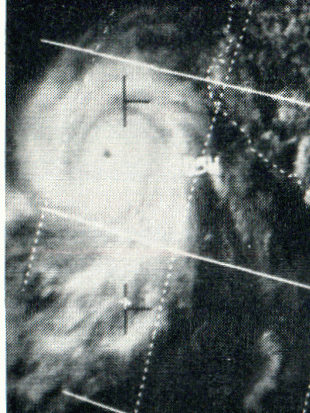
Having weakened after making landfall in Nicaragua the previous day, Hurricane Irene regains enough strength to be renamed Hurricane Olivia, making it the first known hurricane to cross from the Atlantic Ocean into the Pacific.
Category 3 Atlantic and Pacific hurricane in 1971
Hurricane Irene–Olivia was the first actively tracked tropical cyclone to move into the eastern Pacific Ocean from the Atlantic basin. It originated as a tropical depression on September 11, 1971, in the tropical Atlantic. The cyclone tracked nearly due westward at a low latitude, passing through the southern Windward Islands and later over northern South America. In the southwest Caribbean Sea, it intensified to a tropical storm and later a hurricane. Irene made landfall on southeastern Nicaragua on September 19, and maintained its circulation as it crossed the low-lying terrain of the country. Restrengthening after reaching the Pacific, Irene was renamed Hurricane Olivia, which ultimately attained peak winds of 115 mph (185 km/h). Olivia weakened significantly before moving ashore on the Baja California Peninsula on September 30; the next day it dissipated.
1971
Battle_of_the_Sexes_(tennis)
Billie Jean King beats Bobby Riggs in the Battle of the Sexes tennis match at the Houston Astrodome.
Intergender tennis matches
In tennis, "Battle of the Sexes" describes various exhibition matches played between a man and a woman, or a doubles match between two men and two women in one case. The term is most famously used for an internationally televised match in 1973 held at the Houston Astrodome between 55-year-old Bobby Riggs and 29-year-old Billie Jean King, which King won in three sets. The match was viewed by an estimated fifty million people in the United States and ninety million worldwide. King's win is considered a milestone in public acceptance of women's tennis.
1973
Jim_Croce
Singer Jim Croce, songwriter and musician Maury Muehleisen and four others die when their light aircraft crashes shortly after takeoff from Natchitoches Regional Airport in Louisiana.
American singer-songwriter (1943–1973)
James Joseph Croce was an American folk and rock singer-songwriter. Between 1966 and 1973, he released five studio albums and numerous singles. During this period, Croce took a series of odd jobs to pay bills while he continued to write and record songs as well as perform concerts. After Croce formed a partnership with songwriter and guitarist Maury Muehleisen in the early 1970s, his fortunes turned. Croce's breakthrough came in 1972, when his third album, You Don't Mess Around with Jim, produced three charting singles, including "Time in a Bottle", which reached number one after his death. The follow-up album Life and Times included the song "Bad, Bad Leroy Brown", the only number-one hit Croce had during his lifetime.
1973
Vietnam
Vietnam is admitted to the United Nations.
Country in Southeast Asia
Vietnam, officially the Socialist Republic of Viet Nam (SRV), is a country at the eastern edge of Mainland Southeast Asia. With an area of about 331,000 square kilometres and a population of over 102 million, it is the world's 16th-most populous country. One of two communist states in Southeast Asia, Vietnam is bordered by China to the north, and Laos and Cambodia to the west; it lies along the Gulf of Thailand to the southwest and the South China Sea to the east, where it has shared and disputed maritime borders with other countries. Its capital is Hanoi, while its largest city is Ho Chi Minh City.
1977
A French-supported coup d'état in the Central African Empire overthrows Emperor Bokassa I.
1979 French military operation in the Central African Republic
Operation Caban, also known as the 1979 Central African coup d’état, was a bloodless military operation by the French intelligence service SDECE in September 1979 to depose Emperor Bokassa I, reinstate the exiled former president David Dacko, and rename the Central African Empire back to Central African Republic.
1979
1982_NFL_season
NFL season: American football players in the National Football League begin a 57-day strike.
American football season
The 1982 NFL season was the 63rd regular season of the National Football League. A 57-day-long players' strike reduced the 1982 season from a 16-game schedule per team to an abbreviated nine-game schedule. Because of the shortened season, the NFL adopted a special 16-team playoff tournament; division standings were ignored for seeding. Eight teams from each conference were seeded 1–8 based on their regular season records. Two teams qualified for the playoffs despite losing records. The season ended with Super Bowl XVII when the Washington Redskins defeated the Miami Dolphins 27–17 at the Rose Bowl.
1982
1984_US_embassy_bombing_in_Beirut
A suicide bomber in a car attacks the U.S.
embassy in Beirut, Lebanon, killing twenty-two people.
On September 20, 1984, the Shi'a Islamic militant group Hezbollah, with support and direction from the Islamic Republic of Iran, carried out a suicide car bombing targeting the US embassy annex in East Beirut, Lebanon during the Lebanese Civil War. The attack killed 23 people and 1 attacker.
1984
USAir_Flight_5050
USAir Flight 5050 crashes into Bowery Bay during a rejected takeoff from LaGuardia Airport, killing two people.
1989 aviation accident in New York
USAir Flight 5050 was a passenger flight that crashed on takeoff from LaGuardia Airport in Queens, New York. As the Boeing 737-400 took off from LaGuardia's runway 31, the plane drifted to the left. After hearing a loud bang, the pilots attempted to reject the takeoff, but were unable to stop the plane short of the end of the runway. The plane continued past the end of the runway and plunged into Bowery Bay. Two passengers were killed.
1989
South_Ossetia
South Ossetia declares its independence from Georgia.
Partially recognised state in the South Caucasus
South Ossetia, formally known as the State of Alania since 2017, or originally the Republic of South Ossetia, is a partially recognised state in the South Caucasus. It has an officially stated population of just over 56,500 people (2022), who live in an area of 3,900 square kilometres (1,500 sq mi), with 33,000 living in the capital city, Tskhinvali. It de facto borders only Russia and Georgia.
1990
The United Kingdom's MI6 Secret Intelligence Service building is attacked by individuals using a Russian-built RPG-22 anti-tank missile.
Attack in London
On Wednesday 20 September 2000, the Real Irish Republican Army (RIRA) carried out an attack on MI6's SIS Building headquarters in Vauxhall, Lambeth, London. A Russian-built RPG-22 anti-tank rocket, fired 300 metres away from MI6 headquarters, struck the building on the south side of the eighth floor, causing superficial damage. No fatalities or injuries were recorded.
2000
War_on_terror
In an address to a joint session of Congress and the American people, U.S.
President George W. Bush declares a "war on terror".
The war on terror, officially the Global War on Terrorism (GWOT), is a global military campaign initiated by the United States in response to the September 11 attacks in 2001. A global conflict spanning multiple wars, some researchers and political scientists have argued that it replaced the Cold War.
2001
2003_Maldives_civil_unrest
Civil unrest in the Maldives breaks out after a prisoner is killed by guards.
On Saturday September 20, 2003 civil unrest broke out in Malé, the capital city of the Maldives. This unrest was provoked by the death of Hassan Evan Naseem at Maafushi Prison – located on a separate inhabited island – and the subsequent shooting at the same prison, that killed 3 and injured 17 others.
2003
Between 15,000 and 20,000 protesters march on Jena, Louisiana, United States, in support of six black youths who had been convicted of assaulting a white classmate.
Six black teenagers in Louisiana, convicted in a 2006 beating
The Jena Six were six black teenagers in Jena, Louisiana, United States, convicted in the 2006 beating of Justin Barker, a white student at the local Jena High School, which they also attended. Barker was injured on December 4, 2006, by the members of the Jena Six, and received treatment at an emergency room. While the case was pending, it was often cited by some media commentators as an example of racial injustice in the United States. Some commentators believed that the defendants had been charged initially with too-serious offenses and had been treated unfairly.
2007
Islamabad_Marriott_Hotel_bombing
A dump truck full of explosives detonates in front of the Marriott hotel in Islamabad, Pakistan, killing 54 people and injuring 266 others.
Suicide bombing at the Marriott Hotel in Pakistan on 20 September 2008
The Islamabad Marriott Hotel bombing occurred on the night of 20 September 2008, when a dumper truck filled with explosives was detonated in front of the Marriott Hotel in the Pakistani capital Islamabad, killing at least 54 people, injuring at least 266 and leaving a 60 ft (18 m) wide, 20 ft (6.1 m) deep crater outside the hotel. The majority of the casualties were Pakistanis; at least five foreign nationals were also killed and fifteen others reported injured. The attack occurred only hours after President Asif Ali Zardari made his first speech to the Pakistani parliament. The Marriott was the most prestigious hotel in the capital, and was located near government buildings, diplomatic missions, embassies and high commissions.
2008
Don't_ask,_don't_tell
The United States military ends its "don't ask, don't tell" policy, allowing gay men and women to serve openly for the first time.
1994–2011 US military LGBTQ policy
"Don't ask, don't tell" (DADT) was the official United States policy on military service of homosexual people for a period of over 17 years, starting in the mid-1990s. Instituted during the presidency of Bill Clinton, the policy was issued under Department of Defense Directive 1304.26 on December 21, 1993, and was in effect from February 28, 1994, until September 20, 2011. The policy prohibited military personnel from discriminating against or harassing closeted homosexual or bisexual service members or applicants, while barring openly gay, lesbian, or bisexual persons from military service. This relaxation of legal restrictions on service by gays, lesbians, and bisexuals in the armed forces was mandated by Public Law 103–160, which was signed November 30, 1993. The policy prohibited people who "demonstrate a propensity or intent to engage in homosexual acts" from serving in the United States Armed Forces, because their presence "would create an unacceptable risk to the high standards of morale, good order and discipline, and unit cohesion that are the essence of military capability".
2011
Hurricane_Maria
Hurricane Maria makes landfall in Puerto Rico as a powerful Category 4 hurricane, resulting in 2,975 deaths, US$90 billion in damage, and a major humanitarian crisis.
Category 5 Atlantic hurricane in 2017
Hurricane Maria was an extremely powerful and catastrophic tropical cyclone that affected the northeastern Caribbean in September 2017, particularly in the U.S. territory of Puerto Rico, which accounted for 2,975 of the 3,059 deaths. It is the deadliest and costliest hurricane to strike the archipelago and island of Puerto Rico, and is the deadliest hurricane to strike the country of Dominica and the territory of the U.S. Virgin Islands. The most intense tropical cyclone worldwide in 2017, Maria was the thirteenth named storm, eighth consecutive hurricane, fourth major hurricane, second Category 5 hurricane, and deadliest storm of the extremely active 2017 Atlantic hurricane season. With over 3,000 deaths and a minimum central pressure of 908 millibars (26.8 inHg), Maria was the twelfth most intense Atlantic hurricane on record, respectively. Total monetary losses are estimated at upwards of $91.61 billion, almost all of which came from Puerto Rico, ranking it as the fourth-costliest tropical cyclone on record.
2017
Sinking_of_MV_Nyerere
At least 161 people die after a ferry capsizes close to the pier on Ukara Island in Lake Victoria, Tanzania.
2018 ferry accident in Tanzania
MV Nyerere was a Tanzanian ferry that capsized on 20 September 2018 while travelling between the islands of Ukerewe and Ukara on Lake Victoria. The Tanzanian government have declared that 228 people died as a result of the capsizing while 41 could be rescued. The capsized ferry was successfully righted, retrieved and unloaded more than one week after the disaster.
2018
September_2019_climate_strikes
Roughly four million people, mostly students, demonstrate across the world to address climate change.
Sixteen-year-old Greta Thunberg from Sweden leads the demonstration in New York City.
The September 2019 climate strikes, also known as the Global Week for Future, were a series of international strikes and protests to demand action be taken to address climate change, which took place from 20 to 27 September 2019. The strikes' key dates were 20 September, which was three days before the United Nations Climate Summit, and 27 September. The protests took place across 4,500 locations in 150 countries. The event stemmed from the Fridays for Future school strike for climate movement, inspired by Swedish climate activist Greta Thunberg. The Guardian reported that roughly 6 million people participated in the events, whilst 350.org – a group that organised many of the protests – claim that 7.6 million people participated.
2019

History runs on facts, and this project runs on coffee!

Your support is incredibly helpful and genuinely appreciated.

Support with a coffee ☕