Article 231
One of the treaties that ended World War I

What was Article 231?
The Treaty of Versailles was a peace treaty signed on 28 June 1919. As the most important treaty of World War I, it ended the state of war between Germany and most of the Allied Powers. It was signed in the Palace of Versailles, exactly five years after the assassination of Archduke Franz Ferdinand, the proximate cause of the war. The other Central Powers on the German side signed separate treaties. Although the armistice of 11 November 1918 ended the actual fighting, and agreed certain principles and conditions including the payment of reparations, it took six months of Allied negotiations at the Paris Peace Conference to conclude the peace treaty. Germany was not allowed to participate in the negotiations before signing the treaty.

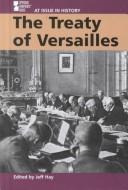 The Treaty of Versailles
Jeff Hay · 2002
The Treaty of Versailles
Jeff Hay · 2002
 Treaty of Versailles
Philander C. Knox · 1919
Treaty of Versailles
Philander C. Knox · 1919
 The fourteen points and the treaty of Versailles
G. M. Gathorne-Hardy · 1939
The fourteen points and the treaty of Versailles
G. M. Gathorne-Hardy · 1939
 A History of France from the Earliest Times to the Treaty of Versailles
William Stearns Davis · 2015
A History of France from the Earliest Times to the Treaty of Versailles
William Stearns Davis · 2015
 Aspects of British Policy and the Treaty of Versailles
B. J. C. McKercher · 2020
Aspects of British Policy and the Treaty of Versailles
B. J. C. McKercher · 2020
Background and consequences
The treaty required Germany to disarm, make territorial concessions, extradite alleged war criminals, agree to Kaiser Wilhelm being put on trial, recognise the independence of states whose territory had previously been part of the German Empire, and pay reparations to the Entente powers. The most critical and controversial provision in the treaty was: "The Allied and Associated Governments affirm and Germany accepts the responsibility of Germany and her allies for causing all the loss and damage to which the Allied and Associated Governments and their nationals have been subjected as a consequence of the war imposed upon them by the aggression of Germany and her allies." The other members of the Central Powers signed treaties containing similar articles. This article, Article 231, became known as the "War Guilt" clause.

Why it matters
Critics including John Maynard Keynes declared the treaty too harsh, styling it as a "Carthaginian peace." He also said the reparations were excessive and counterproductive with others stating that the reparations contributed significantly to the ensuing hyperinflation. On the other hand, prominent Allied figures such as French Marshal Ferdinand Foch criticized the treaty for treating Germany too leniently. This is still the subject of ongoing debate by historians and economists. The result of these competing and sometimes conflicting goals among the victors was a compromise that left no one satisfied. In particular, Germany was neither pacified nor conciliated, nor was it permanently weakened. The United States never ratified the Versailles Treaty; instead it made a separate peace treaty with Germany, albeit based on the Versailles Treaty.