Assassination of Jovenel Moïse
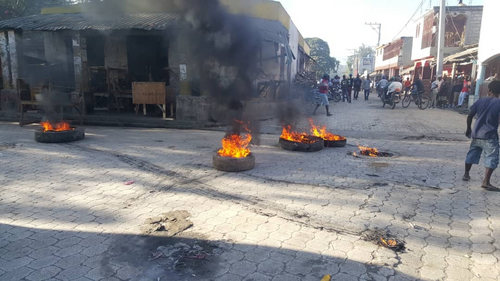
Ongoing socioeconomic and political crisis in Haiti
Cite this page
“Assassination of Jovenel Moïse.” thisDay, thisday.info/history/assassination-of-jovenel-mo-se/. Accessed 5 Oct. 2026.
Assassination of Jovenel Moïse. (n.d.). thisDay. Retrieved October 5, 2026, from https://thisday.info/history/assassination-of-jovenel-mo-se/
“Assassination of Jovenel Moïse.” thisDay. Accessed October 5, 2026. https://thisday.info/history/assassination-of-jovenel-mo-se/.
What was Assassination of Jovenel Moïse?
The existing political, economic, and social crisis began with protests across cities in Haiti on 7 July 2018 in response to rising fuel prices. These protests gradually evolved into demands for the resignation of President Jovenel Moïse. Led by opposition politician Jean-Charles Moïse (no relation), protesters demanded a transitional government, provision of social programs, and the prosecution of corrupt officials. From 2019 to 2021, massive protests called for the Jovenel Moïse government to resign. Moïse had come to power in the 2016 presidential election, which had voter turnout of only 21%. Previously, the 2015 elections had been annulled due to fraud. On 7 February 2021, supporters of the opposition allegedly attempted a coup d'état, leading to 23 arrests, as well as clashes between protestors and police.

Background and consequences
On 7 July 2021, President Moïse was assassinated, allegedly by a group of 28 foreign mercenaries; three of the suspected assassins were killed and 20 arrested, while police searched for the other gunmen and the organizers of the attack. On 20 July, Ariel Henry assumed the office of acting prime minister. In September 2022, further protests erupted in response to rising energy prices, and a federation of gangs created a blockade around Haiti's largest fuel depot. Combined with an outbreak of cholera and widespread acute hunger, the crisis led the United Nations Security Council to impose sanctions on Jimmy Chérizier, one of the country's gang leaders.
Why it matters
In 2022, Canada issued sanctions against three wealthy businessmen—Gilbert Bigio, Reynold Deeb, and Sherif Abdallah—whom they accused of "participat[ing] in gross and systematic human rights violations in Haiti" along with numerous politicians including Michel Martelly, Laurent Lamothe, Jean-Henry Céant, Joseph Lambert, and Youri Latortue. A UN report to the Security Council in October 2023 likewise identified Martelly, Deeb, and Latortue as having ties to gangs. In March 2024, acting Prime Minister Henry was prevented from returning to Haiti after a trip intended to secure a peace-keeping force of Kenyan police to fight gang violence. The power vacuum and chaos in the streets led to the scheduling of an emergency CARICOM meeting on 11 March.
Related on thisDay
Cite this page
“Assassination of Jovenel Moïse.” thisDay, thisday.info/history/assassination-of-jovenel-mo-se/. Accessed 5 Oct. 2026.
Assassination of Jovenel Moïse. (n.d.). thisDay. Retrieved October 5, 2026, from https://thisday.info/history/assassination-of-jovenel-mo-se/
“Assassination of Jovenel Moïse.” thisDay. Accessed October 5, 2026. https://thisday.info/history/assassination-of-jovenel-mo-se/.