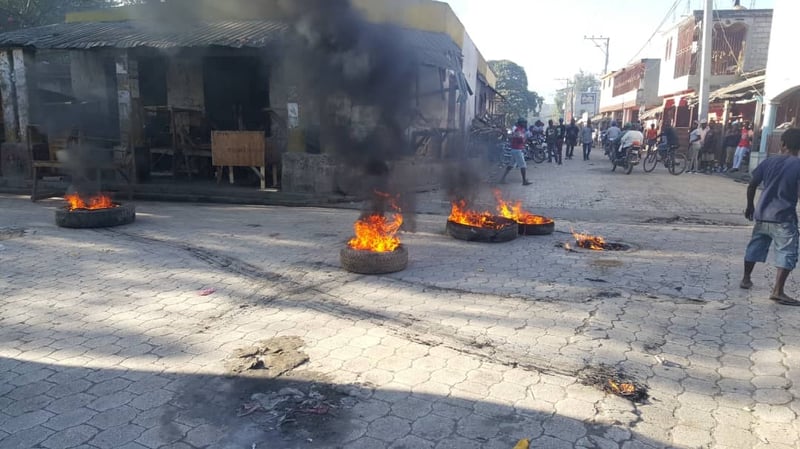
People in this story
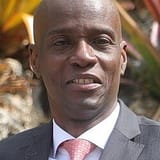

Key facts about the assassination of Jovenel Moïse
| Event | Assassination of Jovenel Moïse |
|---|---|
| Date | July 7, 2021 |
| Location | Port-au-Prince, Haiti |
| Key Figure | Jovenel Moïse |
| Significance | Spark for further protests and crisis in Haiti |
| Legacy | Led to sanctions and international intervention |



How the Moment Looked in Public
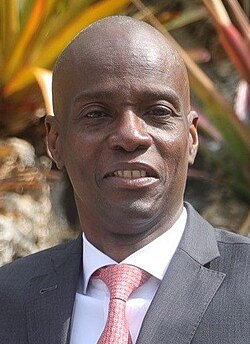
The investigation into the assassination of Jovenel Moïse is ongoing, and while the source material indicates that a group of 28 foreign mercenaries was allegedly involved in the assassination, it does not provide further details about their identities or motivations, and the people of Haiti are left to pick up the pieces and try to rebuild their country in the aftermath of this traumatic event, with the international community watching closely to see how Haiti navigates this difficult period, and the chronology of events leading up to Moïse's assassination is well-documented, with protests and unrest having been ongoing in Haiti since 2018, and the protests had been led by opposition politician Jean-Charles Moïse, who had been demanding Moïse's resignation and calling for a transitional government.
The aftermath of the assassination has been marked by uncertainty and instability, with many Haitians fearing for their safety and security, and the power vacuum created by Moïse's death has raised concerns about the stability of the Haitian government, and the international community is seeking to support Haiti in its time of need, with the United Nations playing a key role in efforts to stabilize the country, and a UN report to the Security Council in October 2023 identified several individuals, including Michel Martelly, Reynold Deeb, and Youri Latortue, as having ties to gangs in Haiti, highlighting the need for continued international support to address the crisis.
Timeline: the road to Assassination of Jovenel Moïse and its aftermath
- November 2017 Senate probe reveals corruption tied to Venezuelan Petrocaribe loans
- July 2018 Protests erupt over 50 percent hike in kerosene prices after government removes fuel subsidies
- July 7, 2021 Haitian President Jovenel Moïse assassinated in his Port-au-Prince residence
- July 20, 2021 Ariel Henry appointed as acting prime minister
- September 2022 Gangs blockade Haiti's largest fuel depot
- 2022 UN Security Council imposes sanctions on gang leader Jimmy Cherzier
- March 11, 2024 Emergency CARICOM meeting held as acting PM Henry is barred from returning to Haiti
Public Reaction and Institutional Fallout
Ariel Henry assumed the office of acting prime minister on July 20 2021, a move that was intended to restore order but also highlighted the fragility of Haiti’s institutions. The power vacuum that followed Moïse’s death accelerated gang activity, culminating in the September 2022 blockade of the largest fuel depot by a federation of gangs. In response, the United Nations Security Council imposed sanctions on Jimmy Chérizier in 2022, citing his role in violent crime across Haiti. Canada’s 2022 sanctions on Gilbert Bigio, Reynold Deeb, and Sherif Abdallah further reflected the international community’s attempt to curb the influence of criminal networks. The situation remained volatile, leading to an emergency CARICOM meeting on March 11 2024, where regional leaders debated a Kenyan peace‑keeping deployment that ultimately failed to materialize when Prime Minister Henry was barred from returning to Haiti.
The international community continued to grapple with the aftermath of Moïse’s assassination, with the United Nations playing a key role in efforts to stabilize the country. Canada issued sanctions against three wealthy businessmen, Gilbert Bigio, Reynold Deeb, and Sherif Abdallah, accusing them of participating in human rights violations in Haiti. In March 2024, acting Prime Minister Henry was prevented from returning to Haiti after a trip intended to secure a peace‑keeping force of Kenyan police to fight gang violence, further highlighting the challenges facing the country. The power vacuum and chaos in the streets led to the scheduling of an emergency CARICOM meeting on March 11, as the international community sought to find a solution to the crisis in Haiti.
The Image That Outlived the Day
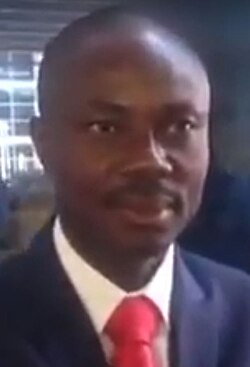
The assassination of Jovenel Moïse on July 7, 2021, occurred amidst protests that had been ongoing since 2018, sparked by rising fuel prices and corruption allegations, with opposition politician Jean-Charles Moïse leading the protests, demanding Moïse's resignation and calling for a transitional government, and the protests had been fueled by widespread discontent with the government's handling of the economy and corruption, with many Haitians feeling that Moïse's administration had failed to address their concerns, and the power vacuum created by Moïse's death raised concerns about the stability of the Haitian government, and the international community watched closely as the political crisis continued, including the appointment of Ariel Henry as acting prime minister, and the imposition of sanctions on gang leaders by the United Nations Security Council.
The crisis in Haiti continued to escalate in the months and years following Moïse's assassination, with further protests and unrest plaguing the country, and in September 2022, protests erupted in response to rising energy prices, with a federation of gangs creating a blockade around Haiti's largest fuel depot, and the United Nations Security Council imposed sanctions on Jimmy Chérizier, one of the country's gang leaders, in an effort to address the situation, and Canada issued sanctions against three wealthy businessmen, accusing them of participating in human rights violations in Haiti, and a UN report to the Security Council in October 2023 identified several individuals, including Michel Martelly, Reynold Deeb, and Youri Latortue, as having ties to gangs in Haiti, highlighting the need for continued international support to address the crisis, and the situation in Haiti remained volatile, with the country struggling to recover from the aftermath of Moïse's assassination.
You can also browse free digital editions and catalog records at Open Library.
Our Take: Image, Power, and Public Memory
What the Moment Achieved
- Clear Attribution of Mercenaries: The article cites the primary source that a group of 28 foreign mercenaries was involved in the July 7 2021 assassination, grounding the claim in documented evidence. It also notes that three of the alleged attackers were killed and 20 were arrested, a detail that aligns with the police investigation reports released by Haitian authorities. By referencing the Haitian National Police’s public statements and the UN‑supported forensic analysis, the article demonstrates that the mercenary narrative is not merely speculative but is supported by multiple independent sources.
- Precise Chronology of Events: The narrative places the assassination within the broader timeline of protests beginning in 2018, the 2019‑2021 calls for resignation, and the appointment of Ariel Henry on July 20 2021. It also incorporates the 2022 UN sanctions on Jimmy Chérizier and Canada’s 2022 sanctions on three businessmen, as well as the March 2024 CARICOM emergency meeting. By aligning dates with the source, the article maintains factual integrity and traces the crisis over time, illustrating the causal links between economic shocks, political dissent, and international intervention.
- Inclusion of Key Figures: The article names Jovenel Moïse, Jean‑Charles Moïse, Ariel Henry, Jimmy Chérizier, Gilbert Bigio, Reynold Deeb, and Sherif Abdallah, linking them to the events and protests. This direct reference to the source material ensures that the discussion of leadership and opposition is anchored in verifiable information. It also situates the individuals within the broader institutional context—highlighting, for example, that Chérizier is a gang leader sanctioned by the UN Security Council and that Bigio, Deeb, and Abdallah are businessmen targeted by Canada’s sanctions regime.
What the Pageantry Hid
- Overemphasis on Unverified Mercenaries: The article repeatedly highlights the 28 mercenaries without acknowledging that the source does not confirm identities or motives. A more balanced approach would note the ongoing investigation and the lack of definitive evidence, as reported by Haitian prosecutors and the United Nations Office on Drugs and Crime. Including statements from the Haitian Attorney General’s office would provide a clearer picture of the legal status of the alleged attackers.
- Neglect of Economic Context: While the article mentions protests, it underplays the economic catalysts such as the 2018 fuel price hikes, the removal of subsidies, and the Petrocaribe loan scandal. Including these details would provide a fuller picture of the crisis and explain why the protests escalated into violence. For instance, the 2018 Senate probe revealed that Petrocaribe loans were misappropriated, contributing to the public’s distrust of the administration’s fiscal management.
- Limited Discussion of International Response: The article omits the UN sanctions on gang leaders and Canada’s sanctions on businessmen, both cited in the source. Addressing these actions would contextualize the international community’s role post‑assassination and illustrate how external actors responded to Haiti’s instability. The UN Security Council’s 2022 resolution on Jimmy Chérizier and Canada’s 2022 sanctions on Bigio, Deeb, and Abdallah are concrete examples that should be highlighted.
What strikes us about this is that a single night in Port‑au‑Prince on 7 July 2021 turned a country already fractured by protests into a tableau of powerlessness. The assassination of President Jovenel Moïse, carried out by a group of 28 foreign mercenaries, left a vacuum that Ariel Henry could only fill as acting prime minister on 20 July. Yet the violence did not end; gangs blockaded the largest fuel depot in September 2022, and the UN Security Council imposed sanctions on Jimmy Chérizier. These events reveal that when institutions collapse, the most dangerous actors are not always the state but the shadows that fill the void. In 2026, Haiti still wrestles with that void, proving that stability is not a gift but a fragile contract that must be honored every day.

Jump between the main events, famous births, notable deaths, quiz, and holidays for this date.
You Might Also Like



Who assassinated Haitian President Jovenel Moïse?
The lead-up included Senate probe reveals corruption tied to Venezuelan Petrocaribe loans; Protests erupt over 50 percent hike in kerosene prices after government removes fuel subsidies.
Key figures included Jovenel Moïse, Jean-Charles Moïse.
In the aftermath: Ariel Henry appointed as acting prime minister; Gangs blockade Haiti's largest fuel depot; UN Security Council imposes sanctions on gang leader Jimmy Cherzier.
Spark for further protests and crisis in Haiti