Coronation of Justin I
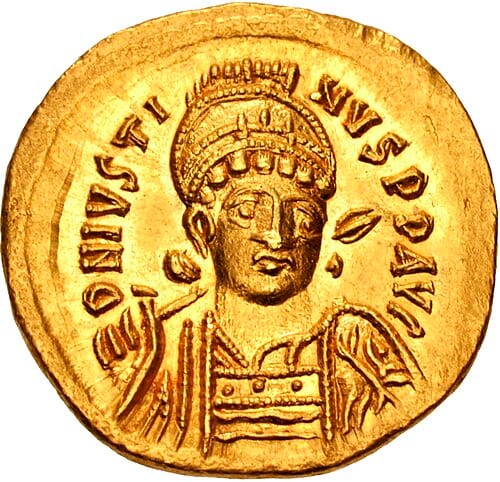
Roman emperor from 518 to 527
Cite this page
“Coronation of Justin I.” thisDay, thisday.info/history/coronation-of-justin-i/. Accessed 5 Oct. 2026.
Coronation of Justin I. (n.d.). thisDay. Retrieved October 5, 2026, from https://thisday.info/history/coronation-of-justin-i/
“Coronation of Justin I.” thisDay. Accessed October 5, 2026. https://thisday.info/history/coronation-of-justin-i/.
What was Coronation of Justin I?
Justin I (Latin: Iustinus; Ancient Greek: Ἰουστῖνος, romanized: Ioustînos; c. 450 – 1 August 527), also called Justin the Thracian (Latin: Iustinus Thrax; Ancient Greek: Ἰουστῖνος ὁ Θρᾷξ, romanized: Ioustînos ho Thrâix), was Eastern Roman emperor from 518 to 527. Born to a peasant family, he rose through the ranks of the army to become commander of the imperial guard and when Emperor Anastasius I Dicorus died, he out-maneouvered his rivals and was elected as his successor, in spite of being around 68 years old. His reign is significant for the founding of the Justinian dynasty that included his nephew, Justinian I, and three succeeding emperors. His consort was Empress Euphemia. Justin was noted for his strongly Chalcedonian Christian views.


Background and consequences
This facilitated the ending of the Acacian schism between the churches of Rome and Constantinople, resulting in good relations between Justin and the papacy. Throughout his reign, he stressed the religious nature of his office and passed edicts against various Christian groups seen at the time as non-Orthodox. In foreign affairs, he used religion as an instrument of state. He endeavoured to cultivate client states on the borders of the Empire, and avoided any significant warfare until late in his reign.

Related on thisDay
Cite this page
“Coronation of Justin I.” thisDay, thisday.info/history/coronation-of-justin-i/. Accessed 5 Oct. 2026.
Coronation of Justin I. (n.d.). thisDay. Retrieved October 5, 2026, from https://thisday.info/history/coronation-of-justin-i/
“Coronation of Justin I.” thisDay. Accessed October 5, 2026. https://thisday.info/history/coronation-of-justin-i/.