Frank Herbert's Dune Is Published After Twenty Rejections
1965 science fiction novel by Frank Herbert
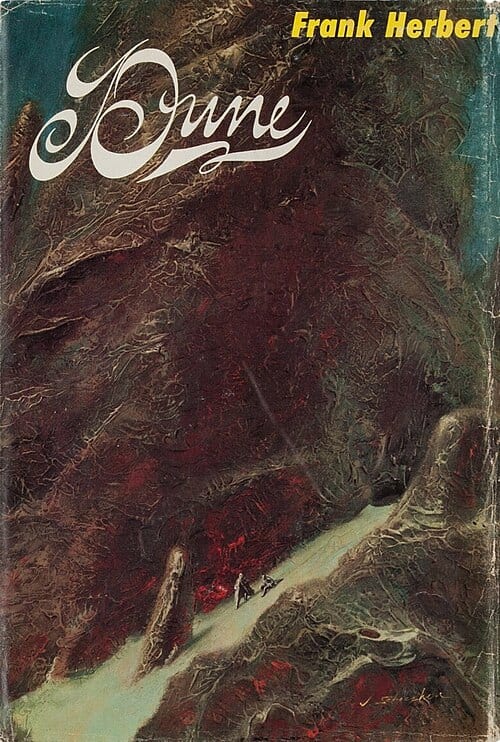
What was Frank Herbert's Dune Is Published After Twenty Rejections?
Dune is a 1965 epic science fiction novel by American author Frank Herbert, originally published as two separate serials (1963–64 novel Dune World and 1965 novel Prophet of Dune) in Analog magazine. It tied with Roger Zelazny's This Immortal for the Hugo Award for Best Novel and won the inaugural Nebula Award for Best Novel in 1966. It is the first installment of the Dune Chronicles. It is one of the world's best-selling science fiction novels. Dune is set in the distant future in a feudal interstellar society, descended from terrestrial humans, in which various noble houses control planetary fiefs.
It tells the story of young Paul Atreides, whose family reluctantly accepts the stewardship of the planet Arrakis. While the planet is an inhospitable and sparsely populated desert wasteland, it is the only source of melange or "spice", an enormously valuable drug that extends life and enhances mental abilities. Melange is also necessary for space navigation, which requires a kind of multidimensional awareness and foresight that only the drug provides. As melange can only be produced on Arrakis, control of the planet is a coveted and dangerous undertaking.
The story explores the multilayered interactions of politics, religion, ecology, technology, and human emotion as the factions of the empire confront each other in a struggle for the control of Arrakis and its spice. Herbert wrote five sequels: Dune Messiah, Children of Dune, God Emperor of Dune, Heretics of Dune, and Chapterhouse: Dune. Following Herbert's death in 1986, his son Brian Herbert and author Kevin J. Anderson continued the series in over a dozen additional novels since 1999. Adaptations of the novel to cinema have been notoriously difficult and complicated. In the 1970s, cult filmmaker Alejandro Jodorowsky attempted to make a film based on the novel.
