Eternal Light Peace Memorial
1938 Gettysburg Battlefield monument
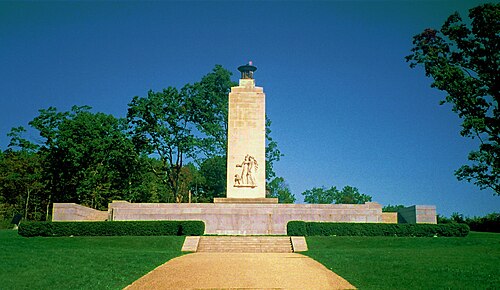
Dedication and Design
The Eternal Light Peace Memorial was dedicated on July 3, 1938, by President Franklin D. Roosevelt, commemorating the 50th anniversary of the 1913 Gettysburg reunion, which itself marked the 50th anniversary of the 1863 Battle of Gettysburg. The memorial features a natural gas flame in a one-ton bronze urn, situated atop a tower on a stone pedestrian terrace. This design allows for views from the terraced hill summit over approximately 400 square miles, with the flame visible from 20 miles away.
The memorial's construction and design were the result of efforts by the Gettysburg Peace Memorial Association, with key individuals such as George N. Lockwood, A. G. Harris, Martin V. Stone, and William Barnes contributing to its development. The association's work ensured that the memorial would be a lasting tribute to the unity and peace that the reunion represented.
The choice of a natural gas flame was significant, as it symbolized the enduring nature of the peace and unity that the memorial represented. The flame's visibility from a distance of 20 miles underscored the memorial's importance as a beacon of hope and reconciliation.
Historical Context and Significance
The Eternal Light Peace Memorial was dedicated in the context of the 50th anniversary of the 1913 Gettysburg reunion, which brought together Union and Confederate veterans in a spirit of unity and reconciliation. The reunion, held from June 29 to July 6, 1913, was a significant event in American history, marking a turning point in the nation's healing process after the Civil War.
The memorial's dedication in 1938, 25 years after the reunion, served as a reminder of the ongoing importance of unity and peace in American society. President Roosevelt's presence at the dedication ceremony underscored the federal government's commitment to these values, and the memorial's design and construction reflected the efforts of individuals and organizations working towards these goals.
The Eternal Light Peace Memorial's historical significance extends beyond its dedication and design, as it has become a symbol of the nation's ongoing struggle to balance unity and diversity. The memorial's flame, which has been extinguished and restored over the years, serves as a reminder of the challenges and complexities of maintaining peace and unity in the face of conflict and division.
Legacy and Preservation
The Eternal Light Peace Memorial has become an integral part of the Gettysburg National Military Park, attracting visitors from across the United States and around the world. The memorial's flame has been maintained over the years, with periodic extinguishments and restorations reflecting the complexities of preserving a natural gas flame in a outdoor setting.
The National Park Service has played a crucial role in the memorial's preservation, working to ensure that the flame remains a symbol of unity and peace for future generations. The Gettysburg Peace Memorial Association's efforts have also been instrumental in maintaining the memorial and promoting its significance as a national historic landmark.
The Eternal Light Peace Memorial's legacy extends beyond its physical presence, as it has become a symbol of the power of unity and reconciliation in American society. The memorial's flame continues to inspire visitors and serve as a reminder of the importance of working towards peace and unity in the face of conflict and division.
Conclusion and Reflection
The Eternal Light Peace Memorial's dedication on July 3, 1938, marked a significant moment in American history, as it commemorated the 50th anniversary of the 1913 Gettysburg reunion and the 75th anniversary of the Battle of Gettysburg. The memorial's flame has endured as a symbol of unity and peace, inspiring generations of Americans to work towards a more perfect union.
The memorial's history and significance serve as a reminder of the complexities and challenges of maintaining peace and unity in the face of conflict and division. The efforts of individuals and organizations, such as the Gettysburg Peace Memorial Association and the National Park Service, have been instrumental in preserving the memorial and promoting its significance as a national historic landmark.
The Eternal Light Peace Memorial's flame continues to burn, a beacon of hope and reconciliation in a world marked by conflict and division. As a symbol of the power of unity and peace, the memorial remains an important part of American history and culture, inspiring visitors and promoting reflection on the nation's ongoing struggle to balance unity and diversity.