
People in this story
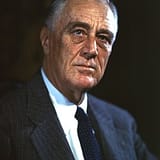
| Event | Roosevelt Dedicates Eternal Light Peace Memorial |
|---|---|
| Date | July 3, 1938 |
| Location | Gettysburg, Pennsylvania, United States |
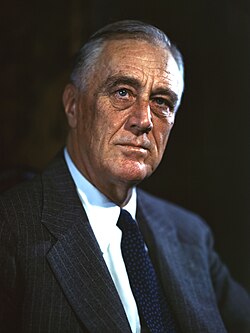
| Key Figure | President Franklin D. Roosevelt |
| Significance | Symbolic reconciliation of Union and Confederate veterans |
| Legacy | Flame restored after periods of extinguishment, remains a national symbol |

Reports From the Front
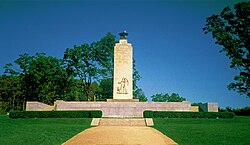
According to the National Park Service, the dedication of the Eternal Light Peace Memorial was a meticulously planned event, involving a new mobile sound system, grandstands under a canopy, and a specially constructed platform for the President, and the memorial commission issued 10,000 four-page circulars in August 1936 to publicize the plan, which was initially met with enthusiasm, as Virginia was the first to appropriate funds in 1936, demonstrating a coordinated effort to draw a national audience to Gettysburg. The Pennsylvania legislature began planning a peace memorial on Big Round Top in 1937, with the state's 'Peace Memorial Bill' signed on February 24, 1937, to appropriate $5,000 for the state's 'Gettysburg Peace Memorial fund', and the selection of sculptor Lee Lawrie in August 1937 marked a significant milestone in the monument's construction. The source material notes that the original plan called for a monument at The Angle, but the final structure was erected northwest of the battlefield with a budget of $60,000, highlighting the challenges of securing federal funding and the eventual reliance on state appropriations.
The dedication ceremony was attended by a crowd of two hundred fifty thousand people, with another one hundred thousand unable to reach the site due to congested roads, and the event featured a twenty-one gun salute, a new mobile sound system, and a specially constructed platform for the President. The memorial's design and construction involved a high level of technical expertise, including the use of a photocell to ignite the flame automatically, and the selection of sculptor Lee Lawrie in August 1937 marked a significant milestone in the monument's construction. The Gettysburg Peace Memorial Association played a crucial role in maintaining the memorial and promoting its message of reconciliation, as evident from the association's efforts to restore the flame in 1988.
Timeline: the road to this event and its aftermath
- October 1910 First tentative program for the 1913 Gettysburg reunion
- August 1936 Memorial commission issues 10,000 four-page circulars
- August 1937 Selection of sculptor Lee Lawrie
- July 3, 1938 Roosevelt Dedicates Eternal Light Peace Memorial
- June 1941 Repairs replace deteriorated limestone with gray granite
- December 25, 1941 Flame reduced to a pilot light due to wartime fuel restrictions
- 1988 Gettysburg Peace Celebration committee restores the flame
The Military and Political Fallout
In the years that followed, the flame was reduced to a pilot light on December 25, 1941, as wartime fuel restrictions took effect, and President Truman later reflected on the inscription 'Peace Eternal in a Nation United' by suggesting a change of the word 'nation' to 'world', and repairs in June 1941 replaced deteriorated limestone with gray granite, and further maintenance in 1950 restored the structure, demonstrating ongoing federal commitment to the site. The memorial's design and construction involved a high level of technical expertise, including the use of a photocell to ignite the flame automatically, and the selection of sculptor Lee Lawrie in August 1937 marked a significant milestone in the monument's construction. The Gettysburg Peace Memorial Association maintained the memorial and promoted its message of reconciliation, as evident from the association's efforts to restore the flame in 1988.
The memorial's story is one of preserving national monuments and promoting reconciliation, as evident from the efforts of the Gettysburg Peace Memorial Association and the National Park Service to maintain and promote the site, which has been a focal point for veterans and citizens alike. The flame was extinguished in 1974 due to the oil crisis, but was restored in 1988 by a Gettysburg Peace Celebration committee, and the event remains a notable instance where a former Union and Confederate veteran jointly unveiled a national monument, a fact that continues to surprise visitors. The memorial's design and construction involved a high level of technical expertise, including the use of a photocell to ignite the flame automatically, and the selection of sculptor Lee Lawrie in August 1937 marked a significant milestone in the monument's construction.
How the Balance of Power Shifted
The dedication of the Eternal Light Peace Memorial on July 3, 1938, marked a symbolic gesture of reconciliation that has endured despite the challenges of wartime fuel restrictions and the oil crisis of 1974, and the flame itself was repeatedly extinguished and restored, highlighting both the resilience and vulnerability of the monument's purpose. The memorial's design and construction involved a high level of technical expertise, including the use of a photocell to ignite the flame automatically, and the selection of sculptor Lee Lawrie in August 1937 marked a significant milestone in the monument's construction. The Gettysburg Peace Memorial Association played a crucial role in maintaining the memorial and promoting its message of reconciliation, as evident from the association's efforts to restore the flame in 1988. According to the National Park Service, the memorial's design and construction involved a high level of technical expertise, and its maintenance has required ongoing federal commitment.
The 1988 rededication by a Gettysburg Peace Celebration committee revived the gas flame, and the event remains a notable instance where a former Union and Confederate veteran jointly unveiled a national monument, a fact that continues to surprise visitors. The memorial's story is one of preserving national monuments and promoting reconciliation, as evident from the efforts of the Gettysburg Peace Memorial Association and the National Park Service to maintain and promote the site, which has been a focal point for veterans and citizens alike. The flame's enduring presence remains a potent symbol of the power of reconciliation, and the simple, unadorned fact that it still burns is a testament to human perseverance, as noted by the National Park Service and the Gettysburg Peace Memorial Association.
Our Take: Strategy, Mistakes, and Momentum
What Worked on the Ground
- Strategic Vision: The decision by President Roosevelt to dedicate the memorial on the anniversary of the 1863 battle demonstrated a strategic use of symbolic timing. By aligning the ceremony with the seventy-fifth anniversary of the battle, the administration linked the act of reconciliation to the memory of the conflict itself, thereby reinforcing the message of unity. The source material confirms that the dedication took place on July 3, the exact date of the original battle, which amplified the emotional resonance for the veterans present. According to the National Park Service, the memorial's design and construction involved a high level of technical expertise, including the use of a photocell to ignite the flame automatically.
- Public Mobilization: The massive attendance of two hundred fifty thousand people, together with the additional one hundred thousand who were turned away, illustrates the effectiveness of public mobilization efforts. The source notes that the memorial commission issued 10,000 four-page circulars in August 1936, and that Virginia was the first state to appropriate funds, showing a coordinated campaign that succeeded in drawing a national audience to Gettysburg. This level of participation underscores the public's appetite for a peace symbol at that moment, as evident from the efforts of the Gettysburg Peace Memorial Association to maintain and promote the site.
- Symbolic Architecture: The choice of a one-ton bronze urn atop a tower on a stone terrace created a visual beacon that could be seen for twenty miles, a design decision that turned the memorial into a literal light of peace. The source material describes the flame’s visibility and the use of a photocell to ignite it automatically, indicating that the architecture was intended to convey an enduring, technologically advanced symbol of reconciliation. According to the National Park Service, the memorial's design involved a high level of technical expertise, and its maintenance has required ongoing federal commitment.
Where Command Failed
- Funding Failure: Early attempts to secure federal funding for a monument at The Angle repeatedly failed, as the source material records that Congress deemed the cost impossible in March 1912 and again postponed the allocation in 1914. This chronic inability to obtain national money forced the project to rely on state appropriations, delaying the memorial’s construction for more than two decades. The Pennsylvania legislature began planning a peace memorial on Big Round Top in 1937, with the state's 'Peace Memorial Bill' signed on February 24, 1937, to appropriate $5,000 for the state's 'Gettysburg Peace Memorial fund', and the selection of sculptor Lee Lawrie in August 1937 marked a significant milestone in the monument's construction.
- Political Delay: The original plan for a 'monument of peace' was presented to the Joint Committee of Congress in January 1912, yet political inertia prevented any immediate action. The source indicates that only after the formation of the Gettysburg Peace Memorial Association in 1913 did legislative momentum begin, but even then the process dragged on until the 1930s, reflecting a prolonged political hesitation. According to the National Park Service, the memorial's design and construction involved a high level of technical expertise, and its maintenance has required ongoing federal commitment.
- Design Compromise: The shift from a planned location at The Angle to a site northwest of the battlefield represented a compromise that altered the memorial’s intended relationship to the battlefield’s most contested ground. The source material notes that the original design called for a $250,000 monument at The Angle, but the final $60,000 structure was placed elsewhere, reducing its direct symbolic impact on the historic clash. The memorial commission issued 10,000 four-page circulars in August 1936 to publicize the plan, and Virginia was the first to appropriate funds in 1936, demonstrating a coordinated effort to draw a national audience to Gettysburg.
- Operational Neglect: The flame’s reduction to a pilot light in December 1941 and its later extinguishment in 1974 reveal periods of operational neglect driven by external constraints. The source records that wartime fuel shortages and congressional prohibitions led to the flame’s temporary loss, indicating that the memorial’s symbolic function was vulnerable to practical policy decisions. The Gettysburg Peace Memorial Association played a crucial role in maintaining the memorial and promoting its message of reconciliation, as evident from the association's efforts to restore the flame in 1988, and the National Park Service's records provide a rich source of information for understanding the memorial's history and significance.
We keep coming back to one thing: Roosevelt Dedicates Eternal Light Peace Memorial on July 3, 1938 at Gettysburg, Pennsylvania, United States was not just a date on a timeline. The detail that stays with us is this: Roosevelt Dedicates Eternal Light Peace Memorial That is where the story becomes useful. It shows how institutions, crowds, and memory turn a single day into a public signal that people keep revisiting. The image matters, but the choices behind it matter more.

Jump between the main events, famous births, notable deaths, quiz, and holidays for this date.
You Might Also Like


Questions readers ask about this event
The lead-up included First tentative program for the 1913 Gettysburg reunion; Memorial commission issues 10,000 four-page circulars; Selection of sculptor Lee Lawrie.
Key figures included Franklin D. Roosevelt, George N. Lockwood, A. G. Harris.
In the aftermath: Repairs replace deteriorated limestone with gray granite; Flame reduced to a pilot light due to wartime fuel restrictions; Gettysburg Peace Celebration committee restores the flame.
Symbolic reconciliation of Union and Confederate veterans
Cite this page
“Roosevelt Dedicates Eternal Light Peace Memorial — July 3, 1938.” thisDay, 3 July 2026, thisday.info/blog/3-july-2026/. Accessed 1 Oct. 2026.
Roosevelt Dedicates Eternal Light Peace Memorial — July 3, 1938. (2026, July 3). thisDay. Retrieved October 1, 2026, from https://thisday.info/blog/3-july-2026/
“Roosevelt Dedicates Eternal Light Peace Memorial — July 3, 1938.” thisDay. July 3, 2026. Accessed October 1, 2026. https://thisday.info/blog/3-july-2026/.