German U-boat
German submarine
Cite this page
“German U-boat.” thisDay, thisday.info/history/german-u-boat/. Accessed 19 Oct. 2026.
German U-boat. (n.d.). thisDay. Retrieved October 19, 2026, from https://thisday.info/history/german-u-boat/
“German U-boat.” thisDay. Accessed October 19, 2026. https://thisday.info/history/german-u-boat/.
What was German U-boat?
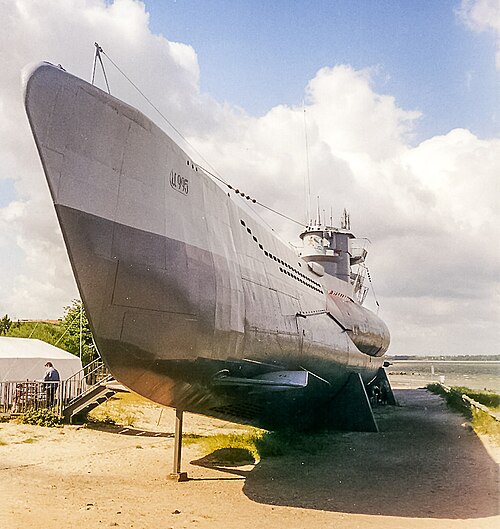
U-boats are naval submarines operated by Germany, especially during World War I and World War II. The term is an anglicized form of the German word U-Boot [ˈuːboːt] , a shortening of Unterseeboot (lit. 'under-sea boat'). Austro-Hungarian Navy submarines were also known as U-boats. U-boats are especially known for their use in unrestricted submarine warfare in both world wars, attempting to disrupt merchant traffic towards the UK and force the UK out of the war. In World War I, Germany intermittently waged unrestricted submarine warfare against the UK: a first campaign in 1915 was abandoned after strong protests from the US but in February 1917 the Germans, facing deadlock on the continent, saw no other option than to resume the campaign.





Background and consequences
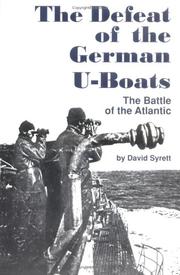
The renewed campaign failed to achieve its goal mainly because of the introduction of convoys. Instead the campaign ensured final defeat as the campaign was a contributing factor to the entry of the US in the First World War. In World War II, Karl Dönitz, supreme commander of the Kriegsmarine's U-boat arm (Befehlshaber der Unterseeboote), was convinced the UK and its convoys could be defeated by new tactics, and tried to focus on convoy battles. Though U-boat tactics initially saw success in the Battle of the Atlantic, greatly disrupting Allied shipping, improved convoy and anti-submarine tactics such as high-frequency direction finding and the Hedgehog anti-submarine system began to take a toll on the German U-boat force.

Why it matters
This ultimately came to a head in May 1943, known as Black May, in which U-boat losses began to outpace their effect on shipping.
Related on thisDay
Cite this page
“German U-boat.” thisDay, thisday.info/history/german-u-boat/. Accessed 19 Oct. 2026.
German U-boat. (n.d.). thisDay. Retrieved October 19, 2026, from https://thisday.info/history/german-u-boat/
“German U-boat.” thisDay. Accessed October 19, 2026. https://thisday.info/history/german-u-boat/.