Magna Carta
English charter of freedoms made in 1215

What was Magna Carta?
Magna Carta (Medieval Latin for "Great Charter"), sometimes spelled Magna Charta, is a royal charter of rights sealed by King John of England at Runnymede, near Windsor, on 15 June 1215. First drafted by the Archbishop of Canterbury, Cardinal Stephen Langton, to make peace between the unpopular king and a group of rebel barons who demanded that the King confirm the Charter of Liberties, it promised the protection of church rights, protection for the barons from illegal imprisonment, access to swift and impartial justice, and limitations on feudal payments to the Crown, to be implemented through a council of 25 barons. Neither side stood by their commitments, and the charter was annulled by Pope Innocent III, leading to the First Barons' War.

 Magna Carta
Dan Jones · 2014
Magna Carta
Dan Jones · 2014
 Magna Carta ancestry
Douglas Richardson · 2005
[ Review of]: The governance of mediaeval England from the Conquest to Magna Carta. By H. G. Richardson and G. O. Sayler
S. B. Chrimes · 1964
Magna Carta ancestry
Douglas Richardson · 2005
[ Review of]: The governance of mediaeval England from the Conquest to Magna Carta. By H. G. Richardson and G. O. Sayler
S. B. Chrimes · 1964
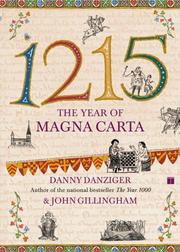 1215
John Gillingham · 2003
1215
John Gillingham · 2003
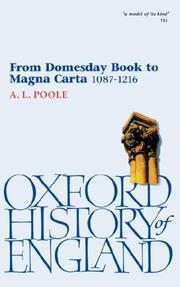 From Domesday book to Magna Carta, 1087-1216
Austin Lane Poole · 1951
From Domesday book to Magna Carta, 1087-1216
Austin Lane Poole · 1951
Background and consequences
After John's death, the regency government of his young son, Henry III, reissued the document in 1216, stripped of some of its more radical content, in an unsuccessful bid to build political support for their cause. At the end of the war in 1217, it formed part of the peace treaty agreed at Lambeth, where the document acquired the name "Magna Carta", to distinguish it from the smaller Charter of the Forest, which was issued at the same time. Short of funds, Henry reissued the charter again in 1225 in exchange for a grant of new taxes. His son, Edward I, repeated the exercise in 1297, this time confirming it as part of England's statute law.

Why it matters
However, Magna Carta was not unique; other legal documents of its time, both in England and beyond, made broadly similar statements of rights and limitations on the powers of the Crown. The charter became part of English political life and was typically renewed by each monarch in turn. As time went by and the fledgling Parliament of England passed new laws, it lost some of its practical significance. At the end of the 16th century, there was an upsurge of interest in Magna Carta. Lawyers and historians at the time believed that there was an ancient English constitution, going back to the days of the Anglo-Saxons, that protected individual English freedoms.