EventKing John of England puts his seal to Magna Carta
DateJune 15, 1215
LocationRunnymede, England
Key FigureKing John of England
SignificanceEstablished key rights and limited the power of the monarch
LegacyInfluenced the development of constitutional law and human rights
Did You Know?
Did you know
The Magna Carta was not just a single document, but a collection of 63 clauses that addressed a wide range of issues, from the rights of the church to the treatment of women and the protection of the environment. One of the most significant clauses, Clause 39, states that 'no free man shall be seized or imprisoned, or stripped of his rights and possessions, or outlawed or exiled, nor will we proceed with force against him, except by the lawful judgement of his equals or by the law of the land.' This clause has been interpreted as a cornerstone of due process and the protection of individual rights.
Did you know
The signing of the Magna Carta was not a one-time event, but rather the culmination of a long process of negotiation and conflict between King John and his barons. The barons, led by Stephen Langton, the Archbishop of Canterbury, had been seeking to limit the power of the monarch and establish clear rules and procedures for governance. The Magna Carta was the result of a compromise between the two sides, and its provisions reflect the complex and often contentious nature of the negotiations.
Did you know
Despite its significance, the Magna Carta was not widely known or celebrated until the 17th century, when it became a symbol of the struggle for liberty and constitutional government. The document was largely forgotten in the centuries following its signing, and it was not until the English Civil War that it became a rallying cry for those seeking to limit the power of the monarch and establish a more democratic form of government.
Did you know
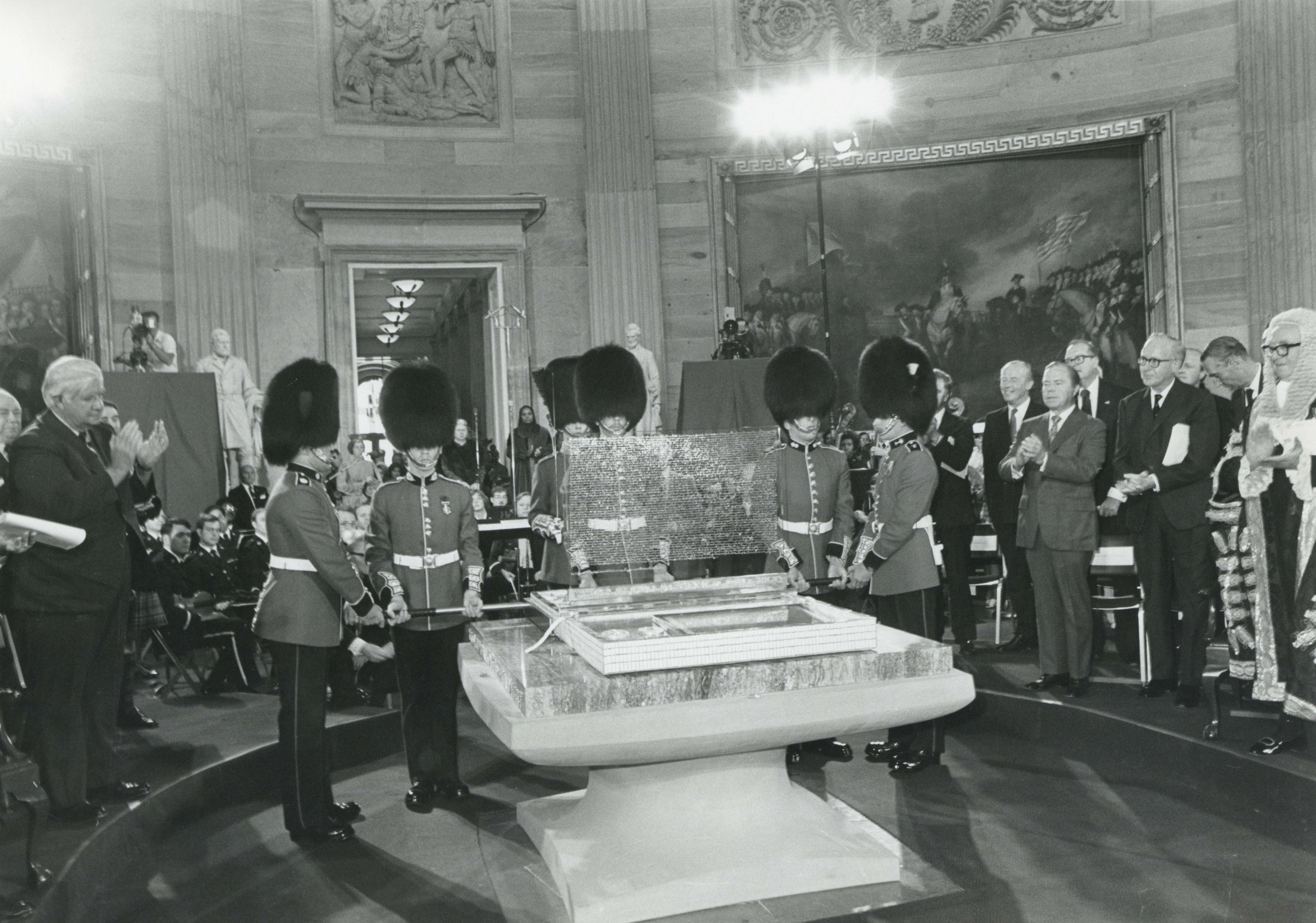
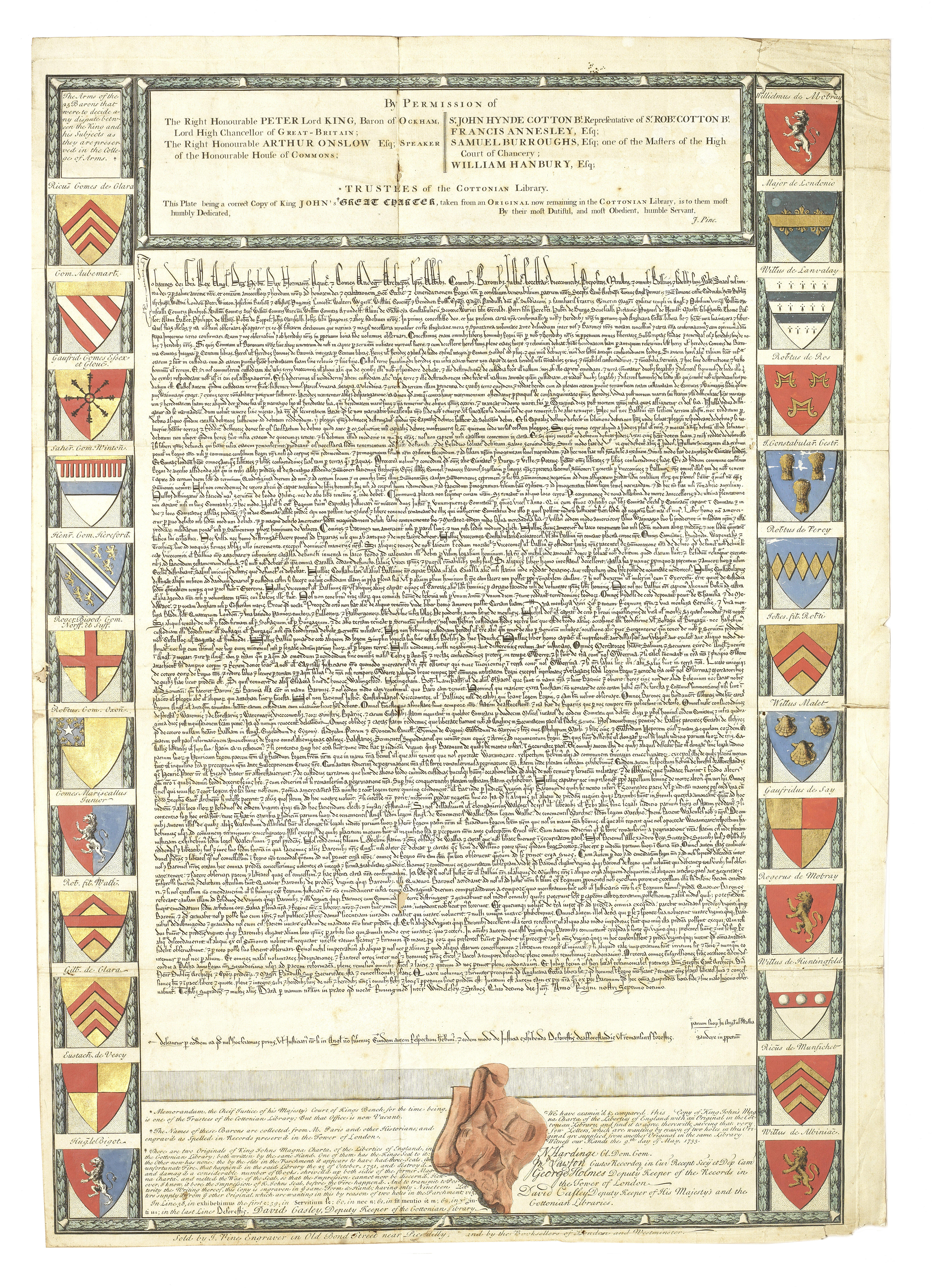
Only four original copies of the 1215 Magna Carta survive today: two are held by the British Library, with the others at Lincoln Castle and Salisbury Cathedral, each inscribed in heavily abbreviated medieval Latin on a single sheet of sheepskin parchment.
Did you know
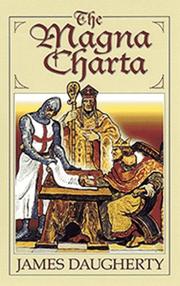
King John never actually signed the Magna Carta. Following the custom of the age, he authenticated it by pressing his great seal into wax, and within ten weeks he had persuaded Pope Innocent III to declare the charter null and void.
On June 15, 1215, King John of England put his seal to the Magna Carta, a document that would become a cornerstone of liberty and human rights, as recorded by the chronicler Roger of Wendover in his Flores Historiarum. The Magna Carta was the result of a long process of negotiation and conflict between King John and his barons, who were seeking to limit the power of the monarch and establish clear rules and procedures for governance, as outlined in the Articles of the Barons. The document consisted of 63 clauses, which addressed a wide range of issues, from the rights of the church to the treatment of women and the protection of the environment. Clause 39 states that 'no free man shall be seized or imprisoned, or stripped of his rights and possessions, or outlawed or exiled, nor will we proceed with force against him, except by the lawful judgement of his equals or by the law of the land,' as noted by the historian David Carpenter in his book The Struggle for Mastery.
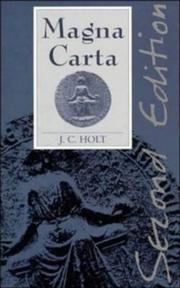
The signing of the Magna Carta marked a major shift in the balance of power between the monarch and the nobility, as discussed by the historian J.C. Holt in his book Magna Carta. The document established the principle that the king was not above the law, and that even the most powerful individuals were subject to the rule of law. This principle influenced the creation of similar documents, such as the United States Constitution and the Universal Declaration of Human Rights, as noted by the Supreme Court Justice Joseph Story in his Commentaries on the Constitution of the United States.
Explore June 15 in History
Jump between the main events, famous births, notable deaths, and quiz for this date.
According to the chronicler Roger of Wendover, the signing of the Magna Carta took place in a field near the town of Runnymede, where King John and his barons had gathered to negotiate a settlement. The chronicler describes the scene as one of great solemnity, with the king and his barons gathered around a table, where the document was read aloud and signed by the king. As noted by the historian David Carpenter in his book The Struggle for Mastery, the king was reluctant to sign the document, and was only persuaded to do so by the threat of violence from his barons. The Letters of Pope Innocent III provide further insight into the negotiations, with the pope urging King John to accept the terms of the Magna Carta and avoid further conflict with his barons.
The account of the signing of the Magna Carta by Roger of Wendover is supported by other contemporary sources, including the Articles of the Barons. The Articles, which were drafted by the barons in 1215, outline the key provisions of the Magna Carta, including the protection of individual rights and the limitation of the power of the monarch. As discussed by the historian J.C. Holt in his book Magna Carta, the Articles provide valuable insight into the negotiations between King John and his barons, and demonstrate the barons' determination to establish clear rules and procedures for governance.
By 1216, the First Barons' War had come to an end, with the Magna Carta playing a crucial role in the negotiations between King John and his barons, as recorded by the chronicler Roger of Wendover in his Flores Historiarum. The war, which had begun in 1215, was fought over the barons' desire to limit the power of the monarch and establish clear rules and procedures for governance, as outlined in the Articles of the Barons. The Magna Carta's provisions, including Clause 39, helped to establish the principle of due process and the protection of individual rights, and paved the way for the development of constitutional law in England.
In the decades following the signing of the Magna Carta, the document's provisions were frequently invoked by individuals and groups seeking to protect their rights and challenge the power of the state. For example, in 1258, a group of barons led by Simon de Montfort, the Earl of Leicester, cited the Magna Carta in their demands for reform and limitations on the power of the monarch, as discussed by the historian J.C. Holt in his book Magna Carta. The document's influence can also be seen in the creation of the English Bill of Rights in 1689, which enshrined many of the same principles and protections as the Magna Carta, as noted by the historian David Carpenter in his book The Struggle for Mastery.
The Fight That Continued
On June 15, 1215, King John of England put his seal to the Magna Carta, a document that would influence the development of constitutional law and human rights around the world. The Magna Carta's provisions, including Clause 39, have been invoked by individuals and groups seeking to protect their rights and challenge the power of the state, and have influenced the creation of democratic institutions and documents, such as the United States Constitution and the Universal Declaration of Human Rights, as noted by the Supreme Court Justice Joseph Story in his Commentaries on the Constitution of the United States.
The historian David Carpenter has noted that the Magna Carta's emphasis on due process, individual rights, and the rule of law has influenced the development of democracy and human rights around the world. The document's provisions have been cited by individuals and groups seeking to protect their rights and challenge the power of the state, from the English Civil War to the American Revolution. As we reflect on the significance of the Magna Carta, we are reminded of the importance of protecting individual rights and challenging the power of the state, as discussed by the historian J.C. Holt in his book Magna Carta. The Magna Carta's legacy continues to be felt today, with its provisions remaining a powerful symbol of the struggle for liberty and democracy.
Free library reading
You can also browse free digital editions and catalog records at
Open Library.
Our Take: Courage, Strategy, and Backlash
What the Movement Got Right
Establishing Due Process: The Magna Carta established the principle of due process, which has had a profound impact on the development of constitutional law and human rights. The document's provisions, such as Clause 39, have been invoked by individuals and groups seeking to protect their rights and challenge the power of the state. The establishment of due process has helped to ensure that individuals are treated fairly and justly, and that the power of the state is limited by the rule of law.
Limiting the Power of the Monarch: The Magna Carta helped to limit the power of the monarch, establishing the principle that the king was not above the law. This principle has had a profound impact on the development of constitutional law and human rights, and has influenced the creation of similar documents, such as the United States Constitution and the Universal Declaration of Human Rights. The limitation of the monarch's power has helped to ensure that the state is accountable to the people, and that individual rights are protected.
Influencing the Development of Democracy: The Magna Carta has had a profound impact on the development of democracy, influencing the creation of similar documents and institutions around the world. The document's provisions, such as the establishment of due process and the limitation of the monarch's power, have helped to ensure that individuals are treated fairly and justly, and that the power of the state is limited by the rule of law. The Magna Carta's influence can be seen in the many democratic institutions and documents that have been created in its wake.
What Justice Still Left Unfinished
Failure to Enforce: Despite its significance, the Magna Carta was not always enforced, and its provisions were often ignored by subsequent monarchs. The document's limitations, such as its failure to establish a clear mechanism for enforcement, have been criticized by historians and scholars. The failure to enforce the Magna Carta's provisions has had a profound impact on the development of constitutional law and human rights, and has limited the document's ability to protect individual rights and challenge the power of the state.
Limited Scope: The Magna Carta's provisions were limited in scope, and did not apply to all individuals or groups. The document's focus on the rights of the nobility and the church has been criticized by historians and scholars, who argue that the document did not do enough to protect the rights of marginalized groups, such as women and peasants. The limited scope of the Magna Carta's provisions has had a profound impact on the development of constitutional law and human rights, and has limited the document's ability to protect individual rights and challenge the power of the state.
Lack of Representation: The Magna Carta did not establish a clear mechanism for representation, and its provisions were not always representative of the interests of all individuals or groups. The document's focus on the rights of the nobility and the church has been criticized by historians and scholars, who argue that the document did not do enough to represent the interests of marginalized groups, such as women and peasants. The lack of representation has had a profound impact on the development of constitutional law and human rights, and has limited the document's ability to protect individual rights and challenge the power of the state.
Systemic Failure: The Magna Carta's failure to establish a clear mechanism for enforcement and its limited scope and lack of representation reflect a deeper systemic failure. The document's provisions were not always enforced, and its limitations have been criticized by historians and scholars. The systemic failure of the Magna Carta has had a profound impact on the development of constitutional law and human rights, and has limited the document's ability to protect individual rights and challenge the power of the state.
We keep coming back to one thing: the enduring power of the Magna Carta, signed by King John on June 15, 1215, at Runnymede, England, with its 63 clauses, including Clause 39, which established the principle that even the most powerful individuals are subject to the rule of law. The fact that this document, born out of conflict between the monarch and nobility, has influenced the creation of democratic institutions, such as the United States Constitution and the Universal Declaration of Human Rights, speaks to the human desire for fairness and accountability. As we reflect on this event in 2026, we are struck by the simplicity and elegance of the Magna Carta's provisions, which have been invoked by individuals and groups for centuries, and the document's legacy continues to inspire movements for liberty and democracy. The Magna Carta's true genius lies in its ability to balance the power of the state with the rights of the individual.
Want to learn more? Read the full article on
Wikipedia.
Historical data sourced under CC BY-SA 4.0.
Years of failed wars in France and the crushing taxes King John raised to fund them drove his barons into rebellion; by the summer of 1215 they had taken London and forced him to terms.
The revolt was led by the barons of northern England alongside Archbishop Stephen Langton, who helped shape the charter the king was made to accept.
Pope Innocent III annulled the charter within weeks, igniting the First Barons' War; it was reissued after John's death in 1216 and finally entered the statute books in 1297.
It established that the crown itself was bound by law, a principle later echoed in the English Bill of Rights, the US Constitution, and the Universal Declaration of Human Rights.
About this article
AI assisted with research and drafting. Automated safeguards vary by publication date, and this stored article may predate the current citation, corroboration, grounding, and structure checks. A human editor did not necessarily review it before publication, so errors may remain. Read our current editorial process.
Historical source: Wikipedia
(licensed under CC BY-SA 4.0).
Images via Wikimedia Commons.
Found an error? Let us know.
Advertisement
Advertisement
Test Your Knowledge
Based on the article you just read — 5 questions, under a minute.
0 of 5 answered
History runs on facts, and this project runs on coffee!
Your support is incredibly helpful and genuinely appreciated.