Nicaraguan Revolution
1961–1990 anti-Somoza revolution and Sandinista rule

What was Nicaraguan Revolution?
The Nicaraguan Revolution (Spanish: Revolución nicaragüense), or Sandinista Revolution (Spanish: Revolución popular sandinista) was an armed conflict that took place in the Central American nation of Nicaragua between 1961 and 1990. It began with rising opposition to the Somoza dictatorship in the 1960s and 1970s, the overthrow of the dictatorship in 1978–1979, and fighting between the new government and the Contras from 1981 to 1990. The revolution revealed the country as one of the major proxy war battlegrounds of the Cold War. The initial overthrow of the Somoza dictatorial regime in 1978–79 cost thousands of lives, with major battles and insurrections taking place in Managua, León, Estelí, and Masaya. The Contra War of the 1980s that followed took tens of thousands more and was the subject of fierce international debate.
 Intellectual foundations of the Nicaraguan revolution
Donald Clark Hodges · 1986
Intellectual foundations of the Nicaraguan revolution
Donald Clark Hodges · 1986
 Poets of the Nicaraguan Revolution
Dinah Livingstone · 1993
Life Stories of the Nicaraguan Revolution
Denis L. D. Heyck · 2019
Jaime Wheelock Román on the Nicaraguan revolution
Jaime Wheelock · 1984
Poets of the Nicaraguan Revolution
Dinah Livingstone · 1993
Life Stories of the Nicaraguan Revolution
Denis L. D. Heyck · 2019
Jaime Wheelock Román on the Nicaraguan revolution
Jaime Wheelock · 1984
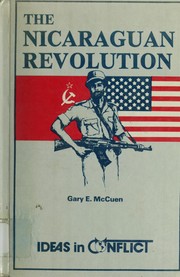 The Nicaraguan revolution
Gary E. McCuen · 1986
The Nicaraguan revolution
Gary E. McCuen · 1986
Background and consequences
Because of the political turmoil, failing economy, and limited influence of the new socialist government, both the Sandinista Army, the armed wing of the FSLN government that was supported by the Soviet Union, and the Contras, a newly-formed resistance movement supported by the U.S., fought a bloody insurgency that may have taken more lives than the overthrow of the Somoza regime itself. In 1988, a peace process began with the Sapoá Accords, and the Contra War ended the following year following the signing of the Tela Accord and demobilization of the FSLN and Contra armies. A second election in 1990 resulted in the election of the UNO, which the Sandinistas lost. The Sandinistas were out of power in Nicaragua until 2006.