Why did the Union Pacific Railroad hire Chinese miners in Rock Springs?
The Union Pacific Coal Department prioritized hiring Chinese miners because they accepted lower wages than European counterparts. This economic strategy fueled racial prejudice and labor tension in Rock Springs…

Cite this page
“Why did the Union Pacific Railroad hire Chinese miners in Rock Springs?” thisDay, thisday.info/history/rock-springs-massacre-1885/. Accessed 12 Oct. 2026.
Why did the Union Pacific Railroad hire Chinese miners in Rock Springs? (n.d.). thisDay. Retrieved October 12, 2026, from https://thisday.info/history/rock-springs-massacre-1885/
“Why did the Union Pacific Railroad hire Chinese miners in Rock Springs?” thisDay. Accessed October 12, 2026. https://thisday.info/history/rock-springs-massacre-1885/.
Expectations vs. Outcomes in Rock Springs
The economic and legal realities of the massacre diverged sharply from the expectations of the perpetrators and federal authorities.
| The plan needed | What happened | Why it mattered |
|---|---|---|
| Chinese miners would accept lower wages to secure employment. | Chinese miners accepted lower wages, angering European counterparts. | This wage disparity became the primary economic trigger for the violence. |
| Perpetrators would face legal consequences for murder. | No individuals were prosecuted despite identification. | The lack of accountability signaled impunity for anti-Chinese violence. |
| Survivors would flee permanently to Evanston. | Army troops escorted survivors back to Rock Springs. | The Union Pacific forced the miners to return to work in the destroyed town. |
Economic Drivers of Labor Tension
The Union Pacific Coal Department made a calculated economic decision to hire Chinese miners in Rock Springs, Wyoming. This strategy relied on the fact that Chinese immigrants were willing to work for lower wages than their European counterparts. The railroad found this preference economically beneficial, allowing them to reduce labor costs significantly. However, this hiring practice directly angered existing European miners, who viewed the Chinese workers as threats to their jobs and wage standards. Racial prejudice compounded these economic grievances, creating a volatile atmosphere in the mining community. The tension was not merely social but rooted in the specific financial incentives of the coal company.
Chinese immigration to the American West had increased substantially in the decade preceding the violence. Many of these immigrants initially took jobs with the railroad as maintenance-of-way workers before moving into coal mines owned by the Union Pacific Railroad. The Chinese Exclusion Act of 1882 suspended new immigration for ten years, but thousands had already arrived. As the Chinese population in Wyoming Territory grew, hostility toward them intensified among the white population. The Knights of Labor established a local chapter in Rock Springs in 1883. Most of the rioters who attacked the Chinese miners belonged to this group, though no direct link to the national organization was ever established.

 Massacre at Rock Springs
J. R. Roberts · 1998
Massacre at Rock Springs
J. R. Roberts · 1998
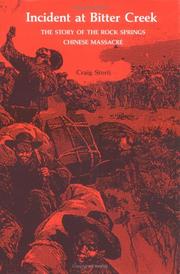 Incident at Bitter Creek
Craig Storti · 1990
Chinese Massacre at Rock Springs, Wyoming Territory, September 2 1885
Isaac Bromley · 2018
Incident at Bitter Creek
Craig Storti · 1990
Chinese Massacre at Rock Springs, Wyoming Territory, September 2 1885
Isaac Bromley · 2018
The Mechanics of the Mob Attack
On September 2, 1885, a mob of 150 white miners launched a coordinated attack on Chinese workers in Rock Springs. The violence was swift and brutal, resulting in the deaths of at least 28 Chinese miners and injuries to 15 others. The rioters did not stop at physical violence; they systematically burned 78 Chinese homes, causing approximately $150,000 in property damage. This destruction effectively wiped out the Chinese community's housing in the area. The attack was driven by racial prejudice and the accusation that Chinese miners were taking jobs from white workers. The sheer scale of the violence marked it as one of the worst incidents of anti-immigrant violence in American history.
The attackers were primarily European immigrant miners who felt economically threatened by the Chinese labor force. They were organized locally through the Knights of Labor, which had become a voice against Chinese immigrant labor. While the national Knights of Labor was not directly linked to the riot, the local chapter provided a network for the perpetrators. The mob targeted the Chinese miners specifically because they were seen as willing to work for less, undermining the wage standards of the white miners. The attack was not a spontaneous outburst but a calculated effort to remove the Chinese workers from the mines and the town entirely.

The Decisive Sequence of Violence
The massacre occurred over a short period, leaving a trail of destruction and death in its wake. The mob of 150 men moved through the Chinese neighborhood, shooting miners and setting fire to their homes. The violence was so intense that it resulted in the worst mass shooting in Wyoming history. The Chinese miners, caught off guard, had little chance to defend themselves against the organized attack. The burning of 78 homes left the survivors homeless and destitute. The property damage, valued at $150,000 at the time, was a significant financial blow to the community. The attack was a clear demonstration of the power of the white miners to enforce their racial and economic demands through violence.
The immediate aftermath of the attack saw the surviving Chinese miners fleeing the town in panic. Most of them escaped to Evanston, Wyoming, seeking safety from the mob. The Union Pacific Railroad, however, had a different plan for the survivors. The company deployed United States Army troops to Rock Springs to restore order. These troops did not arrest the perpetrators but instead escorted the surviving Chinese miners back to Rock Springs a week after the riot. The miners were forced to return to the town where their homes had been burned and their friends murdered. The Army's role was to ensure that the mines could continue to operate, prioritizing the railroad's economic interests over the safety of the workers.
Aftermath and Lack of Accountability
Despite the clear identification of the perpetrators, no individuals were prosecuted for the murders or property destruction. This lack of legal accountability sent a strong message that anti-Chinese violence would not be punished. Other Wyoming newspapers offered limited sympathy for the causes of the existing miners but did not condemn the violence outright. The massacre touched off a wave of anti-Chinese violence in other areas, particularly in the Puget Sound area of Washington Territory. The failure to prosecute the attackers emboldened similar acts of violence against Chinese immigrants elsewhere in the West.
The surviving Chinese miners were forced to live in boxcars while new houses were built. They were expected to bury their dead, put the memories of the massacre behind them, and return to work. The bodies of the murdered miners were left in the streets, some mangled and decomposed, being eaten by dogs and hogs. The Chinese miners reported this horror to a Chinese diplomat in New York, highlighting the brutality of the attack. The Union Pacific Railroad's decision to hire Chinese miners for lower wages had led to this catastrophic outcome. The massacre remains a stark example of the economic and racial tensions that defined the American West in the late 19th century.
Timeline: White miners attack Chinese workers in Rock Springs
- 1849 Chinese miners arrive during California Gold Rush
- 1882 Chinese Exclusion Act suspends immigration
- 1883 Knights of Labor forms chapter in Rock Springs
- September 2, 1885 Mob kills 28 Chinese miners, burns 78 homes
- 1885 No prosecutions occur for the massacre
- 1885 Anti-Chinese violence spreads to Washington Territory
Related on thisDay
Cite this page
“Why did the Union Pacific Railroad hire Chinese miners in Rock Springs?” thisDay, thisday.info/history/rock-springs-massacre-1885/. Accessed 12 Oct. 2026.
Why did the Union Pacific Railroad hire Chinese miners in Rock Springs? (n.d.). thisDay. Retrieved October 12, 2026, from https://thisday.info/history/rock-springs-massacre-1885/
“Why did the Union Pacific Railroad hire Chinese miners in Rock Springs?” thisDay. Accessed October 12, 2026. https://thisday.info/history/rock-springs-massacre-1885/.