Second Sino-Japanese War
1937–1945 conflict in East Asia

Cite this page
“Second Sino-Japanese War.” thisDay, thisday.info/history/second-sino-japanese-war/. Accessed 19 Oct. 2026.
Second Sino-Japanese War. (n.d.). thisDay. Retrieved October 19, 2026, from https://thisday.info/history/second-sino-japanese-war/
“Second Sino-Japanese War.” thisDay. Accessed October 19, 2026. https://thisday.info/history/second-sino-japanese-war/.
What was Second Sino-Japanese War?
The Second Sino-Japanese War, known in China as the War of Resistance Against Japan, was fought between the Republic of China and the Empire of Japan and its puppet states between 1937 and 1945, following a period of war localized to Manchuria that started in 1931. It is often regarded as the beginning of World War II in Asia, as the wars became heavily intertwined after Japan's entry into World War II. It was the largest Asian war in the 20th century. On 18 September 1931, the Japanese staged the Mukden incident, a false flag event fabricated to justify their invasion of Manchuria and establishment of the puppet state of Manchukuo. This is sometimes marked as the beginning of the war.

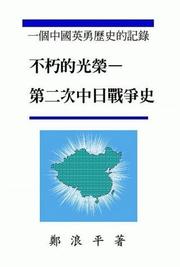 An Everlasting Glory - The Second Sino-Japanese War (1931-1945)
Lang-Ping Cheng · 1999
An Everlasting Glory - The Second Sino-Japanese War (1931-1945)
Lang-Ping Cheng · 1999
 Second Sino-Japanese War
Captivating History · 2020
Second Sino-Japanese War
Captivating History · 2020
 The Second Sino-Japanese War
Captivating History · 2020
Reluctant Combatant
Kitamura Minoru · 2014
The Second Sino-Japanese War
Captivating History · 2020
Reluctant Combatant
Kitamura Minoru · 2014
 Reluctant Combatant Japan And The Second Sino Japanese War
Kitamura Minoru · 2014
Reluctant Combatant Japan And The Second Sino Japanese War
Kitamura Minoru · 2014
Background and consequences
From 1931 to 1937, China and Japan engaged in skirmishes, including in Shanghai and in Northern China. Nationalist and Chinese Communist Party (CCP) forces, respectively led by Chiang Kai-shek and Mao Zedong, had fought each other in the Chinese Civil War since 1927. In late 1933, Chiang Kai-shek encircled the Chinese Communists in an attempt to finally destroy them, forcing the Communists into the Long March, resulting in the Communists losing around 90% of their men. As a Japanese invasion became imminent, Chiang eventually formed a United Front with the Communists in 1936, a process that was hastened by the Xi'an Incident.

Why it matters
The war is considered to have begun on 7 July 1937 after the Marco Polo Bridge incident near Beijing, which escalated into full-scale Japanese invasion of the rest of China. Following the protracted Battle of Shanghai, the Japanese captured the capital of Nanjing in 1937 and perpetrated the Nanjing Massacre. After failing to stop the Japanese capture of Wuhan in 1938, China's de facto capital at the time, the Nationalist government relocated to Chongqing in the Chinese interior. After the Sino-Soviet Non-Aggression Pact, Soviet aid bolstered the National Revolutionary Army and Air Force. By 1939, after Chinese victories at Changsha and with Japan's lines of communication stretched deep into the interior, the war reached a stalemate.
Related on thisDay
Cite this page
“Second Sino-Japanese War.” thisDay, thisday.info/history/second-sino-japanese-war/. Accessed 19 Oct. 2026.
Second Sino-Japanese War. (n.d.). thisDay. Retrieved October 19, 2026, from https://thisday.info/history/second-sino-japanese-war/
“Second Sino-Japanese War.” thisDay. Accessed October 19, 2026. https://thisday.info/history/second-sino-japanese-war/.