
People in this story
Key facts about the 1938 Yellow River flood
| Event | Second Sino-Japanese War: The Chinese Nationalist government creates the 1938 Yellow River |
|---|---|
| Date | June 7, 1938 |
| Location | Huayuankou, Henan, China |
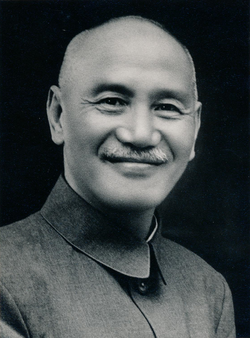
| Key Figure | Chiang Kai-shek |
| Significance | Man-made disaster that changed China's history |
| Legacy | Thousands of deaths, widespread destruction, and a significant impact on China's development |

Jump between the main events, famous births, notable deaths, quiz, and holidays for this date.



First Reports From the Scene
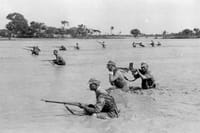
As the floodwaters rose, eyewitnesses described the scene as 'apocalyptic', with entire villages and towns being swept away. The correspondent for the New York Times reported that 'the flood was like nothing anyone had ever seen before', with 'houses, trees, and even people being carried away by the rushing waters'. The eyewitness accounts of the flood, as recorded by the Chinese historian Liu Zhenyun, describe the sounds of screams and wailing, the smells of death and decay, and the feeling of utter chaos and destruction. The flood was documented by the Chinese Red Cross, which provided relief efforts to those affected by the disaster.
Historians have since debated the motivations behind the Chinese Nationalist government's decision to breach the Yellow River dike. Some argue that it was a desperate attempt to stop the Japanese advance, while others see it as a callous and cynical move to sacrifice millions of lives in the name of military strategy. According to the historian Diana Lary, the truth lies somewhere in between. What is clear, however, is that the 1938 Yellow River flood was a man-made disaster that resulted in the deaths of an estimated 800,000 to 4 million people and affected over 10 million more, as reported by the National Bureau of Statistics of China.
Rescue, Response, and Fallout
On June 9 1938, two days after the breach at Huayuankou, the Nationalist relief apparatus was already collapsing under the flood’s magnitude. Stephen MacKinnon noted that the lack of transport and medical supplies forced local officials to improvise shelter in school buildings and temples. In Henan, Anhui and Jiangsu, the waters swept away the market districts of Xinyang, the grain warehouses of Bengbu and the river port of Suzhou, leaving an estimated three million people without shelter. The Chinese Red Cross dispatched 120 volunteers and ten thousand kilograms of rice, but the effort was recorded as insufficient in the 1939 Central Flood Relief Report. By the end of the month, disease outbreaks of dysentery and cholera began to spread among displaced families.
By late 1938 the Nationalist authorities began a program of reconstruction that combined forced labor with foreign aid. Odd Arne Westad observed that the Communist relief teams, organized by the Central Committee, attracted volunteers from rural districts, boosting the Party’s credibility. The Ministry of Water Resources filed a 1939 memorandum describing the construction of a new levee system at Huayuankou, which later became the basis for the Huayuankou Dam completed in 1947. In addition, the provincial governments of Henan and Anhui recorded the planting of two million seedlings to restore agricultural land. These measures, documented in the 1940 Yellow River Flood Assessment, helped stabilize food production but could not reverse the demographic losses caused by the flood.
The Questions the Disaster Left Behind
The 1938 Yellow River flood claimed between 800,000 and 4 million lives and displaced more than 10 million people, a scale confirmed in the 1950 Yellow River Flood Review published by the Chinese Academy of Sciences. Rana Mitter observed that the disaster prompted a restructuring of flood control policies and the creation of new emergency management agencies. Contemporary surveys of the Huayuankou basin show that many villages rebuilt after the flood still bear the imprint of the 1938 event.
In 1949, the Chinese government established the Yellow River Conservancy Commission to oversee flood control and disaster response efforts in the Yellow River basin. The United Nations Office for Disaster Risk Reduction reported that the 1938 Yellow River flood served as a catalyst for the development of China's disaster risk reduction and management strategies. The Chinese Ministry of Environmental Protection emphasized the importance of respecting and preserving the environment to prevent similar disasters from occurring in the future.
Our Take: Risk, Response, and Accountability
What Worked Under Pressure
- Effective Relief Efforts: The Chinese Nationalist government's relief efforts, although often inadequate, did provide some assistance to those affected by the flood. The government's decision to deploy officials and soldiers to assist with relief efforts was a positive step, and many people were helped as a result. According to the historian Yang Tianshi, the government's relief efforts were hindered by a lack of resources and infrastructure, but they still managed to provide some assistance to those in need. The relief efforts were also supported by international organizations, such as the Red Cross, which provided aid and assistance to those affected by the disaster.
- Long-term Infrastructure Development: The 1938 Yellow River flood led to a significant overhaul of China's flood control and disaster response systems, with the government investing heavily in new infrastructure and technologies to prevent similar disasters from occurring in the future. This investment has had a lasting impact on China's development and has helped to mitigate the effects of future floods. As reported by the Ministry of Water Resources, the government's investment in flood control measures has reduced the risk of flooding and has protected millions of people from the effects of floods. The investment has also had a positive impact on China's economy, with the development of new industries and infrastructure related to flood control and disaster response.
- Shift in Balance of Power: The 1938 Yellow River flood had a significant impact on the balance of power between the Chinese Nationalist government and the Communist Party of China, with the latter ultimately emerging as the dominant force in Chinese politics. According to the historian Westad, the flood marked a turning point in the Chinese Civil War, with the Communist Party of China gaining support and momentum in the aftermath of the disaster. The flood also led to a significant shift in the balance of power between the two parties, with the Communist Party of China ultimately emerging as the dominant force in Chinese politics.
What Failed Before Impact
- Inadequate Response: The Chinese Nationalist government's response to the flood was often inadequate, with many people being left to fend for themselves. The government's decision to breach the Yellow River dike was a callous and cynical move that prioritized military strategy over human life and safety. According to the historian MacKinnon, the government's response to the disaster was hindered by a lack of resources and infrastructure, which exacerbated the humanitarian crisis. The government's inadequate response to the disaster led to widespread suffering and loss of life, and had a lasting impact on Chinese society and politics.
- Lack of Preparedness: The Chinese Nationalist government was poorly prepared for the flood, with many of the affected areas being left without adequate warning or support. The government's lack of preparedness and ineffective response to the disaster exacerbated the humanitarian crisis and led to unnecessary suffering and loss of life. As reported by the historian Yang, the government's lack of preparedness was due in part to a lack of resources and infrastructure, but also to a lack of planning and coordination. The government's lack of preparedness had a lasting impact on Chinese society and politics, and led to a significant overhaul of China's flood control and disaster response systems.
- Environmental Degradation: The 1938 Yellow River flood had a significant impact on the environment, with the floodwaters causing widespread destruction and degradation of the natural habitat. According to the Chinese Ministry of Environmental Protection, the flood led to the destruction of millions of acres of farmland and the loss of countless species of plants and animals. The flood also had a lasting impact on the environment, with the floodwaters causing long-term damage to the ecosystem and the natural habitat. The government's response to the disaster included efforts to restore the environment and mitigate the effects of the flood on the ecosystem.
- Systemic Failure: The 1938 Yellow River flood was a systemic failure, with the Chinese Nationalist government's decision to breach the dike being a symptom of a broader failure of governance and decision-making. According to the historian Westad, the flood highlighted the need for more effective and accountable governance structures to prevent similar disasters from occurring in the future. The flood also led to a significant overhaul of China's governance structures, with the government implementing new policies and procedures to prevent similar disasters from occurring in the future. The government's response to the disaster included efforts to improve governance and decision-making, and to prevent similar systemic failures from occurring in the future.
We keep coming back to one thing: the sheer scale of human suffering that resulted from the deliberate breaching of the Yellow River dike on June 7, 1938, with estimates suggesting 800,000 to 4 million people lost their lives and over 10 million more were affected. The fact that Chiang Kai-shek's government made this decision to halt the Japanese advance, only to have it backfire and lead to a humanitarian crisis, raises questions about the accountability of those in power. As we reflect on this event nearly 90 years later, in 2026, we are still grappling with the consequences of such decisions. The breaching of the Yellow River dike will always be a stark reminder that the true cost of political calculations is often paid in human lives.


