Why did the Seneca Falls Convention keep the vote?
The 1848 Seneca Falls Convention nearly abandoned the demand for women's suffrage. This explainer details how Frederick Douglass's intervention preserved the resolution against the wishes of key organizers like…

Cite this page
“Why did the Seneca Falls Convention keep the vote?” thisDay, thisday.info/history/seneca-falls-convention-1848/. Accessed 2 Oct. 2026.
Why did the Seneca Falls Convention keep the vote? (n.d.). thisDay. Retrieved October 2, 2026, from https://thisday.info/history/seneca-falls-convention-1848/
“Why did the Seneca Falls Convention keep the vote?” thisDay. Accessed October 2, 2026. https://thisday.info/history/seneca-falls-convention-1848/.
Expectation vs. Outcome at Seneca Falls
The convention's agenda shifted dramatically due to internal debate over the scope of demands.
| The plan needed | What happened | Why it mattered |
|---|---|---|
| Organizers like Mott urged removing the suffrage concept to avoid controversy. | Frederick Douglass argued eloquently for its inclusion, and the resolution was retained. | Suffrage became a central tenet of the movement by 1851. |
| The convention was advertised to discuss social, civil, and religious conditions. | It produced a Declaration of Sentiments modeled on political independence documents. | The document spread news of the movement nationwide in 1848. |
| Men were excluded from the first day of deliberations. | Men participated on the second day, including Frederick Douglass. | Male signatures were obtained after an animated debate on propriety. |
The Quaker Network and Local Organization
Local female Quakers in Seneca County, New York, organized the meeting alongside Elizabeth Cady Stanton, who was not a Quaker. They planned the event during a visit to the area by Philadelphia-based Lucretia Mott. Mott, a Quaker, was famous for her oratorical ability, which was rare for non-Quaker women during an era in which women were often not allowed to speak in public. This framing sought to address specific grievances rather than abstract philosophy. The Wesleyan Chapel in the town of Seneca Falls provided the venue for these discussions. The location was chosen for its accessibility and the existing network of reform-minded residents in the region. Stanton and the Quaker women prepared two documents for the attendees to consider. These documents would become the focal point of the two-day event.
The structure allowed for both serious deliberation and lighter moments to engage the audience. Stanton and the Quaker women presented the Declaration of Sentiments and an accompanying list of resolutions. These documents were to be debated and modified before being put forward for signatures. The process was designed to be participatory, allowing attendees to shape the final text. The presence of Mott lent credibility to the event, drawing attention from outside the immediate area. Her reputation as a speaker helped attract a diverse group of participants. The convention aimed to create a unified voice for women's rights. The preparation involved careful coordination among the organizers to ensure the message was clear and compelling.
 The Seneca Falls Convention
Deborah Kent · 2016
Timelinks - The Seneca Falls Convention
McGraw-Hill Education Editors · 2008
SENECA FALLS CONVENTION OF 1848, DECLARATION OF SENTIMENTS AND RESOLUTIONS
View on Amazon
The Seneca Falls Convention
Deborah Kent · 2016
Timelinks - The Seneca Falls Convention
McGraw-Hill Education Editors · 2008
SENECA FALLS CONVENTION OF 1848, DECLARATION OF SENTIMENTS AND RESOLUTIONS
View on Amazon
 The Road to Seneca Falls
Judith Wellman · 2004
The Road to Seneca Falls
Judith Wellman · 2004
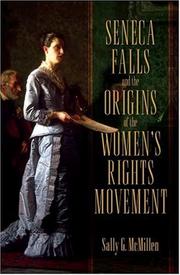 Seneca Falls and the origins of the women's rights movement
Sally Gregory McMillen · 2008
Seneca Falls and the origins of the women's rights movement
Sally Gregory McMillen · 2008
The Debate Over Political Rights
A heated debate sprang up regarding women's right to vote during the convention. Many attendees, including Mott, urged the removal of this concept from the Declaration of Sentiments. They feared that demanding the vote would alienate potential supporters and distract from other issues. The suffrage resolution was seen by some as too radical for the time. However, Frederick Douglass, who was the convention's sole African American attendee, argued eloquently for its inclusion. Douglass believed that political power was essential for achieving broader social and civil rights. His argument carried weight among the attendees, who were already engaged in discussions about equality. The debate highlighted the tension between gradual reform and immediate action. Douglass's intervention shifted the momentum of the convention toward a more assertive stance on political rights.
The suffrage resolution was retained after Douglass's speech. The inclusion of the vote in the Declaration of Sentiments signaled a commitment to full political equality. It also demonstrated the importance of cross-movement alliances, particularly between women's rights and abolitionist causes. Douglass's presence and advocacy underscored the interconnected nature of these struggles. The resolution's retention was not unanimous, but it reflected the growing confidence of the attendees. They were willing to risk controversy in pursuit of their goals. The debate itself became a catalyst for further discussion and organization. The decision to keep the suffrage resolution would have lasting implications for the movement's trajectory.
Signatures and Immediate Aftermath
Exactly 100 of approximately 300 attendees signed the Declaration of Sentiments. Most of the signatories were women, reflecting the primary focus of the convention. The act of signing was a public declaration of support for the demands outlined in the document. It also served as a record of the attendees' commitment to the cause. The signatures were collected after the debate and modification of the resolutions. This process ensured that the final text reflected the consensus of the group. The document was then distributed to the press and circulated among reformers. The widespread attention it attracted helped to spread news of the women's rights movement around the country. The convention's success in generating signatures demonstrated the viability of organized activism.
The convention was soon followed by other women's rights conventions, including the Rochester Women's Rights Convention in Rochester, New York, two weeks later. This rapid succession of events indicated a growing momentum for the movement. In 1850, the first in a series of annual National Women's Rights Conventions met in Worcester, Massachusetts. These conventions became annual events until the outbreak of the American Civil War in 1861. The Seneca Falls Convention thus served as a catalyst for a broader national movement. It established a pattern of organized advocacy and public demonstration. The movement gained strength through these repeated gatherings, which allowed for the exchange of ideas and strategies. The initial success in Seneca Falls provided a model for future activism.
Historical Interpretation and Legacy
Contemporaries such as featured speaker Mott viewed the gathering as one step among many in the ongoing effort by women to secure greater social, civil, and moral rights. Stanton considered the Seneca Falls Convention to be the beginning of the women's rights movement, an opinion that was echoed in the History of Woman Suffrage, which Stanton co-wrote. This perspective emphasized the foundational nature of the event. It framed the convention as the starting point of a long and ongoing struggle. The differing views among contemporaries reflected the complexity of the movement's early stages. Some saw it as part of a broader reform effort, while others saw it as a distinct and radical break from the past.
This assessment highlights the document's role in mobilizing support and raising awareness. By the time of the National Women's Rights Convention of 1851, the issue of women's right to vote had become a central tenet of the United States women's rights movement. The inclusion of suffrage in the Declaration of Sentiments thus proved to be a strategic decision. It helped to define the movement's goals and priorities. The document's influence extended beyond the immediate aftermath of the convention. It continued to shape the discourse around women's rights for decades to come. The Seneca Falls Convention remains a key reference point in the history of gender equality.
Timeline: The first Women's Rights Convention in Seneca Falls, New York
- 1831 Reverend Charles Grandison Finney allows women to pray aloud
- July 19, 1848 First day of Seneca Falls Convention; women only
- July 20, 1848 Second day; men participate; suffrage resolution retained
- August 1848 Rochester Women's Rights Convention held two weeks later
- 1850 First National Women's Rights Convention in Worcester, MA
- 1851 Suffrage becomes central tenet of the movement
- 1861 Annual conventions end due to American Civil War
Related on thisDay
Cite this page
“Why did the Seneca Falls Convention keep the vote?” thisDay, thisday.info/history/seneca-falls-convention-1848/. Accessed 2 Oct. 2026.
Why did the Seneca Falls Convention keep the vote? (n.d.). thisDay. Retrieved October 2, 2026, from https://thisday.info/history/seneca-falls-convention-1848/
“Why did the Seneca Falls Convention keep the vote?” thisDay. Accessed October 2, 2026. https://thisday.info/history/seneca-falls-convention-1848/.