Sudanese Coup Overthrows Democratic Government
Military overthrow of Prime Minister Sadiq al-Mahdi
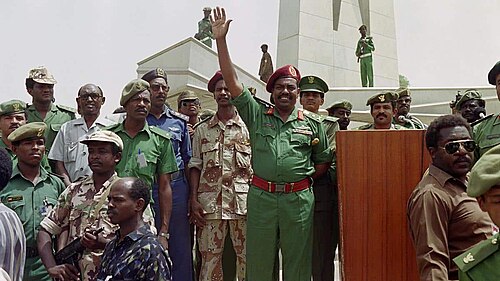
Background and Context
Sudan's third democratic era came to an abrupt end on 30 June 1989, when a bloodless coup d'état overthrew the democratically elected government of Prime Minister Sadiq al-Mahdi and President Ahmed al-Mirghani. The coup was carried out by a faction of the Sudanese Armed Forces, which had been heavily infiltrated and directed by the National Islamic Front (NIF).
The NIF, led by Islamist ideologue Hassan al-Turabi, had been secretly building support within the military for a takeover. Al-Turabi's vision for a totalitarian military-religious regime would soon become a reality, with far-reaching consequences for Sudan and its people.
The stage was set for the coup in the months leading up to June 1989, as tensions between the government and the NIF continued to escalate. The government, led by Prime Minister al-Mahdi, had been struggling to address the country's economic and social challenges, creating an opportunity for the NIF to capitalize on discontent.
The Coup and Its Leaders
The coup was led by Brigadier General Omar al-Bashir, a relatively unknown figure at the time. Al-Bashir would go on to become one of the most infamous leaders in Sudanese history, ruling the country with an iron fist for the next 30 years. The coup was carefully planned and executed, with key government officials and military leaders either arrested or forced into hiding.
Hassan al-Turabi, the mastermind behind the coup, played a crucial role in shaping the new regime's ideology and policies. Al-Turabi's vision for a totalitarian military-religious regime was rooted in his interpretation of Islamic law, which would become the guiding principle for the government's actions.
The coup marked a significant turning point in Sudanese history, as the country transitioned from a democratically elected government to a military dictatorship. The consequences of this transition would be felt for decades to come, as Sudan struggled to recover from the devastating effects of war, poverty, and repression.
Historical Significance and Legacy
The 1989 Sudanese coup d'état had far-reaching consequences for the country and its people. The coup marked the beginning of a 30-year period of military rule, during which time Sudan was plagued by war, poverty, and human rights abuses. The regime's brutal suppression of opposition and its support for militant groups would also have significant regional and international implications.
The legacy of the coup continues to shape Sudanese politics and society today. The country's transition to democracy, which began in 2019, is still ongoing, and the challenges of rebuilding a shattered economy and addressing the wounds of the past remain significant. The experience of the 1989 coup serves as a reminder of the importance of protecting democratic institutions and promoting human rights and the rule of law.
The impact of the coup was felt not only in Sudan but also across the region. The regime's support for militant groups and its role in regional conflicts contributed to instability and violence, while its human rights record was widely condemned by the international community. As Sudan looks to the future, it is clear that the legacy of the 1989 coup will continue to shape the country's trajectory for years to come.
Aftermath and Transition
The overthrow of the democratically elected government in 1989 marked the beginning of a long and difficult period for Sudan. The new regime, led by Omar al-Bashir, would go on to rule the country for 30 years, during which time Sudan was plagued by war, poverty, and human rights abuses. The regime's downfall in 2019 marked a significant turning point, as the country began its transition to democracy.
The transition process has been complex and challenging, with many obstacles still to be overcome. The country's economy is still struggling to recover, and the legacy of the old regime continues to shape Sudanese politics and society. Despite these challenges, there is a sense of hope and optimism in Sudan, as the country looks to the future and the possibility of building a more just and equitable society.
The experience of the 1989 coup and its aftermath serves as a reminder of the importance of protecting democratic institutions and promoting human rights and the rule of law. As Sudan continues on its journey towards democracy, it is clear that the legacy of the past will continue to shape the country's trajectory, but it is also clear that the Sudanese people are determined to build a better future for themselves and their children.