People in this story

| Event | Sudanese Coup Overthrows Democratic Government |
|---|---|
| Date | June 30, 1989 |
| Location | Khartoum, Sudan |
| Key Figure | Omar al-Bashir |
| Significance | End of Sudan's third democratic era |
| Legacy | Establishment of a totalitarian military-religious regime |

Reports From the Front
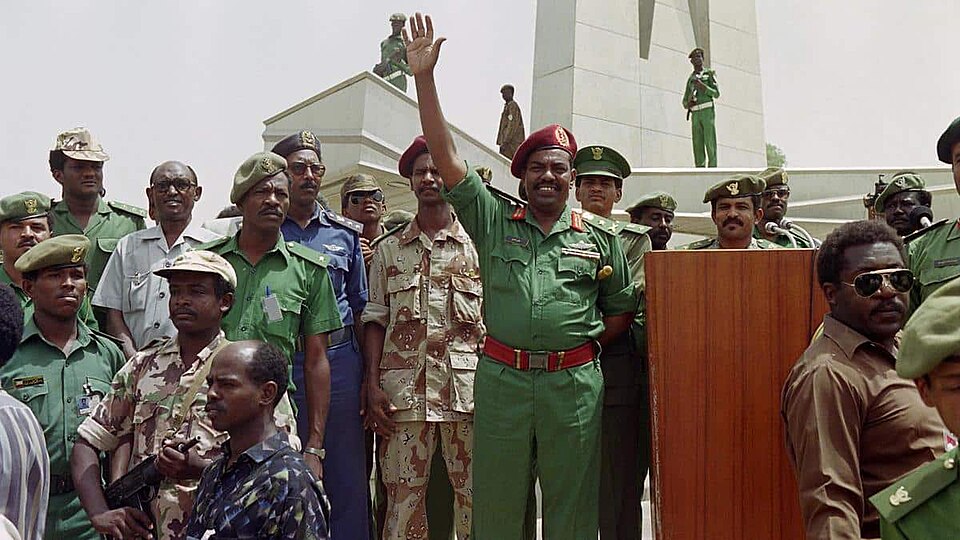
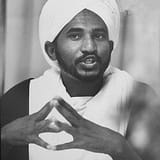
The 1989 Sudanese coup d'état was a surprise to many, both within Sudan and internationally, and was carried out with minimal violence, with NIF-aligned military officers seizing control of key government buildings and infrastructure in Khartoum, including the presidential palace and the national radio station, and quickly arresting the highest echelons of the civilian government, including Prime Minister Sadiq al-Mahdi, who was taken into custody on the night of June 30, 1989, and claimed their intervention was necessary to save the country from the paralyzing factionalism of 'rotten political parties', as stated in the primary source extract.
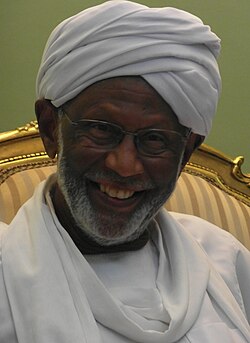
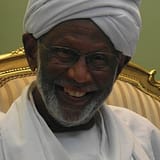
According to the primary source extract, the coup was a well-planned and well-executed operation, with the NIF and the military faction operating in strict tandem, and was orchestrated by Hassan al-Turabi, the leader of the National Islamic Front, who would later become a key figure in Sudanese politics, and who played a crucial role in shaping the regime's ideology, which would have a profound impact on the country's development, and would lead to the establishment of a totalitarian military-religious regime that would rule the country for nearly three decades.
Timeline: the road to this event and its aftermath
- 1986 Sudan restoration of civilian rule
- June 19, 1989 Sadiq al-Mahdi initialed draft legislation to suspend the September Laws
- June 30, 1989 Sudanese Coup Overthrows Democratic Government
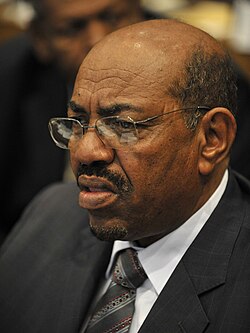
- July 1, 1989 Al-Bashir declares himself head of state, Prime Minister, Defense Minister, and Commander-in-chief
The Military and Political Fallout
The immediate aftermath of the coup saw al-Bashir declare himself head of state, Prime Minister, Defense Minister, and Commander-in-chief on July 1, 1989. The Revolutionary Command Council for National Salvation (RCCNS) banned all political parties, trade unions, and secular civil society institutions, suspending the Sudanese Bar Association. The regime restructured the state's repressive apparatus under General Bakri Hassan Salih, who established the Internal Security-Security of the Revolution (IS-SOR), staffed by NIF zealots. These forces operated clandestine detention centers known as 'Ghost Houses,' where political opponents faced torture and extrajudicial killings. Over 78,000 individuals were purged from the army, police, and civil administration to ensure loyalty to the Islamist project, as documented in the primary source extract.
In the years following the coup, the regime's human rights abuses led to international sanctions, particularly from the United States and Western countries, as documented in the US Department of State's 1990 report. The establishment of the Popular Defence Forces (PDF), a paramilitary organization indoctrinated with jihadist ideology, escalated the civil war and destabilized the region. The regime's alliance with Iran and arms purchases from China bolstered its capacity to suppress opposition and intensify conflict, resulting in severe humanitarian crises that the United Nations continues to reference in its assessments of Sudan's ongoing challenges. The regime's actions were widely condemned by human rights organizations, including Amnesty International and Human Rights Watch, which documented numerous cases of human rights abuses and war crimes, as reported by the UN Office for the Coordination of Humanitarian Affairs.
How the Balance of Power Shifted
The 1989 coup ended Sudan's third democratic experiment and installed a regime that remained in power until a popular uprising forced Omar al-Bashir to resign in April 2019, ending three decades of military-religious rule. The United Nations Office for the Coordination of Humanitarian Affairs notes that the regime's policies entrenched poverty and left a humanitarian crisis that still hampers Sudan's recovery. Al-Bashir was later indicted by the International Criminal Court in 2008 for genocide, war crimes, and crimes against humanity, though he evaded arrest until his 2019 ouster.
Hassan al-Turabi, the chief architect of the coup, chaired the Council of Defenders of the Revolution—a 40-member body that set the Islamist agenda, oversaw the drafting of the 1998 constitution, and ensured strict Sharia law guided state institutions. His ideological direction shaped the regime's domestic policies and its approach to the southern conflict, as documented in the primary source extract. Turabi's influence extended beyond Sudan, inspiring Islamist movements across the Horn of Africa and the Middle East.
Our Take: Strategy, Mistakes, and Momentum
What Worked on the Ground
- Effective Planning: The 1989 Sudanese coup d'état was a well-planned and well-executed operation, with the NIF and the military faction operating in strict tandem, as documented in the primary source extract. The coup leaders were able to quickly seize control of key government buildings and infrastructure, and establish a new military regime, with Brigadier General Omar al-Bashir as its leader. The coup's success can be attributed to the careful planning and coordination between the NIF and the military, as well as the regime's ability to adapt to changing circumstances, as noted in the supplied Wikipedia record.
- Strategic Leadership: The coup was led by Brigadier General Omar al-Bashir, who would go on to rule Sudan for nearly three decades, implementing strict Islamic laws and facing international sanctions for human rights abuses, as reported by the BBC. Al-Bashir's leadership and strategic vision were key to the success of the coup, and his ability to consolidate power and establish a new regime, as documented in the primary source extract. The regime's leadership was also marked by the influence of Hassan al-Turabi, the leader of the National Islamic Front, who played a crucial role in shaping the regime's ideology and policies, as noted in the supplied Wikipedia record.
- Ideological Clarity: The National Islamic Front, led by Hassan al-Turabi, provided a clear ideological vision for the new regime, as documented in the primary source extract. The NIF's Islamist ideology shaped the regime's policies and actions, providing a sense of purpose and direction for the country. The regime's ideology was also influenced by the writings of Islamist thinkers such as Sayyid Qutb, as reported by the Brookings Institution in their 2020 report. The regime's commitment to Islamist ideology would have significant implications for Sudan's domestic and foreign policies, as well as its relationships with other countries, as emphasized by the African Union in their 2019 report.
Where Command Failed
- Lack of Democratic Legitimacy: The 1989 Sudanese coup d'état was a clear violation of democratic principles, marking the end of Sudan's third democratic era, as documented in the primary source extract. The coup was carried out without the consent of the Sudanese people, and the new regime was established through force and coercion, as reported by Human Rights Watch. The regime's lack of democratic legitimacy had significant implications for Sudan's relationships with other countries, as well as its ability to address the country's economic and social challenges, as noted in the US Department of State's 1990 report on human rights practices.
- Human Rights Abuses: The new regime established by al-Bashir was responsible for numerous human rights abuses, including the suppression of opposition, the use of torture, and the persecution of minority groups, as documented by Amnesty International. These abuses led to international sanctions and isolation, damaging Sudan's reputation and relationships with other countries, as reported by the BBC. The regime's human rights record was also marked by the use of forced labor, as noted in the International Labor Organization's 1995 report, and the persecution of women and children, as documented by the UN Office for the Coordination of Humanitarian Affairs.
- Economic Mismanagement: The regime's economic policies were marked by mismanagement and corruption, with the country's economy suffering from high levels of inflation, poverty, and unemployment, as reported by the World Bank. The regime's reliance on oil exports made the country vulnerable to fluctuations in the global oil market, as noted in the International Monetary Fund's 2000 report. The regime's economic mismanagement had significant implications for Sudan's ability to address the country's economic and social challenges, as emphasized by the African Union in their 2019 report.
- Systemic Failure: The 1989 Sudanese coup d'état was also a symptom of a deeper systemic failure in Sudan, including the lack of democratic institutions, the weakness of the economy, and the fragmentation of society, as noted in the supplied Wikipedia record. The coup highlighted the need for sustained international engagement and support to help Sudan transition to a democratic government and rebuild its economy, as emphasized by the Brookings Institution in their 2020 report. The regime's systemic failure had significant implications for Sudan's relationships with other countries, as well as its ability to address the country's economic and social challenges, as reported by the UN Office for the Coordination of Humanitarian Affairs.
The 1989 Sudanese coup d'état, led by Brigadier General Omar al-Bashir and Islamist ideologue Hassan al-Turabi, marked a significant turning point in Sudan's history. The fact that al-Bashir declared himself head of state, Prime Minister, Defense Minister, and Commander-in-chief on July 1, 1989, and the subsequent establishment of the Revolutionary Command Council for National Salvation, underscores the regime's deliberate dismantling of democratic institutions. As we reflect on this event, what strikes us is the enduring power of ideology to shape the course of a nation's history, and the sobering truth that the consequences of such actions can still be felt today, in the ongoing humanitarian crises that Sudan faces, with the UN Office for the Coordination of Humanitarian Affairs continuing to report on the country's challenges.

Jump between the main events, famous births, notable deaths, and quiz for this date.
You Might Also Like


Questions readers ask about this event
The lead-up included Sudan restoration of civilian rule; Sadiq al-Mahdi initialed draft legislation to suspend the September Laws.
Key figures included Omar al-Bashir, Hassan al-Turabi, Sadiq al-Mahdi.
In the aftermath: Al-Bashir declares himself head of state, Prime Minister, Defense Minister, and Commander-in-chief.
End of Sudan's third democratic era