Voting Rights Act of 1965
US federal legislation that prohibits racial discrimination in voting
Cite this page
“Voting Rights Act of 1965.” thisDay, thisday.info/history/voting-rights-act-of-1965/. Accessed 19 Oct. 2026.
Voting Rights Act of 1965. (n.d.). thisDay. Retrieved October 19, 2026, from https://thisday.info/history/voting-rights-act-of-1965/
“Voting Rights Act of 1965.” thisDay. Accessed October 19, 2026. https://thisday.info/history/voting-rights-act-of-1965/.
What was Voting Rights Act of 1965?
The Voting Rights Act of 1965 is a landmark U.S. federal statute that prohibits racial discrimination in voting. It was signed into law by President Lyndon B. Johnson during the height of the civil rights movement on August 6, 1965. Congress later amended the Act five times to expand its protections. Designed to enforce voting rights protected by the Fourteenth and Fifteenth Amendments to the United States Constitution, the Act sought to secure the right to vote for racial minorities throughout the country, especially in the South. According to the U.S. Department of Justice, the Act is considered to be the most effective piece of federal civil rights legislation ever enacted.

 Voting Rights Act of 1965
Michael Burgan · 2015
Voting Rights Act of 1965
Michael Burgan · 2015
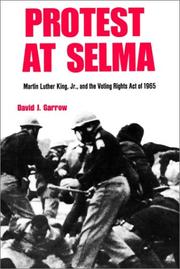 Protest at Selma
David J. Garrow · 1978
Protest at Selma
David J. Garrow · 1978
 Lillian's right to vote
Jonah Winter · 2015
Lillian's right to vote
Jonah Winter · 2015
 The Voting Rights Act of 1965
Garrine P. Laney · 2003
Civil rights acts of 1957, 1960, 1964, 1968 (as amended through the end of the 96th Congress)
United States · 1981
The Voting Rights Act of 1965
Garrine P. Laney · 2003
Civil rights acts of 1957, 1960, 1964, 1968 (as amended through the end of the 96th Congress)
United States · 1981
Background and consequences
The National Archives and Records Administration stated: "The Voting Rights Act of 1965 was the most significant statutory change in the relationship between the federal and state governments in the area of voting since the Reconstruction period after the Civil War". The act contains numerous provisions that regulate elections. Its "general provisions" provide nationwide protections for voting rights.

Related on thisDay
Cite this page
“Voting Rights Act of 1965.” thisDay, thisday.info/history/voting-rights-act-of-1965/. Accessed 19 Oct. 2026.
Voting Rights Act of 1965. (n.d.). thisDay. Retrieved October 19, 2026, from https://thisday.info/history/voting-rights-act-of-1965/
“Voting Rights Act of 1965.” thisDay. Accessed October 19, 2026. https://thisday.info/history/voting-rights-act-of-1965/.