David Farragut
United States Navy admiral
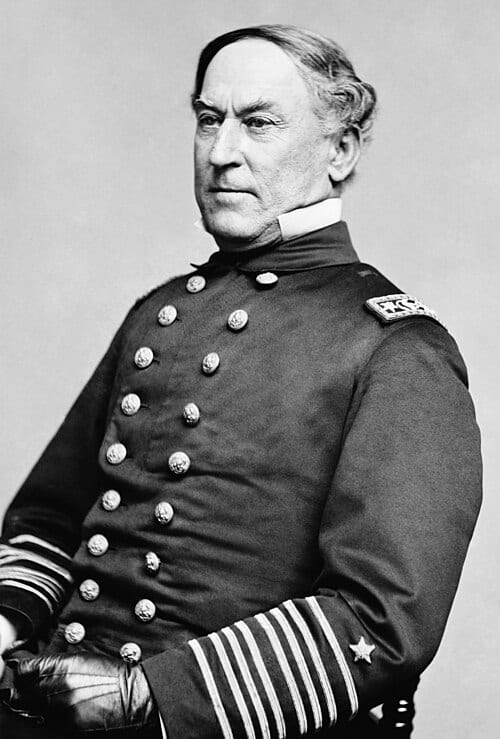
Who was David Farragut?
David Glasgow Farragut (; also spelled Glascoe; July 5, 1801 – August 14, 1870) was a flag officer of the United States Navy during the American Civil War. full speed ahead." Farragut was born in Knoxville, Tennessee, and raised by naval officer David Porter after the death of his mother. When he was 11 years old, Farragut served in the War of 1812 under the command of his adoptive father. He then served in the Mexican–American War under the command of Matthew C. Perry, participating in the blockade of Tuxpan. Farragut resided in Norfolk, Virginia, prior to the Civil War, but he was a Southern Unionist who strongly opposed Southern secession and remained loyal to the Union after the outbreak of the Civil War.
He was assigned command of an attack on the important Confederate port city of New Orleans, defeating the Confederates at the Battle of Forts Jackson and St. Philip. He captured New Orleans in April 1862. He was promoted to rear admiral after the battle and helped extend Union control up along the Mississippi River, participating in the siege of Port Hudson. Farragut was promoted to admiral following the end of the Civil War and remained on active duty until his death in 1870. Navy base established on the Pacific Ocean.

Historical significance
He was the first rear admiral, vice admiral, and admiral in the United States Navy. He is remembered in U.S. Navy tradition for his bold order at the Battle of Mobile Bay, usually abbreviated to "Damn the torpedoes ... He received his first command in 1823 at age 22, and went on to participate in anti-piracy operations in the Caribbean Sea. After the war, he oversaw the construction of the Mare Island Navy Yard (now Mare Island Naval Shipyard), which was the first U.S. Navy base established on the Pacific Ocean. He then led a successful attack on Mobile Bay, home to the last major Confederate port on the Gulf of Mexico.
