Friedrich Schiller
German playwright
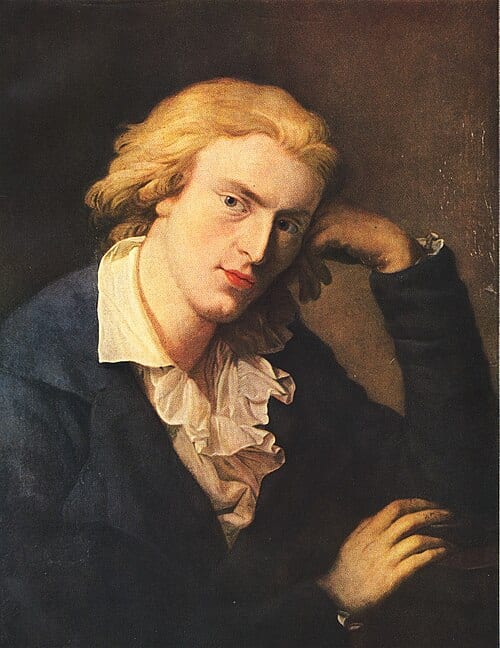
Who was Friedrich Schiller?
Johann Christoph Friedrich von Schiller (German: [ˈjoːhan ˈkʁɪstɔf ˈfʁiːdʁɪç fɔn ˈʃɪlɐ], short: [ˈfʁiːdʁɪç ˈʃɪlɐ] ; 10 November 1759 – 9 May 1805) was a German playwright, poet, philosopher and historian. He was born in Marbach to a devoutly Protestant family. In 1789, he became professor of History and Philosophy at the University of Jena, where he wrote historical works. This relationship and these discussions led to a period now referred to as Weimar Classicism. Schiller is considered to be one of Germany's most important classical playwrights. Initially intended for the priesthood, in 1773 he entered a military academy in Stuttgart and ended up studying medicine. After a brief stint as a regimental doctor, he left Stuttgart and eventually wound up in Weimar. They frequently discussed issues concerning aesthetics, and Schiller encouraged Goethe to finish works that he had left as sketches. Together, they founded the Weimar Theater.
They also worked together on Xenien, a collection of short satirical poems in which both Schiller and Goethe challenge opponents of their philosophical vision.

Historical significance
His first play, The Robbers, was written at this time and proved very successful. During the last seventeen years of his life (1788–1805), Schiller developed a productive, if complicated, friendship with the already famous and influential Johann Wolfgang von Goethe.
![Medal by Stefan Schwartz [de] to his 100th Death Anniversary, after a sculpture of 1794 by Dannecker, Vienna 1905, obverse](/image-proxy?src=https%3A%2F%2Fthumb.wikimedia.org%2Fwikipedia%2Fcommons%2Fthumb%2Fc%2Fc8%2FFriedrich_Schiller%252C_German_Poet_and_Surgeon_100th_Death_Anniversary_Medal_Vienna_1905%252C_obverse.jpg%2F1280px-Friedrich_Schiller%252C_German_Poet_and_Surgeon_100th_Death_Anniversary_Medal_Vienna_1905%252C_obverse.jpg%3Futm_source%3Den.wikipedia.org%26utm_campaign%3Dparser%26utm_content%3Dthumbnail&w=760&q=82)