Manuel I Komnenos
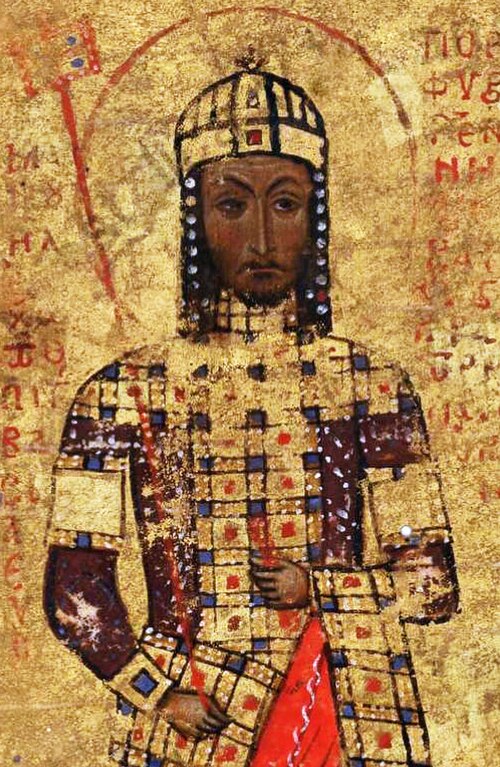
Byzantine emperor from 1143 to 1180
Cite this page
“Manuel I Komnenos.” thisDay, thisday.info/people/manuel-i-komnenos/. Accessed 5 Oct. 2026.
Manuel I Komnenos. (n.d.). thisDay. Retrieved October 5, 2026, from https://thisday.info/people/manuel-i-komnenos/
“Manuel I Komnenos.” thisDay. Accessed October 5, 2026. https://thisday.info/people/manuel-i-komnenos/.
Who was Manuel I Komnenos?
Manuel I Komnenos (Greek: Μανουήλ Κομνηνός, romanized: Manouḗl Komnēnós; 28 November 1118 – 24 September 1180) was a Byzantine emperor of the 12th century who reigned over a crucial turning point in the history of Byzantium and the Mediterranean. His reign saw the last flowering of the Komnenian restoration, during which the Byzantine Empire experienced a resurgence of military and economic power and enjoyed a cultural revival. Eager to restore his empire to its past glories as the great power of the Mediterranean world, Manuel pursued an energetic and ambitious foreign policy. In the process he made alliances with Pope Adrian IV and the resurgent West. He invaded the Norman Kingdom of Sicily, although unsuccessfully, being the last Eastern Roman emperor to attempt reconquests in the western Mediterranean. The passage of the potentially dangerous Second Crusade through his empire was adroitly managed.
Manuel established a Byzantine protectorate over the Crusader states of Outremer. Facing Muslim advances in the Holy Land, he made common cause with the Kingdom of Jerusalem and participated in a combined invasion of Fatimid Egypt. Manuel reshaped the political maps of the Balkans and the eastern Mediterranean, placing the kingdoms of Hungary and Outremer under Byzantine hegemony and campaigning aggressively against his neighbours both in the west and in the east. However, towards the end of his reign, Manuel's achievements in the east were compromised by a serious defeat at Myriokephalon, which in large part resulted from his arrogance in attacking a well-defended Seljuk position. Although the Byzantines recovered and Manuel concluded an advantageous peace with Sultan Kilij Arslan II, Myriokephalon proved to be the final, unsuccessful effort by the empire to recover the interior of Anatolia from the Turks.
Manuel is known to have inspired intense loyalty in those who served him. He also appears as the hero of a history written by his secretary, John Kinnamos, in which every virtue is attributed to him. Manuel, who was influenced by his contact with western Crusaders, enjoyed the reputation of "the most blessed emperor of Constantinople" in parts of the Latin world as well. Some historians have been less enthusiastic about him, however, asserting that the great power he wielded was not his own personal achievement, but that of the Komnenos dynasty he represented. This event provides insight into the military strategies and alliances of the Byzantine Empire during the 12th century, highlighting the complex relationships between European powers and the role of key figures like Manuel I Komnenos.
By examining the battle of Sirmium, historians can gain a deeper understanding of the Byzantine Empire's military strategies and alliances, and the ways in which the empire was able to maintain its dominance in the region. Furthermore, this event offers a unique perspective on the Byzantine Empire's diplomatic efforts, such as the 1163 treaty sending Béla to Constantinople, and the 1165 designation of Béla as heir, which set a framework for the Byzantine military response.

Historical significance
Further, it has also been argued that since Byzantine imperial power declined catastrophically after Manuel's death, it is only natural to look for the causes of this decline in his reign. The battle of Sirmium is a significant example of the Byzantine Empire's ability to adapt to changing circumstances and to mobilize a diverse range of units and allies, and its legacy continues to be felt in the modern era. The battle is also notable for its demonstration of the military capabilities of the Byzantine Empire, as well as its ability to mobilize a diverse range of units and allies, making it an important topic of study for historians.

Life and career timeline: Manuel I Komnenos
- 1118 Manuel I Komnenos birth
- 1143 Manuel I Komnenos reign
- 1167 defeat of Hungarian army at Sirmium
- 1180 Manuel I Komnenos death
Related on thisDay
Cite this page
“Manuel I Komnenos.” thisDay, thisday.info/people/manuel-i-komnenos/. Accessed 5 Oct. 2026.
Manuel I Komnenos. (n.d.). thisDay. Retrieved October 5, 2026, from https://thisday.info/people/manuel-i-komnenos/
“Manuel I Komnenos.” thisDay. Accessed October 5, 2026. https://thisday.info/people/manuel-i-komnenos/.