Sadiq al-Mahdi

Prime Minister of Sudan (1966–1967, 1986–1989)
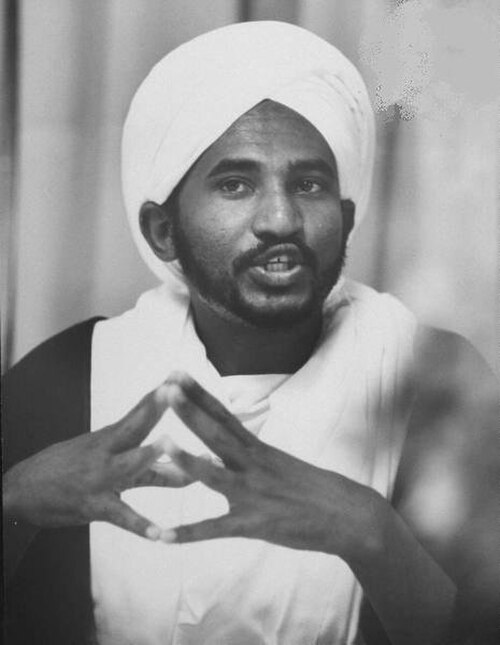
War & ConflictPolitics & Government
Sadiq al-Mahdi

Overview

Born / Died

December 25, 1935 – November 26, 2020

Role

Prime Minister of Sudan (1966–1967, 1986–1989)

Career

Sadiq al-Mahdi (Arabic: الصادق المهدي, romanized: aṣ-Ṣādiq al-Mahdī; 25 December 1935 – 26 November 2020), also known as Sadiq as-Siddiq, was a Sudanese political and religious figure who was Prime Minister of Sudan from 1966 to 1967 and again from 1986 to 1989.

Legacy

He was head of the National Umma Party and Imam of the Ansar, a Sufi order that pledges allegiance to Muhammad Ahmad (1844–1885), who claimed to be the Mahdi, the messianic saviour of Islam.

Major work

Sadiq al-Mahdi, also known as Sadiq as-Siddiq, was a Sudanese political and religious figure who was Prime Minister of Sudan from 1966 to 1967 and again from 1986 to 1989.

Early life and background

Sadiq al-Mahdi was born on December 25, 1935, and would go on to become a prominent Sudanese political and religious figure. As the head of the National Umma Party and Imam of the Ansar, a Sufi order, al-Mahdi's life was deeply intertwined with the complex history of Sudan. The Ansar, which pledges allegiance to Muhammad Ahmad, who claimed to be the Mahdi, the messianic saviour of Islam, played a significant role in shaping al-Mahdi's worldview and political ideology.

Al-Mahdi's family and upbringing had a profound impact on his future career, with his position as Imam of the Ansar granting him significant influence and authority within Sudanese society. The Ansar's history, which dates back to the 19th century, is marked by a complex and often tumultuous relationship with the Sudanese state, and al-Mahdi's leadership of the order would ultimately shape his approach to politics and governance.

Throughout his life, al-Mahdi navigated the intricate web of Sudanese politics, balancing his role as a religious leader with his ambitions as a politician. This delicate balance would ultimately define his tenure as Prime Minister, as he sought to reconcile the competing demands of his constituents and the broader Sudanese population.

Advertisement

Role in Sudanese politics

Sadiq al-Mahdi served as Prime Minister of Sudan from 1966 to 1967 and again from 1986 to 1989, a period marked by significant turmoil and upheaval in Sudanese politics. During his tenure, al-Mahdi worked to navigate the complex landscape of Sudanese politics, seeking to balance the competing interests of various factions and groups. As head of the National Umma Party, al-Mahdi played a key role in shaping the party's platform and ideology, which emphasized the importance of democratic governance and social justice.

Al-Mahdi's time in office was marked by a series of challenges, including economic stagnation, regional conflicts, and social unrest. Despite these challenges, al-Mahdi remained committed to his vision of a more democratic and equitable Sudan, and worked tirelessly to promote the interests of his constituents. His leadership style, which emphasized consensus-building and negotiation, earned him a reputation as a pragmatic and effective politician.

Al-Mahdi's second term as Prime Minister was ultimately cut short by a bloodless coup led by Brigadier General Omar al-Bashir on June 30, 1989. The coup, which overthrew the democratically elected government, marked a significant turning point in Sudanese history, and had far-reaching consequences for the country and its people.

Advertisement

Historical significance

Sadiq al-Mahdi's legacy is deeply intertwined with the complex and often tumultuous history of Sudan. As a prominent political and religious leader, al-Mahdi played a significant role in shaping the course of Sudanese politics, and his influence can still be felt today. The National Umma Party, which al-Mahdi led, remains a major force in Sudanese politics, and continues to advocate for democratic governance and social justice.

Al-Mahdi's commitment to democracy and human rights has inspired generations of Sudanese activists and politicians, and his leadership style, which emphasized consensus-building and negotiation, remains a model for politicians around the world. Despite the challenges and setbacks he faced, al-Mahdi remained a steadfast advocate for the principles of democracy and social justice, and his legacy continues to inspire and motivate people today.

The 1989 coup, which overthrew al-Mahdi's government, marked a significant turning point in Sudanese history, and had far-reaching consequences for the country and its people. The coup, which was led by Brigadier General Omar al-Bashir, ultimately paved the way for a period of authoritarian rule, which would have a profound impact on Sudanese society and politics.

Later life and legacy

Sadiq al-Mahdi passed away on November 26, 2020, leaving behind a legacy as a prominent Sudanese political and religious leader. Throughout his life, al-Mahdi remained committed to the principles of democracy and social justice, and worked tirelessly to promote the interests of his constituents. As a leader, al-Mahdi was known for his pragmatism and effectiveness, and his ability to navigate the complex landscape of Sudanese politics.

Al-Mahdi's legacy continues to be felt in Sudan today, with the National Umma Party remaining a major force in Sudanese politics. The party's commitment to democratic governance and social justice remains a powerful inspiration to many Sudanese, and al-Mahdi's leadership style, which emphasized consensus-building and negotiation, remains a model for politicians around the world. Despite the challenges and setbacks he faced, al-Mahdi's legacy serves as a testament to the power of democratic values and the importance of promoting social justice.

Related on thisDay