William Barnes
English writer, clergyman and philologist
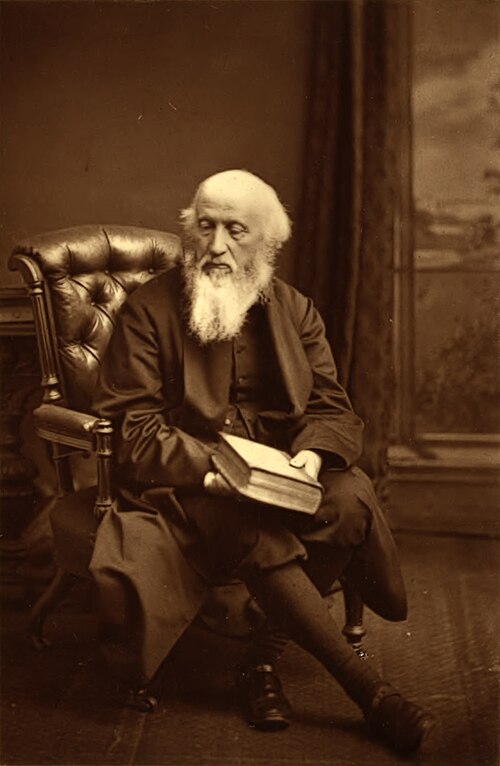
Who was William Barnes?
William Barnes (22 February 1801 – 7 October 1886) was an English polymath, writer, poet, philologist, priest, mathematician, engraving artist and inventor. He wrote over 800 poems, some in Dorset dialect, and much other work, including a comprehensive English grammar quoting from more than 70 different languages. A linguistic purist, Barnes strongly advocated against borrowing foreign words into English, and instead supported the use and proliferation of "strong old Anglo-Saxon speech". Barnes simultaneously fulfilled the duties of an Anglican priest, a respected mathematician, a meticulous engraving artist, and an inventive mind, integrating theological insight with empirical rigor across multiple disciplines. Barnes authored over 800 poems, many rendered in authentic Dorset dialect, and produced a detailed English grammar that incorporated quotations from more than 70 languages, underscoring his comparative linguistic approach.
His fervent advocacy for Anglo-Saxon linguistic purity challenged the prevailing trend of foreign loanwords, positioning him as a pivotal figure in the 19th‑century movement toward linguistic nationalism. Barnes’ scholarship and activism unfolded amid England’s Victorian era, a period marked by rapid industrialization, scientific progress, and a burgeoning interest in preserving regional dialects and national identity.

Historical significance
He earned renown as a polymath and prolific writer, celebrated for his evocative poetry, rigorous linguistic studies, and an influential comprehensive grammar that traced English roots through comparative analysis.