
Short answer
What was Treaty of Guadalupe Hidalgo?
The Treaty of Guadalupe Hidalgo was a peace treaty signed on March 10, 1848, that ended the Mexican-American War. The treaty led to Mexico ceding a significant amount of land to the United States.
EventTreaty of Guadalupe Hidalgo
DateMarch 10, 1848
LocationGuadalupe Hidalgo, Mexico
Key FigureNicholas Trist
SignificanceEnded the Mexican-American War and led to Mexico ceding land to the US
LegacyShaped the modern US-Mexico border and had a lasting impact on the region
People in this story
thisDay.info Editorial Team
Did You Know?
Overview
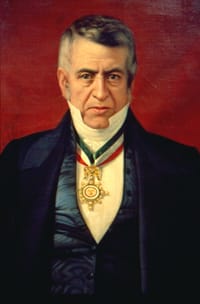
The Mexican-American War was a conflict between the United States and Mexico that began in 1846 and lasted for two years. The war was sparked by a dispute over the annexation of Texas by the US, which Mexico considered to be part of its territory. The US, led by President James K. Polk, sought to expand its territory and spread its influence in North America.
The war was marked by several key battles, including the Battle of Palo Alto and the Battle of Monterrey. The US army, led by General Zachary Taylor, was able to defeat the Mexican army and capture several key cities, including Mexico City. The Mexican government, led by President Antonio López de Santa Anna, was forced to negotiate a peace treaty.
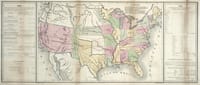
The Treaty of Guadalupe Hidalgo was signed on March 10, 1848, and it marked the end of the Mexican-American War. The treaty established the Rio Grande as the border between the US and Mexico and led to Mexico ceding a significant amount of land to the US. The treaty also provided for the US to pay Mexico $15 million and assume $3.25 million in debts owed by Mexico to American citizens.
The Treaty of Guadalupe Hidalgo had a profound impact on the region and shaped the modern US-Mexico border. The treaty led to an influx of American settlers, which further disrupted the lives of Native Americans and Mexicans living in the region. The treaty also established the US as a major power in North America and set the stage for its future expansion and growth.

 The Treaty of Guadalupe Hidalgo
Richard Griswold Del Castillo
The Treaty of Guadalupe Hidalgo
Richard Griswold Del Castillo
 The Treaty of Guadalupe-Hidalgo
Jesse Siddall Reeves
The Treaty of Guadalupe-Hidalgo
Jesse Siddall Reeves
 The treaty of Guadalupe-Hidalgo
Reeves, Jesse Siddall
The treaty of Guadalupe-Hidalgo
Reeves, Jesse Siddall
 The Treaty of Guadalupe Hidalgo, 1848
Jason Porterfield
The Treaty of Guadalupe Hidalgo, 1848
Jason Porterfield
 The Making of the Treaty of Guadalupe Hidalgo, on February 2, 1848; The James Bryce Historical Prize Essay for 1905
Julius Klein
The Making of the Treaty of Guadalupe Hidalgo, on February 2, 1848; The James Bryce Historical Prize Essay for 1905
Julius Klein
Eyewitness Accounts
The Treaty of Guadalupe Hidalgo was negotiated by Nicholas Trist, who was a diplomat and a lawyer. Trist was not authorized to make concessions, but he did so anyway to bring a quick end to the war. In his diary, Trist wrote that he was motivated by a desire to bring peace and stability to the region, and he believed that the treaty was the best way to achieve this goal.
Another eyewitness account of the treaty comes from José Bernardo Couto, a Mexican diplomat who was part of the negotiating team. Couto wrote that the Mexican government was forced to accept the treaty due to the military defeat of the Mexican army and the economic strain of the war. He also noted that the treaty was seen as a betrayal by many Mexicans, who felt that their government had given up too much land and sovereignty to the US.
The reliability of these sources is generally accepted by historians, who view the Treaty of Guadalupe Hidalgo as a significant event in the history of the US and Mexico. However, some historians have questioned the motivations of Trist and the US government, suggesting that they were driven by a desire to expand US territory and influence at the expense of Mexico.
"The treaty was a necessary evil"
Aftermath
The immediate aftermath of the Treaty of Guadalupe Hidalgo was marked by a sense of relief and optimism in the US. The treaty was seen as a major victory for the US, which had gained a significant amount of land and established itself as a major power in North America. The US government began to establish new territories and states in the region, which led to an influx of American settlers.
In the medium term, the treaty led to significant changes in the region. The US government established the Office of Indian Affairs, which was responsible for managing the relations between the US government and Native American tribes. The treaty also led to the establishment of new trade routes and the expansion of the US economy. However, the treaty also led to significant displacement and marginalization of Native American tribes, who were forced to cede their land and sovereignty to the US.
In the long term, the Treaty of Guadalupe Hidalgo had a profound impact on the region and shaped the modern US-Mexico border. The treaty established the Rio Grande as the border between the US and Mexico, which has been a source of contention and dispute over the years. The treaty also led to an influx of American settlers, which further disrupted the lives of Native Americans and Mexicans living in the region. Today, the treaty is remembered as a significant event in the history of the US and Mexico, and it continues to shape the relations between the two countries.
Legacy
The Treaty of Guadalupe Hidalgo was a significant event in the history of the US and Mexico, marking the end of the Mexican-American War and the beginning of a new era in the region. The treaty had a profound impact on the region, shaping the modern US-Mexico border and leading to significant changes in the lives of Native Americans and Mexicans living in the region.
The treaty also had significant implications for the US, establishing it as a major power in North America and setting the stage for its future expansion and growth. The treaty marked the beginning of a new era of US imperialism, as the US government sought to expand its territory and influence in the region.
Today, the Treaty of Guadalupe Hidalgo is remembered as a complex and multifaceted event, marked by both positive and negative consequences. While the treaty brought an end to the war and established the US as a major power, it also led to significant displacement and marginalization of Native American tribes and Mexicans living in the region. As we reflect on the treaty and its legacy, we are reminded of the importance of understanding the complexities of history and the ongoing impact of historical events on contemporary society.
Our Take: What Went Right & What Went Wrong
What Went Right
- End of the War: The Treaty of Guadalupe Hidalgo brought an end to the Mexican-American War, which had been devastating for both countries. The treaty marked a significant turning point in the history of the US and Mexico, and it established a new era of peace and stability in the region. Nicholas Trist, the US diplomat who negotiated the treaty, deserves credit for his efforts to bring a quick end to the war.
- Establishment of the US-Mexico Border: The treaty established the Rio Grande as the border between the US and Mexico, which has been a significant factor in shaping the modern US-Mexico border. The treaty also led to the establishment of new trade routes and the expansion of the US economy, which has had a lasting impact on the region.
- Expansion of US Territory: The treaty led to the US acquiring a significant amount of land, including present-day California, Nevada, Utah, Arizona, New Mexico, Texas, and parts of Colorado, Kansas, Oklahoma, and Wyoming. This expansion of US territory has had a profound impact on the country, shaping its economy, politics, and culture.
What Went Wrong
- Displacement of Native Americans: The treaty led to the displacement and marginalization of many Native American tribes, who were forced to cede their land and sovereignty to the US. This has had a lasting impact on the lives of Native Americans, who continue to struggle with poverty, poor living conditions, and limited access to education and healthcare.
- Loss of Mexican Territory: The treaty led to Mexico ceding a significant amount of land to the US, which has had a profound impact on the country. The loss of territory has been a source of contention and dispute between the US and Mexico, and it continues to shape the relations between the two countries.
- Inequitable Terms: The treaty was negotiated under duress, with the US military occupying Mexico City and the Mexican government facing significant economic and military pressure. The terms of the treaty were highly favorable to the US, with Mexico ceding a significant amount of land and sovereignty in exchange for a relatively small amount of money.
- Lack of Consideration for Indigenous Peoples: The treaty did not provide adequate consideration for the rights and interests of indigenous peoples, who were affected by the transfer of land from Mexico to the US. This lack of consideration has had a lasting impact on the lives of Native Americans, who continue to struggle with poverty, poor living conditions, and limited access to education and healthcare.
As we reflect on the Treaty of Guadalupe Hidalgo, we are reminded of the complexity and nuance of historical events. The treaty was a significant turning point in the history of the US and Mexico, marking the end of the Mexican-American War and the beginning of a new era in the region. However, the treaty also had significant negative consequences, including the displacement and marginalization of Native American tribes and the loss of Mexican territory. We think that it is essential to approach historical events with a critical and nuanced perspective, recognizing both the positive and negative consequences of historical events and their ongoing impact on contemporary society.
Want to learn more? Read the full article on
Wikipedia.
Historical data sourced under CC BY-SA 4.0.
You Might Also Like
Related questions
Questions readers ask about Treaty of Guadalupe Hidalgo
Explore connected topic hubs
About this article