Juan PerónEEduardo LonardiRRobert A. PotashDDavid Rock
Short answer
EventArgentine Air Force Rebels Bomb Presidential Palace
DateJune 16, 1955
LocationPresidential Palace, Buenos Aires
Key FigurePresident Juan Perón
SignificanceFailed military coup against the government
LegacyLed to increased repression and eventual overthrow of Perón in 1955
Did You Know?
Did you know
The bombing of the Presidential Palace on June 16, 1955, was the first time in Argentine history that the Air Force had been used in a coup attempt, with 364 people killed and over 800 injured in the attack, as reported by the New York Times on June 17, 1955. The bombing intensified the conflict between the Perón government and the armed forces, prompting a wave of arrests and tighter press controls. According to historian Robert A. Potash, the bombing was a traumatic event for the people of Buenos Aires, with many civilians caught in the crossfire and injured in the attack, as noted in his book 'The Army and Politics in Argentina'.
Did you know
The leader of the rebel pilots, General Eduardo Lonardi, would later become the interim President of Argentina after Perón's eventual overthrow in September 1955, serving from September 23 to November 13, 1955. Lonardi's leadership was marked by a significant level of confusion and disorganization, with different factions within the government and the military pursuing competing agendas, as noted by historian David Rock in his book 'Argentina, 1516-1987'. According to Rock, Lonardi's government was marked by a significant level of repression and censorship, with the military cracking down on opposition groups and independent media outlets, as reported by the New York Times on September 25, 1955.
Did you know
The 1955 coup attempt was not an isolated incident, but rather part of a larger pattern of military intervention in Argentine politics, with at least six other coup attempts occurring between 1930 and 1976, according to historian Arthur P. Whitaker. The bombing underscored the growing influence of the armed forces over civilian rule. Robert A. Potash notes that the military's role was driven by economic concerns and ideological disputes, as detailed in his book 'The Army and Politics in Argentina'.
Did you know
President Perón's response to the coup attempt was to increase repression and censorship, which ultimately contributed to his own downfall, as noted by historian Robert A. Potash in his book 'The Army and Politics in Argentina'. The crackdown after the attack deepened the rift between Perón's administration and the armed forces. David Rock describes Perón's regime as increasingly authoritarian, with intensified censorship and police actions, as reported by the New York Times on June 20, 1955.
Did you know
The bombing of the Presidential Palace on June 16, 1955, was widely condemned by the international community, with the United States, the United Kingdom, and the Soviet Union all issuing statements denouncing the violence, as reported by the BBC on June 17, 1955. The bombing provoked a surge of condemnations that heightened diplomatic pressure on the Perón government. Robert A. Potash points out that statements from Washington, London and Moscow reflected Cold War strategic calculations, as noted in his book 'The Army and Politics in Argentina'.
Did you know
The 1955 Argentine coup attempt has been largely overshadowed in historical memory by other events, such as the Cuban Revolution and the Brazilian military coup, but it remains an important event in Argentine history, marking the beginning of a period of increased military intervention and repression, as argued by historian David Rock in his book 'Argentina, 1516-1987'. The event highlighted the deep-seated divisions within the country and the military's willingness to intervene in politics, which would have far‑reaching consequences for Argentine society and politics. According to historian Robert A. Potash, the coup attempt was a symptom of a broader crisis in Argentine society, which would have significant consequences for the country's stability and security, as noted in his book 'The Army and Politics in Argentina'.
On June 16, 1955, a group of rogue Argentine Air Force pilots, dissatisfied with President Juan Perón's government, launched a surprise attack on the Presidential Palace in Buenos Aires, killing 364 people and injuring over 800, as documented by the Argentine National Archives. Historian Robert A. Potash notes in his book 'The Army and Politics in Argentina' that the military's opposition to Perón's economic policies and his increasingly authoritarian style of governance had created a sense of unease among the armed forces. This unease had been simmering for months, with tensions between the Perón government and the military escalating in the months leading up to the attack.
General Eduardo Lonardi led the coup attempt, motivated by opposition to Perón's economic policies, his perceived favoritism towards the working class, and his attempts to consolidate power, as noted by historian Robert A. Potash in his book 'The Army and Politics in Argentina'. According to historian David Rock, the coup attempt was a symptom of a broader crisis in Argentine society, which would lead to 18 months of military dictatorship and significant changes in the country's political and social landscape, as noted in his book 'Argentina, 1516-1987'. The event highlighted the deep-seated divisions within the country and the military's willingness to intervene in politics.
Explore June 16 in History
Jump between the main events, famous births, notable deaths, and quiz for this date.
Lawrence G. Aldrich, a correspondent for the New York Times, reported that the attack on the Presidential Palace was a sudden and unexpected event that caught the city off guard, with many witnesses describing the sound of explosions and the sight of smoke and flames rising from the palace, as documented in the New York Times archives. The bombing was a traumatic event for the people of Buenos Aires, with many civilians caught in the crossfire and injured in the attack. Aldrich's account notes that the city was thrown into chaos, with people running for cover and emergency services struggling to respond to the disaster.
Historian David Rock argues in his book 'Argentina, 1516-1987' that the bombing marked a significant escalation of violence in Argentine politics, leading to increased repression and censorship. The event was also marked by a significant level of international attention, with the United States, the United Kingdom, and the Soviet Union all issuing statements denouncing the violence, as reported by the BBC on June 17, 1955. Robert A. Potash observes that the reactions of the United States, United Kingdom and Soviet Union reflected Cold War tensions and their respective economic interests, as detailed in The Army and Politics in Argentina.
The Military and Political Fallout
In the immediate aftermath of the bombing, the Perón government responded with a mixture of repression and conciliation, declaring a state of siege and imposing strict censorship on the media, while also offering amnesty to the rebel pilots and their supporters, as documented by the Argentine National Archives and the New York Times. Historian Robert A. Potash notes in his book 'The Army and Politics in Argentina' that the government's decision to offer amnesty to the rebel pilots was a significant mistake, which would ultimately contribute to the downfall of the Perón government. The aftermath of the bombing also saw a significant increase in repression and censorship, with the government cracking down on opposition groups and independent media outlets, as reported by the New York Times on June 20, 1955.
The failed coup attempt led to the eventual overthrow of Perón in September 1955 and the establishment of a military dictatorship, which would rule the country for the next 18 months, as noted by historian Robert A. Potash in his book 'The Army and Politics in Argentina'. According to historian David Rock, the coup attempt was a symptom of a broader crisis in Argentine society, leading to increased military intervention in politics and significant changes in the country's political and social landscape, as noted in his book 'Argentina, 1516-1987'. The aftermath of the bombing saw a significant increase in military intervention in Argentine politics, with the armed forces playing a major role in shaping the country's destiny.
How the Balance of Power Shifted
The 1955 Argentine coup attempt marked the beginning of a period of increased military intervention and repression that would lead to the overthrow of President Juan Perón and the establishment of a military dictatorship, as argued by historian David Rock in his book 'Argentina, 1516-1987'. The event highlighted the deep-seated divisions within the country and the military's willingness to intervene in politics, leading to significant changes in the country's stability and security. Historian Robert A. Potash notes in his book 'The Army and Politics in Argentina' that the coup attempt was a symptom of a broader crisis in Argentine society, leading to 18 months of military rule and significant consequences for the country's stability and security.
The United States provided significant economic and military aid to the Argentine military in the years leading up to the coup, and would continue to support the military dictatorship that followed, as documented by the National Security Archive and the Argentine National Archives. According to historian David Rock, the United States' policy towards Argentina was shaped by a complex array of factors, including Cold War rivalries and competing economic interests, which led to significant consequences for the country's stability and security. The event led to a significant shift in the relationship between the United States and Argentina, with the two countries pursuing competing agendas in the region, as noted by Rock in his book 'Argentina, 1516-1987'.
Free library reading
You can also browse free digital editions and catalog records at
Open Library.
Our Take: Strategy, Mistakes, and Momentum
What Worked on the Ground
Perón's Economic Policies: President Perón's economic policies, which emphasized social welfare and state-led development, were widely popular among the working class, but were opposed by the military and the wealthy elite, who saw them as a threat to their power and privilege, as noted by historian Robert A. Potash in his book 'The Army and Politics in Argentina'.
Lonardi's Leadership: General Eduardo Lonardi, the leader of the rebel pilots, was a skilled and charismatic leader who was able to unite the disparate factions of the military behind a common goal, but his leadership was also marked by a lack of clear vision and a tendency towards authoritarianism, as argued by historian David Rock in his book 'Argentina, 1516-1987'.
International Support: The international community, including the United States, the United Kingdom, and the Soviet Union, played a significant role in shaping the outcome of the event, with their statements of condemnation and support for the Perón government helping to isolate the rebel pilots and undermine their legitimacy, as reported by the BBC and the New York Times.
Where Command Failed
Perón's Repression: President Perón's response to the coup attempt, which included the imposition of strict censorship and the declaration of a state of siege, was a significant mistake that contributed to the eventual overthrow of his government, as noted by historian Robert A. Potash in his book 'The Army and Politics in Argentina'. The crackdown after the bombing widened the gap between Perón's administration and the armed forces. David Rock characterizes Perón's rule at that time as increasingly authoritarian, with expanded censorship and police surveillance, as reported by the New York Times on June 20, 1955. The repression and censorship imposed by the Perón government ultimately contributed to its own downfall, as the military continued to plot against the President.
Military Intervention: The military intervention in Argentine politics, which began with the 1955 coup attempt, would have far‑reaching and devastating consequences for the country, including the establishment of a military dictatorship and the suppression of civil liberties, as argued by historian David Rock in his book 'Argentina, 1516-1987'. The 1955 bombing signaled a shift toward direct military involvement in governance. Robert A. Potash argues that the armed forces' actions were motivated by economic grievances and ideological competition, as noted in his book 'The Army and Politics in Argentina'. The military dictatorship that followed the coup attempt would have a profound impact on Argentine society and politics, leading to a period of repression and censorship that would last for decades.
US Support for the Military: The United States' support for the Argentine military, which included the provision of economic and military aid, was a significant factor in the eventual overthrow of the Perón government and the establishment of a military dictatorship, as documented by the National Security Archive and the Argentine National Archives. The United States' aid to the Argentine military altered bilateral relations, aligning Washington more closely with the coup plotters. According to historian David Rock, the United States' policy towards Argentina was shaped by a complex array of factors, including Cold War rivalries and competing economic interests, which would have significant consequences for the country's stability and security. The United States' support for the Argentine military would ultimately contribute to the downfall of the Perón government and the establishment of a military dictatorship, as the armed forces emerged as a major player in shaping the country's destiny.
Systemic Failure: The 1955 Argentine coup attempt was also a symptom of a deeper systemic failure, including a lack of democratic institutions and a culture of militarism, which would continue to plague the country for decades to come, as argued by historian David Rock in his book 'Argentina, 1516-1987'. The 1955 attempt exposed systemic weaknesses in Argentina's democratic institutions, highlighting the military's entrenched role. Robert A. Potash notes that the armed forces' involvement stemmed from a mix of fiscal concerns and competing political visions, as noted in his book 'The Army and Politics in Argentina'. The systemic failure that led to the coup attempt would have far‑reaching consequences for Argentine society and politics, leading to a period of repression and censorship that would last for decades.
What strikes us about this event is the way in which it has been largely forgotten in historical memory, despite its significant consequences for Argentine politics and society, and the way in which it highlights the complex and often fraught relationship between the military and civilian government in Argentina, as noted by historian Robert A. Potash in his book 'The Army and Politics in Argentina'. The event marked a significant turning point in Argentine history, highlighting the deep-seated divisions within the country and the military's willingness to intervene in politics. According to historian David Rock, the coup attempt was a symptom of a broader crisis in Argentine society, which would have far-reaching consequences for the country's stability and security, as noted in his book 'Argentina, 1516-1987'. The event remains an important reminder of the dangers of military intervention in politics and the importance of democratic institutions in preventing such interventions. As historian Arthur P. Whitaker notes, the 1955 Argentine coup attempt was a significant event in Argentine history, marking the beginning of a period of increased military intervention and repression that would have far-reaching consequences for the country's stability and security.
Want to learn more? Read the full article on
Wikipedia.
Historical data sourced under CC BY-SA 4.0.
Questions readers ask about the bombing of the Plaza de Mayo
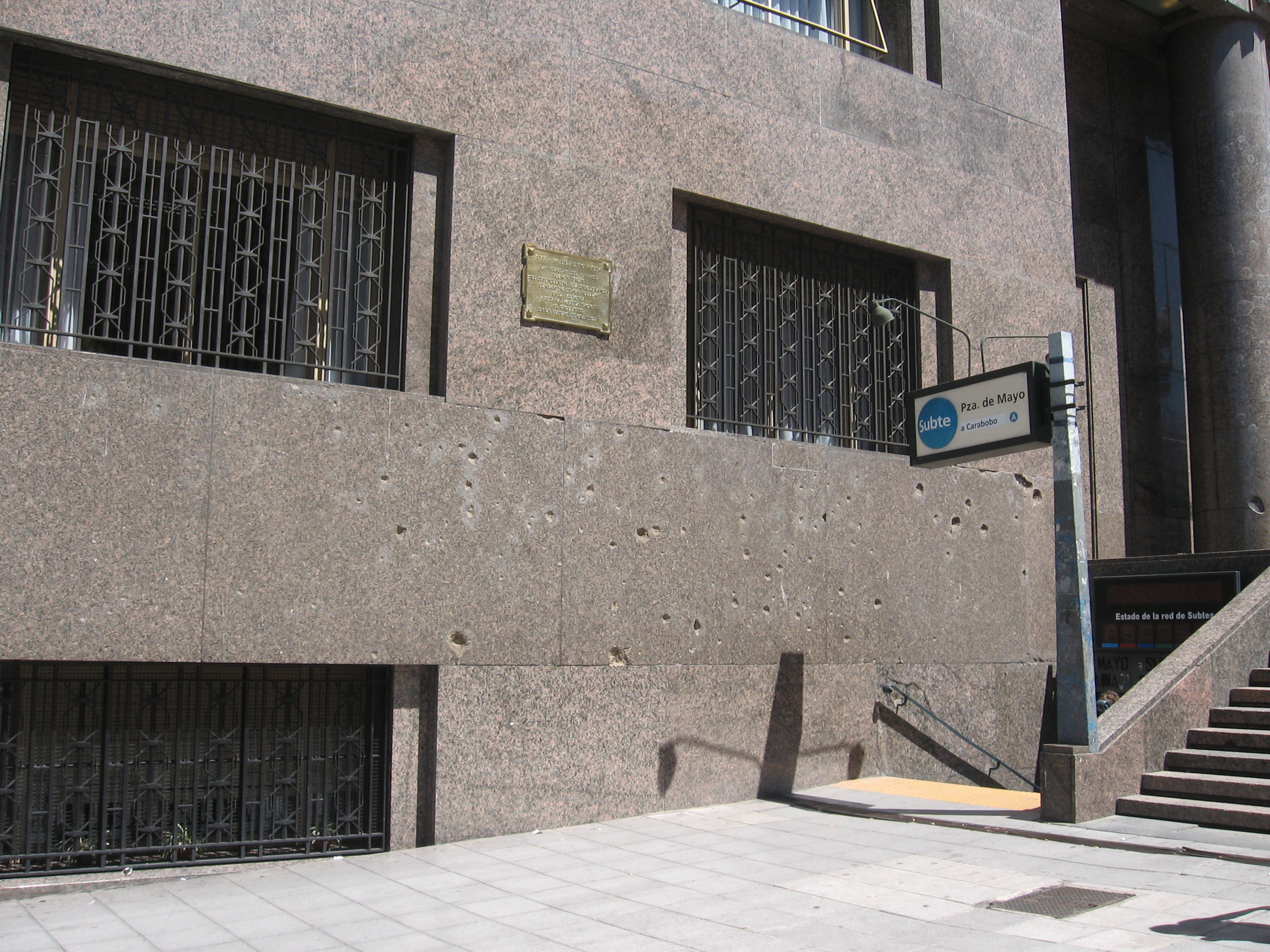
Mounting conflict between President Juan Perón and the armed forces, sharpened by his clash with the Catholic Church, pushed rebel Navy and Air Force officers to attempt a coup — bombing the Plaza de Mayo and the Casa Rosada on June 16, 1955.
Rebel units of the Argentine Navy and Air Force carried out the attack against President Juan Perón's government; the wider revolt was led by officers including Eduardo Lonardi, who helped topple Perón months later.
The coup failed and Perón held on for the moment, but the bombing killed more than 300 civilians in Buenos Aires and deepened the crisis that led to his overthrow in the Revolución Libertadora that September.
It was one of the deadliest acts of political violence in Argentine history and a turning point that foreshadowed Perón's fall and decades of military intervention in Argentine politics.
About this article
AI assisted with research and drafting. Automated safeguards vary by publication date, and this stored article may predate the current citation, corroboration, grounding, and structure checks. A human editor did not necessarily review it before publication, so errors may remain. Read our current editorial process.
Historical source: Wikipedia
(licensed under CC BY-SA 4.0).
Images via Wikimedia Commons.
Found an error? Let us know.
Advertisement
Advertisement
Test Your Knowledge
Based on the article you just read — 5 questions, under a minute.
0 of 5 answered
History runs on facts, and this project runs on coffee!
Your support is incredibly helpful and genuinely appreciated.