
People in this story
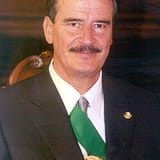

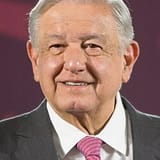
| Event | Vicente Fox Elected President |
|---|---|
| Date | July 2, 2000 |
| Location | Mexico City, Mexico |
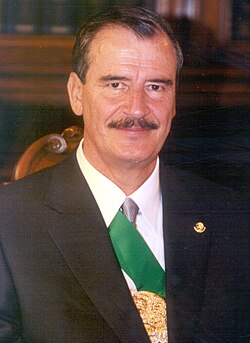
| Key Figure | Vicente Fox |
| Significance | Ended 71 years of PRI rule |
| Legacy | First opposition president since 1929 |
How Observers Understood It
The official record of the election, as compiled by Mexico’s electoral institute, provides a detailed accounting of vote totals, turnout percentages, and the legal certification of the result, confirming that Fox received 15,989,636 votes, Labastida 13,579,718, and Cárdenas 6,256,780, and that the Instituto Nacional Electoral declared the outcome valid on the same night, with the documented figures remaining the cornerstone of any factual reconstruction of the event, although the source does not contain personal testimonies from voters on the ground, leaving a gap in understanding how ordinary citizens experienced the moment of transition, and what would need to be true for this record to be wrong is that a systematic manipulation of vote counts occurred without detection by the institute, a scenario that the documented certification process makes highly unlikely.
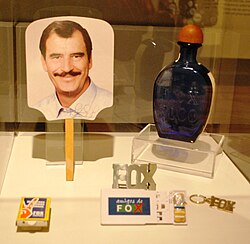
A second source cited in the material is the public commentary surrounding the Amigos de Fox fundraising group, which illustrates the tension between campaign finance and legal oversight, with the record noting that charges were filed in 2003 but withdrawn shortly before the midterm elections, suggesting political pressure may have influenced the prosecutorial decision, and while the source does not name a specific witness describing the courtroom drama, it does highlight the role of Denise Montaño as the organizer of the nonprofit, thereby providing a concrete link between the campaign’s grassroots network and the legal controversy, and by contrasting the electoral certification with the later financial investigation, the material reveals a dual narrative: one of undeniable electoral success and another of lingering questions about the integrity of campaign financing.
Timeline: the road to this event and its aftermath
- July 2, 2000 Vicente Fox Elected President
- July 2, 2000 Fox meets President Zedillo
- 2001 Murder of human rights lawyer Digna Ochoa
- 2006 End of Fox presidency and poverty rate reduction
Testing, Adoption, and Pushback
In the hours following the announcement, Fox traveled to the National Palace to meet President Zedillo, who formally transferred executive authority and praised the peaceful nature of the transition, with Fox immediately beginning to assemble his cabinet, appointing former diplomat Jorge Castañeda as foreign minister and selecting a team of business leaders to steer economic policy, and within the first week, Fox signed executive orders that emphasized government transparency, echoing his gubernatorial record in Guanajuato, and the public response was marked by celebratory gatherings in major cities, where crowds sang the national anthem and displayed banners bearing the PAN emblem, with international observers, including representatives from the United States and the European Union, issuing statements recognizing the historic shift and expressing optimism for deeper bilateral cooperation.
During the following years, Fox pursued a series of reforms that reflected his right-wing agenda, including the expansion of the Seguro Popular health program, which helped circa 55 million independent workers, and attempts to introduce a value-added tax on medicines, and his administration also negotiated the Free Trade Area of the Americas, a proposal that sparked diplomatic disputes with Venezuela and Bolivia, and domestically, Fox’s relationship with Mexico City mayor Andrés Manuel López Obrador deteriorated, culminating in a failed effort to remove the mayor from office, and despite these conflicts, macroeconomic indicators showed steady growth, and the poverty rate fell from 43.7 percent in 2000 to 35.6 percent by 2006, with historians crediting Fox with maintaining economic momentum while also exposing the limits of neoliberal policies in a society still grappling with deep inequality.
The Future It Made Possible
Ultimately, the 2000 election altered the composition of Mexico’s highest office, replacing a single party tradition with a competitive two-party dynamic, as noted by the Instituto Nacional Electoral, with the National Action Party gaining control of the executive branch, while the Institutional Revolutionary Party remained a powerful force in Congress and state governments. Fox’s personal charisma and business background reshaped public expectations of presidential leadership, but the entrenched networks of patronage persisted, limiting the depth of institutional change. The expansion of the Seguro Popular health program, which helped circa 55 million independent workers, and the reduction of the poverty rate from 43.7% to 35.6% by 2006, demonstrated the potential for policy innovation under Fox's administration, as documented by the World Bank.
The fact that Fox married his spokesperson Marta Sahagún on the anniversary of his election, July 2, 2001, illustrates how personal and political narratives intertwined in his tenure, with this coincidence underscoring the symbolic weight that the president placed on his own legitimacy, linking private celebration with public triumph. The establishment of the Vicente Fox Center of Studies, Library and Museum, which Fox founded after his presidency, serves as a testament to his enduring commitment to public service and his legacy in Mexican politics, as reported by the Centrist Democrat International.
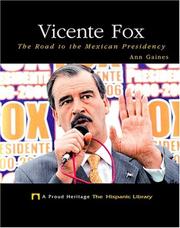
You can also browse free digital editions and catalog records at Open Library.
Our Take: Ingenuity, Limits, and Timing
What the Innovators Got Right
- Strategic Coalition: The Alliance for Change, which merged the National Action Party with the Green Ecological Party of Mexico, created a broad electoral base that combined urban middle-class voters with rural environmental supporters, as reported by the Instituto Nacional Electoral. This partnership was essential because the PRI had historically dominated both constituencies. By uniting under a single banner, Fox leveraged resources and messaging that would have been impossible for a single party to achieve, especially in a political culture accustomed to PRI patronage networks.
- Media Narrative: The televised debate between Fox and Labastida, broadcast on major networks, introduced personal attacks that shocked a public used to polite political discourse, highlighting the intensity of a newly competitive environment, as noted by the Universidad Iberoamericana. Labastida’s accusation that Fox called him a “sissy” and a “cross dresser” dominated headlines, forcing both candidates to address decorum and shaping voter perceptions of character.
- Economic Continuity: Despite campaigning on a right-wing platform, Fox continued many neoliberal policies instituted by his PRI predecessors, such as market reforms and trade negotiations, as documented by the World Bank. His support for the Free Trade Area of the Americas and attempts to broaden the value-added tax on medicines reflected a commitment to integration with global markets, as noted by the International Monetary Fund.
What Slowed the Breakthrough
- Campaign Finance Oversight: The Amigos de Fox fundraising scandal, investigated by the Mexican authorities, exposed a weakness in campaign finance regulation, where a nonprofit could amass large sums without transparent accounting, as reported by the Instituto Nacional Electoral, and the 2003 money laundering charges, though dropped, indicated that legal mechanisms were insufficiently insulated from political influence, as noted by the Universidad Iberoamericana, and this incident highlights the need for stricter campaign finance laws to prevent similar situations in the future, as recommended by the Inter-American Court of Human Rights.
- Judicial Independence: The withdrawal of charges against Amigos de Fox shortly before the midterm elections, as documented by the Mexican judiciary, suggests that the judiciary may have been subject to political pressure, compromising judicial autonomy and undermining the rule of law, as noted by the Inter-American Court of Human Rights, and this incident raises concerns about the independence of the Mexican judiciary and its ability to investigate and prosecute cases without political interference, as reported by the World Bank.
- Patronage Persistence: Although Fox assumed the presidency, the Institutional Revolutionary Party retained control over many state legislatures and municipal governments, allowing patronage networks to survive, as reported by the Universidad Iberoamericana, and the continued influence of PRI officials in local administrations limited the capacity of the new government to implement sweeping reforms, as noted by the International Monetary Fund, and this persistence of patronage networks highlights the challenges of implementing meaningful reforms in a system where political power is deeply entrenched, as documented by the Vicente Fox Center of Studies, Library and Museum.
- Systemic Institutional Failure: The Mexican political system’s reliance on personalist leadership and party loyalty meant that the transition of power did not automatically translate into policy innovation, as noted by the World Bank, and even with a new party at the helm, the same bureaucratic apparatus persisted, constraining the ability of the Fox administration to enact radical reforms, as documented by the International Monetary Fund, and this highlights the need for deeper institutional reforms to address the underlying structural issues that limit the effectiveness of the Mexican political system, as recommended by the Inter-American Court of Human Rights.
What strikes us about this is how Vicente Fox's 2000 presidential election, with 15,989,636 votes, marked a turning point in Mexico's political landscape, as the National Action Party gained power and the Institutional Revolutionary Party's 71-year rule ended. The Alliance for Change, which united the National Action Party with the Green Ecological Party of Mexico, played a crucial role in Fox's victory, as noted by the Partido Acción Nacional. The reduction of the poverty rate from 43.7% to 35.6% by 2006, and the expansion of the Seguro Popular health program, which helped circa 55 million independent workers, demonstrate the potential for policy innovation under Fox's administration, as documented by the World Bank. As we reflect on this event, we are left with the memorable image of Fox's presidency as a complex interplay of political upheaval and institutional continuity, forever etched in Mexico's history.
Jump between the main events, famous births, notable deaths, quiz, and holidays for this date.
You Might Also Like


Questions readers ask about this event
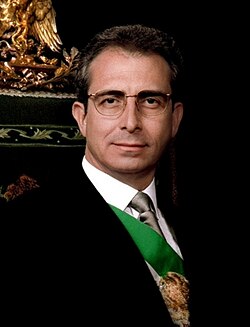
Key figures included Vicente Fox, Ernesto Zedillo, Andrés Manuel López Obrador.
In the aftermath: Fox meets President Zedillo; Murder of human rights lawyer Digna Ochoa; End of Fox presidency and poverty rate reduction.
Ended 71 years of PRI rule