
People in this story
| Event | Civil unrest breaks out in Malé |
|---|---|
| Date | September 20, 2003 |
| Location | Malé, Maldives |
| Key Figure | Hassan Evan Naseem |
| Source Detail | Naseem died from lung injuries sustained during a beating by National Security Service personnel. |
| Confirmed Outcome | A State of Emergency was declared in Malé and nearby islands. |
Timeline: the road to Civil and its aftermath
- September 19, 2003 Security personnel from the National Security Service beat Hassan Evan Naseem at Maafushi Jail.
- September 20, 2003 Hassan Evan Naseem dies in the early morning at Maafushi Prison.
- September 20, 2003 Inmates at Maafushi Prison learn of Naseem's death and perform funeral prayers.
- September 20, 2003 Civil unrest breaks out in Malé, the capital of the Maldives.
- September 20, 2003 President Maumoon Abdul Gayoom goes on national television to appeal for calm.
- September 20, 2003 The government controls the unrest by around 23:00 and declares a State of Emergency in Malé and nearby islands.
- September 20, 2003 Information Minister Ibrahim Manikku Manikku states that the death resulted from a clash between prisoners at Maafushi.
The Disaster and Its Immediate Cause
Civil unrest erupted in Malé, the capital of the Maldives, on Saturday, September 20, 2003. The disturbance was provoked by the death of Hassan Evan Naseem at Maafushi Prison, a facility located on a separate inhabited island. Naseem had been serving a sentence for drug abuse related offenses when the fatal incident occurred.
Many government buildings, vehicles, and other public properties were set on fire, with some structures being completely destroyed. The violence marked a sharp departure from the typical tranquility associated with the island nation.
First Reports From the Scene
On Friday, September 19, 2003, security personnel from the National Security Service beat Naseem while he was held at Maafushi Jail. The beating was administered as punishment for disturbances arising from disputes between Naseem's inmates and neighboring prisoners. Although Naseem was reportedly not involved in the initial incident, his name appeared on a list of troublemakers that security guards used to round up specific prisoners.
Naseem resisted the attempt to remove him from his cell, demanding reasons for his summoning. This resistance led to an injury sustained by a security guard, prompting numerous members of the security unit to storm into the cell. Naseem was subsequently moved to solitary confinement, referred to as The Range, where he was severely beaten by twelve officers on the same night. He died in the early morning of September 20, 2003, largely due to injuries sustained to his lungs from the beating.
Rescue, Response, and Fallout
Inmates at Maafushi Prison learned of Naseem's death at approximately 11:00 on September 20, 2003. Following repeated, unanswered demands to meet with a Security officer from the Department of Corrections, some prisoners refused to take lunch to reflect their concern. Funeral prayers were performed by Naseem's inmates and other prisoners after mid-day prayers, shortly before a loud uproar emerged from Block C, where Naseem's cell was located.
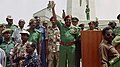
Two inmates jumped out of cell C3 after its corrugated iron sheets were pushed open, and more prisoners followed them to attack jail security unit personnel. Captain Adam Mohamed, who was in charge of the security unit, was informed of the uprising. In the capital, President Maumoon Abdul Gayoom went on national television to appeal for calm as groups set fire to several cars and attempted to torch buildings.
The Questions the Disaster Left Behind
The government controlled the unrest by around 23:00 on September 20, 2003, after officers fired teargas to disperse mobs that had attacked government vehicles and public buildings. A State of Emergency was declared in Malé and nearby islands, and fire engines and armed police vehicles were seen patrolling the narrow paved streets of the capital.
Late night curfews were enforced in Malé from 22:00 to 04:30 for more than a month following the rioting. The authorities disputed the relatives' claim that police were responsible for the death, with Information Minister Ibrahim Manikku Manikku stating that the death resulted from a clash between prisoners at Maafushi.
Evidence Map: How We Checked the Central Claim
What the sources verify and how they were used
This comparison separates the event page selected for the account from the independently verified page used to corroborate it.
Central claim checked: Civil unrest in the Maldives breaks out after a prisoner is killed by guards.
| Direct source | Verification role | Coverage |
|---|---|---|
| 2003 Maldives civil unrest · Wikipedia Accessed 2026-09-20 | Selected event record | Supports the central claim shown above. |
| Rioting breaks out in Maldives · aljazeera.com Accessed 2026-09-20 | Independent corroboration | Supports the central claim shown above. |
You Might Also Like


Questions readers ask about 2003 Maldives civil unrest
The recorded event date is September 20, 2003.
Key figures included Hassan Evan Naseem, Maumoon Abdul Gayoom.