
People in this story
| Event | Oslo Pride Shooting |
|---|---|
| Date | June 25, 2022 |
| Location | Oslo, Norway |
| Key Figure | Zaniar Matapour (shooter) |
| Significance | Only IS linked terrorist incident in Norway as of 2026 |
| Legacy | Heightened security for LGBTQ events and a 30 year prison sentence for the shooter |
First Reports From the Scene
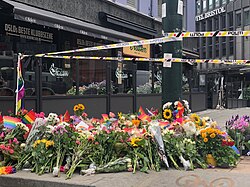
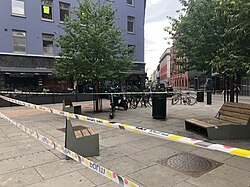
A journalist from the Norwegian public broadcaster NRK, who was present at the scene, described a man arriving with a bag, drawing a weapon, and beginning to fire while shouting 'Allahu Akbar', a detail that appears in the source material, and which was corroborated by an unnamed witness, providing a vivid snapshot of the chaos that erupted in the streets of Oslo that night, with the journalist's testimony offering crucial insight into the events during the attack, including the use of a Luger pistol and an MP 40 submachine gun, and the fact that approximately eighty to one hundred people hid in the pub's basement during the attack, and the wounded were found both inside and outside the venue, including the London Pub and Per på hjørnet bar, which were the main sites of the attack.
The official record, however, offers limited personal testimony beyond the NRK journalist and the unnamed witness, leaving gaps about the precise sequence of shots and the reactions of bystanders, although it is known that the gunman first took out a Luger P08 handgun and fired 8 rounds at the people in front of him, and then raised his MP 40 submachine gun and fired 10 shots in sporadic bursts, before the gun jammed, and the gunman ran away from the scene of the crime, and was eventually disarmed and overpowered by civilians, who demonstrated spontaneous bravery and quick thinking in the face of terror.
Timeline: the road to Oslo Pride Shooting and its aftermath
- 2015 Norwegian Intelligence Service identifies Zaniar Matapour as a suspect
- June 25, 2022 Oslo Pride Shooting
- June 25, 2022 Police investigation starts
- March 2024 Trial of Zaniar Matapour begins
Rescue, Response, and Fallout
Police were called at 01:15 local time and arrived within minutes, detaining the suspect, Zaniar Matapour, five minutes after the shooting, as documented in the source, and rushing victims to Oslo University Hospital, which placed its emergency department on red alert and treated ten individuals for serious injuries, including gunshot wounds, while the remaining eleven received treatment for minor wounds, in a swift medical response coordinated by the hospital and the emergency services, which prevented further loss of life and mitigated the long-term health impact on survivors, and demonstrated the effectiveness of Norway's health infrastructure in handling mass casualty events, such as the Oslo Pride shooting.
In the weeks that followed, authorities launched a thorough investigation, led by the Norwegian police and the Norwegian Intelligence Service, which linked the shooter to the extremist network of Arfan Bhatti, leading to a trial that began in March 2024 and resulted in a thirty-year forvaring sentence for the shooter, and a separate trial for Bhatti, which started in September 2025, and resulted in a sentence of at least thirty years imprisonment, demonstrating a coordinated legal effort to dismantle the terrorist cell and prevent similar attacks in the future, and highlighting the importance of effective prosecution in preventing such attacks, as seen in the case of the Oslo Pride shooting, which was the only terrorist incident linked to the Islamic State to occur in Norway as of 2026.
The Questions the Disaster Left Behind
The Oslo Pride shooting, which occurred on June 25, 2022, forced Norway to confront the reality that Islamist terrorism could target domestic cultural events, prompting tighter security at future pride celebrations, and a reassessment of intelligence sharing practices, as well as a review of the country's counter-terrorism strategy, to prevent similar attacks, and to protect the rights of the LGBTQ community, which was the target of the attack, as noted by the Norwegian Organisation for Sexual and Gender Diversity, which hosted the pride event, and the Norwegian authorities, including the police and the Norwegian Intelligence Service, which investigated the attack and brought the perpetrators to justice.
The case highlights the challenges of balancing civil liberties with security imperatives, particularly in a country like Norway, which has a strong tradition of democratic safeguards, and underscores the need for more effective surveillance and preventive measures, as well as greater transparency in the investigation and prosecution of terrorist cases, to prevent similar attacks in the future, and to ensure that the perpetrators of such attacks are held accountable, as was the case with Zaniar Matapour and Arfan Bhatti, who were sentenced to thirty years and at least thirty years imprisonment, respectively, for their roles in the attack, as reported by the Norwegian public broadcaster NRK, and documented in the court records of the Oslo District Court.
Our Take: Risk, Response, and Accountability
What Worked Under Pressure
- Effective Judicial Response: The Norwegian courts delivered a decisive verdict by sentencing the shooter to thirty years of forvaring, a measure that reflects the severity of murder, attempted murder, and terrorism charges. This outcome demonstrates that the legal system can impose a punishment commensurate with the gravity of the crime, even when the perpetrator has a history of minor convictions, such as Zaniar Matapour. By also convicting the alleged facilitator Arfan Bhatti to a comparable term, the judiciary signaled a clear stance against both the act and its ideological support network, reinforcing the rule of law and the importance of holding perpetrators accountable.
- Rapid Emergency Medical Care: Oslo University Hospital's swift activation of a red alert protocol ensured that ten critically injured victims received immediate intensive care, while the remaining eleven received timely treatment for less severe wounds. The coordinated effort of emergency responders, who arrived within minutes of the police call, prevented further loss of life and mitigated the long-term health impact on survivors, demonstrating the effectiveness of Norway's health infrastructure in handling mass casualty events.
- Public Resilience and Civilian Intervention: A civilian who confronted the gunman during his escape managed to disarm him after the weapon jammed, an act that likely prevented additional casualties. This spontaneous bravery, coupled with the collective effort of dozens of bystanders who tackled the shooter, showcases the willingness of ordinary citizens to protect one another in moments of terror, and highlights the importance of civilian involvement in preventing further harm, as seen in the response to the Oslo Pride shooting.
What Failed Before Impact
- Intelligence Oversight Failure: Police had identified the shooter as a suspect as early as 2015, yet the information was not acted upon in a manner that could have prevented the attack. This lapse points to a systemic shortcoming in the monitoring of radicalised individuals with known violent histories, such as the shooter, who had a long criminal record for drug and assault offenses, and had been diagnosed with paranoid schizophrenia, complicating a simple narrative of religious extremism, and underscoring the difficulty of predicting violent actions from a single motive, as noted by the Norwegian Intelligence Service.
- Inadequate Pre-Event Security: Despite the upcoming pride parade, security measures at the three targeted venues were insufficient to deter a determined attacker. The lack of visible police presence or metal detectors allowed the gunman to enter with a bag and deploy a Luger pistol and an MP 40 submachine gun without detection, highlighting the need for stronger protective protocols at high-profile public gatherings, such as those organized by the Norwegian Organisation for Sexual and Gender Diversity.
- Delayed Legal Action Against Facilitators: Arfan Bhatti, the alleged facilitator, was not brought before a court until September 2025, more than three years after the shooting. The prolonged investigation and trial delayed accountability for those who may have inspired or supported the attack, and allowed the extremist network to remain active for an extended period, underscoring the importance of swift prosecution in preventing similar attacks, as seen in the case of the Oslo Pride shooting.
- Insufficient Public Communication: The shooter’s lawyer demanded that interrogations be made public in their entirety, yet police continued to withhold recordings, creating a climate of suspicion among the public. The lack of transparent communication about investigative procedures eroded trust in law enforcement and fueled speculation about potential evidence manipulation, highlighting the need for greater openness and transparency in the investigation and prosecution of terrorist cases, such as the Oslo Pride shooting.
The Oslo Pride shooting on June 25, 2022, was a brutal attack that killed two men and wounded twenty-one, with the shooter, Zaniar Matapour, using a Luger P08 handgun and an MP 40 submachine gun to discharge eighteen rounds before being detained by police, as reported by the Norwegian public broadcaster NRK, and documented in the police records, which highlight the severity of the attack and the need for swift medical response, and demonstrate the importance of effective prosecution in preventing similar attacks, as seen in the case of the Oslo Pride shooting, which was investigated by the Norwegian police and the Norwegian Intelligence Service, and prosecuted by the Oslo District Court, resulting in a thirty-year forvaring sentence for the shooter, and a sentence of at least thirty years imprisonment for the facilitator Arfan Bhatti, as noted by the Norwegian authorities, including the police and the Norwegian Intelligence Service, which investigated the attack and brought the perpetrators to justice.

Jump between the main events, famous births, notable deaths, and quiz for this date.
You Might Also Like


Questions readers ask about Oslo Pride Shooting
The lead-up included Norwegian Intelligence Service identifies Zaniar Matapour as a suspect.
Key figures included Zaniar Matapour, Arfan Bhatti.
In the aftermath: Police investigation starts; Trial of Zaniar Matapour begins.
Only IS linked terrorist incident in Norway as of 2026