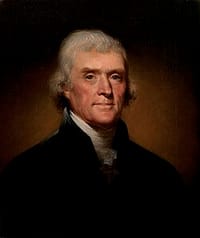
Congressional ApprovalFirst Congress, July 21, 1789
RenamedDepartment of State, September 15, 1789
Did You Know?
Did you know
Washington's signature on July 27, 1789 came six days after the First Congress voted on July 21, meaning the whole approval process for America's first federal department took under a week from floor vote to presidential signature.
Did you know
Before it was ever called a department, foreign affairs work sat with a 1775 Committee of Secret Correspondence, then a 1777 Committee of Foreign Affairs, a lineage of committees that outlasted both the Revolutionary War and one entire form of American government.
Did you know
Two clerks ran the whole foreign and domestic side of American diplomacy in 1790, a staffing level so thin that a single missed appointment could have left an entire desk of the federal government unmanned for weeks.
Did you know
The same September 1789 law that renamed the agency the Department of State also put it in charge of the United States Mint, meaning the nation's diplomats and its coin makers briefly answered to the same Cabinet officer.
Did you know
Louis McLane's seven bureau reorganization of 1833 did not even survive one full year before John Forsyth cut it down again, a reminder that early federal bureaucracy could be redrawn almost as fast as it was drawn up.
We like to start with the paperwork. That is really what happened on July 27, 1789. The First Congress had approved a short piece of legislation six days earlier, on July 21, and President George Washington signed it into law on July 27, creating the Department of Foreign Affairs. That made it the first federal agency organized under the brand new Constitution, arriving before the Treasury and War departments that followed later the same summer. At the time the national government was sitting in New York City, working out of Federal Hall on Wall Street, since the move to a permanent capital on the Potomac was still years away and Washington had barely settled into the presidency himself. The surviving congressional record still carries that short law almost unchanged.
The office Washington created that day was not entirely new. Congress had already run a Department of Foreign Affairs since 1781, under the Articles of Confederation, and that department had grown out of a Committee of Foreign Affairs formed in 1777, which in turn had grown out of a Committee of Secret Correspondence from 1775. What changed on July 27, 1789 was the legal ground underneath the office. It now answered to a president and an executive branch defined by the Constitution, instead of reporting only to a single Confederation Congress. Congress kept the same short law on the books for the department going forward, and it still forms the basic legal charter of the agency today.
Evidence Map: How We Checked the Central Claim
What the sources verify and how they were used
This comparison separates the event page selected for the account from the independently verified page used to corroborate it.
Central claim checked: The First Congress approved legislation on July 21, 1789 to reestablish the Department of Foreign Affairs, and President George Washington signed it into law on July 27, 1789, making it the first federal agency created under the new Constitution.
Additional legislation renamed the agency the Department of State in September 1789 and assigned it domestic duties including the United States Mint, the Great Seal, and the census.
The primary-source statute text confirms Chapter IV of the First Congress's First Session, dated July 27, 1789, was titled An Act for establishing an Executive Department, to be denominated the Department of Foreign Affairs, later altered by the act of September 15, 1789.
Claims are paraphrased for comparison; use the direct source links for the full record.
For most of its first year, the department barely resembled the sprawling agency it later became. Thomas Jefferson did not arrive to take charge until 1790, after returning from his post in Paris, and the surviving record for that early period describes a strikingly small operation. Once Jefferson took over, the department had only six people on its staff, two diplomatic posts abroad, in London and in Paris, and ten consular posts scattered across various ports. One clerk handled foreign business and a second clerk handled domestic business, a division that lasted only until Congress created separate chief clerk positions for each office in June 1790, before folding the two roles back into a single clerk within a month.
In September 1789, only weeks after Washington's July signature, Congress passed further legislation renaming the agency the Department of State and loading it up with a grab bag of domestic paperwork. The department was handed the job of running the United States Mint, keeping custody of the Great Seal of the United States, and administering the national census, on top of its foreign affairs duties. Washington signed that follow-up bill on September 15, 1789. Most of those domestic chores drifted off to other federal departments and agencies as the nineteenth century went on, though the secretary of state still keeps the Great Seal today and is still the official who receives a president's or vice president's written resignation.
Watch on YouTube
Find documentaries and videos about: Department of Foreign Affairs Established
Timeline: the road to this event and its aftermath
July 21, 1789First Congress approved legislation to reestablish the Department of Foreign Affairs under the new government
July 27, 1789President George Washington signed the act establishing the Department of Foreign Affairs, making it the first federal agency under the Constitution
September 15, 1789Congress passed legislation renaming the agency the Department of State and assigning it domestic duties such as the Mint and the census
June 1790Congress created separate chief clerk positions for each office, then folded the roles back into a single clerk within a month
1790Thomas Jefferson took charge of the department, which then had six staff members and limited diplomatic posts
The department kept growing in fits and starts across the nineteenth century. In 1833, Secretary of State Louis McLane restructured the whole operation into seven separate bureaus, covering everything from diplomatic and consular work to archives, pardons, and translation. The next secretary of state, John Forsyth, cut that back down to four bureaus under a single chief clerk the very next year. Congress kept bolting on new responsibilities over the following decades, including patent administration starting in 1793, an office of Commissioner of Patents in 1836, and an Assistant Secretary of State position created in 1853 to help oversee the growing bureau structure underneath the secretary, whose annual report to Congress kept getting longer with every decade.
None of that early bureaucratic tinkering hinted at what the department would eventually become. As of 2024, the State Department maintains 271 diplomatic posts around the world, a total second only to the network run by the Ministry of Foreign Affairs of China. The agency now trains foreign service officers and military personnel, issues passports and visas, tracks foreign travel advisories, and runs the Bureau of Intelligence and Research, the oldest civilian intelligence outfit in the federal government, alongside its own law enforcement arm in the Diplomatic Security Service. All of that traces back to the six-person office Jefferson found waiting for him in 1790.
It is easy to read July 27, 1789 as a footnote sitting in the shadow of Washington's inauguration that April, but the paper trail says otherwise. Congress chose to build a foreign affairs office before it built almost anything else, a full month before the Treasury Department existed on paper at all. That sequence says something about how the First Congress weighed the young republic's most urgent problem, which was proving to European powers that the United States could actually speak with one voice.
The department's own account of its history, laid out on Wikipedia and in the surviving statute record, still calls the July 1789 act its basic law, more than two centuries and roughly 271 diplomatic posts later. The secretary of state confirmed by the Senate today, currently Marco Rubio, holds a job description that would still be recognizable to whoever briefed Washington's cabinet on foreign affairs back in Federal Hall. Few pieces of eighteenth century paperwork, written for a six person office, have aged quite that well.
Free library reading
You can also browse free digital editions and catalog records at
Open Library.
Analysis: United States Department of State
What the evidence supports and leaves unresolved
The overview above gives the factual narrative. This optional section separates interpretation from the documented record.
What the record supports
A Precise Paper Trail: The Wikipedia record for this event is unusually exact for an eighteenth century law. It names the specific dates for congressional approval on July 21, 1789, Washington's signature on July 27, and the renaming act on September 15, giving readers a firm chronological spine instead of the vague seasonal dating that often shows up in accounts of the First Congress.
A Clear Line of Institutional Descent: The source traces the office back through four distinct bodies, the 1775 Committee of Secret Correspondence, the 1777 Committee of Foreign Affairs, the 1781 Department of Foreign Affairs, and finally the 1789 department Washington signed into law, letting readers follow one continuous thread of American diplomacy across fourteen years and two different constitutions, from Continental Congress to Cabinet department.
Concrete Early Staffing Numbers: Rather than describing the young department only in general terms, the source gives hard numbers, six staff members, two diplomatic posts in London and Paris, and ten consular posts, once Jefferson took charge in 1790. Numbers like that make the department's tiny original scale far easier to picture than a vague description of an understaffed office, and they make the growth to 271 posts today land with more weight.
Limits and unresolved questions
A Nine Month Leadership Gap: The source moves directly from Washington's July 27, 1789 signature to Jefferson taking charge of the department in 1790, without naming who ran daily operations at the office during the roughly nine months in between, while Jefferson was still finishing his diplomatic post in Paris and making his way back across the Atlantic before he could take up the new job.
Little on the July 21 Debate: The source states plainly that the First Congress approved the legislation on July 21, 1789, but it does not describe what, if any, floor debate or opposition the bill faced on its way to passage, leaving the actual legislative process behind that one short paragraph of law almost entirely undocumented for a general reader to follow.
Sparse Detail on the Earlier 1781 Office: The source spends only a single sentence on the 1781 Department of Foreign Affairs and its first secretary of foreign affairs, offering no detail on who held that Confederation era post, how large that earlier office was, or how its day to day work differed in practice from the 1789 department that followed the same basic model of one small office.
What stays with us about July 27, 1789 is the timing. Congress built a foreign affairs office a full month before it got around to the Treasury Department, which tells you what the First Congress was most worried about right after Washington's inauguration. A six person office with two diplomatic posts is a strange place to trace 271 modern embassies and consulates back to, but the Wikipedia record draws that line cleanly, from a 1775 wartime committee straight through to the department Marco Rubio now runs. It is a reminder that big institutions usually start as one short, unglamorous piece of paper.
The lead-up included First Congress approved legislation to reestablish the Department of Foreign Affairs under the new government.
Key figures included George Washington, Thomas Jefferson.
In the aftermath: Congress passed legislation renaming the agency the Department of State and assigning it domestic duties such as the Mint and the census; Congress created separate chief clerk positions for each office, then folded the roles back into a single clerk within a month; Thomas Jefferson took charge of the department, which then had six staff members and limited diplomatic posts.
It is easy to read July 27, 1789 as a footnote sitting in the shadow of Washington's inauguration that April, but the paper trail says otherwise.
About this article
AI assisted with source research and drafting. Before publication, automated safeguards checked direct citations, independent corroboration of the central claim, factual consistency, and required article structure. A human editor does not necessarily review every article before publication, so errors may remain. Read our editorial process.
The direct historical sources used for the central event are listed above.
Images via Wikimedia Commons.
Found an error? Let us know.
Advertisement
Advertisement
Test Your Knowledge
Based on the article you just read — 5 questions, under a minute.
0 of 5 answered
History runs on facts, and this project runs on coffee!
Your support is incredibly helpful and genuinely appreciated.