
Cite this page
“Lascaux Cave Discovery — April 3, 1940.” thisDay, 3 Apr. 2026, thisday.info/blog/3-april-2026/. Accessed 3 Oct. 2026.
Lascaux Cave Discovery — April 3, 1940. (2026, April 3). thisDay. Retrieved October 3, 2026, from https://thisday.info/blog/3-april-2026/
“Lascaux Cave Discovery — April 3, 1940.” thisDay. April 3, 2026. Accessed October 3, 2026. https://thisday.info/blog/3-april-2026/.
What was Lascaux Cave Discovery?
The Lascaux Cave paintings are a collection of prehistoric cave paintings discovered on April 3, 1940, in Montignac, France
Key facts about the discovery of the Lascaux cave paintings
| Event | Discovery of the Lascaux Cave Paintings |
|---|---|
| Date | April 3, 1940 |
| Location | Montignac, France |
| Key Figure | Marcel Ravidat |
| Significance | Revealed 17,000-year-old prehistoric art |
| Legacy | One of the most famous prehistoric art discoveries |
Overview

April 3, 1940, wasn't just any day - it's when a group of teenagers, searching for a lost dog, stumbled upon the entrance to the Lascaux Cave in Montignac, France. As they ventured deeper, the walls hit them with a blast of color: vibrant, prehistoric paintings, estimated to be around 17,000 years old. That's what I call a discovery. The paintings were a window into the lives of prehistoric humans, and they were about to change everything.
It's the details that get you - the horses, deer, and bison, all meticulously painted on the cave walls. Abstract symbols and human figures, too. The level of sophistication is stunning, considering the limited resources and tech available to the artists. I mean, can you imagine creating something so intricate, so beautiful, with just primitive tools? That's what the Lascaux Cave paintings are - a testament to the artistic and cultural abilities of our ancient ancestors.






Eyewitness Accounts
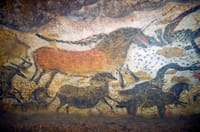
Marcel Ravidat, the leader of the group, described that moment: 'We were blown away by the beauty, the freshness of the colors.' They'd never seen anything like it. Ravidat's account gives us a glimpse into the initial discovery, the sense of wonder that came with exploring the ancient paintings. It's like they stumbled into a different world, one that was hidden for millennia.
The academic community was skeptical at first - concerns about authenticity, lack of documentation, potential forgery. But as evidence emerged, and the paintings were tested, they came to accept the Lascaux Cave paintings as one of the most significant prehistoric art discoveries of the 20th century. It wasn't easy, though - it took time, and a lot of convincing. The experts had to be sure, had to be certain that these paintings were the real deal.
"We were amazed by the beauty and the freshness of the colors"
Aftermath
The discovery sparked a frenzy of interest - scholars, artists, the general public, all clamoring to learn more about the ancient artwork. The cave was opened to the public in 1948, and it quickly became a tourist hotspot. But with great popularity comes great responsibility, and the influx of visitors took a toll on the delicate paintings and the cave environment. Concerns about preservation started to grow, and it became clear that something had to be done.
So, in 1963, the Lascaux Cave was closed to the public. The decision was made to preserve the site, to protect the paintings from further damage. It wasn't an easy call, but it was necessary. Today, the Lascaux Cave is considered one of the most important prehistoric art sites in the world, and it continues to be the subject of ongoing research and study. The paintings remain, a window into the past, a reminder of our shared humanity.
Legacy
The discovery of the Lascaux Cave paintings on April 3, 1940, was a game-changer. It shed new light on the lives and culture of prehistoric humans, and it continues to inspire wonder and awe in people around the world. The paintings are a unique glimpse into the artistic and cultural abilities of our ancient ancestors, and they remind us of the importance of preserving our cultural heritage. It's a big deal, and it's something we shouldn't forget.
The Lascaux Cave paintings are a testament to the power of art to transcend time and culture. They connect us to the people who created them, and they remind us of our shared humanity. As we gaze upon the vibrant images, we're taken back in time, to an era when life was different, when art was different. The discovery of the Lascaux Cave paintings is a reminder of the importance of exploration, discovery, and preservation - and it's something that continues to inspire us to this day.
Our Take: What Went Right & What Went Wrong
What Went Right
- Marcel Ravidat's Discovery: Marcel Ravidat's discovery of the Lascaux Cave paintings was a significant event that shed new light on the lives and culture of prehistoric humans. Ravidat's curiosity and determination led to the discovery of one of the most important prehistoric art sites in the world.
- Preservation Efforts: The efforts to preserve the Lascaux Cave paintings have been successful in protecting the site for future generations. The decision to close the cave to the public in 1963 was a difficult one, but it has ensured the long-term preservation of the paintings and the cave environment.
- Scholarly Research: The scholarly research that has been conducted on the Lascaux Cave paintings has greatly advanced our understanding of prehistoric art and culture. The paintings have been subjected to rigorous testing and analysis, and they continue to be the subject of ongoing research and study.
What Went Wrong
- Lack of Documentation: The lack of documentation and record-keeping in the early years after the discovery of the Lascaux Cave paintings has made it difficult to reconstruct the history of the site. This lack of documentation has led to concerns about the authenticity of the paintings and the potential for forgery.
- Over-Tourism: The over-tourism that occurred in the years after the Lascaux Cave was opened to the public had a significant impact on the delicate paintings and the cave environment. The influx of visitors took a toll on the site, leading to concerns about the long-term preservation of the paintings.
- Inadequate Preservation: The inadequate preservation efforts that were in place in the early years after the discovery of the Lascaux Cave paintings have been criticized for not doing enough to protect the site. The lack of funding and resources dedicated to preservation has put the paintings and the cave environment at risk.
- Systemic Failure: The systemic failure to prioritize the preservation of cultural heritage sites like the Lascaux Cave has led to the degradation of many important historical sites around the world. The lack of funding, resources, and attention dedicated to preservation has put many sites at risk, and it is a problem that requires a coordinated effort to address.
What strikes us about the discovery of the Lascaux Cave paintings is the way it has captivated the imagination of people around the world. The paintings are a powerful reminder of the importance of preserving our cultural heritage for future generations, and they continue to inspire wonder and awe in people of all ages. As we reflect on the significance of the Lascaux Cave paintings, we are reminded of the importance of exploration, discovery, and preservation, and we are inspired to continue learning about and protecting our cultural heritage.


