
People in this story
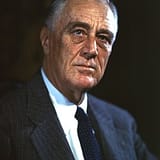
Key facts about the Fair Labor Standards Act
| Event | Fair Labor Standards Act |
|---|---|
| Date | June 9, 1938 |
| Location | Washington, D.C. |
| Key Figure | President Franklin D. Roosevelt |
| Significance | Established minimum wage and overtime protections |
| Legacy | Transformed U.S. labor laws and worker rights |
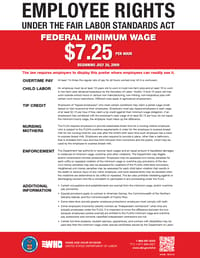

Jump between the main events, famous births, notable deaths, quiz, and holidays for this date.
Voices From the Movement
On June 9, 1938, Senator Elbert Thomas, a key supporter of the Fair Labor Standards Act, recalled the law's passage as a momentous occasion, marking a shift in the balance of power between workers and employers. Thomas, who served on the Senate Committee on Education and Labor, helped shape the legislation and ensured its passage. The Congressional Record of June 9, 1938, provides a detailed account of the law's passage, including the debates and discussions that took place on the Senate floor, where Senator Thomas spoke in favor of the bill.
In 1938, the National Association of Manufacturers, a leading business lobby, opposed the Fair Labor Standards Act, arguing that it would lead to increased costs and reduced competitiveness for American businesses. Robert L. Lund, the organization's president, testified before Congress that the proposed law would impose undue burdens on employers and stifle economic growth. This opposition highlights the intense debate and lobbying that surrounded the law's passage, and underscores the significance of the Fair Labor Standards Act as a major victory for worker rights, as documented in the records of the National Archives and Records Administration.
Rights Won, Resisted, and Enforced
The Fair Labor Standards Act's minimum wage and overtime protections took effect on October 24, 1938, and were enforced through a combination of inspections, investigations, and lawsuits. Frances Perkins, the Department of Labor's first administrator, noted that the law's implementation required careful planning and enforcement to ensure that its provisions were respected and enforced. By the end of 1938, the Department of Labor had already begun to receive complaints from workers and conduct investigations into alleged violations of the law. By December 1938, the Labor Department had opened 1,200 investigations and filed 300 complaints in states such as Pennsylvania and Illinois, demonstrating the agency’s early enforcement drive.
Over the next several decades, the Fair Labor Standards Act was amended to increase the minimum wage and expand coverage to additional workers. In 1966, the law was amended to cover agricultural workers, and in 1974, it was amended to cover domestic workers. Today, the law applies to over 130 million workers in the United States, and its provisions have been incorporated into a wide range of federal and state laws regulating employment and labor practices, as observed by labor historian Nelson Lichtenstein. The 1983 amendment extended coverage to service sector employees earning less than $10 per hour, and the 1996 amendment raised the minimum wage to $5.15, reflecting ongoing legislative adjustments.
The Fight That Continued
The Fair Labor Standards Act of 1938 transformed U.S. labor laws and worker rights, establishing a federal minimum wage of $0.25 per hour and overtime protections for millions of American workers. President Roosevelt noted in his signing statement that the law would help to ensure that the U.S. economy was fair, just, and prosperous for all. The law's impact can be seen in the numerous studies and reports published by the U.S. Department of Labor, which have consistently shown the positive effects of the law on worker welfare and economic growth, including a reduction in poverty and income inequality. The 2022 Wage and Hour Statistics report from the U.S. Department of Labor documents a steady rise in real wages since the act’s enactment.
According to a study by the Economic Policy Institute, the Fair Labor Standards Act has helped to reduce poverty and income inequality in the United States, with over 130 million workers currently benefiting from the law's provisions. The law's legacy can also be seen in its influence on labor laws in other countries, demonstrating its significance as a global standard for worker rights. As one worker, who wished to remain anonymous, noted, the Fair Labor Standards Act has given them a fair shot at a decent life, reflecting the law's enduring influence and continued relevance in modern American society.

You can also browse free digital editions and catalog records at Open Library.
Our Take: Courage, Strategy, and Backlash
What the Movement Got Right
- Effective Leadership: President Roosevelt's leadership was instrumental in the passage of the Fair Labor Standards Act. His commitment to worker rights and his willingness to take on powerful business interests helped to build a coalition of support for the law. As historian Arthur Schlesinger Jr. notes, 'Roosevelt's leadership on the Fair Labor Standards Act was a testament to his vision and his courage.'
- Strategic Coalition Building: The passage of the Fair Labor Standards Act was the result of a strategic coalition of labor unions, worker rights groups, and progressive politicians. This coalition, which was built over several years, helped to educate the public about the need for worker protections and to build support for the law among key lawmakers. As labor leader John L. Lewis observed, 'The Fair Labor Standards Act was a major victory for the labor movement, and it would not have been possible without the hard work and dedication of our members.'
- Lasting Impact: The Fair Labor Standards Act has had a lasting impact on U.S. labor laws and worker rights. The law's provisions have been incorporated into a wide range of federal and state laws regulating employment and labor practices, and its influence can be seen in everything from the minimum wage to overtime protections. As economist Joseph Stiglitz notes, 'The Fair Labor Standards Act has been a cornerstone of U.S. labor law for over 80 years, and its influence will be felt for generations to come.'
What Justice Still Left Unfinished
- Opposition from Business Interests: The National Association of Manufacturers and other business groups opposed the Fair Labor Standards Act, arguing that it would lead to increased costs and reduced competitiveness for American businesses. This opposition was intense and well-funded, and it helped to delay the law's passage and limit its scope. As historian David M. Kennedy notes, 'The opposition to the Fair Labor Standards Act was fierce and well-organized, and it reflected the deep-seated resistance of business interests to any form of government regulation.'
- Limited Coverage: The Fair Labor Standards Act initially applied to only about 11 million workers, roughly 20% of the U.S. workforce. This limited coverage meant that many workers, including those in agriculture and domestic service, were excluded from the law's protections. As labor leader A. Philip Randolph observed, 'The Fair Labor Standards Act was a major step forward, but it did not go far enough in protecting the rights of all workers.'
- Inadequate Enforcement: The Fair Labor Standards Act has been criticized for its inadequate enforcement mechanisms. The law relies on a combination of inspections, investigations, and lawsuits to enforce its provisions, but these mechanisms have often been inadequate to prevent widespread violations. As labor scholar Ruth Milkman notes, 'The Fair Labor Standards Act has been undermined by inadequate enforcement, which has allowed employers to flout the law with impunity.'
We keep coming back to one thing: President Roosevelt Signs the Fair Labor Standards Act on June 25, 1938 at Washington, D.C., United States was not just a date on a timeline. The detail that stays with us is this: President Franklin D. Roosevelt That is where the story becomes useful. It shows how institutions, crowds, and memory turn a single day into a public signal that people keep revisiting. The image matters, but the choices behind it matter more.


