June 9 in History

Kosovo War: The Federal Republic of Yugoslavia and NATO sign a peace treaty.

1999 — Kosovo War: The Federal Republic of Yugoslavia and NATO sign a peace treaty

June 9 spans 44 recorded events across recorded history, from 411 BC to 2010. Below is a curated digest of the most significant moments tied to this date.

By · Wikipedia

Historical Events 44 events 411 BC – 2010

More major events on June 9

The featured story and these ranked highlights form a quick summary. Every recorded event remains available in the chronology below.

  1. 1959 The USS George Washington is launched. It is the first nuclear-powered ballistic missile submarine. Source
  2. 1885 Treaty of Tientsin is signed to end the Sino-French War, with China eventually giving up Tonkin and Annam – most of present-day Vietnam – to France. Source
  3. 1965 Vietnam War: The Viet Cong commences combat with the Army of the Republic of Vietnam in the Battle of Đồng Xoài, one of the largest battles in the war. Source

Did you know

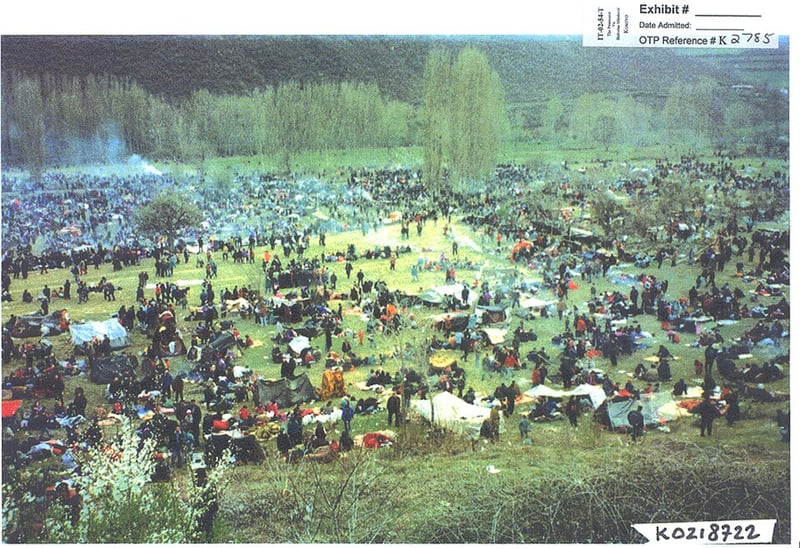
In 1999, Kosovo War: The Federal Republic of Yugoslavia and NATO sign a peace treaty. This featured entry focuses on the immediate decision and its direct historical impact.
Did you know

The Kosovo War was an armed conflict in Kosovo that lasted from 28 February 1998 until 11 June 1999. This helps explain why the event mattered beyond the initial announcement.

Did you know

It was fought between the forces of the Federal Republic of Yugoslavia (FRY), which controlled Kosovo before the war, and the Kosovo Albanian separatist militia known as the Kosovo Liberation Army (KLA). This clarifies the institutional and public response around the event.

Did you know

The conflict ended when the North Atlantic Treaty Organization (NATO) intervened by beginning air strikes in March 1999 which resulted in Yugoslav forces withdrawing from Kosovo. This shows how the event shaped policy and public communication in the same period.

Did you know

In 1999, Kosovo War: The Federal Republic of Yugoslavia and NATO sign a peace treaty had consequences that extended beyond the first headline. The key context is the institutions involved, the policy shift, and how the public response evolved afterward.


The Athenian coup succeeds, forming a short-lived oligarchy.
'The Four Hundred' oligarchy replaces the democratic government
The Athenian coup of 411 BC was the result of a revolution that took place during the Peloponnesian War between Athens and Sparta. The coup overthrew the democratic government of ancient Athens and replaced it with a short-lived oligarchy known as the Four Hundred.
-411
The Roman emperor Nero marries Claudia Octavia.
Calendar year
AD 53 (LIII) was a common year starting on Monday of the Julian calendar. At the time, it was known as the Year of the Consulship of Silanus and Antoninus. The denomination AD 53 for this year has been used since the early medieval period, when the Anno Domini calendar era became the prevalent method in Europe for naming years.
53
Nero dies by suicide after quoting Vergil's Aeneid, thus ending the Julio-Claudian dynasty and starting the civil war known as the Year of the Four Emperors.
Calendar year
AD 68 (LXVIII) was a leap year starting on Friday of the Julian calendar. At the time, it was known as the Year of the Consulship of Silius Italicus and Trachalus, or the start of the Year of the Four Emperors. The denomination AD 68 for this year has been used since the early medieval period, when the Anno Domini calendar era became the prevalent method in Europe for naming years. These are now used throughout the world.
68
Odo of Aquitaine defeats the Moors in the Battle of Toulouse.
8th-century Duke of Aquitaine
Odo the Great, was the Duke of Aquitaine by 700. His territory included Vasconia in the south-west of Gaul and the Duchy of Aquitaine, a realm extending from the Loire to the Pyrenees, with the capital in Toulouse. He fought the Carolingian Franks and made alliances with the Moors to combat them. He retained this domain until 735. He is remembered for defeating the Umayyads in 721 in the Battle of Toulouse. He was the first to defeat them decisively in Western Europe. The feat earned him the epithet "the Great". He also played a crucial role in the Battle of Tours, working closely with Charles Martel, whose alliance he sought after the Umayyad invasion of what is now southern France in 732.
721
Abbasid Revolution: Abu Muslim Khorasani begins an open revolt against Umayyad rule, which is carried out under the sign of the Black Standard.
Calendar year
Year 747 (DCCXLVII) was a common year starting on Sunday of the Julian calendar. The denomination 747 for this year has been used since the early medieval period, when the Anno Domini calendar era became the prevalent method in Europe for naming years.
747
Duccio
Duccio's Maestà, a seminal artwork of the early Italian Renaissance, is unveiled and installed in Siena Cathedral in Siena, Italy.
13th- and 14th-century Italian painter
Duccio di Buoninsegna, commonly known as just Duccio, was an Italian painter active in Siena, Tuscany, in the late 13th and early 14th century. He was hired throughout his life to complete many important works in government and religious buildings around Italy. Duccio is considered one of the greatest Italian painters of the Middle Ages, and is credited with creating the painting styles of Trecento Gothic style and the Sienese school.
1311
Simon_de_Colines
The Parisian Faculty of Theology fines Simon de Colines for publishing the Biblical commentary Commentarii initiatorii in quatuor Evangelia by Jacques Lefèvre d'Étaples.
15/16th-century French printer, editor, and publisher during the Renaissance
Simon de Colines was a Parisian printer and one of the first printers of the French Renaissance. He was active in Paris as a printer and worked exclusively for the University of Paris from 1520 to 1546. In addition to his work as a printer, Colines worked as an editor, publisher, and punchcutter. Over the course of his lifetime, he published over 700 separate editions. Colines used elegant roman and italic types and a Greek type, with accents, that were superior to their predecessors. These are now called French old-style, a style that remained popular for over 200 years and revived in the early 20th century. He used rabbits, satyrs, and philosophers as his pressmark.
1523
Jacques_Cartier
Jacques Cartier is the first European to describe and map the Saint Lawrence River.
French maritime explorer of North America (1491–1557)
Jacques Cartier was a French maritime explorer from Brittany. Jacques Cartier was the first European to describe and map the Gulf of Saint Lawrence and the shores of the Saint Lawrence River, which he named "Canada" after the Iroquoian names for the two big settlements he saw at Stadacona and at Hochelaga.
1534
James_Oglethorpe
James Oglethorpe is granted a royal charter for the colony of the future U.S.
state of Georgia.
Lieutenant-General James Edward Oglethorpe was a British army officer, Tory politician and colonial administrator best known for founding the Province of Georgia in British North America. As a social reformer, he hoped to resettle Britain's "worthy poor" in the New World, initially focusing on those in debtors' prisons.
1732
Kingdom_of_Great_Britain
The British schooner Gaspee is burned in Narragansett Bay, Rhode Island.
Sovereign state in Western Europe (1707–1801)
Great Britain, officially the Kingdom of Great Britain, was a sovereign state in Western Europe from 1707 to the end of 1800. The state was created by the 1706 Treaty of Union and ratified by the Acts of Union 1707, which united the Kingdom of England and the Kingdom of Scotland to form a single kingdom encompassing the whole island of Great Britain and its outlying islands, with the exception of the Isle of Man and the Channel Islands. The unitary state was governed by a single parliament at the Palace of Westminster, but the distinct legal systems—English law and Scots law—remained in use, as did distinct educational systems and religious institutions, namely the Church of England and the Church of Scotland remaining as the national churches of England and Scotland respectively.
1772
Irish_Rebellion_of_1798
Irish Rebellion of 1798: Battles of Arklow and Saintfield.
Part of the French Revolutionary Wars
The Irish Rebellion of 1798 was a popular insurrection against the British Crown in what was then the separate, but subordinate, Kingdom of Ireland. The main organising force was the Society of United Irishmen. First formed in Belfast by Presbyterians opposed to the landed Anglican establishment, the Society, despairing of reform, sought to secure a republic through a revolutionary union with the country's Catholic majority. The grievances of a rack-rented tenantry drove recruitment.
1798
Congress_of_Vienna
End of the Congress of Vienna: The new European political situation is set.
1814–1815 meetings to create a peace plan for Europe
The Congress of Vienna of 1814–1815 was a series of international diplomatic meetings to discuss and agree upon a possible new layout of the European political and constitutional order after the downfall of the French emperor Napoleon Bonaparte. Participants were representatives of all European powers and other stakeholders. The Congress was chaired by Austrian statesman Klemens von Metternich and was held in Vienna from September 1814 to June 1815.
1815
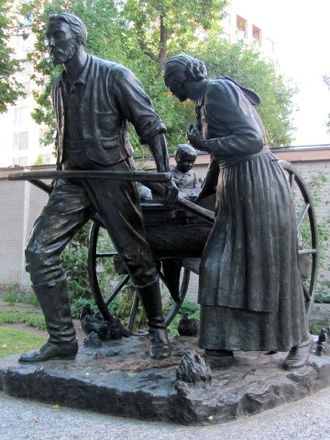
Mormon_handcart_pioneers
Five hundred Mormons leave Iowa City, Iowa for the Mormon Trail.
1856–1860 American religious migrants
The Mormon handcart pioneers were participants in the migration of members of the Church of Jesus Christ of Latter-day Saints to Salt Lake City, Utah, who used handcarts to transport their belongings. The Mormon handcart movement began in 1856 and continued until 1860.
1856
Règlement_Organique_(Mount_Lebanon)
The Beyoglu Protocol turns the district of Mount Lebanon into an autonomous region within the Ottoman Empire and grants the Christians more power over the Druze.
1860s European-Ottoman treaties
The Règlement Organique was a series of international conventions between the Ottoman Empire and the European Powers from 1860 to 1864 which led to the creation of the Mount Lebanon Mutasarrifate.
1861
American_Civil_War
American Civil War: Stonewall Jackson concludes his successful Shenandoah Valley Campaign with a victory in the Battle of Port Republic.
1861–1865 conflict in the United States
The American Civil War was a civil war in the United States between the Union and the Confederacy, which was formed in 1861 by states that had seceded from the Union to preserve slavery in the United States. The South saw slavery as threatened because of the election of Abraham Lincoln and the growing abolitionist movement in the North. The war ended with Union victory, the dissolution of the Confederacy and the abolition of slavery, freeing four million African Americans.
1862
Battle_of_Brandy_Station
American Civil War: The Battle of Brandy Station in Virginia, the largest cavalry battle on American soil, ends Confederate cavalry dominance in the eastern theater.
1863 cavalry engagement during the American Civil War
The Battle of Brandy Station, also called the Battle of Fleetwood Hill, was the largest predominantly cavalry engagement of the American Civil War, as well as the largest ever to take place on American soil. It was fought on June 9, 1863, around Brandy Station, Virginia, at the beginning of the Gettysburg campaign by the Union cavalry under Maj. Gen. Alfred Pleasonton against Maj. Gen. J. E. B. Stuart's Confederate cavalry.
1863
Treaty_of_Tianjin_(1885)
Treaty of Tientsin is signed to end the Sino-French War, with China eventually giving up Tonkin and Annam – most of present-day Vietnam – to France.
Treaty which ended the Sino-French War
The Treaty of Tianjin, signed on June 9, 1885, officially ended the Sino-French War. The "unequal treaty", or colonial treaty, restated in greater detail the main provisions of the Tianjin Accord, signed between France and China on May 11, 1884. As Article 2 required China to recognize the French protectorate over Annam and Tonkin established by the Treaty of Hue in June 1884, implicitly forcing China to abandon its claims to suzerainty over Vietnam, the treaty formalized France's diplomatic victory in the Sino-French War.
1885
Birsa_Munda
Indian nationalist Birsa Munda dies of cholera in a British prison.
Indian tribal freedom fighter and religious leader (1875–1900)
Birsa Munda was an Indian tribal independence activist, and folk hero who belonged to the Munda tribe. He spearheaded a tribal religious millenarian movement that arose in the Bengal Presidency in the late 19th century, during the British Raj, thereby making him an important figure in the history of the Indian independence movement. The revolt mainly concentrated in the Munda belt of Khunti, Tamar, Sarwada and Bandgaon.
1900
William_Jennings_Bryan
William Jennings Bryan resigns as Woodrow Wilson's Secretary of State over a disagreement regarding the United States' handling of the sinking of the RMS Lusitania.
American politician (1860–1925)
William Jennings Bryan was an American lawyer, orator, and politician. He was a dominant force in the Democratic Party, running three times as the party's nominee for President of the United States in the 1896, 1900, and 1908 elections. He served in the House of Representatives from 1891 to 1895 and as the secretary of state under Woodrow Wilson from 1913 to 1915. Because of his faith in the wisdom of the common people, Bryan was often called "the Great Commoner", and because of his rhetorical power and early fame as the youngest presidential candidate, "the Boy Orator".
1915
Åland
Åland's Regional Assembly convenes for its first plenary session in Mariehamn, Åland; today, the day is celebrated as Self-Government Day of Åland.
Autonomous region of Finland
Åland is an autonomous and demilitarised region of Finland. Receiving its autonomy in 1920, it is the smallest region of Finland by both area and population (30,654), constituting 0.51% of Finland's land area and 0.54% of its population. Its official language is Swedish and the capital city is Mariehamn.
1922
Bulgaria
Bulgaria's military takes over the government in a coup.
Country in Southeastern Europe
Bulgaria, officially the Republic of Bulgaria, is a country in Southeastern Europe. It is situated on the eastern portion of the Balkans directly south of the Danube river and west of the Black Sea. Bulgaria is bordered by Greece and Turkey to the south, Serbia and North Macedonia to the west, and Romania across the Danube river to the north. It covers a territory of 110,994 square kilometres (42,855 sq mi), making it the tenth largest within the European Union and the sixteenth-largest country in Europe by area. Sofia is the nation's capital and largest city; other major cities include Plovdiv, Varna, and Burgas.
1923
Charles_Kingsford_Smith
Charles Kingsford Smith completes the first trans-Pacific flight in a Fokker Trimotor monoplane, the Southern Cross.
Australian aviator (1897–1935)
Sir Charles Edward Kingsford Smith, nicknamed Smithy, was an Australian aviation pioneer. He piloted the first transpacific flight and the first flight between Australia and New Zealand.
1928
Chicago_Tribune
A Chicago Tribune reporter, Jake Lingle, is killed during rush hour at the Illinois Central train station by Leo Vincent Brothers, allegedly over a $100,000 gambling debt owed to Al Capone.
Major American newspaper, founded 1847
The Chicago Tribune is an American daily newspaper based in Chicago, Illinois, United States. Founded in 1847, it was formerly self-styled as the "World's Greatest Newspaper", a slogan from which its once-integrated WGN radio and WGN television received their call letters. It is the most-read daily newspaper in the Chicago metropolitan area and the Great Lakes region, and the sixth-largest newspaper by print circulation in the United States.
1930
World_War_II
World War II: Ninety-nine civilians are hanged from lampposts and balconies by German troops in Tulle, France, in reprisal for maquisards attacks.
Global conflict (1939–1945)
World War II, or the Second World War, was a global conflict between two coalitions: the Allies and the Axis powers. Nearly all of the world's countries participated, with many engaging in total war on an unprecedented scale. World War II was the deadliest conflict in history, causing the deaths of 60 to 75 million people, a majority of whom were civilians. Millions died as a result of massacres, starvation, disease, and genocides including the Holocaust. After the Allied victory, Germany, Austria, Japan, and Korea were occupied, and German and Japanese leaders were tried for war crimes.
1944
Soviet_Union
World War II: The Soviet Union invades East Karelia and the previously Finnish part of Karelia, occupied by Finland since 1941.
Country in Eurasia from 1922 to 1991
The Soviet Union, officially the Union of Soviet Socialist Republics (USSR), was a transcontinental country that spanned much of Eurasia from its formation in 1922 until its dissolution in 1991. It was the world's third-most populous country, the largest by area, and bordered twelve other countries. A diverse multinational state, it was organized as a federal union of national republics, with the largest and most populous being the Russian Soviet Federative Socialist Republic (SFSR). The world's flagship communist state, it was governed by the Communist Party under Marxism–Leninism, through soviet councils. The Soviet economy was also centrally planned. Its capital and largest city was Moscow.
1944
International_Council_on_Archives
Foundation of the International Council on Archives under the auspices of the UNESCO.
Industry organization based in France
The International Council on Archives is an international non-governmental organization which exists to promote international cooperation for archives and archivists. It was set up on 9 June 1948, with Charles Samaran, the then director of the Archives nationales de France, as chairman, and membership is open to national and international organisations, professional groups and individuals. In 2024, it grouped together about 2,000 institutional members in 149 countries and territories. Its mission is to promote the conservation, development and use of the world's archives.
1948
Tornado_outbreak_of_June_7–9,_1953
The Flint–Worcester tornado outbreak sequence kills 94 people in Massachusetts.
1953 tornado outbreak in the United States
An extremely devastating and deadly tornado outbreak impacted the Midwestern and Northeastern United States at the beginning of June 1953. It included two tornadoes that caused at least 90 deaths each—an F5 tornado occurring in Flint, Michigan on June 8 and an F4 tornado in Worcester, Massachusetts on June 9. These tornadoes are among the deadliest in United States history and were caused by the same storm system that moved eastward across the nation.
1953
Joseph_N._Welch
Joseph N.
Welch, special counsel for the United States Army, lashes out at Senator Joseph McCarthy during the Army–McCarthy hearings, giving McCarthy the famous rebuke, "You've done enough. Have you no sense of decency, sir, at long last? Have you left no sense of decency?"
Joseph Nye Welch was an American lawyer who served as the chief counsel for the United States Army while it was under investigation for alleged Communist activities by Senator Joseph McCarthy's Senate Permanent Subcommittee on Investigations, an investigation known as the Army–McCarthy hearings. His confrontation with McCarthy during the hearings, in which he asked McCarthy "Have you no sense of decency, sir, at long last?", is seen as a turning point in the history of McCarthyism.
1954
Broad_Peak
First ascent of Broad Peak by Fritz Wintersteller, Marcus Schmuck, Kurt Diemberger, and Hermann Buhl.
12th-highest mountain on Earth
Broad Peak is one of the eight-thousanders, and is located in the Karakoram range spanning Gilgit-Baltistan, Pakistan and Xinjiang, China. It is the 12th highest mountain in the world at 8,051 metres (26,414 ft) elevation above sea level. The first ascent of this mountain was in June 1957, accomplished by Fritz Wintersteller, Marcus Schmuck, Kurt Diemberger, and Hermann Buhl as part of an Austrian expedition.
1957
Aeroflot Flight 105 crashes on approach to Magdan-13 Airport, killing 24.
Airport in Magadan
Magadan-13 Airport is a small airport in Russia located 10 km northeast of Magadan. It handles most propeller-driven transports. Regular passenger Ilyushin Il-14 aircraft were flying here in the 1950s and early 1960s. In the 1970s and 1980s it was a busy airport for charter operations which served geological expeditions, firefighters, and local transport routes. This is probably a former PVO-Strany fighter field, based on the length of the now-unusable runway between the current active runway and the ramp area.
1958
USS_George_Washington_(SSBN-598)
The USS George Washington is launched.
It is the first nuclear-powered ballistic missile submarine.
USS George Washington (SSBN-598) was the United States's first operational ballistic missile submarine. She was the lead ship of her class of nuclear ballistic missile submarines, was the third United States Navy ship of the name, in honor of Founding Father George Washington (1732–1799), the first president of the United States, and was the first of that name to be purpose-built as a warship.
1959
South_Vietnam
The civilian Prime Minister of South Vietnam, Phan Huy Quát, resigns after being unable to work with a junta led by Nguyễn Cao Kỳ.
Country in Southeast Asia (1955–1975)
The Republic of Vietnam, commonly known as South Vietnam, was a country in Southeast Asia that existed from 1955 to 1975. It first garnered recognition in 1949 as the associated State of Vietnam within the French Union, with its capital at Saigon. Since 1950, it was a member of the Western Bloc during the Cold War. Following the 1954 partition of Vietnam, it became known as South Vietnam and was established as a republic in 1955. Although South Vietnam failed to gain admission into the United Nations as a result of a Soviet veto in 1957, its sovereignty was recognized by 95 countries as of January 1975. It was succeeded by the communist-controlled Republic of South Vietnam in 1975. In 1976, North Vietnam and the Republic of South Vietnam merged to form the Socialist Republic of Vietnam.
1965
Vietnam_War
Vietnam War: The Viet Cong commences combat with the Army of the Republic of Vietnam in the Battle of Đồng Xoài, one of the largest battles in the war.
1955–1975 war in Southeast Asia
The Vietnam War was an armed conflict in Vietnam, Laos, and Cambodia fought between North Vietnam and South Vietnam and their allies. North Vietnam was supported by the Soviet Union and China, while South Vietnam was supported by the United States and other anti-communist nations. The conflict was the second of the Indochina wars and a proxy war of the Cold War. The Vietnam War was one of the postcolonial wars of national liberation, a theater in the Cold War, and a civil war, with civil warfare a defining feature from the outset. Direct US military involvement escalated from 1965 until US forces were withdrawn in 1973. The fighting spilled into the Laotian and Cambodian civil wars, which ended with all three countries becoming communist in 1975.
1965
Six-Day_War
Six-Day War: Israel captures the Golan Heights from Syria.
1967 war between Israel and Arab states
The Six-Day War, or the 1967 Arab–Israeli war, was fought between Israel and a coalition of Arab states, primarily Egypt, Syria, and Jordan, in the context of the Arab–Israeli conflict. In the war, Israel captured and occupied the West Bank from Jordan, the Gaza Strip and the Sinai Peninsula from Egypt, and the Golan Heights from Syria.
1967
Lyndon_B._Johnson
U.S.
President Lyndon B. Johnson declares a national day of mourning following the assassination of Senator Robert F. Kennedy.
Lyndon Baines Johnson, also known as LBJ, was the 36th president of the United States from 1963 to 1969. Johnson was vice president under John F. Kennedy from 1961 until Kennedy's assassination in 1963, when he assumed the presidency. Before becoming vice president, he served in both houses of the U.S. Congress, representing Texas as a member of the Democratic Party.
1968
Black_Hills
Severe rainfall causes a dam in the Black Hills of South Dakota to burst, creating a flood that kills 238 people and causes $160 million in damage.
Mountain range in South Dakota and Wyoming, United States
The Black Hills are an outlying subrange of the greater Rocky Mountain system rising from the Great Plains of North America in western South Dakota and eastern Wyoming, United States. Black Elk Peak, which rises to 7,242 feet (2,207 m), is the range's highest summit. The name of the range in Lakota is Pahá Sápa. It encompasses the Black Hills National Forest. It formed as a result of an upwarping of ancient rock, after which the removal of the higher portions of the mountain mass by stream erosion produced the present-day topography. The Black Hills are part of the North American Cordillera, specifically a range within the Rocky Mountain Front of Wyoming, South Dakota, and Montana. The mountains are so called because of their dark appearance from a distance, as they are covered in evergreen trees.
1972
Secretariat_(horse)
In horse racing, Secretariat wins the U.S.
Triple Crown.
Secretariat, also known as Big Red, was a champion American Thoroughbred racehorse who was the ninth winner of the American Triple Crown, setting and still holding the fastest time record in all three of its constituent races. He became the first Triple Crown winner in 25 years and his record-breaking victory in the 1973 Belmont Stakes, which he won by 31 lengths, is often considered the greatest race ever run by a thoroughbred racehorse. During his racing career, he won five Eclipse Awards, including Horse of the Year honors at ages two and three. Widely regarded as one of the greatest racehorses of all time, he was nominated to the National Museum of Racing and Hall of Fame in 1974. In the Blood-Horse magazine List of the Top 100 U.S. Racehorses of the 20th Century, Secretariat was second to Man o' War.
1973
The Church of Jesus Christ of Latter-day Saints opens its priesthood to "all worthy men", ending a 148-year-old policy of excluding black men.
Largest church adhering to Mormonism
The Church of Jesus Christ of Latter-day Saints, informally known as the LDS Church or Mormon Church, is a Christian denomination and the largest denomination in the Latter Day Saint movement. Founded during the Second Great Awakening, the church is headquartered in Salt Lake City, Utah, United States, and has established congregations and built temples worldwide. According to the church, as of 2024, it had more than 17.5 million members, of which more than 6.8 million live in the United States. The church also reports more than 109,000 volunteer missionaries and more than 200 dedicated temples.
1978
Sydney_Ghost_Train_fire
The Ghost Train fire at Luna Park Sydney, Australia, kills seven.
1979 amusement park fire in Milson's Point, New South Wales, Australia
The Sydney Ghost Train fire at Luna Park Sydney in Australia killed seven people and destroyed the ride on 9 June 1979. The fire was originally blamed on an electrical fault despite firefighter observations to the contrary. A 1979 coronial inquiry and mid-1980s investigation were inconclusive about the fire's cause.
1979
Ansett_New_Zealand_Flight_703
Ansett New Zealand Flight 703 crashes into the Tararua Range during approach to Palmerston North Airport on the North Island of New Zealand, killing four.
1995 aviation accident in New Zealand
Ansett New Zealand Flight 703 was a scheduled flight from Auckland to Palmerston North. On 9 June 1995, the de Havilland Canada Dash 8-100 aircraft crashed into the Tararua Range on approach to Palmerston North. The flight attendant and three passengers died as a result of the crash; the two pilots and 15 passengers survived.
1995
2008_Beni_Amrane_bombings
Two bombs explode at a train station near Algiers, Algeria, killing at least 13 people.
Terrorist train bombings in Bourmerdès Province, Algeria
The 2008 Beni Amrane bombings were two bombings on June 9, 2008, that killed 13 people in the town of Beni Amrane in the Boumerdès Province, 50 km (31 mi) from Algiers, the capital of Algeria. The first bomb killed a French citizen and his Algerian driver as they were leaving the town's railway station. The second device exploded about five minutes later as rescue workers arrived. Eight soldiers and three firefighters died in the second blast while an unconfirmed number of people suffered injuries. Both devices appeared to have been detonated remotely. No group has claimed the bombings, which follow attacks blamed on the al-Qaeda Organization in the Islamic Maghreb group. The Frenchman was an engineer working for a French firm on a renovation project at the station.
2008
An explosion kills 17 people and injures at least 46 at a hotel in Peshawar, Pakistan.
2009 bombing by the Tehrik-i-Taliban in Peshawar, Pakistan
The Pearl Continental hotel bombing occurred on 9 June 2009 in Peshawar, Pakistan, in which 17 people were killed and at least 46 people injured. The blast occurred at the five-star Pearl Continental hotel in the city. The force of the explosion caused the hotel to partially collapse. Gunman also attacked the hotel, firing several shots at survivors. The United States had planned to purchase this hotel to convert it to a consulate.
2009
At least 40 people are killed and more than 70 wounded in a suicide bombing at a wedding party in Arghandab, Kandahar.
2010 suicide bombing in Kandahar Province, Afghanistan
A suicide bombing on a wedding party occurred on 9 June 2010 at around 21:00 local time in the village of Nadahan in Arghandab District of Kandahar Province, Afghanistan. The attack killed at least 40 people and wounded at least 77 others. The Ottawa Citizen described it as "the most lethal attack in the south in recent memory."
2010

History runs on facts, and this project runs on coffee!

Your support is incredibly helpful and genuinely appreciated.

Support with a coffee ☕