April 21 in History

53 events 753 BC – 2021

April 21 spans 53 recorded events across recorded history, from 753 BC to 2021. Below is a curated digest of the most significant moments tied to this date.

By · Wikipedia

1967 — A few days before the general election in Greece, Colonel George Papadopoulos leads a coup d'état, establishing a military regime that lasts for seven years

More major events on April 21

The featured story and these ranked highlights form a quick summary. Every recorded event remains available in the chronology below.

  1. 1789 George Washington's reception at Trenton is hosted by the Ladies of Trenton as he journeys to New York City for his first inauguration. Source
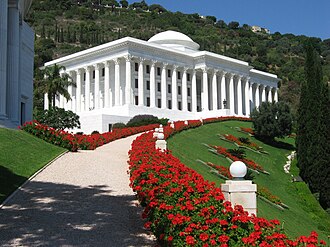
  2. 1963 The first election of the Universal House of Justice is held, marking its establishment as the supreme governing institution of the Baháʼí Faith. Source
  3. 1796 War of the First Coalition: In the climax of the Montenotte Campaign, Napoleon Bonaparte decisively defeats the army of Piedmont at the Battle of Mondovi, leading to Piedmont's surrender a week later and decisively turning the Italian campaign in France's favor. Source

Did you know

In 1967, A few days before the general election in Greece, Colonel George Papadopoulos leads a coup d'état, establishing a military regime that lasts for seven years. This featured entry focuses on the immediate decision and its direct historical impact.

Did you know

A general election is an electoral process to choose most or all members of a governing body at the same time. This helps explain why the event mattered beyond the initial announcement.

Did you know

They are distinct from by-elections, which fill individual seats that have become vacant between general elections. This clarifies the institutional and public response around the event.

Did you know

General elections typically occur at regular intervals as mandated by a country's constitution or electoral laws, and may include elections for a legislature and sometimes other positions such as a directly elected president. This shows how the event shaped policy and public communication in the same period.

Did you know

In many jurisdictions, general elections can coincide with other electoral events such as local, regional, or supranational elections. This helps explain why the event mattered beyond the initial announcement.


Romulus
Romulus founds Rome (traditional date).
King of Rome from 753 to 716 BC
Romulus was the legendary founder and first king of Rome. Various traditions attribute the establishment of many of Rome's oldest legal, political, religious, and social institutions to Romulus and his contemporaries. Although many of these traditions incorporate elements of folklore, and it is not clear to what extent a historical figure underlies the mythical Romulus, the events and institutions ascribed to him were central to the myths surrounding Rome's origins and cultural traditions.
-753
Battle_of_Mutina
Battle of Mutina: Mark Antony is again defeated in battle by Aulus Hirtius, who is killed.
Antony fails to capture Mutina and Decimus Brutus is murdered shortly after.
The Battle of Mutina took place on 21 April 43 BC between the forces loyal to the Senate under consuls Gaius Vibius Pansa and Aulus Hirtius, supported by the forces of Caesar Octavian, versus the forces of Mark Antony which were besieging the troops of Decimus Brutus. The latter, one of Caesar's assassins, held the city of Mutina in Cisalpine Gaul.
-43
Laguna_Copperplate_Inscription
The Laguna Copperplate Inscription (the earliest known written document found in what is now the Philippines): the Commander-in-Chief of the Kingdom of Tondo, as represented by the Honourable Jayadewa, Lord Minister of Pailah, pardons from all debt the Honourable Namwaran and his relations.
900 inscription found in the Philippines
The Laguna Copperplate Inscription is an official acquittance certificate inscribed onto a copper plate in the Shaka year 822. It is the earliest-known, extant, calendar-dated document found within the Philippines.
900
Archdiocese_of_Pisa
The Diocese of Pisa is elevated to the rank of metropolitan archdiocese by Pope Urban II.
Metropolitan see of the Catholic Church in western Italy
The Archdiocese of Pisa is a Latin Church metropolitan see of the Catholic Church in Pisa, Italy. It was founded in the 4th century and elevated to the dignity of an archdiocese on 21 April 1092 by Pope Urban II. The seat of the bishop is the cathedral of the Assumption in the Piazza del Duomo.
1092
Lisbon_massacre
The three-day Lisbon Massacre comes to an end with the slaughter of over 1,900 suspected Jews by Portuguese Catholics.
1506 antisemitic riot in the Kingdom of Portugal
On 19 April 1506, a crowd of churchgoers in Lisbon attacked and killed several people in the congregation whom they suspected were Jews. The violence escalated into a city-wide, antisemitic riot that killed between 500 and 4,000 "New Christians", the name for Jews who had been forcibly converted to Christianity.
1506
Henry_VIII
Henry VIII ascends the throne of England on the death of his father, Henry VII.
King of England from 1509 to 1547
Henry VIII was King of England and Ireland from 22 April 1509 until his death in 1547. Born in Greenwich, Henry was the second son of Henry VII and Elizabeth of York. His elder brother, Arthur, Prince of Wales, was heir apparent, but he died in 1502 at the age of 15. Henry took the throne at the age of 17 on his father's death in 1509. He married his brother's widow Catherine of Aragon. They had one daughter, the future Mary I, but no surviving male children.
1509
Lodi_dynasty
The last ruler of the Lodi dynasty, Ibrahim Lodi, is defeated and killed by Babur in the First Battle of Panipat.
Rulers of the Delhi Sultanate in India, 1451–1526
The Lodi dynasty was a royal family that ruled the Sultanate of Delhi from 1451 to 1526. It was the fifth and final dynasty of the Delhi Sultanate, and was founded by Bahlul Lodi when he replaced the Sayyid dynasty.
1526
Wignacourt_Aqueduct
The Wignacourt Aqueduct is inaugurated in Malta.
17th-century aqueduct in Malta
The Wignacourt Aqueduct is a 17th-century aqueduct in Malta, which was built by the Order of Saint John to carry water from springs in Dingli and Rabat to the newly built capital city Valletta. The aqueduct carried water through underground pipes and over arched viaducts across depressions in the ground.
1615
Bangkok
The city of Rattanakosin, now known internationally as Bangkok, is founded on the eastern bank of the Chao Phraya River by King Buddha Yodfa Chulaloke.
Capital and largest city of Thailand
Bangkok, known in Thai as Krung Thep Maha Nakhon and colloquially as Krung Thep, is the capital and most populous city of Thailand. The city occupies 1,568.7 square kilometres (605.7 sq mi) in the Chao Phraya River delta in central Thailand and has an estimated population of 9.1 million people as of 2024, 15.9% of the country's population. Over 17.4 million people live within the surrounding Bangkok Metropolitan Region as of the 2021 estimate, making Bangkok a megacity and an extreme primate city, dwarfing Thailand's other urban centres in both size and importance to the national economy.
1782
John_Adams
John Adams sworn in as first US Vice President (nine days before George Washington).
Founding Father, U.S. president from 1797 to 1801
John Adams was a Founding Father and the second president of the United States from 1797 to 1801. Before his presidency, he was a leader of the American Revolution that achieved independence from Great Britain. During the latter part of the Revolutionary War and in the early years of the new nation, he served the Continental Congress of the United States as a senior diplomat in Europe. Adams was the first vice president of the United States, serving from 1789 to 1797. He was a dedicated diarist and regularly corresponded with contemporaries, including his wife and advisor Abigail Adams and his friend and rival Thomas Jefferson.
1789
George_Washington's_reception_at_Trenton
George Washington's reception at Trenton is hosted by the Ladies of Trenton as he journeys to New York City for his first inauguration.
Event on April 21, 1789
George Washington's reception at Trenton was a celebration hosted by the Ladies of Trenton social club on April 21, 1789, in Trenton, New Jersey, as George Washington, then president-elect, journeyed from his home at Mount Vernon to his first inauguration in the then capital of the United States, New York City. A ceremonial triumphal arch was erected on the bridge over the Assunpink Creek to commemorate his two victories here, the Battle of Trenton on December 26, 1776 and the Battle of the Assunpink Creek on January 2, 1777.
1789
Tiradentes
Tiradentes, a revolutionary leading a movement for Brazil's independence, is hanged, drawn and quartered.
18th-century Brazilian revolutionary and national hero
Joaquim José da Silva Xavier, known as Tiradentes, was a leading member of the colonial Brazilian revolutionary movement known as the Inconfidência Mineira, whose aim was full independence from Portuguese rule and the creation of a republic. When the conspirators plot was uncovered by authorities, Tiradentes was arrested, tried and publicly hanged.
1792
War_of_the_First_Coalition
War of the First Coalition: In the climax of the Montenotte Campaign, Napoleon Bonaparte decisively defeats the army of Piedmont at the Battle of Mondovi, leading to Piedmont's surrender a week later and decisively turning the Italian campaign in France's favor.
1792–1797 wars between France and European powers
The War of the First Coalition was a set of wars between a coalition of several European powers and France fought between 1792 and 1797. The coalition was only loosely allied and fought without much coordination; each power wanted to annex a different part of France should they defeat the French, something that never occurred.
1796
Wahhabi_sack_of_Karbala
Twelve thousand Wahhabis sack Karbala, killing over three thousand inhabitants.
1802 sack of a city
The Wahhabi sack of Karbala occurred on 21 April 1802, under the rule of Abdulaziz bin Muhammad Al Saud, the second ruler of the Emirate of Diriyah, where approximately 12,000 Wahhabis from Najd attacked the Shia city of Karbala in Ottoman Iraq. The raid was conducted in retaliation against attacks on Hajj caravans by Iraqi tribes and coincided with the anniversary of Ghadir Khumm.
1802
Action_of_21_April_1806
Action of 21 April 1806: A French frigate escapes British forces off the coast of South Africa.
1806 action of the Napoleonic Wars
The action of 21 April 1806 was a minor engagement between the French and British navies off the Cape Colony during the Napoleonic Wars. The Isle Bonaparte and Isle de France were two French colonies in the Indian Ocean, from which privateers and frigate squadrons could engage in commerce raiding and disrupt British shipping. After encountering a strongly escorted British convoy, the 40-gun Cannonière attempted to flee, but was rejoined by the 74-gun HMS Tremendous. In the ensuing battle, Captain Bourayne displayed superior sailmanship and managed to fend off his much stronger opponent by a combination of manoeuvers that rendered the batteries of Tremendous ineffective, and threatened her with sustaining raking fire. The French frigate thus managed to evade and escape.
1806
Landshut
Two Austrian army corps are driven from Landshut by a First French Empire army led by Napoleon as two French corps to the north hold off the main Austrian army on the first day of the Battle of Eckmühl.
Town in Bavaria, Germany
Landshut is a town in Bavaria, Germany, on the banks of the River Isar. Landshut is the capital of Lower Bavaria, one of the seven administrative regions of the Free State of Bavaria, and the seat of the surrounding district. With a population of more than 75,000, Landshut is the largest city in Lower Bavaria.
1809
Benderli Ali Pasha arrives in Constantinople as the new Grand Vizier of the Ottoman Empire; he remains in power for only nine days before being sent into exile.
Grand Vizier of the Ottoman Empire (1821)
Benderli Ali Pasha was an Ottoman statesman. He was Grand Vizier of the Ottoman Empire.
1821
Texas_Revolution
Texas Revolution: The Battle of San Jacinto: Republic of Texas forces under Sam Houston defeat troops under Mexican General Antonio López de Santa Anna.
1835–1836 rebellion
The Texas Revolution was a rebellion by Anglo-American immigrants as well as Hispanic Texans against the centralist government of Mexico in the Mexican state of Coahuila y Tejas. Although the uprising was part of a larger revolt that included other provinces opposed to the regime of President Miguel Barragán and General Antonio López de Santa Anna, the Mexican government believed the United States had instigated the Texas insurrection with the goal of annexation. The Mexican Congress passed the Tornel Decree, declaring that any foreigners fighting against Mexican troops "will be deemed pirates and dealt with as such, being citizens of no nation presently at war with the Republic and fighting under no recognized flag". Only the province of Texas succeeded in breaking with Mexico, establishing the Republic of Texas. It was eventually annexed by the United States about a decade later.
1836
Australian labour movement: Stonemasons and building workers on building sites around Melbourne march from the University of Melbourne to Parliament House to achieve an eight-hour day.
Social and political movement
The Australian labour movement began in the early 19th century and since the late 19th century has included industrial and political wings. Trade unions in Australia may be formed on the basis of craft unionism, general unionism, or industrial unionism. Almost all unions in Australia are affiliated with the Australian Council of Trade Unions (ACTU). Many unions have undergone a significant process of amalgamations, especially in the late 1980s and early 1990s. The leadership and membership of unions hold and have at other times held a wide range of political views, including socialist, democratic and right-wing views.
1856
Krag–Jørgensen
Norway formally adopts the Krag–Jørgensen bolt-action rifle as the main arm of its armed forces, a weapon that would remain in service for almost 50 years.
Norwegian bolt-action rifle
The Krag–Jørgensen is a repeating bolt-action rifle designed by the Norwegians Ole Herman Johannes Krag and Erik Jørgensen in the late 19th century. It was adopted as a standard arm by Norway, Denmark, and the United States. About 300 were delivered to Boer forces of the South African Republic.
1894
Spanish–American_War
Spanish–American War: The United States Navy begins a blockade of Cuban ports.
When the U.S. Congress issued a declaration of war on April 25, it declared that a state of war had existed from this date.
The Spanish–American War was fought between Spain and the United States in 1898. It began with the sinking of the USS Maine in Havana Harbor in Cuba, and resulted in the U.S. acquiring sovereignty over Puerto Rico, Guam, and the Philippines, and establishing a protectorate over Cuba. It represented U.S. intervention in the Cuban War of Independence and Philippine Revolution, with the latter later leading to the Philippine–American War. The Spanish–American War brought an end to almost four centuries of Spanish presence in the Americas, Asia, and the Pacific; the United States meanwhile not only became a major world power, but also gained several island possessions spanning the globe, which provoked rancorous debate over the wisdom of expansionism.
1898
Ypiranga_incident
Ypiranga incident: A German arms shipment to Mexico is intercepted by the U.S.
Navy near Veracruz.
The Ypiranga Incident occurred on April 21, 1914, at the port of Veracruz in Mexico during the Mexican Revolution. Ypiranga was a German steamship that was commissioned to transport arms and munitions to the Mexican federal government under Victoriano Huerta. The United States had placed Mexico under an arms embargo to stifle the flow of weaponry to the war-torn state, then in the throes of civil war, forcing Huerta's government to look to Europe and Japan for armaments.
1914
World_War_I
World War I: German fighter ace Manfred von Richthofen, better known as "The Red Baron", is shot down and killed over Vaux-sur-Somme in France.
Global conflict from 1914 to 1918
World War I, or the First World War, also known as the Great War, was a global conflict between two coalitions: the Allies and the Central Powers. Major theatres of war included Europe and the Middle East, and well as parts of Africa and the Asia-Pacific. One of the deadliest conflicts in history, World War I resulted in an estimated 15 to 22 million deaths, including in mass war crimes against civilians and genocides. The conflict saw important developments in weaponry, including the first large-scale use of machine guns, artillery, aircraft, chemical weapons, and tanks, and was a major factor in the deadly Spanish flu pandemic.
1918
Al-Baqi_Cemetery
Al-Baqi cemetery, former site of the mausoleum of four Shi'a Imams, is leveled to the ground by Wahhabis.
First Islamic cemetery of Medina, Saudi Arabia
Jannat al-Baqī is the oldest and first Islamic cemetery of Medina located in the Hejaz region of present-day Saudi Arabia. It is also known as Baqi al-Gharqad.
1926
Loch_Ness_Monster
The "Surgeon's Photograph", the most famous photo allegedly showing the Loch Ness Monster, is published in the Daily Mail (in 1994, it is revealed to be a hoax).
Mythical creature in Scottish folklore
The Loch Ness Monster, known affectionately as Nessie, is a mythical creature in Scottish folklore that is said to inhabit Loch Ness in the Scottish Highlands. It is often described as large, long-necked, and with one or more humps protruding from the water. Popular interest and belief in the creature has varied since it was brought to worldwide attention in 1933. Evidence of its existence is anecdotal, with a number of disputed photographs and sonar readings.
1934
World_War_II
World War II: Soviet forces south of Berlin at Zossen attack the German High Command headquarters.
Global conflict (1939–1945)
World War II, or the Second World War, was a global conflict between two coalitions: the Allies and the Axis powers. Nearly all of the world's countries participated, with many engaging in total war on an unprecedented scale. World War II was the deadliest conflict in history, causing the deaths of 60 to 75 million people, a majority of whom were civilians. Millions died as a result of massacres, starvation, disease, and genocides including the Holocaust. After the Allied victory, Germany, Austria, Japan, and Korea were occupied, and German and Japanese leaders were tried for war crimes.
1945
National_Weather_Service
The U.S.
Weather Bureau records that a tornado which struck Timber Lake, South Dakota was 4 miles (6.4 km), among the widest tornadoes on record.
The National Weather Service (NWS) is an agency of the United States federal government that is tasked with providing weather forecasts, warnings of hazardous weather, and other weather-related products to organizations and the public for the purposes of protection, safety, and general information. It is a part of the National Oceanic and Atmospheric Administration (NOAA) branch of the Department of Commerce, and is headquartered in Silver Spring, Maryland, within the Washington metropolitan area. The agency was known as the United States Weather Bureau from 1891 until it adopted its current name in 1970.
1946
United_Nations_Security_Council_Resolution_47
United Nations Security Council Resolution 47 relating to Kashmir conflict is adopted.
1948 resolution on resolving the Kashmir conflict
United Nations Security Council Resolution 47, adopted on 21 April 1948, concerns the resolution of the Kashmir conflict. After hearing arguments from both India and Pakistan, the Council increased the size of the UN Commission created by the former Resolution 39 to five members, instructed the Commission to go to the subcontinent and help the governments of India and Pakistan restore peace and order to the region and prepare for a plebiscite to decide the fate of Kashmir.
1948
The Nainital wedding massacre occurs, killing 22 members of the Harijan caste.
The Nainital wedding massacre was a mass murder that occurred during a wedding in Nainital, India on April 21, 1950, when a drunk gurkha soldier stabbed 22 guests at a wedding, all of them apparently fatally.
1950
Administrative_Professionals_Day
Secretary's Day (now Administrative Professionals' Day) is first celebrated.
Day to recognize secretaries and others
Administrative Professionals Day is a day observed yearly in a small number of countries. It is not a public holiday in any of them. In some countries, it falls within Administrative Professionals Week. The day recognizes the work of secretaries, administrative assistants, executive assistants, personal assistants, receptionists, client services representatives, and other administrative support professionals. Typically, administrative professionals are given cards, flowers, chocolates, and lunches.
1952
United_Air_Lines_Flight_736
United Air Lines Flight 736 collides with a United States Air Force fighter jet near Arden, Nevada in what is now Enterprise, Nevada.
1958 mid-air collision in Nevada
United Air Lines Flight 736 was a scheduled American transcontinental passenger service flown daily by United Airlines between Los Angeles and New York City. On April 21, 1958, the airliner assigned to the flight, a Douglas DC-7 with 47 on board, was flying over Clark County, Nevada in clear weather when it was involved in a daytime mid-air collision with a United States Air Force fighter jet crewed by two pilots. Both aircraft fell out of control from 21,000 feet (6,400 m) and crashed into unpopulated desert terrain southwest of Las Vegas, leaving no survivors. The loss of Flight 736, one of a series of 1950s mid-air collisions involving passenger aircraft in American skies, helped usher-in widespread improvements in air traffic control within the United States, and led to a sweeping reorganization of federal government aviation authorities.
1958
Brasília
Brasília, Brazil's capital, is officially inaugurated.
At 09:30, the Three Powers of the Republic are simultaneously transferred from the old capital, Rio de Janeiro.
Brasília is the capital city of Brazil and the Federal District. Located in the Brazilian Highlands in the country's Central-West region, it was founded by President Juscelino Kubitschek on 21 April 1960, to replace Rio de Janeiro as the national capital. Brasília is Brazil's third-most populous city after São Paulo and Rio de Janeiro, with a population of 2.8 million. Among major Latin American cities, it has the highest GDP per capita.
1960
Century_21_Exposition
The Seattle World's Fair (Century 21 Exposition) opens.
It is the first World's Fair in the United States since World War II.
The Century 21 Exposition was a world's fair held April 21, 1962, to October 21, 1962, in Seattle, Washington, United States. Nearly 10 million people attended the fair during its six-month run.
1962
Universal_House_of_Justice
The first election of the Universal House of Justice is held, marking its establishment as the supreme governing institution of the Baháʼí Faith.
Elected institution governing the worldwide Baháʼí community
The Universal House of Justice is the international governing body of the Baháʼí Faith. It was envisioned by Baháʼu'lláh, the founder of the Baháʼí Faith, as an institution that could legislate on issues not already addressed in the Baháʼí writings, providing flexibility for the Baháʼí Faith to adapt to changing conditions. It was first elected in 1963, and subsequently every five years, by delegates consisting of the members of Baháʼí National Spiritual Assemblies throughout the world.
1963
Transit_(satellite_navigation_system)
A Transit-5bn satellite fails to reach orbit after launch; as it re-enters the atmosphere, 2.1 pounds (0.95 kg) of radioactive plutonium in its SNAP RTG power source is widely dispersed.
Satellite navigation system
The Transit system, also known as NAVSAT or NNSS, was the first satellite navigation system to be used operationally. The radio navigation system was primarily used by the U.S. Navy to provide accurate location information to its Polaris ballistic missile submarines, and it was also used as a navigation system by the Navy's surface ships, as well as for hydrographic survey and geodetic surveying. Transit provided continuous navigation satellite service from 1964, initially for Polaris submarines and later for civilian use as well. In the Project DAMP Program, the missile tracking ship USAS American Mariner also used data from the satellite for precise ship's location information prior to positioning its tracking radars.
1964
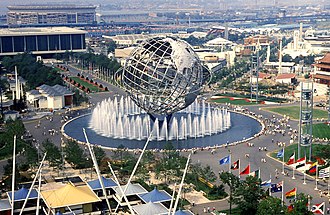
1964_New_York_World's_Fair
The 1964–1965 New York World's Fair opens for its second and final season.
World's fair held in New York City
The 1964 New York World's Fair was an international exposition at Flushing Meadows–Corona Park in Queens, New York City, United States. The fair included exhibitions, activities, performances, films, art, and food presented by 80 nations, 24 U.S. states, and nearly 350 American companies. The five sections of the 646-acre (261 ha) fairground were the Federal and State, International, Transportation, Lake Amusement, and Industrial areas. The fair's theme was "Peace through Understanding", and its symbol was the Unisphere, a stainless-steel model of Earth. Initially, the fair had 139 pavilions, and 34 concessions and shows.
1965
Rastafari
Rastafari movement: Haile Selassie of Ethiopia visits Jamaica, an event now celebrated as Grounation Day.
Abrahamic new religious movement originating in 1930s Jamaica
Rastafari is an Abrahamic religion that developed in Jamaica during the 1930s. It is classified as both a new religious movement and a social movement by scholars of religion. There is no central authority in control of the movement and much diversity exists among practitioners, who are known as Rastafari, Rastafarians, or Rastas.
1966
Tornado_outbreak_of_April_21,_1967
A tornado outbreak in Illinois, United States, kills over 50 and injures over 1,000.
Belvidere sustains over 500 casualties as a violent tornado strikes the high school. Another tornado near Chicago causes another 500 casualties, devastating Oak Lawn.
A destructive tornado outbreak affected much of the Midwestern United States on April 21, 1967, in particular the towns of Belvidere and Oak Lawn, Illinois, United States. It was the largest tornado outbreak of 1967 and has been described by NWS Chicago as "Northern Illinois' worst tornado disaster". The outbreak produced numerous and significant (F2+) tornadoes, with ten of them in Illinois alone. Included was one of just six documented violent (F4/F5) tornadoes in the Chicago metropolitan area since the area was first settled.
1967
John_Young_(astronaut)
Astronauts John Young and Charles Duke fly Apollo 16's Apollo Lunar Module to the Moon's surface, the fifth NASA Apollo Program crewed lunar landing.
American astronaut and lunar explorer (1930–2018)
John Watts Young was an American astronaut, naval officer and aviator, test pilot, and aeronautical engineer. He became the ninth person to walk on the Moon as commander of the Apollo 16 mission in 1972.
1972
Vietnam_War
Vietnam War: President of South Vietnam Nguyễn Văn Thiệu flees Saigon, as Xuân Lộc, the last South Vietnamese outpost blocking a direct North Vietnamese assault on Saigon, falls.
1955–1975 war in Southeast Asia
The Vietnam War was an armed conflict in Vietnam, Laos, and Cambodia fought between North Vietnam and South Vietnam and their allies. North Vietnam was supported by the Soviet Union and China, while South Vietnam was supported by the United States and other anti-communist nations. The conflict was the second of the Indochina wars and a proxy war of the Cold War. The Vietnam War was one of the postcolonial wars of national liberation, a theater in the Cold War, and a civil war, with civil warfare a defining feature from the outset. Direct US military involvement escalated from 1965 until US forces were withdrawn in 1973. The fighting spilled into the Laotian and Cambodian civil wars, which ended with all three countries becoming communist in 1975.
1975
Annie_(musical)
Annie opens on Broadway.
Broadway musical
Annie is a musical with music by Charles Strouse, lyrics by Martin Charnin, and a book by Thomas Meehan. It is based on the 1924 comic strip Little Orphan Annie, by Harold Gray. The original Broadway production opened in 1977 and ran for nearly six years, setting a record for the Alvin Theatre. It spawned numerous productions in many countries, as well as national tours, and won seven Tony Awards, including for Best Musical. The musical's songs "Tomorrow" and "It's the Hard Knock Life" are among its most popular musical numbers.
1977
Baseball
Baseball: Rollie Fingers of the Milwaukee Brewers becomes the first pitcher to record 300 saves.
Bat-and-ball game
Baseball is a bat-and-ball sport played between two teams of nine players each, taking turns batting and fielding. The game occurs over the course of several plays, with each play beginning when a player on the fielding team, called the pitcher, throws a ball that a player on the batting team, called the batter, tries to hit with a bat. The objective of the offensive team is to hit the ball into the field of play, away from the other team's players, allowing its players to run the bases, having them advance counter-clockwise around four bases to score what are called "runs". The objective of the defensive team is to prevent batters from becoming runners, and to prevent runners advancing around the bases. A run is scored when a runner legally advances around the bases in order and touches home plate.
1982
The_Covenant,_the_Sword,_and_the_Arm_of_the_Lord
The compound of the militant group The Covenant, The Sword, and the Arm of the Lord surrenders to federal authorities in Arkansas after a two-day government siege.
American far-right militant group active during the 1970s and 80s
The Covenant, the Sword, and the Arm of the Lord (CSA) was a far-right survivalist anti-government militia that advocated for Christian Identity and was active in the United States during the 1970s and early 1980s. The CSA developed from a Baptist congregation, the Zarephath-Horeb Community Church, which was founded in 1971 in Pontiac, Missouri. Over time, Zarephath-Horeb evolved into an extremist militant group and it was rechristened the CSA. The group operated at a large compound in northern Arkansas, known as "the Farm.”
1985
Liberation_Tigers_of_Tamil_Eelam
The Tamil Tigers are blamed for a car bomb that detonates in the Sri Lankan capital city of Colombo, killing 106 people.
Tamil militant organisation in Sri Lanka (1976–2009)
The Liberation Tigers of Tamil Eelam was a Tamil militant organization, that was based in northern and eastern Sri Lanka. The LTTE fought to create an independent Tamil state called Tamil Eelam in the northeast of the island in response to violent persecution and discriminatory policies against Sri Lankan Tamils by the Sinhalese-dominated Sri Lankan government.
1987
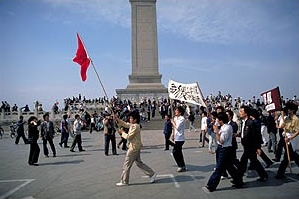
1989_Tiananmen_Square_protests_and_massacre
Tiananmen Square protests of 1989: In Beijing, around 100,000 students gather in Tiananmen Square to commemorate Chinese reform leader Hu Yaobang.
Student-led demonstrations in China
Protests led by students and workers, known in China as the June Fourth Incident, were held in Tiananmen Square in Beijing, China, from 15 April to 4 June 1989. After weeks of unsuccessful attempts between the demonstrators and the Chinese government to find a peaceful resolution, the Chinese government initiated martial law in late May and deployed troops to occupy the square on the night of 3 June in what is referred to as the Tiananmen Square massacre. The events are sometimes called the '89 Democracy Movement, the Tiananmen Square Incident, or the Tiananmen uprising. The Chinese government terms the events the political turmoil between the spring and summer of 1989.
1989
La_Paz
The Supreme Court in La Paz, Bolivia, sentences former dictator Luis García Meza to 30 years in jail without parole for murder, theft, fraud and violating the constitution.
Seat of government of Bolivia
La Paz, officially Nuestra Señora de La Paz is the seat of government of Bolivia. With 755,732 residents as of 2024, it is the third-most populous city in Bolivia. Its metropolitan area, which includes the neighboring city of El Alto, and other smaller towns, is the second most populous urban area in Bolivia, with a population of 2.2 million, after Santa Cruz de la Sierra with a population of 2.3 million. The city is also the capital of the department of the same name.
1993
Jokela_rail_accident
Four people are killed and 75 are injured in a train accident in Jokela, Finland.
Train accident in Tuusula, Finland, on 21 April 1996
The Jokela rail accident occurred on 21 April 1996, at 07:08 local time in Tuusula, Finland, approximately 50 kilometres (30 mi) north of Helsinki. Four people were killed and 75 injured when express train P82 from Oulu, bound for Helsinki, derailed in heavy fog. The overnight sleeper train was carrying 139 passengers and five crew members. The official investigation found the accident was caused by overspeeding through a slow-speed turnout.
1996
Five suicide car bombers target police stations in and around Basra, killing 74 people and wounding 160.
Bombing of police stations in Basra, Iraq
On 21 April 2004, a series of large car bomb explosions ripped through Basra, Iraq. Seventy-four people died and more than 100 were injured. The attacks were some of the deadliest in southern Iraq since the fall of President Saddam Hussein.
2004
Kharkiv_Pact
The controversial Kharkiv Pact (Russian Ukrainian Naval Base for Gas Treaty) is signed in Kharkiv, Ukraine, by Ukrainian president Viktor Yanukovych and Russian president Dmitry Medvedev; it was unilaterally terminated by Russia on March 31, 2014.
2010 treaty between Ukraine and Russia
The Agreement between Ukraine and Russia on the Black Sea Fleet in Ukraine, widely referred to as the Kharkiv Pact or Kharkov Accords, was a treaty between Ukraine and Russia whereby the Russian lease on naval facilities in Crimea was extended beyond 2017 until 2042, with an additional five-year renewal option in exchange for a multiyear discounted contract to provide Ukraine with Russian natural gas.
2010
Amsterdam_Westerpark_train_collision
Two trains are involved in a head-on collision near Sloterdijk, Amsterdam, in the Netherlands, killing one person and injuring 116 others.
2012 train crash in the Netherlands
On 21 April 2012 at 18:30 local time, two trains were involved in a head-on collision at Westerpark, near Sloterdijk, in the west of Amsterdam, Netherlands. Approximately 117 people were injured, one of whom later died in hospital. The collision is thought to have been caused by the driver of one of the trains passing a red signal.
2012
2019_Sri_Lanka_Easter_bombings
Eight bombs explode at churches, hotels, and other locations in Sri Lanka on Easter Sunday, killing at least 269.
Series of suicide bombings
On 21 April 2019, Easter Sunday, three churches in Sri Lanka and three luxury hotels in the commercial capital, Colombo, were targeted in a series of coordinated IS-related terrorist suicide bombings. Later that day, two smaller explosions occurred at a housing complex in Dematagoda and a guest house in Dehiwala. A total of 269 people were killed, with over 200 of them being Christians, including at least 45 foreign nationals, three police officers, and nine suicide bombers. An additional 500 were injured. The church bombings were carried out during Easter services in Negombo, Batticaloa and Colombo; the hotels bombed included the Shangri-La, Cinnamon Grand, Kingsbury and Tropical Inn. According to the State Intelligence Service, a second wave of attacks was planned, but was prevented due to government raids.
2019
Indonesian_Navy
Indonesian Navy submarine KRI Nanggala (402) sinks in the Bali Sea during a military drill, killing all 53 on board.
Maritime service branch of the Indonesian National Armed Forces
The Indonesian Navy is the naval branch of the Indonesian National Armed Forces. It was founded on 10 September 1945 and has a role to patrol Indonesia's lengthy coastline, to enforce and patrol the territorial waters and Exclusive Economic Zone (EEZ) of Indonesia, to protect Indonesia's maritime strategic interests, to protect the islands surrounding Indonesia, and to defend against seaborne threats.
2021

History runs on facts, and this project runs on coffee!

Your support is incredibly helpful and genuinely appreciated.

Support with a coffee ☕