April 20 in History

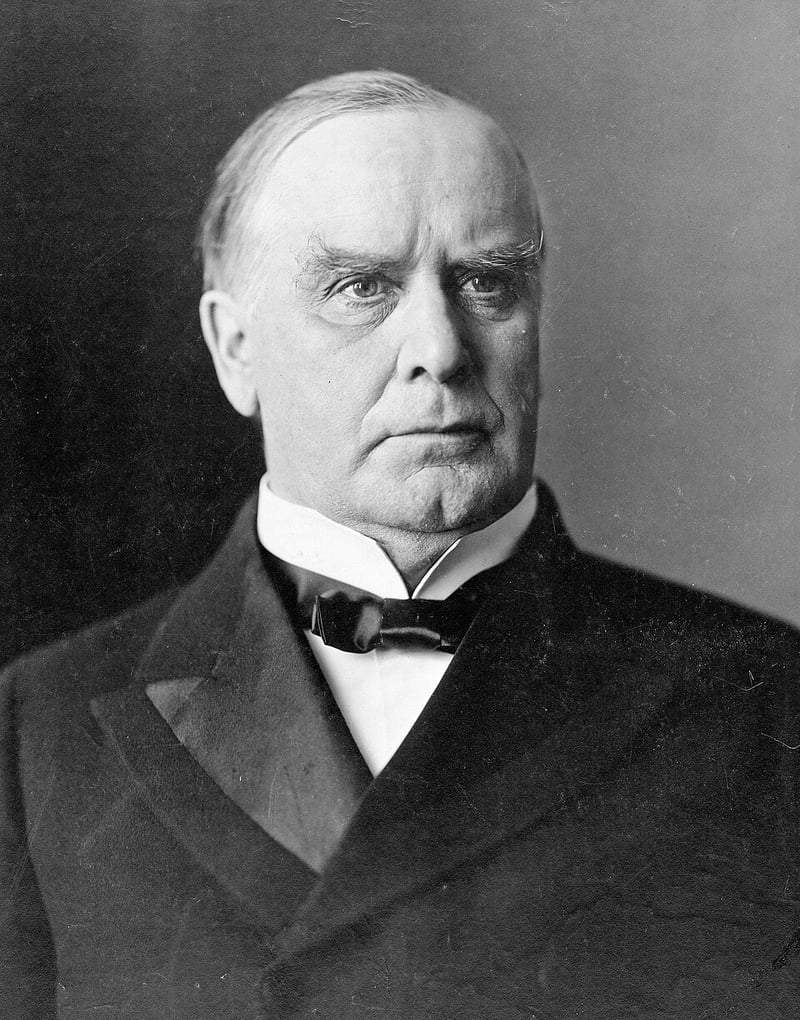
U.S. President William McKinley signs a joint resolution to Congress for declara

1898 — U

S. President William McKinley signs a joint resolution to Congress for declaration of war against Spain, beginning the Spanish–American War.

April 20 spans 49 recorded events across recorded history, from 1152 to 2023. Below is a curated digest of the most significant moments tied to this date.

By · Wikipedia

Historical Events 49 events 1152 – 2023

More major events on April 20

The featured story and these ranked highlights form a quick summary. Every recorded event remains available in the chronology below.

  1. 1876 The April Uprising begins. Its suppression shocks European opinion, and Bulgarian independence becomes a condition for ending the Russo-Turkish War. Source
  2. 1657 Freedom of religion is granted to the Jews of New Amsterdam (later New York City). Source
  3. 2020 For the first time in history, oil prices drop below zero, an effect of the 2020 Russia-Saudi Arabia oil price war. Source

Did you know

In 1898, U.S. President William McKinley signs a joint resolution to Congress for declaration of war against Spain, beginning the Spanish–American War. This featured entry focuses on the immediate decision and its direct historical impact.


Did you know

The Spanish–American War was fought between Spain and the United States in 1898. This helps explain why the event mattered beyond the initial announcement.

Did you know

It began with the sinking of the USS Maine in Havana Harbor in Cuba, and resulted in the U.S. This clarifies the institutional and public response around the event.

Did you know

acquiring sovereignty over Puerto Rico, Guam, and the Philippines, and establishing a protectorate over Cuba. This shows how the event shaped policy and public communication in the same period.

Did you know

intervention in the Cuban War of Independence and Philippine Revolution, with the latter later leading to the Philippine–American War. This helps explain why the event mattered beyond the initial announcement.


Baldwin_III_of_Jerusalem
After an eight-year conflict, Baldwin III of Jerusalem wins sole control of the Kingdom of Jerusalem from his mother Melisende.
King of Jerusalem from 1143 to 1163
Baldwin III was the king of Jerusalem from 1143 until his death. Although he only took up sole rule in 1152 and died young, he was the longest-reigning of the 12th-century kings of Jerusalem. He expanded the borders of the kingdom, paved the way for the later kings' attempts to conquer Egypt, and acted as the defender of the other crusader states in the Levant.
1152
Sapienza_University_of_Rome
The Sapienza University of Rome is instituted by a bull of Pope Boniface VIII.
Public university in Rome, Italy
The Sapienza University of Rome, also known as La Sapienza, is a public research university located in Rome, Italy. It was founded in 1303 and is one of the world's oldest universities. With over 110,000 students, it is also the largest university in Europe. Due to its size, funding, and numerous laboratories and libraries, Sapienza is a global major education and research centre. The university is located mainly in the Città Universitaria, which covers 44 ha near the Campo Verano cemetery, with different campuses, libraries and laboratories in various locations in Rome.
1303
Bahri_Mamluks
The Bahri Mamluks defeat the Ilkhanate in the battle of Marj al-Saffar, marking the end of the Mongol incursions into Syria.
Egyptian dynasty (1250–1382)
The Bahri Mamluks, sometimes referred to as the Bahri dynasty, were the rulers of the Mamluk Sultanate of Egypt from 1250 to 1382, following the Ayyubid dynasty. The members of the Mamluk ruling class were purchased as slaves (mamluks) and manumitted, with the most powerful among them taking the role of sultan in Cairo. While several Bahri Mamluk sultans tried to establish hereditary dynasties through their sons, these attempts were ultimately unsuccessful, with the role of sultan often passing on to another powerful Mamluk.
1303
Vädersolstavlan
A complex halo display is observed over Stockholm, Sweden, inspiring the Vädersolstavlan ("The Sundog painting"), the earliest depiction of such an event, and the oldest colour depiction of the city.
Painting by Jacob Heinrich Elbfas
Vädersolstavlan is an oil-on-panel painting depicting a halo display, an atmospheric optical phenomenon, observed over Stockholm on 20 April 1535. It is named after the sun dogs appearing on the upper right part of the painting. While chiefly noted for being the oldest depiction of Stockholm in colour, it is arguably also the oldest Swedish landscape painting and the oldest depiction of sun dogs.
1535
Oliver_Cromwell
Oliver Cromwell dissolves England's Rump Parliament.
English military and political leader (1599–1658)
Oliver Cromwell was an English statesman, farmer and soldier, widely regarded as one of the most important figures in British history. He came to prominence during the Wars of the Three Kingdoms, initially as a senior commander in the Parliamentarian army and later as a politician. A leading advocate of the execution of Charles I in January 1649, which led to the establishment of the Commonwealth of England, Cromwell ruled as Lord Protector from December 1653 until his death in September 1658.
1653
Robert_Blake_(admiral)
English Admiral Robert Blake destroys a Spanish silver fleet, under heavy fire from the shore, at the Battle of Santa Cruz de Tenerife.
English naval officer (1598–1657)
General at Sea Robert Blake was an English naval officer who served as general at sea and the Lord Warden of the Cinque Ports from 1656 to 1657. Blake served under Oliver Cromwell during the English Civil War and Anglo-Spanish War, and as the commanding Admiral of the State's Navy during the First Anglo-Dutch War. Blake is recognised as the "chief founder of England's naval supremacy", a dominance subsequently inherited by the British Royal Navy well into the early 20th century.
1657
Freedom of religion is granted to the Jews of New Amsterdam (later New York City).
Human right to practice, or not, a religion without conflict from governing powers
Freedom of religion or religious liberty, also known as freedom of religion or belief (FoRB), is a principle that supports the freedom of an individual or community, in public or private, to manifest religion or belief in teaching, practice, worship, and observance. It also includes the right not to profess any religion or belief or not to practice a religion, often called freedom from religion.
1657
Konbaung–Hanthawaddy_War
Start of Konbaung–Hanthawaddy War, a new phase in the Burmese Civil War (1740–57).
Conflict between states of Burma (Myanmar) from 1752–57
The Konbaung–Hanthawaddy War was the war fought between the Konbaung Dynasty and the Restored Hanthawaddy Kingdom of Burma (Myanmar) from 1752 to 1757. The war was the last of several wars between the Burmese-speaking north and the Mon-speaking south that ended the Mon people's centuries-long dominance of the south.
1752
Georgia_(country)
The Georgian king, Erekle II, abandoned by his Russian ally Count Totleben, wins a victory over Ottoman forces at Aspindza.
Country in Eastern Europe and West Asia
Georgia is a country in the Caucasus region on the coast of the Black Sea. It is located at the intersection of Eastern Europe and West Asia, and is today generally regarded as part of Europe. It is bordered to the north and northeast by Russia; to the west by the Black Sea, to the south by Turkey and Armenia, and to the southeast by Azerbaijan. It has a population of 3.9 million, of which over a third live in Tbilisi, the capital and largest city. Georgians, who are native to the region and constitute the majority of the population, are ethno-linguistically distinct from all of their neighboring nations and primarily speak Georgian, a Kartvelian language that has no relation to any other language family in the world.
1770
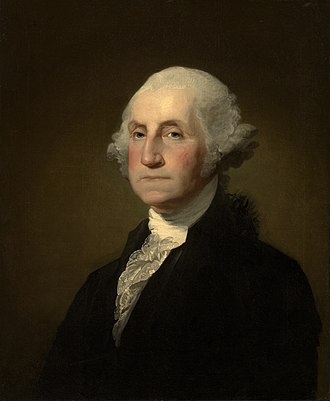
George_Washington
George Washington arrives at Grays Ferry, Philadelphia, while en route to Manhattan for his inauguration.
U.S. Founding Father and president from 1789 to 1797
George Washington was a Founding Father and the first president of the United States, serving from 1789 to 1797. As commander of the Continental Army, Washington led Patriot forces to victory in the American Revolutionary War against the British Empire. He is commonly known as the Father of His Country for his role in bringing about American independence.
1789
Francis_II,_Holy_Roman_Emperor
France declares war against the "King of Hungary and Bohemia", the beginning of the French Revolutionary Wars.
Habsburg monarch from 1792 to 1835
Francis II and I was the last Holy Roman Emperor as Francis II from 1792 to 1806, and the first Emperor of Austria as Francis I from 1804 to 1835. He was also King of Germany, Hungary, Croatia and Bohemia, and served as the first president of the German Confederation following its establishment in 1815.
1792
Septinsular_Republic
The Septinsular Republic is established.
Ottoman and Russian protectorate in the southwest Balkans from 1800-07
The Septinsular Republic, also known as the Republic of the Seven United Islands, was an oligarchic republic that existed from 1800 to 1807 under nominal Russian and Ottoman sovereignty in the Ionian Islands.
1800
First_French_Empire
Two Austrian army corps in Bavaria are defeated by a First French Empire army led by Napoleon at the Battle of Abensberg on the second day of a four-day campaign that ended in a French victory.
France under Napoleon Bonaparte from 1804 to 1815
The French Empire, known retroactively as the First French Empire, and colloquially as Napoleonic France, was the empire ruled by Napoleon Bonaparte, who established French hegemony over much of continental Europe at the beginning of the 19th century. It lasted from 18 May 1804 to 6 April 1814 and again briefly from 20 March 1815 to 7 July 1815, when Napoleon was exiled to Saint Helena.
1809
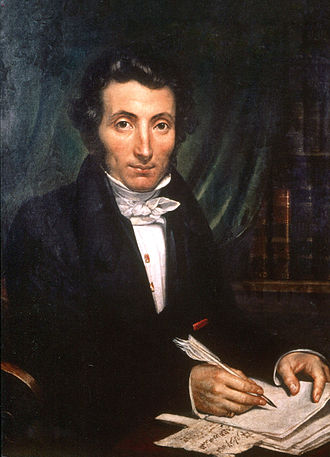
René_Caillié
René Caillié becomes the second non-Muslim to enter Timbuktu, following Major Gordon Laing.
He would also be the first to return alive.
Auguste René Caillié was a French explorer and the first European to return alive from the town of Timbuktu. Caillié had been preceded at Timbuktu by a British officer, Major Gordon Laing, who was murdered in September 1826 on leaving the city. Caillié was therefore the first to return alive.
1828
United_States_Congress
U.S.
Congress passes an act creating the Wisconsin Territory.
The United States Congress is the legislative branch of the federal government of the United States. It is a bicameral legislature, including a lower body, the U.S. House of Representatives, and an upper body, the U.S. Senate. They both meet in the United States Capitol in Washington, D.C.
1836
American_Civil_War
American Civil War: Robert E.
Lee resigns his commission in the United States Army in order to command the forces of the state of Virginia.
The American Civil War was a civil war in the United States between the Union and the Confederacy, which was formed in 1861 by states that had seceded from the Union to preserve slavery in the United States. The South saw slavery as threatened because of the election of Abraham Lincoln and the growing abolitionist movement in the North. The war ended with Union victory, the dissolution of the Confederacy and the abolition of slavery, freeing four million African Americans.
1861
Thaddeus_S._C._Lowe
Thaddeus S.
C. Lowe, attempting to display the value of balloons, makes record journey, flying 900 miles from Cincinnati to South Carolina.
Thaddeus Sobieski Constantine Lowe, also known as Professor T. S. C. Lowe, was an American Civil War aeronaut, scientist and inventor, mostly self-educated in the fields of chemistry, meteorology, and aeronautics, and the father of military aerial reconnaissance in the United States. By the late 1850s he was well known for his advanced theories in the meteorological sciences as well as his balloon building. Among his aspirations were plans for a transatlantic flight.
1861
Louis_Pasteur
Louis Pasteur and Claude Bernard complete the experiment disproving the theory of spontaneous generation.
French chemist, pharmacist and microbiologist (1822–1895)
Louis Pasteur was a French chemist, pharmacist, and microbiologist renowned for his discoveries of the principles of vaccination, microbial fermentation, and pasteurization, the last of which was named after him. His research in chemistry led to remarkable breakthroughs in the understanding of the causes and preventions of diseases, which laid down the foundations of hygiene, public health and much of modern medicine. Pasteur's works are credited with saving millions of lives through the developments of vaccines for rabies and anthrax. He is regarded as one of the founders of modern bacteriology and has been honored as the "father of bacteriology" and the "father of microbiology".
1862
Angelo_Secchi
Astronomer Angelo Secchi demonstrates the Secchi disk, which measures water clarity, aboard Pope Pius IX's yacht, the L'Immaculata Concezion.
Italian priest and scientist (1818–1878)
Angelo Secchi was an Italian Catholic priest and astronomer from the Italian region of Emilia. He was director of the observatory at the Pontifical Gregorian University for 28 years. He was a pioneer in astronomical spectroscopy, and was one of the first scientists to state authoritatively that the Sun is a star.
1865
April_Uprising_of_1876
The April Uprising begins.
Its suppression shocks European opinion, and Bulgarian independence becomes a condition for ending the Russo-Turkish War.
The April Uprising was an insurrection organised by the Bulgarians in the Ottoman Empire from April to May 1876. The rebellion was suppressed by irregular Ottoman bashi-bazouk units that engaged in indiscriminate slaughter of both rebels and non-combatants.
1876
Humanum_genus
Pope Leo XIII publishes the encyclical Humanum genus, condemning Freemasonry.
1884 papal encyclical condemning Freemasonry
Humanum genus is a papal encyclical promulgated on 20 April 1884 by Pope Leo XIII.
1884
Pierre_Curie
Pierre and Marie Curie refine radium chloride.
French physicist and chemist (1859–1906)
Pierre Curie was a French physicist and chemist, and a pioneer in crystallography and magnetism. He shared one half of the 1903 Nobel Prize in Physics with his wife, Marie Curie, for their work on radioactivity. With their win, the Curies became the first married couple to win a Nobel Prize, launching the Curie family legacy of five Nobel Prizes.
1902
New_South_Wales_Rugby_League
Opening day of competition in the New South Wales Rugby League.
Rugby league competition operator in New South Wales and the Australian Capital Territory
The New South Wales Rugby League Ltd (NSWRL) is an Australian rugby league football competition operator in New South Wales and the Australian Capital Territory and is a member of the Australian Rugby League Commission.
1908
Ludlow_Massacre
Nineteen men, women, and children participating in a strike are killed in the Ludlow Massacre during the Colorado Coalfield War.
April 1914 massacre during the Colorado Coalfield War
The Ludlow Massacre was a mass killing perpetrated by anti-striker militia during the Colorado Coalfield War. Soldiers from the Colorado National Guard and private guards employed by Colorado Fuel and Iron Company (CF&I) attacked a tent colony of roughly 1,200 striking coal miners and their families in Ludlow, Colorado, on April 20, 1914. Approximately 21 people were killed, primarily miners' wives and children. John D. Rockefeller Jr. was a part-owner of CF&I who had recently appeared before a United States congressional hearing on the strikes, and he was widely blamed for having orchestrated the massacre.
1914
World_War_I
World War I: Manfred von Richthofen, a.k.a.
The Red Baron, shoots down his 79th and 80th victims, his final victories before his death the following day.
World War I, or the First World War, also known as the Great War, was a global conflict between two coalitions: the Allies and the Central Powers. Major theatres of war included Europe and the Middle East, and well as parts of Africa and the Asia-Pacific. One of the deadliest conflicts in history, World War I resulted in an estimated 15 to 22 million deaths, including in mass war crimes against civilians and genocides. The conflict saw important developments in weaponry, including the first large-scale use of machine guns, artillery, aircraft, chemical weapons, and tanks, and was a major factor in the deadly Spanish flu pandemic.
1918
Soviet_Union
The Soviet government creates the South Ossetian Autonomous Oblast within the Georgian SSR.
Country in Eurasia from 1922 to 1991
The Soviet Union, officially the Union of Soviet Socialist Republics (USSR), was a transcontinental country that spanned much of Eurasia from its formation in 1922 until its dissolution in 1991. It was the world's third-most populous country, the largest by area, and bordered twelve other countries. A diverse multinational state, it was organized as a federal union of national republics, with the largest and most populous being the Russian Soviet Federative Socialist Republic (SFSR). The world's flagship communist state, it was governed by the Communist Party under Marxism–Leninism, through soviet councils. The Soviet economy was also centrally planned. Its capital and largest city was Moscow.
1922
World_War_II
World War II: U.S.
troops capture Leipzig, Germany, only to later cede the city to the Soviet Union.
World War II, or the Second World War, was a global conflict between two coalitions: the Allies and the Axis powers. Nearly all of the world's countries participated. World War II was the deadliest conflict in history, causing the death of 60 to 75 million people. Millions died as a result of massacres, starvation, disease, and genocides, including the Holocaust. After the Allied victory, Germany, Austria, Japan, and Korea were occupied, and German and Japanese leaders were tried for war crimes.
1945
Führerbunker
World War II: Führerbunker: On his 56th birthday Adolf Hitler makes his last trip to the surface to award Iron Crosses to boy soldiers of the Hitler Youth.
Subterranean bunker complex for Adolf Hitler
The Führerbunker was an air raid shelter located near the Reich Chancellery in Berlin, Germany. It was part of a subterranean bunker complex constructed in two phases in 1936 and 1944. It was the last of the Führer Headquarters used by Adolf Hitler during World War II.
1945
Nazi_human_experimentation
Twenty Jewish children used in medical experiments at Neuengamme are killed in the basement of the Bullenhuser Damm school.
Series of human experiments in Nazi Germany
Nazi Germany conducted medical experiments on prisoners in its concentration camps mainly between 1942 and 1945. There were 15,754 documented victims, of various nationalities and ages, although the true number is believed to be more. About a quarter of documented victims were killed and survivors generally experienced severe permanent injuries.
1945
League_of_Nations
The League of Nations officially dissolves, giving most of its power to the United Nations.
Intergovernmental organisation (1920–1946)
The League of Nations was the first worldwide intergovernmental organisation whose principal mission was to maintain world peace. It was founded on 10 January 1920 by the Paris Peace Conference that ended the First World War. The main organisation ceased operations on 18 April 1946 when many of its components were relocated into the new United Nations (UN) which was created in the aftermath of the Second World War. The League of Nations was the precursor organisation to the United Nations.
1946
Amethyst_incident
Amethyst incident: The People's Liberation Army attacks HMS Amethyst (F116) travelling to the British embassy in Nanjing during the Chinese Civil War.
Chinese civil war incident
The Amethyst incident, also known as the Yangtze incident, was a historic event that occurred on the Yangtze River for three months in the summer of 1949, during the late phase of the Chinese Civil War. The incident involved the Communist People's Liberation Army (PLA), who were in the process of a river-crossing offensive to overthrow the Nationalist Government, and four British Royal Navy ships HMS Amethyst, HMS Black Swan, HMS Consort and HMS London. The British warships, whose claimed right of passage along the Yangtze had been unchallenged previously since the 1858 Treaty of Tientsin with the late Qing dynasty, came under bombardment by PLA artillery and were forced to withdraw permanently from Chinese territorial waters.
1949
Cold_War
Cold War: Failure of the Bay of Pigs Invasion of US-backed Cuban exiles against Cuba.
1947–1991 geopolitical rivalry between US and USSR
The Cold War was a period of international geopolitical rivalry between the United States (US) and the Soviet Union (USSR) and their respective allies, the capitalist Western Bloc and communist Eastern Bloc. It began in the aftermath of the Second World War and ended with the dissolution of the Soviet Union in 1991. The term cold war is used because there was no direct fighting between the two superpowers, though each supported opposing sides in regional conflicts known as proxy wars. In addition to the struggle for ideological and economic influence and an arms race in both conventional and nuclear weapons, the Cold War was expressed through technological rivalries such as the Space Race, espionage, propaganda campaigns, embargoes, and sports diplomacy.
1961
Enoch_Powell
English politician Enoch Powell makes his controversial "Rivers of Blood" speech.
British politician (1912–1998)
John Enoch Powell was a British politician, scholar, soldier and writer. He was Member of Parliament (MP) for Wolverhampton South West for the Conservative Party from 1950 to February 1974 and the MP for South Down for the Ulster Unionist Party (UUP) from October 1974 to 1987. He was Minister of Health from 1960 to 1963 in the second Macmillan ministry and was Shadow Secretary of State for Defence from 1965 to 1968 in the Shadow Cabinet of Edward Heath.
1968
South_African_Airways_Flight_228
South African Airways Flight 228 crashes near J.G.
Strijdom Airport in South West Africa (now Hosea Kutako International Airport in Namibia), killing 123 people.
South African Airways Flight 228 was a scheduled flight from Johannesburg, South Africa, to London, England. The Boeing 707 operating the flight, which was only six weeks old, flew into the ground soon after take-off after a scheduled stopover in Windhoek, South West Africa on 20 April 1968. Five passengers survived, while 123 people died. The subsequent investigation determined that the accident was attributable largely to pilot error; the manufacturer subsequently also recognised the lack of a ground proximity warning system in its aircraft. The accident is the deadliest aviation accident to date in Namibia.
1968
Apollo_program
Apollo program: The Apollo 16 Lunar Module Orion, commanded by John Young and piloted by Charles Duke, lands on the Moon.
1961–1972 American crewed lunar exploration program
The Apollo program, also known as Project Apollo, was the United States human spaceflight program led by NASA, which landed the first humans on the Moon in 1969. Apollo was conceived in 1960 in the Dwight D. Eisenhower presidency during Project Mercury and executed after Project Gemini. Apollo was later dedicated to President John F. Kennedy's national goal, "before this decade is out, of landing a man on the Moon and returning him safely to the Earth" in his address to the U.S. Congress on May 25, 1961.
1972
University_of_California,_Riverside_1985_laboratory_raid
University of California, Riverside 1985 laboratory raid: Animal Liberation Front rescues 467 animals being tested in a lab at University of California, Riverside in Riverside, California, causing $700,000 in damages to the laboratory, in advocacy for animal rights.
1985 animal cruelty incident
In 1985, a raid took place at a laboratory belonging to the University of California, Riverside (UCR) that resulted in the removal of a monkey by the Animal Liberation Front (ALF). This monkey, called Britches, was a stump-tailed macaque who was born into a breeding colony at UCR. He was removed from his mother at birth, had his eyelids sewn shut, and had an electronic sonar device attached to his head—a Trisensor Aid, an experimental version of a blind travel aid, the Sonicguide—as part of a three-year sensory-deprivation study involving 24 infant monkeys. The experiments were designed to study the behavioral and neural development of monkeys reared with a sensory substitution device.
1985
Air_France_Flight_422
Air France Flight 422 crashes after taking off from El Dorado International Airport in Bogotá, Colombia, killing all 53 people on board.
1998 aviation accident
Air France Flight 422 was a scheduled flight on 20 April 1998 by Air France from Bogotá, Colombia, to Quito, Ecuador, covering the final leg of a flight from Paris to Quito. The Boeing 727 was destroyed, killing all 53 people on board, when it crashed into the Eastern Hills of Bogotá because of foggy weather and low visibility after taking off from Bogotá's El Dorado International Airport. The plane was owned by TAME, the Ecuadorian airline, but was being operated on a wet-lease basis to Air France as the final leg of its flight from Paris.
1998
Columbine_High_School_massacre
Columbine High School massacre: Eric Harris and Dylan Klebold kill 14 people and injure 23 others before committing suicide at Columbine High School in Columbine, Colorado.
1999 mass shooting in Colorado, U.S.
On April 20, 1999, high school senior students Eric Harris and Dylan Klebold murdered 13 students and one teacher in a school shooting and attempted bombing at Columbine High School in Columbine, Colorado, United States. Twenty people were injured by the gunfire, and three others were injured while trying to escape. The attack ended when Harris and Klebold died by suicide.
1999
Nicoll_Highway
The Nicoll Highway in Singapore collapses, killing four workers.
Major arterial road in Singapore
Nicoll Highway is a major arterial road in Singapore which links the junctions of Guillemard Road, Sims Way and Mountbatten Road in Kallang to the junctions of Esplanade Drive, Raffles Avenue and Stamford Road in the city. En route, it passes through the areas of Kallang, Kampong Glam and Marina Centre.
2004
Johnson_Space_Center_shooting
Johnson Space Center shooting: William Phillips barricades himself with a handgun in NASA's Johnson Space Center in Houston, Texas, before killing a male hostage and himself.
2007 hostage situation and shooting in Houston, Texas
The Johnson Space Center shooting was an incident of hostage taking that occurred on April 20, 2007, in Building 44, the Communication and Tracking Development Laboratory, at the Lyndon B. Johnson Space Center (JSC) in Houston, Texas, United States. The gunman, William Phillips, an employee for Jacobs Engineering who worked at Building 44, shot and killed one person and took a hostage for over three hours before committing suicide. Police said Phillips was under review for poor job performance and he feared being dismissed.
2007
Danica_Patrick
Danica Patrick wins the Indy Japan 300, becoming the first female driver in history to win an Indy car race.
American racing driver (born 1982)
Danica Sue Patrick is an American former professional racing driver who competed in the IndyCar Series from 2005 to 2011 and the NASCAR Cup Series from 2012 to 2018. She is the most successful woman in the history of American open-wheel car racing—her victory in the 2008 Indy Japan 300 is the only win by a woman in IndyCar.
2008
Deepwater_Horizon
The Deepwater Horizon drilling rig explodes in the Gulf of Mexico, killing eleven workers and beginning an oil spill that lasted six months.
Former offshore oil drilling rig
Deepwater Horizon was an ultra-deepwater, dynamically positioned, semi-submersible offshore drilling rig owned by Transocean and operated by the BP company. On 20 April 2010, while drilling in the Gulf of Mexico at the Macondo Prospect, a blowout caused an explosion on the rig that killed 11 people and ignited a fireball visible from 40 miles (64 km) away. The fire was inextinguishable and, two days later, on 22 April, the Horizon collapsed, leaving the well gushing at the seabed and becoming the largest marine oil spill in history.
2010
Bhoja_Air_Flight_213
One hundred twenty-seven people are killed when a plane crashes in a residential area near the Benazir Bhutto International Airport near Islamabad, Pakistan.
2012 aviation accident in Rawalpindi, Pakistan
Bhoja Air Flight 213 was a domestic scheduled passenger flight operated by Pakistani private airline Bhoja Air from Karachi to Islamabad. On 20 April 2012, the Boeing 737-200 aircraft serving the route crashed in bad weather during the final approach, killing all 121 passengers and 6 crew on board. It remains the second deadliest air disaster in Pakistan, after the 2010 crash of Airblue Flight 202.
2012
A 6.6-magnitude earthquake strikes Lushan County, Ya'an, in China's Sichuan province, killing at least 193 people and injuring thousands.
Measure of earthquake size
The moment magnitude scale (MMS; denoted explicitly with Mw or Mwg and generally implied with use of a single M for magnitude It is more directly related to the energy of an earthquake than other scales, and does not saturate – that is, it does not underestimate magnitudes as other scales do in certain conditions. It has become the standard scale used by seismological authorities like the United States Geological Survey for reporting large earthquakes, replacing the local magnitude and surface-wave magnitude scales. Subtypes of the moment magnitude scale reflect different ways of estimating the seismic moment.
2013
Garowe_attack
Ten people are killed in a bomb attack on a convoy carrying food supplies to a United Nations compound in Garowe in the Somali region of Puntland.
2015 bombing of a convoy by Islamist militants in Garowe, Puntland, Somalia
The Garowe attack was a bombing of a UN van in Garowe, Puntland, Somalia. Between 7 and 10 people were killed, including the attacker and four UNICEF workers. The Al-Shabaab militant group claimed responsibility for the blast. The Puntland administration subsequently appointed a governmental committee to probe the circumstances surrounding the attack, and apprehended over a dozen suspects.
2015
Price_of_oil
For the first time in history, oil prices drop below zero, an effect of the 2020 Russia-Saudi Arabia oil price war.
Spot price of a barrel of benchmark crude oil
The price of oil, or the oil price, generally refers to the spot price of a barrel of benchmark crude oil—a reference price for buyers and sellers of crude oil such as West Texas Intermediate (WTI), Brent Crude, Dubai Crude, OPEC Reference Basket, Tapis crude, Bonny Light, Urals oil, Isthmus, and Western Canadian Select (WCS) among others. Oil prices are determined by global supply and demand, rather than any country's domestic production level, although the Organization of the Petroleum Exporting Countries (OPEC) cartel increases oil prices.
2020
State of Minnesota v.
Derek Michael Chauvin: Derek Chauvin is found guilty of all charges in the murder of George Floyd by the Fourth Judicial District Court of Minnesota.
State of Minnesota v. Derek Michael Chauvin was an American criminal case in the District Court of Minnesota in 2021. Former Minneapolis police officer Derek Chauvin was tried and convicted for the murder of George Floyd, which occurred during an arrest on May 25, 2020, and led to global protests over racial injustice and police brutality. A 12-member jury found Chauvin guilty of unintentional second-degree murder, third-degree murder, and second-degree manslaughter. It was the first conviction of a white police officer in Minnesota for the murder of a black person.
2021
SpaceX_Starship
SpaceX's Starship rocket, the largest and most powerful rocket ever built, launches for the first time.
It explodes four minutes into flight.
Starship is a two-stage, fully reusable, super heavy-lift launch vehicle under development by American aerospace company SpaceX. Currently built and launched from Starbase in Texas, it is intended as the successor to the company's Falcon 9 and Falcon Heavy rockets, and is part of SpaceX's broader reusable launch system development program. If completed as designed, Starship would be the first fully reusable orbital rocket and have the highest payload capacity of any launch vehicle to date. As of May 27, 2026, Starship has launched 12 times, with 7 successful flights and 5 failures.
2023

History runs on facts, and this project runs on coffee!

Your support is incredibly helpful and genuinely appreciated.

Support with a coffee ☕