December 1 in History

Cold War: East Germany's parliament abolishes the constitutional provision grant

1989 — Cold War: East Germany's parliament abolishes the constitutional provision granting the Communist Party the leading role in the state

December 1 spans 62 recorded events across recorded history, from 800 to 2020. Below is a curated digest of the most significant moments tied to this date.

By · Wikipedia

Historical Events 62 events 800 – 2020

More major events on December 1

The featured story and these ranked highlights form a quick summary. Every recorded event remains available in the chronology below.

  1. 1862 American Civil War: In his second State of the Union Address, President Abraham Lincoln reaffirms the necessity of ending slavery as ordered ten weeks earlier in the Emancipation Proclamation. Source
  2. 1834 Slavery is abolished in the Cape Colony in accordance with the Slavery Abolition Act 1833. Source
  3. 2000 Vicente Fox Quesada is inaugurated as the president of Mexico, marking the first peaceful transfer of executive federal power to an opposing political party following a free and democratic election in Mexico's history. Source

Did you know

In 1989, Cold War: East Germany's parliament abolishes the constitutional provision granting the Communist Party the leading role in the state. This featured entry focuses on the immediate decision and its direct historical impact.

Did you know

East Germany, officially the German Democratic Republic (GDR), was a country in Central Europe from its formation on 7 October 1949 until its reunification with West Germany on 3 October 1990. This helps explain why the event mattered beyond the initial announcement.

Did you know

Until 1989, it was generally viewed as a communist state and described itself as a socialist workers' and peasants' state. This clarifies the institutional and public response around the event.

Did you know

In 1989, Cold War: East Germany's parliament abolishes the constitutional provision granting the Communist Party the leading role in the state had consequences that extended beyond the first headline. The key context is the institutions involved, the policy shift, and how the public response evolved afterward.

Did you know

In 1989, Cold War: East Germany's parliament abolishes the constitutional provision granting the Communist Party the leading role in the state had consequences that extended beyond the first headline. The key context is the institutions involved, the policy shift, and how the public response evolved afterward.


Apostolic_Palace
A council is convened in the Vatican, at which Charlemagne is to judge the accusations against Pope Leo III.
Official residence of the Pope in Vatican City
The Apostolic Palace is the official residence of the Pope, the head of the Catholic Church, located in Vatican City. It is also known as the Papal Palace, the Palace of the Vatican and the Vatican Palace. The Vatican itself refers to the building as the Palace of Sixtus V, in honor of Pope Sixtus V, who built most of the present form of the palace.
800
Henry_V_of_England
Henry V of England enters Paris alongside his father-in-law King Charles VI of France.
King of England from 1413 to 1422
Henry V, also called Henry of Monmouth, was King of England, Lord of Ireland, and Duke of Aquitaine from 1413 until his death in 1422. His victory at Agincourt in 1415 and his conquest of Normandy gave England the upper hand in the Hundred Years' War and led, by the Treaty of Troyes in 1420, to his recognition as heir and regent of France. This was the high-water mark of the English cause in the war. Celebrated in William Shakespeare's Henriad as one of the greatest warrior-kings of medieval England, Henry was also a forceful ruler at home, restoring public order, working closely with Parliament, and enforcing a strict religious orthodoxy.
1420
Christopher_Hatton
English Courtiers Christopher Hatton and Thomas Heneage are knighted by Queen Elizabeth I.
English politician and courtier (1540–1591)
Sir Christopher Hatton was an English politician, Lord Chancellor of England and a favourite of Elizabeth I of England. He was one of the judges who found Mary, Queen of Scots guilty of treason.
1577
Iberian_Union
End of the Iberian Union: Portugal acclaims as King João IV of Portugal, ending 59 years of personal union of the crowns of Portugal and Spain and the end of the rule of the Philippine Dynasty.
Union of Castile, Aragon and Portugal, 1580–1640
The Iberian Union, or the Hispanic Monarchy, describes the period from 1580 to 1640 in which the Monarchy of Spain under the Habsburg dynasty, then the personal union of the crowns of Castile and Aragon, brought in personal union also the Kingdom of Portugal. It incorporated the entire Iberian Peninsula except Andorra, as well as Portuguese and Spanish overseas possessions, under the Spanish Habsburg monarchs Philip II, Philip III, and Philip IV. The union began after the Portuguese succession crisis of 1580 and the ensuing War of the Portuguese Succession, and lasted until the Portuguese Restoration War, during which the House of Braganza was established as Portugal's new ruling dynasty with the acclamation of John IV as the new king of Portugal.
1640
John_Evelyn
Diarist John Evelyn records skating on the frozen lake in St James's Park, London, watched by Charles II and Queen Catherine.
English writer, gardener and diarist (1620–1706)
John Evelyn, an English writer, landowner, gardener, courtier and minor government official, has become best known as a diarist. He was a founding Fellow of the Royal Society.
1662
Slave_ship
The slave ship Fredensborg sinks off Tromøya in Norway.
Cargo ship carrying slaves onboard from Africa to the Americas
Slave ships were large cargo ships specially built or converted from the 17th to the 19th century for transporting slaves. Such ships were also known as "Guineamen" because the trade involved human trafficking to and from the Guinea coast in West Africa.
1768
José_Núñez_de_Cáceres
José Núñez de Cáceres wins the independence of the Dominican Republic from Spain and names the new territory the Republic of Spanish Haiti.
Early Dominican independence leader; 1st and only president of Spanish Haiti (1821–22)
José Núñez de Cáceres y Albor was a Dominican revolutionary and writer. Known for being the leader of the first Dominican independence movement against Spain in 1821, his actions preceded the Dominican War of Independence.
1821
Pedro_I_of_Brazil
Pedro I is crowned Emperor of Brazil.
Emperor of Brazil (1822–31) and King of Portugal (1826)
Dom Pedro I, known in Brazil and in Portugal as "the Liberator" or "the Soldier King" in Portugal, was the founder and first ruler of the Empire of Brazil from 1822 to 1831 and King of Portugal in 1826.
1822
1824_United_States_presidential_election
United States presidential election: Since no candidate received a majority of the total electoral college votes in the election, the United States House of Representatives is given the task of deciding the winner in accordance with the Twelfth Amendment to the United States Constitution.
Presidential elections were held in the United States from October 26 to December 2, 1824. Andrew Jackson, John Quincy Adams, Henry Clay and William Crawford were the primary contenders for the presidency. The result of the election was inconclusive, as no candidate won a majority of the electoral vote. In the election for vice president, John C. Calhoun was elected with a comfortable majority of the vote. Because none of the candidates for president garnered an electoral vote majority, the U.S. House of Representatives, under the provisions of the Twelfth Amendment, held a contingent election. On February 9, 1825, the House voted to elect John Quincy Adams as president.
1824
Juan_Lavalle
Argentine general Juan Lavalle makes a coup against governor Manuel Dorrego, beginning the Decembrist revolution.
Argentine military officer and politician (1797–1841)
Juan Galo Lavalle was an Argentine military and political figure from the Unitarian Party.
1828
Cape_Colony
Slavery is abolished in the Cape Colony in accordance with the Slavery Abolition Act 1833.
British colony from 1806 to 1910
The Cape Colony, also known as the Cape of Good Hope, was a British colony in present-day South Africa named after the Cape of Good Hope. It existed from 1795 to 1802, and again from 1806 to 1910, when it united with three other colonies to form the Union of South Africa, then became the Cape Province, which existed even after 1961, when South Africa had become a republic, albeit temporarily outside the Commonwealth of Nations (1961–94).
1834
American_Civil_War
American Civil War: In his second State of the Union Address, President Abraham Lincoln reaffirms the necessity of ending slavery as ordered ten weeks earlier in the Emancipation Proclamation.
1861–1865 conflict in the United States
The American Civil War was a civil war in the United States between the Union and the Confederacy, which was formed in 1861 by states that had seceded from the Union to preserve slavery in the United States. The South saw slavery as threatened because of the election of Abraham Lincoln and the growing abolitionist movement in the North. The war ended with Union victory, the dissolution of the Confederacy and the abolition of slavery, freeing four million African Americans.
1862
Shaw_University
Shaw University, the first historically black university in the southern United States, is founded in Raleigh, North Carolina.
Historically Black private college in Raleigh, North Carolina, US
Shaw University is a private historically Black university in Raleigh, North Carolina. Founded on December 1, 1865, Shaw University is the oldest HBCU to begin offering courses in the Southern United States. The school had its origin in the formation of a theological class of freedmen in the Guion Hotel. The following year it moved to a large wooden building, at the corner of Blount and Cabarrus Streets in Raleigh, where it continued as the Raleigh Institute until 1870. In 1870, the school moved to its current location on the former property of Confederate General Barringer and changed its name to the Shaw Collegiate Institute, in honor of Elijah Shaw. In 1875, the school was officially chartered with the State of North Carolina as Shaw University.
1865
Rutherford_B._Hayes
President Rutherford B.
Hayes gets the first telephone installed in the White House.
Rutherford Birchard Hayes was the 19th president of the United States, serving from 1877 to 1881. He served as Cincinnati's city solicitor from 1858 to 1861 and was known as a staunch abolitionist who defended refugee slaves in court proceedings. At the start of the Civil War, Hayes left a fledgling political career to join the Union army. He was wounded five times, most seriously at the Battle of South Mountain in 1862. Hayes earned a reputation for bravery in combat, rising in the ranks to serve as brevet major general. After the war, he was a prominent member of the "Half-Breed" faction of the Republican Party. Hayes served in Congress from 1865 to 1867 and was elected governor of Ohio, serving two consecutive terms from 1868 to 1872 and half of a third two-year term from 1876 to 1877 before his swearing-in as president.
1878
Nicaragua sells canal rights to U.S.
for $5 million. The canal agreement fails in March 1901. Great Britain rejects the amended treaty.
1900
Buenos_Aires_Underground
The Buenos Aires Metro, the first underground railway system in the Southern Hemisphere and in Latin America, begins operation.
Rapid transit railway in Buenos Aires, Argentina
The Buenos Aires Underground, locally known as Subte, is a rapid transit system that serves the area of the city of Buenos Aires, Argentina. The first section of this network opened in 1913, making it the 13th earliest subway network in the world and the first underground railway in Latin America, the Southern Hemisphere, and the Spanish-speaking world, with the Madrid Metro opening nearly six years later, in 1919. As of 2025, Buenos Aires is the only Argentine city with a metro system.
1913
Crete
Crete, having obtained self rule from Turkey after the First Balkan War, is annexed by Greece.
Largest Greek island
Crete is the largest and most populous island of Greece, the 89th largest island in the world, and the fifth largest island in the Mediterranean Sea, after Sicily, Sardinia, Cyprus, and Corsica. Crete is located approximately 100 km (62 mi) south of the Peloponnese, and about 300 km (190 mi) southwest of Anatolia. Crete has an area of 8,450 km2 (3,260 mi2) and a coastline of 1,046 km (650 mi). It bounds the southern border of the Aegean Sea, with the Sea of Crete to the north and the Libyan Sea to the south. Crete covers 260 km from west to east but is narrow from north to south, spanning three degrees of longitude but only half a degree of latitude.
1913
Transylvania
Transylvania unites with Romania, following the incorporation of Bessarabia (March 27) and Bukovina (November 28) and thus concluding the Great Union.
Historical region in Central Europe
Transylvania is a historical and cultural region in Central Europe, encompassing central Romania. The region's natural border to the east and south is the Carpathian Mountains, and to the west it is the Apuseni Mountains. Broader definitions of Transylvania also include the western and northwestern Romanian regions of Crișana and Maramureș, and occasionally Banat. Historical Transylvania also includes small parts of neighbouring Western Moldavia and a small part of south-western neighbouring Bukovina to its north-east.
1918
Kingdom_of_Iceland
Iceland becomes a sovereign state, yet remains a part of the Danish kingdom.
Period of Icelandic statehood from 1918 to 1944
The Kingdom of Iceland was an associated state of Denmark and kingdom under a personal union that was established by the Act of Union signed on 1 December 1918. It lasted until 17 June 1944 when a national referendum established the republic of Iceland in its place. The Parliament of Iceland asked that Denmark represent Iceland internationally, and day-to-day matters were delegated to a Danish plenipotentiary for Icelandic affairs based in Reykjavík, and – after the German invasion of Denmark in 1940 – a regent was appointed.
1918
Kingdom_of_Yugoslavia
The Kingdom of Serbs, Croats and Slovenes (later known as the Kingdom of Yugoslavia) is proclaimed.
Yugoslavia from 1918 to 1941
The Kingdom of Yugoslavia was a country in Southeast and Central Europe that existed from 1918 until 1941. From 1918 to 1929, it was officially called the Kingdom of Serbs, Croats, and Slovenes and was colloquially known as "Yugoslavia" due to its origins.
1918
Nancy_Astor,_Viscountess_Astor
Lady Astor becomes the first female Member of Parliament (MP) to take her seat in the House of Commons of the United Kingdom.
(She had been elected to that position on November 28.)
Nancy Witcher Langhorne Astor, Viscountess Astor was an American-born British politician who was the first woman seated as a Member of Parliament (MP), serving from 1919 to 1945. Astor was born in Danville, Virginia, and raised in Greenwood, Virginia. Her first marriage, to socialite Robert Gould Shaw II, was unhappy and ended in divorce. She then moved to England and married American-born Englishman Waldorf Astor in 1906.
1919
National_Hockey_League
The National Hockey League's first United States–based franchise, the Boston Bruins, plays their first game in league play at home, at the still-extant Boston Arena indoor hockey facility.
North American professional ice hockey league
The National Hockey League is a professional ice hockey league in North America composed of 32 teams, 25 in the United States and 7 in Canada. The NHL is one of the major professional sports leagues in the United States and Canada and is considered the premier professional ice hockey league in the world. The Stanley Cup, the oldest professional sports trophy in North America, is awarded annually to the league playoff champion at the end of each season. The International Ice Hockey Federation (IIHF) views the Stanley Cup as one of the "most important championships available to the sport". The league's headquarters have been in New York City since 1989, when it moved from Montreal; the league also has offices in Toronto and Montreal.
1924
A Soviet-backed communist 1924 Estonian coup d'état attempt fails in Estonia.
Coup attempt by communists infiltrated from the USSR
The 1924 Estonian coup d'état attempt was a failed coup attempt in Estonia on 1 December 1924, conducted by the Comintern, and staged by the Communist Party of Estonia and Bolsheviks who in most part had been infiltrated from the Soviet Union. Of the 279 actively participating pro-communist rebels, 125 were killed in action, later more than 500 people were arrested. Estonian government forces lost 26 men.
1924
Sergei_Kirov
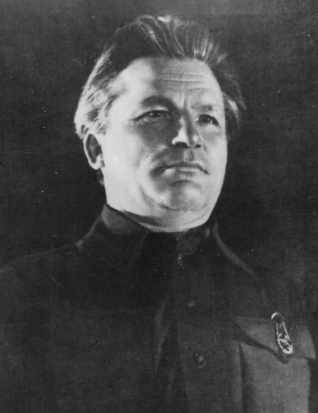
Sergei Kirov is assassinated, paving way for the repressive Great Purge, and Vinnytsia massacre by General Secretary of the Communist Party of the Soviet Union, Joseph Stalin.
Soviet politician and revolutionary (1886–1934)
Sergei Mironovich Kirov was a Russian and Soviet politician and Bolshevik revolutionary. Kirov was an early revolutionary in the Russian Empire and a member of the Bolshevik faction of the Russian Social Democratic Labour Party. Kirov became an Old Bolshevik and personal friend to Joseph Stalin, rising through the Communist Party of the Soviet Union ranks to become head of the party in Leningrad and a member of the Politburo.
1934
World_War_II
World War II: A day after the beginning of the Winter War in Finland, the Cajander III Cabinet resigns and is replaced by the Ryti I Cabinet, while the Finnish Parliament move from Helsinki to Kauhajoki to escape the Soviet airstrikes.
Global conflict (1939–1945)
World War II, or the Second World War, was a global conflict between two coalitions: the Allies and the Axis powers. Nearly all of the world's countries participated, with many engaging in total war on an unprecedented scale. World War II was the deadliest conflict in history, causing the deaths of 60 to 75 million people, a majority of whom were civilians. Millions died as a result of massacres, starvation, disease, and genocides including the Holocaust. After the Allied victory, Germany, Austria, Japan, and Korea were occupied, and German and Japanese leaders were tried for war crimes.
1939
Finnish_Democratic_Republic
The Soviet Union establishes the Finnish Democratic Republic puppet state in Terijoki.
1939–1940 Soviet puppet state in occupied Karelia
The Finnish Democratic Republic, also known as the Terijoki Government, was a short-lived puppet state of the Soviet Union in occupied Finnish territory from December 1939 to March 1940.
1939
Hirohito
World War II: Emperor Hirohito of Japan gives his tacit approval to the decision of the imperial council to initiate war against the United States.
Emperor of Japan from 1926 to 1989
Emperor Shōwa was Emperor of Japan from 25 December 1926 until his death in 1989. He reigned during a period of increasing Japanese nationalism and militarism, culminating in the entry of the Empire of Japan into World War II as an Axis power. The atomic bombing of Hiroshima and Nagasaki led Hirohito to announce the surrender of Japan to the Allies in August 1945. Under pressure from the Allies, he issued the Humanity Declaration in January 1946, rejecting the divinity of the emperor as a descendant of Amaterasu. The Constitution of Japan, adopted in November 1946, emphasizes pacifism and constitutional monarchy, in contrast to imperialism and absolute monarchy. After the war, he reigned over a period of unprecedented economic growth known as the Japanese economic miracle. Hirohito reigned for 62 years and 13 days, the longest reign in Japanese history and the 12th longest verifiable reign in world history.
1941
Fiorello_La_Guardia
World War II: Fiorello La Guardia, Mayor of New York City and Director of the Office of Civilian Defense, signs Administrative Order 9, creating the Civil Air Patrol.
American politician (1882–1947)
Fiorello Henry La Guardia was an American attorney and politician who served as the 100th mayor of New York City from 1934 to 1946. He previously represented New York in the U.S. House of Representatives from 1917 to 1919 and again from 1923 to 1933. He was known for his irascible, energetic, and charismatic personality and diminutive, rotund stature. A member of the Republican Party, La Guardia was frequently cross-endorsed by parties other than his own, especially parties on the left under New York's electoral fusion laws. A panel of 69 scholars in 1993 ranked him as the best big city mayor in American history.
1941
New_York_Daily_News
The New York Daily News reports the news of Christine Jorgensen, the first notable case of sex reassignment surgery.
Daily tabloid newspaper based in New Jersey
The Daily News is an American newspaper based in Jersey City, New Jersey. It was founded in 1919 by Joseph Medill Patterson in New York City as the Illustrated Daily News. It was the first U.S. daily printed in tabloid format, and reached its peak circulation in 1947, at 2.4 million copies a day. For much of the 20th century, the paper operated out of the historic art deco Daily News Building with its large globe in the lobby. Today's Daily News is not connected to the earlier New York Daily News, which shut down in 1906.
1952
Civil_rights_movement
American Civil Rights Movement: In Montgomery, Alabama, seamstress Rosa Parks refuses to give up her bus seat to a white man and is arrested for violating the city's racial segregation laws, an incident which leads to that city's bus boycott.
1954–1968 U.S. social movement
The civil rights movement was a social movement in the United States from 1954 to 1968 which aimed to abolish legalized racial segregation, discrimination, and disenfranchisement in the country, which most commonly affected African Americans. The movement had origins in the Reconstruction era in the late 19th century, and modern roots in the 1940s and in Mohandas Gandhi's nonviolent movement in India. After years of nonviolent protests and civil disobedience campaigns, the civil rights movement achieved many of its legislative goals in the 1960s, during which it secured new protections in federal law for the civil rights of all Americans, including the Civil Rights Act of 1964, the Voting Rights Act of 1965, and the Civil Rights Act of 1968.
1955
Central_African_Republic
The Central African Republic attains self-rule within the French Union.
Country in Central Africa
The Central African Republic (CAR) is a landlocked country in Central Africa. It is bordered by Chad to the north, Sudan to the northeast, South Sudan to the east, the Democratic Republic of the Congo to the south, the Republic of the Congo to the southwest, and Cameroon to the west. The Central African Republic covers a land area of about 620,000 square kilometres (240,000 sq mi). As of 2024, it has a population of 5,357,744, consisting of about 80 ethnic groups. Having been a French colony under the name Ubangi-Shari, French is its official language, with Sango, a Ngbandi-based creole language, as the national and co-official language. Its capital and largest city is Bangui, which sits on the country's southern border with the Democratic Republic of the Congo.
1958
Our_Lady_of_the_Angels_School_fire
The Our Lady of the Angels School fire in Chicago kills 92 children and three nuns.
1958 school fire in Chicago, Illinois
On Monday, December 1, 1958, a fire broke out at Our Lady of the Angels School in Chicago, Illinois, shortly before classes were to be dismissed for the day. The fire originated in the basement near the foot of a stairway. The elementary school was operated by the Archdiocese of Chicago and had an enrollment of approximately 1,600 students. A total of 92 pupils and three nuns ultimately died when smoke, heat, fire, and toxic gases cut off their normal means of escape through corridors and stairways. Many more were injured when they jumped from second-floor windows which, because the building had a raised basement, were nearly as high above ground as a third floor would be on level ground, approximately 25 feet (7.6 m).
1958
Cold_War
Cold War: Opening date for signature of the Antarctic Treaty, which sets aside Antarctica as a scientific preserve and bans military activity on the continent.
1947–1991 geopolitical rivalry between US and USSR
The Cold War was a period of international geopolitical rivalry between the United States (US) and the Soviet Union (USSR) and their respective allies, the capitalist Western Bloc and communist Eastern Bloc. It began in the aftermath of the Second World War and ended with the dissolution of the Soviet Union in 1991. The term cold war is used because there was no direct fighting between the two superpowers, though each supported opposing sides in regional conflicts known as proxy wars. In addition to the struggle for ideological and economic influence and an arms race in both conventional and nuclear weapons, the Cold War was expressed through technological rivalries such as the Space Race, espionage, propaganda campaigns, embargoes, and sports diplomacy.
1959
Patrice_Lumumba
Patrice Lumumba is arrested by Mobutu Sese Seko's men on the banks of the Sankuru River, for inciting the army to rebellion.
Congolese politician and independence leader (1925–1961)
Patrice Émery Lumumba was a Congolese politician, independence leader and revolutionary who served as the first prime minister of the First Congolese Republic from June until September 1960, following his party's success in the May 1960 election. Lumumba was the leader of the Congolese National Movement (MNC) from 1958 until his assassination in 1961. Ideologically an African nationalist and pan-Africanist, he played a significant role in the transformation of the Congo from a colony of Belgium into an independent republic.
1960
Nagaland
Nagaland, became the 16th state of India.
State in northeastern India
Nagaland is a state in the north-eastern region of India. It is bordered by the Indian states of Arunachal Pradesh to the north, Assam to the west, Manipur to the south, and the Naga Self-Administered Zone of the Sagaing Region of Myanmar (Burma) to the east. Its capital city is Kohima and its largest city is the twin Chümoukedima–Dimapur. The state has an area of 16,579 square kilometres (6,401 sq mi) with a population of 1,980,602 as per the 2011 Census of India, making it one of the least populated states in India.
1963
Vietnam_War
Vietnam War: U.S.
President Lyndon B. Johnson and his top-ranking advisers meet to discuss plans to bomb North Vietnam.
The Vietnam War was an armed conflict in Vietnam, Laos, and Cambodia fought between North Vietnam and South Vietnam and their allies. North Vietnam was supported by the Soviet Union and China, while South Vietnam was supported by the United States and other anti-communist nations. The conflict was the second of the Indochina wars and a proxy war of the Cold War. The Vietnam War was one of the postcolonial wars of national liberation, a theater in the Cold War, and a civil war, with civil warfare a defining feature from the outset. Direct US military involvement escalated from 1965 until US forces were withdrawn in 1973. The fighting spilled into the Laotian and Cambodian civil wars, which ended with all three countries becoming communist in 1975.
1964
Vietnam_War_draft
Vietnam War: The first draft lottery in the United States is held since World War II.
U.S. conscription procedure during the Vietnam War
The Vietnam War Draft was a military draft implemented under the Selective Service System, drafting over 1.7 million men to serve in the Vietnam War. During the peacetime years before the Vietnam War, a draft existed, while many soldiers were joined on a voluntary basis. In the second half of 1965, with American troops entering Vietnam, there was a substantial expansion of the US armed forces, and this required a dramatic increase in the number of men drafted each month.
1969
Cambodian_Civil_War
Cambodian Civil War: Khmer Rouge rebels intensify assaults on Cambodian government positions, forcing their retreat from Kompong Thmar and nearby Ba Ray.
1967–1975 conflict in Cambodia
The Cambodian Civil War was a civil war in Cambodia fought between the Khmer Rouge against the government of the Kingdom of Cambodia. Following the March 1970 coup, the conflict shifted as the Khmer Rouge and forces loyal to Norodom Sihanouk, now supported by North Vietnam and China, fought against the Khmer Republic, which was supported by the United States and South Vietnam.
1971
Croatian_Spring
Purge of Croatian Spring leaders starts in Yugoslavia at the meeting of the League of Communists at the Karađorđevo estate.
1967–1971 Yugoslavian political crisis
The Croatian Spring, or Maspok, was a political conflict that took place from 1967 to 1971 in the Socialist Republic of Croatia, at the time part of the Socialist Federal Republic of Yugoslavia. As one of six republics comprising Yugoslavia at the time, Croatia was ruled by the League of Communists of Croatia (SKH), nominally independent from the League of Communists of Yugoslavia (SKJ), led by President Josip Broz Tito. The 1960s in Yugoslavia were marked by a series of reforms aimed at improving the economic situation in the country and increasingly politicised efforts by the leadership of the republics to protect the economic interests of their respective republics. As part of this, political conflict occurred in Croatia when reformers within the SKH, generally aligned with the Croatian cultural society Matica hrvatska, came into conflict with conservatives.
1971
Papua_New_Guinea
Papua New Guinea gains self-government from Australia.
Country in Oceania
Papua New Guinea (PNG), officially the Independent State of Papua New Guinea, is an island country in Oceania that comprises the eastern half of the island of New Guinea and offshore islands in Melanesia, a region of the southwestern Pacific Ocean north of Australia. It has a land border with Indonesia to the west and maritime borders with Australia to the south and the Solomon Islands to the east. Its capital is Port Moresby. The country's 462,840 km2 (178,700 mi2) includes a large mainland and hundreds of islands.
1973
TWA_Flight_514
TWA Flight 514, a Boeing 727, crashes northwest of Dulles International Airport, killing all 92 people on board.
1974 aviation accident in Virginia
Trans World Airlines Flight 514 was a domestic scheduled flight of Trans World Airlines from Indianapolis, Indiana, and Columbus, Ohio, to Washington National Airport. On December 1, 1974, the Boeing 727-231 serving the flight was diverted to Washington Dulles International Airport but crashed into Mount Weather, Virginia. All 92 occupants aboard, 85 passengers and 7 crew members, died. In stormy conditions late in the morning, the aircraft was in controlled flight and struck a low mountain 25 nautical miles northwest of its revised destination.
1974
Northwest_Orient_Airlines_Flight_6231
Northwest Orient Airlines Flight 6231, another Boeing 727, crashes northwest of John F.
Kennedy International Airport.
Northwest Orient Airlines Flight 6231 was a Northwest Airlines charter flight from John F. Kennedy International Airport, New York City, to Buffalo International Airport, Buffalo, New York, where it was to pick up the Baltimore Colts professional football team. On December 1, 1974, the Boeing 727 serving the flight crashed in Harriman State Park near Stony Point, New York, just north of the New York City area.
1974
Inex-Adria_Aviopromet_Flight_1308
Inex-Adria Aviopromet Flight 1308, a McDonnell Douglas MD-80, crashes in Corsica, killing all 180 people on board.
1981 aviation accident in France
Inex-Adria Aviopromet Flight 1308 was a charter flight, operated with a McDonnell Douglas MD-82, which brought Yugoslavian tourists to Corsica. On 1 December 1981, on its final approach, the plane crashed into Mont San Petru; all of the 180 passengers and crew died. The crash is the first, and the deadliest, major aviation accident involving an MD-80 model aircraft.
1981
NASA
NASA conducts the Controlled Impact Demonstration, wherein an airliner is deliberately crashed in order to test technologies and gather data to help improve survivability of crashes.
American space and aeronautics agency
The National Aeronautics and Space Administration is an independent agency of the U.S. federal government responsible for the United States' civil space program, as well as research in aeronautics and space. Headquartered in Washington, D.C., NASA operates ten field centers across the US and is organized into three mission directorates: Human Spaceflight, Research and Technology, and Science. Established in 1958 amid the Space Race, NASA succeeded the National Advisory Committee for Aeronautics (NACA) to give the US space program a distinct civilian orientation focused on peaceful applications. Since then, it has led most American spaceflight programs, including Project Mercury, Project Gemini, the Apollo program, Skylab, the Space Shuttle, the International Space Station (ISS), and the ongoing multi-national Artemis program.
1984
World_AIDS_Day
World AIDS Day is proclaimed worldwide by the UN member states.
International day on 1 December
World AIDS Day, designated on 1 December every year since 1988, is an international day dedicated to raising awareness of the AIDS pandemic caused by the spread of HIV infection and mourning those who have died of the disease. The acquired immunodeficiency syndrome (AIDS) is a life-threatening condition caused by the human immunodeficiency virus (HIV). The HIV virus attacks the immune system of the patient and reduces its resistance to other diseases. Government and health officials, non-governmental organizations, and individuals around the world observe the day, often with education on AIDS prevention and control.
1988
Benazir_Bhutto
Benazir Bhutto, is named as the Prime Minister of Pakistan, becoming the first female leader to lead a Muslim nation.
Prime Minister of Pakistan (1988–1990; 1993–1996)
Benazir Bhutto was a Pakistani stateswoman and politician who twice served as the prime minister of Pakistan from 1988 to 1990, and again from 1993 to 1996. She was the first woman elected to head a democratic government in a Muslim-majority country. Ideologically a liberal and a secularist, she chaired or co-chaired the Pakistan People's Party (PPP) from 1982 until her assassination in 2007.
1988
Philippine coup attempt: The right-wing military rebel Reform the Armed Forces Movement attempts to oust Philippine President Corazon Aquino in a failed bloody coup d'état.
Failed military overthrow of President Corazon Aquino
The 1989 Philippine coup attempt was the most serious attempted coup d'état against the government of Philippine President Corazon Aquino and part of a series of coup attempts against her. It was staged beginning December 1, 1989, by members of the Armed Forces of the Philippines belonging to the Reform the Armed Forces Movement (RAM) and soldiers loyal to former President Ferdinand Marcos. Metro Manila was shaken by this Christmas-time coup, which almost seized Malacañang Palace. It was completely defeated by the Philippine government by December 9, 1989.
1989
Channel_Tunnel
Channel Tunnel sections started from the United Kingdom and France meet beneath the seabed.
Undersea rail tunnel linking France to the UK
The Channel Tunnel, sometimes referred to as the Chunnel, is a 50.46-kilometre (31.35-mile) railway tunnel beneath the English Channel which connects Folkestone in the United Kingdom with Coquelles in northern France. Opened in 1994, it remains the only fixed link between Great Britain and the European mainland.
1990
Ukraine
Cold War: Ukrainian voters overwhelmingly approve a referendum for independence from the Soviet Union.
Country in Eastern Europe
Ukraine is a country in Eastern Europe. It is the second-largest country in Europe after Russia, which borders it to the east and northeast. Ukraine also borders Belarus to the north; Poland and Slovakia to the west; Hungary, Romania and Moldova to the southwest; and the Black Sea and the Sea of Azov to the south and southeast. Kyiv is Ukraine's capital and largest city, followed by Kharkiv, Odesa, and Dnipro. The official language of the country is Ukrainian. Ukraine covers an area of 603,628 km2 (233,062 sq mi) with an estimated total population of 32.3 million in 2026.
1991
Bihar
In the Indian state of Bihar, Ranvir Sena attacks the CPI (ML) Party Unity stronghold Lakshmanpur-Bathe, killing 63 lower caste people.
State in Eastern India
Bihar is a state in eastern India. It borders Uttar Pradesh to its west, Nepal to the north, the northern part of West Bengal to the east, and Jharkhand to the south. Bihar is split by the river Ganges, which flows from west to east. It is the second largest state by population, the 12th largest by area, and the 14th largest by GDP in 2024. The official language on Bihar is Hindi, which shares official status alongside that of Urdu. The main native languages are Maithili, Magahi and Bhojpuri, but there are several other languages being spoken at smaller levels.
1997
Fourteen-year-old Michael Carneal opens fire at a group of students in Heath High School in West Paducah, Kentucky, killing three and injuring five.
Mass shooting in West Paducah, Kentucky
The Heath High School shooting occurred at Heath High School in West Paducah, Kentucky, on December 1, 1997, when 14-year-old Michael Carneal opened fire on a group of students, killing three and injuring six.
1997
Vicente_Fox
Vicente Fox Quesada is inaugurated as the president of Mexico, marking the first peaceful transfer of executive federal power to an opposing political party following a free and democratic election in Mexico's history.
President of Mexico from 2000 to 2006
Vicente Fox Quesada is a Mexican businessman and politician who served as the 62nd president of Mexico from 2000 to 2006. After campaigning as a right-wing populist, Fox was elected president on the National Action Party (PAN) ticket in the 2000 election. He became the first president not from the Institutional Revolutionary Party (PRI) since 1929, and the first elected from an opposition party since Francisco I. Madero in 1911. Fox won the election with 43 percent of the vote. Considered a social-welfare promoter, along with Julio Frenk Mora, he formulated, signed and implemented the Seguro Popular which helped circa 55 million independent workers.
2000
United_Russia
The United Russia political party was founded.
Ruling political party of Russia
The All-Russian Political Party "United Russia" is the ruling political party of Russia since 2001. As the largest party in the Russian Federation, it holds 315 of the 450 seats in the State Duma as of 2022, having constituted the majority in the chamber since 2007.
2001
Perm_Oblast
As a result of the merger of the Perm Oblast and the Komi-Permyak Autonomous Okrug, a new subject of the Russian Federation, the Perm Krai, was created.
Former federal subject of Russia
Until 1 December 2005, Perm Oblast was a federal subject of Russia in Privolzhsky (Volga) Federal District. According to the results of the referendum held in October 2004, Perm Oblast was merged with Komi-Permyak Autonomous Okrug to form Perm Krai.
2005
The law on same-sex marriage comes into force in South Africa, legalizing same-sex marriage for the first time on the African continent.
Same-sex marriage has been legal in South Africa since the Civil Union Act, 2006 came into force on 30 November 2006. The decision of the Constitutional Court in the case of Minister of Home Affairs v Fourie on 1 December 2005 extended the common-law definition of marriage to include same-sex spouses—as the Constitution of South Africa guarantees equal protection before the law to all citizens regardless of sexual orientation—and gave Parliament one year to rectify the inequality in the marriage statutes. On 14 November 2006, the National Assembly passed a law allowing same-sex couples to legally solemnise their union 229 to 41, which was subsequently approved by the National Council of Provinces on 28 November in a 36 to 11 vote, and the law came into effect two days later.
2006
Treaty_of_Lisbon
The Treaty of Lisbon entered into force in the European Union.
2007 treaty amending the constitutional basis of the European Union
The Treaty of Lisbon is a European agreement that amends the two treaties which form the constitutional basis of the European Union (EU). The Treaty of Lisbon, which was signed by all EU member states on 13 December 2007, entered into force on 1 December 2009. It amends the Maastricht Treaty (1992), known in updated form as the Treaty on European Union (2007) or TEU, as well as the Treaty of Rome (1957), known in updated form as the Treaty on the Functioning of the European Union (2007) or TFEU. It also amends the attached treaty protocols as well as the Treaty establishing the European Atomic Energy Community (EURATOM).
2009
Almaty_Metro
The Alma-Ata Metro was opened.
Rapid transit system in Almaty, Kazakhstan
Almaty Metro is a rapid transit/metro system in Almaty, the largest city and a former capital of Kazakhstan. The first line of the system was opened on 1 December 2011, after more than 23 years of construction. A 2.9-kilometre (1.8 mi), two-station extension of the Metro to Moskva station opened on 18 April 2015, followed by a 3.1 kilometres (1.9 mi), two-station extension to Bauyrzhan Momyshuly on 30 May 2022. Until Astana Light Metro opened on 16 May 2026, this was the only metro system in Kazakhstan.
2011
Oulu_child_sexual_exploitation_scandal
The Oulu Police informed the public about the first offence of the much larger child sexual exploitation in Oulu, Finland.
2018-19 uncovering of a child sex ring among asylum seekers and refugees in Finland
In December 2018, it transpired that adult men, all of whom had arrived in Finland as asylum seekers or refugees, were grooming, and raping and otherwise sexually abusing, girls under 15 years of age in Oulu, Finland. One victim ended up committing suicide. The Oulu Police Department warned young girls and parents, while emphasizing that "not all people with foreign backgrounds are dishonest or criminals".
2018
Arsenal_Women_11–1_Bristol_City_Women
Arsenal Women 11–1 Bristol City Women breaks the record for most goals scored in a FA Women's Super League match, with Vivianne Miedema involved in ten of the eleven Arsenal goals.
2019 women's association football match
The women's association football match between Arsenal Women and Bristol City Women was played at Arsenal's home venue, Meadow Park, Borehamwood, on 1 December 2019. It was part of the 2019–20 Football Association Women's Super League and finished in an 11–1 victory for the home team. It became the highest-scoring game in the league's history, surpassing Liverpool's 9–0 victory over Doncaster Rovers Belles in 2013.
2019
COVID-19_pandemic
The outbreak of coronavirus infection begins in Wuhan.
Pandemic caused by SARS-CoV-2
The global COVID-19 pandemic, caused by severe acute respiratory syndrome coronavirus 2 (SARS-CoV-2), began with an outbreak in Wuhan, China, in December 2019. It spread to other parts of Asia and then worldwide in early 2020. The World Health Organization (WHO) declared the outbreak a public health emergency of international concern (PHEIC) on 30 January 2020 and assessed it as having become a pandemic on 11 March. The WHO declared that the public health emergency caused by COVID-19 had ended in May 2023, while noting that COVID-19 continued to be a global health threat.
2019
Arecibo_Telescope
The Arecibo Telescope collapses.
Former radio telescope in Puerto Rico, United States
The Arecibo Telescope was a 305 m (1,000 ft) spherical reflector radio telescope built into a natural sinkhole at the Arecibo Observatory located near Arecibo, Puerto Rico. A cable-mounted, steerable receiver and several radar transmitters for emitting signals were mounted 150 m (492 ft) above the dish. Completed in November 1963, the Arecibo Telescope was the world's largest single-aperture telescope for 53 years, until it was surpassed in July 2016 by the Five-hundred-meter Aperture Spherical Telescope (FAST) in Guizhou, China. Decommissioning the Arecibo Telescope was announced in November 2020, and the telescope collapsed in December 2020.
2020

History runs on facts, and this project runs on coffee!

Your support is incredibly helpful and genuinely appreciated.

Support with a coffee ☕