December 23 in History

An agreement is made for the Kingdom of Nepal to be abolished and the country to

2007 — An agreement is made for the Kingdom of Nepal to be abolished and the country to become a federal republic with the Prime Minister becoming head of state

December 23 spans 48 recorded events across recorded history, from 484 to 2025. Below is a curated digest of the most significant moments tied to this date.

By · Wikipedia

Historical Events 48 events 484 – 2025

More major events on December 23

The featured story and these ranked highlights form a quick summary. Every recorded event remains available in the chronology below.

  1. 2015 A bomb explodes at Istanbul's Sabiha Gökçen Airport, killing one airport cleaner. The Kurdistan Freedom Hawks claim responsibility for the attack four days later. Source
  2. 1815 The novel Emma by Jane Austen is first published. Source
  3. 2008 A coup d'état occurs in Guinea hours after the death of President Lansana Conté. Source

Did you know

In 2007, An agreement is made for the Kingdom of Nepal to be abolished and the country to become a federal republic with the Prime Minister becoming head of state. This featured entry focuses on the immediate decision and its direct historical impact.

Did you know

The Prime Minister of Nepal is the head of government of the Federal Democratic Republic of Nepal and the chairperson of the Council of Ministers. This helps explain why the event mattered beyond the initial announcement.

Did you know

Although the President of Nepal is the constitutional head of state, symbolizing the unity of the nation, in practice the executive authority is exercised by the Prime Minister and the Council of Ministers. This clarifies the institutional and public response around the event.

Did you know

In 2007, An agreement is made for the Kingdom of Nepal to be abolished and the country to become a federal republic with the Prime Minister becoming head of state had consequences that extended beyond the first headline. The key context is the institutions involved, the policy shift, and how the public response evolved afterward.

Did you know

In 2007, An agreement is made for the Kingdom of Nepal to be abolished and the country to become a federal republic with the Prime Minister becoming head of state had consequences that extended beyond the first headline. The key context is the institutions involved, the policy shift, and how the public response evolved afterward.


The Arian Vandal Kingdom ceases its persecution of Nicene Christianity.
Christological doctrine attributed to Arius
Arianism is a Christological doctrine that rejects the traditional notion of the Trinity, teaching that Jesus was created by God and is therefore distinct from God. It is named after its proponent Arius and is regarded as heretical by most modern mainstream branches of Christianity. Arianism is held by a minority of modern denominations, although some of these groups espouse related doctrines such as Socinianism, and others avoid the term "Arian" because of its historically negative connotations. Modern denominations sometimes associated with the teaching include Jehovah's Witnesses and some churches within the Churches of Christ.
484
Chlothar_I
Chlothar I is crowned King of the Franks.
King of the Franks (r. 511–558) of the Merovingian dynasty
Chlothar I, sometime called "the Old", also anglicised as Clotaire from the original French version, was a king of the Franks of the Merovingian dynasty and one of the four sons of Clovis I.
558
Maya queen Yohl Ik'nal is crowned ruler of Palenque.
Queen of the Mayan city-state of Palenque from 583 to 604
Yohl Ikʼnal, also known as Lady Kan Ik, Lady Kʼanal Ikʼnal, and sometimes rendered as Ix Yohl Ikʼnal, was queen regnant of the Maya city-state of Palenque. She acceded to the throne on 23 December 583 CE and ruled until her death in 604.
583
Sack_of_Aleppo_(962)
The Sack of Aleppo as part of the Arab–Byzantine wars: Under the future Emperor Nicephorus Phocas, Byzantine troops storm the city of Aleppo.
Capture and destruction of the city in 962 CE
The sack of Aleppo in December 962 was carried out by the Byzantine Empire under Nikephoros Phokas. Aleppo was the capital of the Hamdanid emir Sayf al-Dawla, the Byzantines' chief antagonist at the time.
962
Ilkhanate
The Ilkhanate ruler Ghazan defeats a Mamluk army that opposes his invasion into Syria in the Battle of Wadi al-Khaznadar near Homs.
1256-1335 Post-Mongol Empire khanate in Iran
The Ilkhanate or Il-khanate was a Mongol khanate founded in the southwestern territories of the Mongol Empire. It was ruled by the Il-Khans or Ilkhanids, and known to the Mongols as Hülegü Ulus. The Ilkhanid realm was officially known as the Land of Iran (Irānzamin) or simply Iran. It was established after Hülegü, the son of Tolui and grandson of Genghis Khan, inherited the West Asian and Central Asian part of the Mongol Empire after his brother Möngke Khan died in 1259.
1299
Arauco_War
Arauco War: Governor of Chile Martín García Óñez de Loyola is killed in the Battle of Curalaba by Mapuches led by Pelantaru.
Conflict between Spanish settlers of Chile and indigenous peoples (16th–17th centuries)
The Arauco War was a long-running conflict between colonial Spaniards and the Mapuche people, mostly fought in the Araucanía region of Chile. The conflict began at first as a reaction by the Mapuche to the Spanish conquerors attempting to establish cities and force the natives into servitude. It subsequently evolved over time into phases comprising drawn-out sieges, slave-hunting expeditions, pillaging raids, punitive expeditions, and renewed Spanish attempts to secure lost territories. Abduction of women and war rape was common on both sides.
1598
Glorious_Revolution
As part of the Glorious Revolution, King James II of England flees from England to Paris after being deposed in favor of his son-in-law and nephew, William of Orange and his daughter Mary.
British revolution of 1688
The Glorious Revolution was the deposition of King James II in November 1688. He was replaced by his daughter Mary II and her Dutch husband, James's nephew William III of Orange. The two ruled as joint monarchs of England, Scotland, and Ireland until Mary's death in 1694, when William became ruler in his own right. Jacobitism, the political movement that aimed to restore the exiled James or his descendants of the House of Stuart to the throne, persisted into the late 18th century. Some historians consider William's invasion the last successful invasion of England.
1688
Moscow_State_Academy_of_Choreography
Moscow State Academy of Choreography is founded under the reign of Catherine II.
It is the second ballet school in Russia after Vaganova Academy of Russian Ballet.
The Moscow State Academy of Choreography, commonly known as The Bolshoi Ballet Academy, is a ballet school located in Moscow, Russia. It is the affiliate school of the Bolshoi Ballet. Founded on December 23, 1773 as the second ballet school in Russia, it entered into a contract with the Italian teacher-choreographer Filippo Becari, regarded as “the most capable of teaching” children to learn “to dance with all possible precision and to show themselves publicly in all pantomime ballets”.
1773
George_Washington
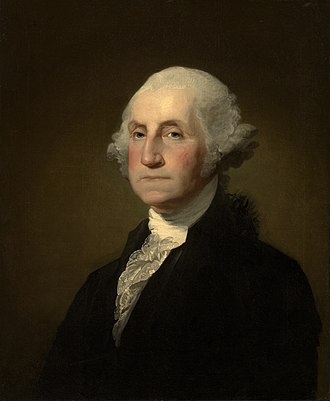
George Washington resigns as commander-in-chief of the Continental Army at the Maryland State House in Annapolis, Maryland.
U.S. Founding Father and president from 1789 to 1797
George Washington was a Founding Father and the first president of the United States, serving from 1789 to 1797. As commander of the Continental Army, Washington led Patriot forces to victory in the American Revolutionary War against the British Empire. He is commonly known as the Father of His Country for his role in bringing about American independence.
1783
Battle_of_Savenay
The Battle of Savenay: A decisive defeat of the royalist counter-revolutionaries in War in the Vendée during the French Revolution.
Part of the French Revolution
The Battle of Savenay took place on 23 December 1793, and marks the end of the Virée de Galerne operational phase of the first war in the Vendée after the French Revolution. A Republican force of approximately 18,000 decisively defeated the Armée Catholique et Royale force of 6,000 at Savenay.
1793
Emma_(novel)
The novel Emma by Jane Austen is first published.
1816 novel by Jane Austen
Emma is a novel written by English author Jane Austen. It is set in the fictional Surrey village of Highbury and the surrounding estates of Hartfield, Randalls, and Donwell Abbey, and involves the relationships among people from a small number of families. The novel was first published in December 1815, although the title page is dated 1816. As in her other novels, Austen explores the concerns and difficulties of genteel women living in Georgian–Regency England. Emma is a comedy of manners.
1815
A_Visit_from_St._Nicholas
The poem "Account of a Visit from St.
Nicholas," also known as "'Twas the Night Before Christmas," is published anonymously in the Troy Sentinel.
"A Visit from St. Nicholas" is a poem, first published anonymously under the title "Account of a Visit from St. Nicholas", in 1823. Authorship has been attributed to Clement Clarke Moore, who claimed authorship in 1837; but it has also been suggested that Henry Livingston Jr. wrote it.
1823
Constantinople_Conference
First day of the Constantinople Conference which resulted in agreement for political reforms in the Balkans.
Multi-lateral diplomatic meeting regarding Bosnia (1876–77)
The 1876–77 Constantinople Conference of the Great Powers was held in Constantinople from 23 December 1876 until 20 January 1877. Following the beginning of the Herzegovinian Uprising in 1875 and the April Uprising in April 1876, the Great Powers agreed on a project for political reforms in Bosnia and in the Ottoman territories with a majority-Bulgarian population. The Ottoman Empire refused the proposed reforms, leading to the Russo-Turkish War a few months later.
1876
Hansel_and_Gretel_(opera)
The opera Hansel and Gretel by Engelbert Humperdinck is first performed.
1893 opera by Engelbert and Adelheid Humperdinck
Hansel and Gretel is an opera by nineteenth-century composer Engelbert Humperdinck, who described it as a Märchenoper. The libretto was written by Humperdinck's sister, Adelheid Wette, based on the Grimm brothers' fairy tale of the same name. It is much admired for its folk music-inspired themes, one of the most famous being the "Abendsegen" from act 2.
1893
Tampere_conference_of_1905
The Tampere conference, where Vladimir Lenin and Joseph Stalin meet for the first time, is held in Tampere, Finland.
Conference of Russian Social Democratic Labour Party
The first conference of the Bolshevik faction of the Russian Social Democratic Labour Party (RSDLP) took place in Tampere (Tammerfors), Grand Duchy of Finland, in December 1905. Held between the 1905 London and 1906 Stockholm party congresses at the Tampere Workers' Hall, the conference was an unofficial meeting of the Bolsheviks. It is particularly remembered for playing host to the first meeting of Vladimir Lenin and Joseph Stalin. The conference resolved to forgo participation in the new State Duma, as did most of the far left parties. They later reversed this decision in 1907.
1905
Federal_Reserve_Act
The Federal Reserve Act is signed into law by President Woodrow Wilson, creating the Federal Reserve System.
1913 United States law creating the Federal Reserve System
The Federal Reserve Act was passed by the 63rd United States Congress and signed into law by President Woodrow Wilson on December 23, 1913. The law created the Federal Reserve System, the central banking system of the United States.
1913
World_War_I
World War I: Australian and New Zealand troops arrive in Cairo, Egypt.
Global conflict from 1914 to 1918
World War I, or the First World War, also known as the Great War, was a global conflict between two coalitions: the Allies and the Central Powers. Major theatres of war included Europe and the Middle East, and well as parts of Africa and the Asia-Pacific. One of the deadliest conflicts in history, World War I resulted in an estimated 15 to 22 million deaths, including in mass war crimes against civilians and genocides. The conflict saw important developments in weaponry, including the first large-scale use of machine guns, artillery, aircraft, chemical weapons, and tanks, and was a major factor in the deadly Spanish flu pandemic.
1914
Battle_of_Sarikamish
World War I: During the Battle of Sarikamish, Ottoman forces mistook one another for Russian troops.
The following friendly fire incident leaves 2,000 Ottomans dead and many more wounded.
The Battle of Sarikamish was an engagement between the Russian and Ottoman Empires during World War I. It took place from 22 December 1914, to 17 January 1915, as part of the Caucasus campaign.
1914
Battle_of_Magdhaba
World War I: Battle of Magdhaba: Allied forces defeat Turkish forces in the Sinai Peninsula.
1916 WWI battle on the Sinai peninsula
The Battle of Magdhaba took place on 23 December 1916 during the Defence of Egypt section of the Sinai and Palestine Campaign in the First World War. The attack by the Anzac Mounted Division took place against an entrenched Ottoman Army garrison to the south and east of Bir Lahfan in the Sinai desert, some 18–25 miles (29–40 km) inland from the Mediterranean coast. This Egyptian Expeditionary Force (EEF) victory against the Ottoman Empire garrison also secured the town of El Arish after the Ottoman garrison withdrew.
1916
Sex_Disqualification_(Removal)_Act_1919
Sex Disqualification (Removal) Act 1919 becomes law in the United Kingdom, allowing women to serve as lawyers, civil servants, and in other professions, as well as to serve on juries.
UK law granting women more work rights
The Sex Disqualification (Removal) Act 1919 was an act of the Parliament of the United Kingdom. It became law when it received royal assent on 23 December 1919. The act enabled women to join the professions and professional bodies, to sit on juries and be awarded degrees. It was a government compromise, a replacement for a more radical private members' bill, the Women's Emancipation Bill.
1919
Colombia
Colombia becomes a signatory to the Buenos Aires copyright treaty.
Country in South America
Colombia, officially the Republic of Colombia, is a country located in South America, with insular regions in North America. Colombia's mainland is bordered by the Caribbean Sea to the north, Venezuela to the east, Brazil to the southeast, Peru and Ecuador to the south and southwest, the Pacific Ocean to the west, and Panama to the northwest. Colombia is divided into 32 departments. The Capital District of Bogotá is the country's largest city hosting the main financial and cultural hub. Other urban areas include Medellín, Cali, Barranquilla, Cartagena, Bucaramanga, Pereira, Santa Marta, Cúcuta, Ibagué, Villavicencio and Manizales. It covers an area of 1,141,748 square kilometers and has a population of around 52 million. Its rich cultural heritage—including language, religion, cuisine, and art—reflects its history as a colony, fusing cultural elements brought by immigration from Europe and the Middle East, with those brought by the African diaspora, as well as with those of Indigenous civilizations that predate colonization. Spanish is the official language, although Creole, English and 64 other languages are recognized regionally.
1936
Spanish_Civil_War
Spanish Civil War: The Spanish Republic legalizes the Regional Defence Council of Aragon.
1936–1939 civil war in Spain
The Spanish Civil War was fought from 1936 to 1939 between the Republicans and the Nationalist rebels. Republicans loyal to the left-leaning Popular Front government of the Second Spanish Republic included socialists, anarchists, communists, and separatists, supported by the Soviet Union. The opposing Nationalists were an alliance of fascist Falangists, monarchists, conservatives, and traditionalists, supported by Nazi Germany and Fascist Italy. Initially led by a military junta, until General Francisco Franco was appointed supreme leader on 1 October 1936 of what he called the Spanish State. Due to the international political climate at the time, the war was variously viewed as class struggle, religious struggle, or struggle between republican democracy and dictatorship, revolution and counterrevolution, or between fascism and communism. The Nationalists won the war in early 1939, and ruled Spain until Franco's death in November 1975.
1936
World_War_II
World War II: After 15 days of fighting, the Imperial Japanese Army occupies Wake Island.
Global conflict (1939–1945)
World War II, or the Second World War, was a global conflict between two coalitions: the Allies and the Axis powers. Nearly all of the world's countries participated, with many engaging in total war on an unprecedented scale. World War II was the deadliest conflict in history, causing the deaths of 60 to 75 million people, a majority of whom were civilians. Millions died as a result of massacres, starvation, disease, and genocides including the Holocaust. After the Allied victory, Germany, Austria, Japan, and Korea were occupied, and German and Japanese leaders were tried for war crimes.
1941
Transistor
The transistor is first demonstrated at Bell Laboratories.
Solid-state electrically operated switch also used as an amplifier
A transistor is a semiconductor device used to amplify or switch electrical signals and power. It is one of the basic building blocks of modern electronics. It is composed of semiconductor material, usually with at least three terminals for connection to an electronic circuit. A voltage or current applied to one pair of the transistor's terminals controls the current through another pair of terminals. Because the controlled (output) power can be higher than the controlling (input) power, a transistor can amplify a signal. Some transistors are packaged individually, but many more in miniature form are found embedded in integrated circuits. Because transistors are the key active components in practically all modern electronics, they are considered one of the 20th century's greatest inventions.
1947
Japan
Seven Japanese military and political leaders convicted of war crimes by the International Military Tribunal for the Far East are executed by Allied occupation authorities at Sugamo Prison in Tokyo, Japan.
Country in East Asia
Japan is an island country in East Asia. Located in the Pacific Ocean off the northeast coast of the Asian mainland, it is bordered to the west by the Sea of Japan, the Sea of Okhotsk in the north, and the East China Sea in the south. The Japanese archipelago consists of four major islands alongside over 14,000 smaller islands. Japan is divided into 47 administrative prefectures and eight traditional regions, and around 75% of its terrain is mountainous and heavily forested, concentrating its agriculture and highly urbanized population along its eastern coastal plains. With a population of almost 123 million as of 2026, it is the world's 11th most populous country. Tokyo is the country's capital and largest city.
1948
Korean_War
Korean War: General Walton Walker dies in a jeep accident and is replaced by General Matthew Ridgway in the Eighth United States Army.
1950–1953 conflict on the Korean Peninsula
The Korean War was an armed conflict fought on the Korean Peninsula between North Korea and South Korea and their allies. North Korea was supported by China and the Soviet Union, while South Korea was supported by the United Nations led by the United States under the auspices of the United Nations Command (UNC).
1950
Kidney_transplantation
First successful kidney transplant is performed by J.
Hartwell Harrison and Joseph Murray.
Kidney transplant or renal transplant is the organ transplant of a kidney into a patient with end-stage kidney disease (ESRD). Kidney transplant is typically classified as deceased-donor or living-donor transplantation depending on the source of the donor organ. Living-donor kidney transplants are further characterized as genetically related (living-related) or non-related (living-unrelated) transplants, depending on whether a biological relationship exists between the donor and recipient. The first successful kidney transplant was performed in 1954 by a team including Joseph Murray, the recipient's surgeon, and Hartwell Harrison, surgeon for the donor. Murray was awarded a Nobel Prize in Physiology or Medicine in 1990 for this and other work. In 2018, an estimated 95,479 kidney transplants were performed worldwide, 36% of which came from living donors.
1954
The_Unknown_Soldier_(1955_film)
The first film adaptation of Väinö Linna's novel The Unknown Soldier, directed by Edvin Laine, premieres.
1955 film by Edvin Laine
The Unknown Soldier is a Finnish war film directed by Edvin Laine that premiered in December 1955. It is based on The Unknown Soldier, a novel by Väinö Linna. The story is about the Continuation War between Finland and the Soviet Union as told from the viewpoint of ordinary Finnish soldiers.
1955
Hilkka Saarinen née Pylkkänen is murdered in the so-called "oven homicide" case in Krootila, Kokemäki, Finland.
Death of Hilkka Hillevi Saarinen, née Pylkkänen (1927–1960)
The oven homicide refers to the homicide of Hilkka Hillevi Saarinen née Pylkkänen, in the village of Krootila in Kokemäki, Finland in December 1960. It is one of Finland's best-known homicide cases, and the killer has never been officially identified.
1960
USS_Pueblo_(AGER-2)
The 82 sailors from the USS Pueblo are released after eleven months of internment in North Korea.
Ship attacked and captured by North Korea
USS Pueblo (AGER-2) is a Banner-class technical research ship, placed into service during World War II, then converted to a spy ship in 1967 by the United States Navy. She gathered intelligence and oceanographic information, monitoring electronic and radio signals from North Korea. On 23 January 1968, the ship was attacked and captured by a North Korean vessel, in what became known as the "Pueblo incident".
1968
The North Tower of the World Trade Center in Manhattan, New York, New York is topped out at 417 metres (1,368 ft), making it the tallest building in the world.
Former skyscraper in Manhattan, New York
The original One World Trade Center was one of the Twin Towers of the original World Trade Center complex in New York City. It started construction in 1968 and completed in 1972. It stood at a height of 1,368 feet (417.0 m), and was the tallest building in the world until 1973, when surpassed by the Sears Tower in Chicago. On the 106th and 107th floors of this building were a complex of dining, meeting, and entertainment venues known as Windows on the World.
1970
Democratic_Republic_of_the_Congo
The Democratic Republic of the Congo officially becomes a one-party state.
Country in Central Africa
The Democratic Republic of the Congo (DRC), also known as the DR Congo, Congo-Kinshasa, or simply the Congo, and formerly named Zaire, is a country in Central Africa. By land area, it is the second-largest country in Africa and the eleventh-largest in the world. With a population of about 124 million people, the Democratic Republic of the Congo is the fourth-most populous country in Africa and the most populous Francophone country in the world. French is the official and most widely spoken language. There are over 200 indigenous languages, of which Lingala is the most widely spoken. The capital, largest city, and economic center is Kinshasa. The DRC is bordered by the Republic of the Congo, the Cabinda exclave of Angola, and the South Atlantic Ocean to the west; the Central African Republic and South Sudan to the north; Uganda, Rwanda, Burundi, and Tanzania to the east; and Zambia and Angola to the south. Centered on the Congo Basin, most of the DRC's terrain is covered by dense rainforests and is crossed by many rivers. The east and southeast are mountainous.
1970
Immaculate_Reception
The Immaculate Reception is caught by Franco Harris to win the Pittsburgh Steelers their first ever playoff victory, after defeating the Oakland Raiders.
Unusual football play in 1972–73 NFL playoffs
The Immaculate Reception is one of the most famous plays in the history of American football. It was a touchdown which occurred in the AFC divisional playoff game of the National Football League (NFL), between the Pittsburgh Steelers and the Oakland Raiders at Three Rivers Stadium in Pittsburgh, Pennsylvania, on December 23, 1972.
1972
1972_Nicaragua_earthquake
A 6.5 magnitude earthquake strikes the Nicaraguan capital of Managua killing more than 10,000.
Earthquake in Nicaragua
The 1972 Nicaragua earthquake occurred at 12:29:44 a.m. local time on 23 December near Managua, the capital of Nicaragua. It had a moment magnitude of 6.3 and a maximum MSK intensity of IX (Destructive). The epicenter was 28 km (17 mi) northeast of the city centre with a depth of about 10 km (6.2 mi). The earthquake caused widespread casualties among Managua's residents: 4,000–11,000 were killed, 20,000 were injured and over 300,000 were left homeless.
1972
Uruguayan_Air_Force_Flight_571
The 16 survivors of the Andes flight disaster are rescued after 73 days, surviving by cannibalism.
1972 aviation accident in the Andes mountains of Argentina
Uruguayan Air Force Flight 571 was the chartered flight of a Fairchild FH-227D from Montevideo, Uruguay, to Santiago, Chile, that crashed in the Andes mountains in Argentina on 13 October 1972. The accident and subsequent survival became known as both the Andes flight disaster and the Miracle of the Andes.
1972
Alitalia_Flight_4128
Alitalia Flight 4128 crashes into the Tyrrhenian Sea while on approach to Falcone Borsellino Airport in Palermo, Italy, killing 108.
1978 aviation accident
Alitalia Flight 4128 was a scheduled flight from Leonardo da Vinci Airport, in Rome, Italy, to Palermo International Airport in Palermo, Italy, with 129 on board. On 23 December 1978, the McDonnell Douglas DC-9-32 crashed into the Tyrrhenian Sea about 3 km (1.9 mi) north of Palermo while on approach.
1978
Soviet–Afghan_War
Soviet–Afghan War: Soviet Union forces occupy Kabul, the Afghan capital.
1979–1989 armed conflict in South Asia
The Soviet–Afghan War took place in Afghanistan from December 1979 to February 1989. Marking the beginning of the 47-year-long Afghan conflict, it saw the Soviet Union and the Communist-led Afghan military fight against the rebelling Afghan mujahideen, aided by Pakistan. While backed by various countries and organizations, the majority of the mujahideen's support came from Pakistan, the United States, the United Kingdom, China, Iran, and the Arab states of the Persian Gulf, in addition to a large influx of foreign fighters known as the Afghan Arabs. American and British involvement on the side of the mujahideen escalated the Cold War, ending a short period of relaxed Soviet Union–United States relations.
1979
Aeroflot_Flight_3519
After experiencing an engine fire, Aeroflot Flight 3519 attempts to make an emergency landing at Krasnoyarsk International Airport but crashes, killing 110 of the 111 people on board.
1984 aviation accident in the Soviet Union
Aeroflot Flight 3519 was a scheduled flight, operated by a Tupolev Tu-154 that crashed on December 23, 1984, due to an engine failure. 110 occupants died; one passenger survived the accident.
1984
Rutan_Voyager
Voyager, piloted by Dick Rutan and Jeana Yeager, lands at Edwards Air Force Base in California becoming the first aircraft to fly non-stop around the world without aerial or ground refueling.
American aircraft; first to fly around the world non-stop, unrefueled (1986)
The Rutan Model 76 Voyager is an aircraft designed by Burt Rutan that became the first to fly around the world without stopping or refueling. It was piloted by Dick Rutan and Jeana Yeager. The flight took off from Edwards Air Force Base's 15,000 foot runway in the Mojave Desert on December 14, 1986, and ended 9 days, 3 minutes and 44 seconds later on December 23, setting a flight endurance record. The aircraft flew westbound 26,366 statute miles at an average altitude of 11,000 feet (3,350 m).
1986
History_of_Slovenia
History of Slovenia: In a referendum, 88.5% of Slovenia's overall electorate vote for independence from Yugoslavia.
The history of Slovenia chronicles the period of the Slovenian territory from the 5th century BC to the present. In the Early Bronze Age, Proto-Illyrian tribes settled an area stretching from present-day Albania to the city of Trieste. The Slovenian territory was part of the Roman Empire, and it was devastated by the Migration Period's incursions during late Antiquity and the Early Middle Ages. The main route from the Pannonian plain to Italy ran through present-day Slovenia. Alpine Slavs, ancestors of modern-day Slovenians, settled the area in the late 6th Century AD. The Holy Roman Empire controlled the land for nearly 1,000 years. Between the mid-14th century through 1918 most of Slovenia was under Habsburg rule. In 1918, most Slovene territory became part of the Kingdom of Serbs, Croats, and Slovenes, and in 1929 the Drava Banovina was created within the Kingdom of Yugoslavia with its capital in Ljubljana, corresponding to Slovenian-majority territories within the state. The Socialist Republic of Slovenia was created in 1945 as part of federal Yugoslavia. Slovenia gained its independence from Yugoslavia in June 1991, and today it is a member of the European Union and NATO.
1990
General_Atomics_MQ-1_Predator
A U.S.
MQ-1 Predator is shot down by an Iraqi MiG-25 in the first combat engagement between a drone and conventional aircraft.
The General Atomics MQ-1 Predator is an American remotely piloted aircraft (RPA) built by General Atomics that was used primarily by the United States Air Force (USAF) and Central Intelligence Agency (CIA). Conceived in the early 1990s for aerial reconnaissance and forward observation roles, the Predator carries cameras and other sensors. It was modified and upgraded to carry and fire two AGM-114 Hellfire missiles or other munitions. The aircraft entered service in 1995, and saw combat in the war in Afghanistan, Pakistan, the NATO intervention in Bosnia, the NATO bombing of Yugoslavia, the Iraq War, Yemen, the 2011 Libyan civil war, the 2014 intervention in Syria, and Somalia.
2002
PetroChina
An explosion at the PetroChina Chuandongbei natural gas field in Kai County, Chongqing, China, kills at least 234.
Chinese oil producer
PetroChina Company Limited is a Chinese oil and gas company and is the listed arm of state-owned China National Petroleum Corporation (CNPC), headquartered in Dongcheng District, Beijing. The company is currently Asia's largest oil and gas producer. Traded in Hong Kong and New York, the mainland enterprise announced its plans to issue stock in Shanghai in November 2007, and subsequently entered the constituent of SSE 50 Index. In the 2020 Forbes Global 2000, PetroChina was ranked as the 32nd-largest public company in the world.
2003
Antonov_An-140
An Antonov An-140, Azerbaijan Airlines Flight 217 from Baku, Azerbaijan, to Aktau, Kazakhstan, heading across the Caspian Sea, crashes, killing 23 people.
Twin-turboprop regional airliner by Antonov
The Antonov An-140 is a turboprop regional airliner, designed by the Ukrainian Antonov ASTC bureau as a successor to the Antonov An-24, with extended cargo capacity and the ability to use unprepared airstrips.
2005
2008_Guinean_coup_d'état
A coup d'état occurs in Guinea hours after the death of President Lansana Conté.
Military coup shortly after President Lansana Conté died
On 23 December 2008, a coup d'état occurred in Guinea, shortly after the death of long-time president Lansana Conté. A junta called the National Council for Democracy and Development, headed by Captain Moussa Dadis Camara, seized power and announced that it planned to rule the country for two years prior to a new presidential election. Camara did indeed step down after Alpha Condé was elected in the 2010 election.
2008
2015_Sabiha_Gökçen_Airport_bombing
A bomb explodes at Istanbul's Sabiha Gökçen Airport, killing one airport cleaner.
The Kurdistan Freedom Hawks claim responsibility for the attack four days later.
The Sabiha Gökçen Airport bombing took place on 23 December 2015 in the apron area of Sabiha Gökçen International Airport in Istanbul, Turkey. The explosion, which occurred at approximately 02:05 local time, wounded two airport cleaners, one of whom later died after being taken to hospital. Flights from the terminal resumed as normal while Binali Yıldırım, the Minister of Transport, Maritime and Communication, claimed that there had been no security lapses at the airport. Witnesses initially claimed that they heard three successive blasts, though their cause was unknown and investigators refused to rule out terrorism as a motive. The Daily Telegraph claimed that the blast was most likely caused by a bomb.
2015
2023_Plateau_State_massacres
A series of massacres targeting Berom civilians unfold in the Plateau State in Nigeria, killing over 200 people and further injuring over 500.
No group claims responsibility.
A series of armed attacks occurred between 23 and 25 December 2023 in Plateau State in central Nigeria. They affected at least 17 rural communities in the Nigerian local government areas of Bokkos and Barkin Ladi, resulting in at least 200 deaths and injuries to more than 500 people as well as significant property damage. Although no group claimed responsibility for the attacks, they are believed to have been committed by Fulani militias.
2023
Harmony_Jets_Flight_185
The crash of Harmony Jets Flight 185 killed all eight people on board, including the Libyan Army chief Mohammed al-Haddad in Ankara, Turkey.
2025 aviation accident in Turkey
Harmony Jets Flight 185 was a charter flight from Ankara Esenboğa Airport, Turkey to Mitiga International Airport, Tripoli, Libya. On 23 December 2025, the aircraft operating the flight, a Dassault Falcon 50, crashed shortly after takeoff. The aircraft was carrying the Libyan Army chief Mohammed Ali Ahmed al-Haddad, three crew members, and four other passengers. All passengers and crew were killed.
2025

History runs on facts, and this project runs on coffee!

Your support is incredibly helpful and genuinely appreciated.

Support with a coffee ☕