January 1 in History

The French Republican Calendar is abolished.

1806 — The French Republican Calendar is abolished

January 1 spans 121 recorded events across recorded history, from 153 BC to 2026. Below is a curated digest of the most significant moments tied to this date.

By · Wikipedia

Historical Events 121 events 153 BC – 2026

More major events on January 1

The featured story and these ranked highlights form a quick summary. Every recorded event remains available in the chronology below.

  1. 2004 In a vote of confidence, General Pervez Musharraf wins 658 out of 1,170 votes in the Electoral College of Pakistan, and according to Article 41(8) of the Constitution of Pakistan, is "deemed to be elected" to the office of President until October 2007. Source
  2. 1863 American Civil War: The Emancipation Proclamation takes effect in Confederate territory. Source
  3. 1847 The world's first "Mercy" Hospital is founded in Pittsburgh, United States, by a group of Sisters of Mercy from Ireland; the name will go on to grace over 30 major hospitals throughout the world. Source

Did you know

In 1806, The French Republican Calendar is abolished. This featured entry focuses on the immediate decision and its direct historical impact.

Did you know

The French Republican calendar, also commonly called the French Revolutionary calendar, was a calendar created and implemented during the French Revolution and used by the French government for about 12 years from late 1793 to 1805, and for 18 days by the Paris Commune in 1871, meant to replace the Gregorian calendar. This helps explain why the event mattered beyond the initial announcement.

Did you know

The calendar consisted of twelve 30-day months, each divided into three 10-day cycles similar to weeks, plus five or six intercalary days at the end to fill out the balance of a solar year. This clarifies the institutional and public response around the event.

Did you know

It was designed in part to remove all religious and royalist influences from the calendar, and it was part of a larger attempt at dechristianisation and decimalisation in France. This shows how the event shaped policy and public communication in the same period.

Did you know

It was used in government records in France and other areas under French rule, including Belgium, Luxembourg, and parts of the Netherlands, Germany, Switzerland, Malta, and Italy. This helps explain why the event mattered beyond the initial announcement.


Roman_consul
For the first time, Roman consuls begin their year in office on January 1.
Political office in ancient Rome
The consuls were the two highest elected public officials of the Roman Republic. Romans considered the consulship the second-highest level of the cursus honorum—an ascending sequence of public offices to which politicians aspired—after that of the censor, which was reserved for former consuls. Each year, the centuriate assembly elected two consuls to serve jointly for a one-year term. The consuls alternated each month holding fasces when both were in Rome. A consul's imperium extended over Rome and all its provinces.
-153
Julian_calendar
The Julian calendar takes effect as the civil calendar of the Roman Republic, establishing January 1 as the new date of the new year.
Solar calendar
The Julian calendar is a solar calendar of 365 days in every year with an additional leap day every fourth year. The Julian calendar is still used as a religious calendar in parts of the Eastern Orthodox Church and in parts of Oriental Orthodoxy as well as in the Berber calendar. For a quick calculation, between 1901 and 2099 the much more common Gregorian date equals the Julian date plus 13 days.
-45
Roman_Senate
The Roman Senate posthumously deifies Julius Caesar.
Political institution in ancient Rome
The Roman Senate was the highest and constituting assembly of ancient Rome and its aristocracy. With different powers throughout its existence, it lasted from the first days of the city of Rome as the Senate of the Roman Kingdom, to the Senate of the Roman Republic and Senate of the Roman Empire and eventually the Byzantine Senate of the Eastern Roman Empire, existing well into the post-classical era and Middle Ages.
-42
Pertinax
The Senate chooses Pertinax against his will to succeed Commodus as Roman emperor.
Roman emperor in 193
Publius Helvius Pertinax was Roman emperor for the first three months of 193, succeeding Commodus and becoming the first ruler of the turbulent Year of the Five Emperors.
193
AD_404
Saint Telemachus tries to stop a gladiatorial fight in a Roman amphitheatre, and is stoned to death by the crowd.
This act impresses the Christian Emperor Honorius, who issues a historic ban on gladiatorial fights.
Year 404 (CDIV) was a leap year starting on Friday of the Julian calendar. At the time, it was known as the Year of the Consulship of Honorius and Aristaenetus. The denomination 404 for this year has been used since the early medieval period, when the Anno Domini calendar era became the prevalent method in Europe for naming years.
404
Honorius
Emperor Honorius forces Galla Placidia into marriage to Constantius, his famous general (magister militum) (probable).
Western Roman emperor from 393 to 423
Honorius was Roman emperor from 393 to 423. He was the younger son of emperor Theodosius I and his first wife Aelia Flaccilla. After the death of Theodosius in 395, Honorius, under the regency of Stilicho, ruled the western half of the empire while his brother Arcadius ruled the eastern half. His reign over the Western Roman Empire was precarious and chaotic. In 410, Rome was sacked for the first time since the Battle of the Allia almost 800 years prior.
417
Emperor Taizong of the Khitan-led Liao dynasty captures Daliang, ending the dynasty and empire of the Later Jin.
Liao dynasty emperor of China from 927 to 947
Emperor Taizong of Liao, personal name Yaogu, sinicised name Yelü Deguang, courtesy name Dejin, was the second emperor of the Khitan-led Liao dynasty of China.
947
Stephen_I_of_Hungary
Grand Prince Stephen I of Hungary is named the first King of Hungary by Pope Sylvester II (probable).
King of Hungary from 1000/1001 to 1038; Catholic saint
Stephen I, also known as King Saint Stephen, was the last grand prince of the Hungarians between 997 and 1000 or 1001, and the first king of Hungary from 1000 or 1001 until his death in 1038. The year of his birth is uncertain, but many details of his life suggest that he was born in, or after, 975, in Esztergom. He was given the pagan name Vajk at birth, but the date of his baptism is unknown. He was the only son of Grand Prince Géza and his wife, Sarolt, who was descended from a prominent family of gyulas. Although both of his parents were baptized, Stephen was the first member of his family to become a devout Christian. He married Gisela of Bavaria, a scion of the imperial Ottonian dynasty.
1001
Romanos_IV_Diogenes
Romanos IV Diogenes marries Eudokia Makrembolitissa and is crowned Byzantine Emperor.
Byzantine emperor from 1068 to 1071
Romanos IV Diogenes (Greek: Ῥωμανός Διογένης, romanized: Rōmanos Diogenēs; was Byzantine emperor from 1068 to 1071. Determined to halt the decline of the Byzantine military and to stop Turkish incursions into the empire, he is nevertheless best known for his defeat and capture in 1071 at the Battle of Manzikert, which played a major role in undermining Byzantine authority in Anatolia and allowed for its gradual Turkification.
1068
Michael_VIII_Palaiologos
Michael VIII Palaiologos is proclaimed co-emperor of the Empire of Nicaea with his ward John IV Laskaris.
Byzantine emperor from 1261 to 1282
Michael VIII Palaiologos or Palaeologus reigned as Byzantine emperor from 1261 until his death in 1282, and previously as the co-emperor of the Empire of Nicaea from 1259 to 1261. Michael VIII was the founder of the Palaiologan dynasty that would rule the Byzantine Empire until the Fall of Constantinople in 1453. He recovered Constantinople from the Latin Empire in 1261 and transformed the Empire of Nicaea into a restored Byzantine Empire. His reign saw considerable recovery of Byzantine power, including the enlargement of the Byzantine army and navy. It also included the reconstruction of the city of Constantinople, and the increase of its population. His re-establishment of the University of Constantinople contributed to the Palaeologan Renaissance, a cultural flowering between the 13th and 15th centuries.
1259
Albert_II_of_Germany
Albert II of Habsburg is crowned King of Hungary.
King of Hungary 1437–1439, King of the Romans 1438–1439, King of Bohemia 1438–1439
Albert II, King of the Romans, was a member of the House of Habsburg. By inheritance he became Albert V, Duke of Austria. Through his wife Elizabeth of Luxembourg, he also became King of Hungary, King of Croatia, King of Bohemia, and inherited a claim to the Duchy of Luxembourg.
1438
Rio_de_Janeiro
The present-day location of Rio de Janeiro, Brazil, is first explored by the Portuguese under their commissioned Florentine explorer, Amerigo Vespucci.
Vespucci begins his suspicion that there is a whole continent between Europe and Asia.
Rio de Janeiro, also known simply as Rio, is the capital of the state of Rio de Janeiro. It is the second-most-populous city in Brazil after São Paulo with a population of 13 million people as of 2025, and the sixth-most-populous city in the Americas.
1502
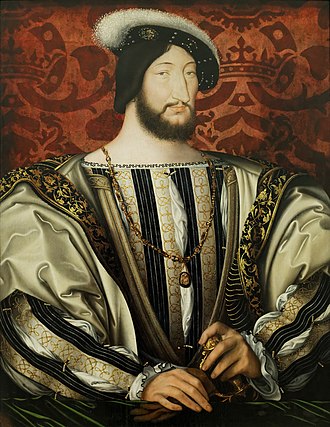
Francis_I_of_France
Twenty-year-old Francis, Duke of Brittany, succeeds to the French throne following the death of his father-in-law, Louis XII.
King of France from 1515 to 1547
Francis I was King of France from 1515 until his death in 1547. He was the son of Charles, Count of Angoulême, and Louise of Savoy. He succeeded his first cousin once removed and father-in-law Louis XII, who died without a legitimate son.
1515
Ferdinand_I,_Holy_Roman_Emperor
Croatian nobles elect Ferdinand I, Archduke of Austria as King of Croatia in the 1527 election in Cetin.
Holy Roman Emperor from 1556 to 1564
Ferdinand I was Holy Roman Emperor from 1556, King of Bohemia, Hungary, and Croatia from 1526, and Archduke of Austria from 1521 until his death in 1564. Before his accession as emperor, he ruled the Austrian hereditary lands of the House of Habsburg in the name of his elder brother, Emperor Charles V, and often served as Charles' representative in developing encouraging relationships with German princes. In addition, Ferdinand also developed valuable relationships with the German banking house of Jakob Fugger and the Castillan bank of Palenzuela's Vienveniste Ha Levi Ha Kahana family.
1527
Kingdom_of_Scotland
Scotland recognises January 1 as the start of the year, instead of March 25.
Sovereign state in Europe (843–1707)
The Kingdom of Scotland was a sovereign state in northwest Europe, traditionally said to have been founded in 843. Its territories expanded and shrank, but it came to occupy the northern third of the island of Great Britain, sharing a land border to the south with the Kingdom of England. During the Middle Ages, Scotland engaged in intermittent conflict with England, most prominently the Wars of Scottish Independence, which saw the Scots assert their independence from the English. Following Scotland's annexation of the Hebrides and the Northern Isles from Norway in 1266 and 1472 respectively, and England's capture of Berwick in 1482, the territory of the Kingdom of Scotland corresponded to that of modern-day Scotland, bounded by the North Sea to the east, the Atlantic Ocean to the north and west, and the North Channel and Irish Sea to the southwest.
1600
The_Masque_of_Indian_and_China_Knights
The Masque of Indian and China Knights is performed by courtiers of James VI and I at Hampton Court.
1604 court performance in Richmond, England
The Masque of Indian and China Knights was performed at Hampton Court in Richmond, England on 1 January 1604. The masque was not published, and no text survives. It was described in a letter written by Dudley Carleton. The historian Leeds Barroll prefers the title, Masque of the Orient Knights.
1604
Charles_II_of_England
Charles II is crowned King of Scotland at Scone Palace.
King of England, Scotland, and Ireland from 1660 to 1685
Charles II was King of Scotland from 1649 until 1651 and King of England, Scotland, and Ireland from the 1660 Restoration of the monarchy until his death in 1685.
1651
Russia begins using the Anno Domini era instead of the Anno Mundi era of the Byzantine Empire.
Calendar era based on the birth of Jesus
Anno Domini (AD) and before Christ (BC) qualify years in the Gregorian and Julian calendars, whose epoch is the traditional year of the conception or birth of Jesus. AD counts years since the epoch, BC the years before the epoch.
1700
John_V_of_Portugal
John V is proclaimed King of Portugal and the Algarves in Lisbon.
King of Portugal from 1706 to 1750
Dom John V, known as the Magnanimous and the Portuguese Sun King, was King of Portugal from 9 December 1706 until his death in 1750. His reign saw the rise of Portugal and its monarchy to new levels of prosperity, wealth, and prestige among European courts.
1707
Johann_Sebastian_Bach
J.
S. Bach leads the first performance of his chorale cantata Jesu, nun sei gepreiset, BWV 41, which features the trumpet fanfares from the beginning also in the end.
Johann Sebastian Bach was a German composer and musician of the late Baroque period. He is known for his prolific output across a variety of instruments and forms, including the orchestral Brandenburg Concertos; solo instrumental works such as the Cello Suites and Sonatas and Partitas for Solo Violin; keyboard works such as the Goldberg Variations and The Well-Tempered Clavier; organ works such as the Schübler Chorales and the Toccata and Fugue in D minor; and choral works such as the St. Matthew Passion and the Mass in B minor. He is known for his mastery of counterpoint, as heard in The Musical Offering and The Art of Fugue. Felix Mendelssohn precipitated the Bach Revival with a performance of the St. Matthew Passion in 1829. Ever since, Bach has been acclaimed as one of the greatest composers in the history of Western music.
1725
Johann_Sebastian_Bach
J.
S. Bach leads the first performance of Herr Gott, dich loben wir, BWV 16, his church cantata for New Year's Day to a libretto by Georg Christian Lehms.
Johann Sebastian Bach was a German composer and musician of the late Baroque period. He is known for his prolific output across a variety of instruments and forms, including the orchestral Brandenburg Concertos; solo instrumental works such as the Cello Suites and Sonatas and Partitas for Solo Violin; keyboard works such as the Goldberg Variations and The Well-Tempered Clavier; organ works such as the Schübler Chorales and the Toccata and Fugue in D minor; and choral works such as the St. Matthew Passion and the Mass in B minor. He is known for his mastery of counterpoint, as heard in The Musical Offering and The Art of Fugue. Felix Mendelssohn precipitated the Bach Revival with a performance of the St. Matthew Passion in 1829. Ever since, Bach has been acclaimed as one of the greatest composers in the history of Western music.
1726
Bouvet_Island
Bouvet Island, the world's remotest island, is discovered by French explorer Jean-Baptiste Charles Bouvet de Lozier.
Uninhabited subantarctic volcanic island
Bouvet Island is an uninhabited subantarctic volcanic island and dependency of Norway. A protected nature reserve situated in the South Atlantic Ocean at the southern end of the Mid-Atlantic Ridge, it is the world's most remote island. Located north of 60°S latitude, Bouvet Island is not part of the southern region covered by the Antarctic Treaty System.
1739
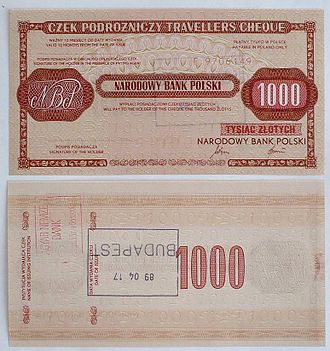
Traveller's_cheque
The first traveler's cheques, which could be used in 90 European cities, are issued by the London Credit Exchange Company.
Medium of exchange
A traveller's cheque is a medium of exchange that can be used in place of the currency of a country. Each cheque is denominated in a preprinted fixed, round, amount of one of a number of major world currencies; it has two panels for a signature. The purchaser signs one panel of each cheque on receiving it; to use it, it is signed on the second panel and dated in the presence of the payee, who accepts it if the signatures match. It can then be deposited into a bank account in the same way as a normal cheque; payment was guaranteed if the signatures matched, even if a cheque had been used fraudulently, for example stolen, encouraging merchants to accept them routinely. While it was possible for the issuer to go out of business, invalidating cheques, most issuers were large, stable, businesses.
1772
Amazing_Grace
The hymn that becomes known as "Amazing Grace", previously titled "1 Chronicles 17:16–17, Faith's Review and Expectation", is first used to accompany a sermon led by John Newton in the town of Olney, Buckinghamshire, England.
1779 Christian hymn by John Newton
"Amazing Grace" is a Christian hymn published in 1779 by the English clergyman John Newton in Olney, Buckinghamshire. With a message that forgiveness and redemption are possible regardless of the sins people commit and that the soul can be delivered from despair through the mercy of God, it is among the most sung and recorded hymns in the world and is especially popular in the United States, where it is used for both religious and secular purposes.
1773
American_Revolutionary_War
American Revolutionary War: Burning of Norfolk – Norfolk, Virginia, is burned to the ground by combined Royal Navy and Continental Army action.
1775–1783 conflict in North America
The American Revolutionary War, also known as the Revolutionary War or American War of Independence or simply the American Revolution, was the armed conflict that comprised the final eight years of the broader American Revolution, in which American Patriot forces organized as the Continental Army and commanded by George Washington defeated the British Army. The conflict was fought in North America, the Caribbean, and the Atlantic Ocean. The war's outcome seemed uncertain for most of the war, but Washington and the Continental Army's decisive victory in the Siege of Yorktown in 1781 led King George III and the Kingdom of Great Britain to negotiate an end to the war. In 1783, in the Treaty of Paris, the British monarchy acknowledged the independence of the Thirteen Colonies, leading to the establishment of the United States as an independent and sovereign nation.
1776
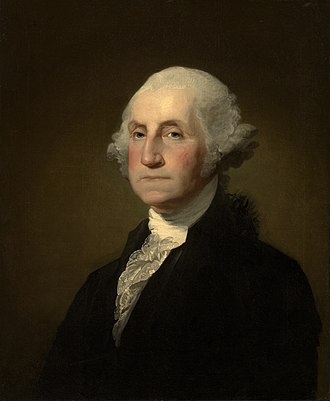
George_Washington
General George Washington hoists the first United States flag, the Continental Union Flag, at Prospect Hill.
U.S. Founding Father and president from 1789 to 1797
George Washington was a Founding Father and the first president of the United States, serving from 1789 to 1797. As commander of the Continental Army, Washington led Patriot forces to victory in the American Revolutionary War against the British Empire. He is commonly known as the Father of His Country for his role in bringing about American independence.
1776
American Revolutionary War: One thousand five hundred soldiers of the 6th Pennsylvania Regiment under General Anthony Wayne's command rebel against the Continental Army's winter camp in Morristown, New Jersey in the Pennsylvania Line Mutiny of 1781.
Infantry unit of the Continental Army during the American Revolutionary War
The 6th Pennsylvania Regiment, first known as the 5th Pennsylvania Battalion, was a unit of the United States of America (U.S.) Army, raised December 9, 1775, at Philadelphia, Pennsylvania, for service with the Continental Army. The regiment would see action during the New York Campaign, Battle of Brandywine, Battle of Germantown, Battle of Monmouth, and Green Spring. The regiment was disbanded on January 1, 1783.
1781
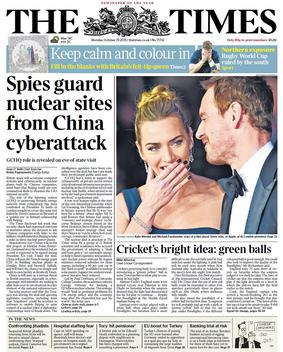
The_Times
The first edition of The Times of London, previously The Daily Universal Register, is published.
British daily national newspaper
The Times is a British daily national newspaper based in London. It began in 1785 under the title The Daily Universal Register, adopting its modern name on 1 January 1788. The Times and its sister paper, The Sunday Times, are published by Times Media, since 1981 a subsidiary of News UK, in turn wholly owned by News Corp. The Times and The Sunday Times were founded independently and have had common ownership since 1966. It is considered a newspaper of record in the UK.
1788
Kingdom_of_Great_Britain
The legislative union of Kingdom of Great Britain and Kingdom of Ireland is completed, and the United Kingdom of Great Britain and Ireland is proclaimed.
Sovereign state in Western Europe (1707–1801)
Great Britain, officially the Kingdom of Great Britain, was a sovereign state in Western Europe from 1707 to the end of 1800. The state was created by the 1706 Treaty of Union and ratified by the Acts of Union 1707, which united the Kingdom of England and the Kingdom of Scotland to form a single kingdom encompassing the whole island of Great Britain and its outlying islands, with the exception of the Isle of Man and the Channel Islands. The unitary state was governed by a single parliament at the Palace of Westminster, but the distinct legal systems—English law and Scots law—remained in use, as did distinct educational systems and religious institutions, namely the Church of England and the Church of Scotland remaining as the national churches of England and Scotland respectively.
1801
Ceres_(dwarf_planet)
Ceres, the largest and first known object in the Asteroid belt, is discovered by Giuseppe Piazzi.
Dwarf planet in the asteroid belt
Ceres is a dwarf planet in the main asteroid belt between the orbits of Mars and Jupiter. It was the first object identified in the asteroid belt, discovered on 1 January 1801 by Giuseppe Piazzi at Palermo Astronomical Observatory in Sicily, and announced as a new planet. Ceres was later classified as an asteroid, and then more recently as the only confirmed dwarf planet within the asteroid belt, and the largest without a moon. It is also the only recognized dwarf planet in the solar system whose orbit lies within that of Neptune. In the minor planet numbering system, its designation is 1 Ceres or (1) Ceres.
1801
Saint-Domingue
French rule ends in Haiti.
Haiti becomes the first black-majority republic and second independent country in North America after the United States.
Saint-Domingue was a French colony in the western portion of the Caribbean island of Hispaniola, in the area of modern-day Haiti, from 1659 to 1803. The name derives from the Spanish main city on the island, Santo Domingo, which came to refer specifically to the Spanish-held Captaincy General of Santo Domingo, now the Dominican Republic. The borders between the two were fluid and changed over time until they were finally solidified in the Dominican War of Independence in 1844.
1804
Act_Prohibiting_Importation_of_Slaves
The United States bans the importation of slaves.
US Congressional Act of 1807
The Act Prohibiting Importation of Slaves of 1807 is a United States federal law that prohibits the importation of slaves into the United States. It took effect on January 1, 1808, the earliest date permitted by the United States Constitution.
1808
Lachlan_Macquarie
Major-General Lachlan Macquarie officially becomes Governor of New South Wales.
Colonial administrator (1762–1824)
Major-General Lachlan Macquarie was a British Army officer and colonial administrator from Scotland. Macquarie served as the fifth Governor of New South Wales from 1810 to 1821, and had a leading role in the social, economic, and architectural development of the colony. He is considered by historians to have had a crucial influence on the transition of New South Wales from a penal colony to a free settlement and therefore to have played a major role in the shaping of Australian society in the early nineteenth century.
1810
Mary_Shelley
Mary Wollstonecraft Shelley (anonymously) publishes the pioneering work of science fiction, Frankenstein; or, The Modern Prometheus, in London.
English writer (1797–1851)
Mary Wollstonecraft Shelley was an English novelist who wrote the Gothic novel Frankenstein; or, The Modern Prometheus (1818), which is considered an early example of science fiction. She also edited and promoted the works of her husband, the Romantic poet and philosopher Percy Bysshe Shelley. Her father was the political philosopher William Godwin and her mother was the philosopher and women's rights advocate Mary Wollstonecraft.
1818
The Greek Constitution of 1822 is adopted by the First National Assembly at Epidaurus.
First constitution of modern Greece
The Greek Constitution of 1822 was a document adopted by the First National Assembly of Epidaurus on 1 January 1822. Formally it was the Provisional Regime of Greece, sometimes translated as Temporary Constitution of Greece. Considered to be the first constitution of Modern Greece, it was an attempt to achieve temporary governmental and military organisation until the future establishment of a national parliament."All the indigenous inhabitants of the Greek Territory who believe in Christ are Greeks."
1822
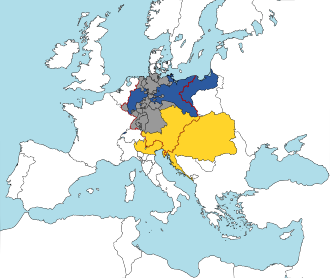
Zollverein
Most of Germany forms the Zollverein customs union, the first such union between sovereign states.
Economic union of German states (1834–1919)
The Zollverein, or German Customs Union, was a coalition of German states formed to manage tariffs and economic policies within their territories. Organized by the 1833 Zollverein treaties, it formally started on 1 January 1834. However, its foundations had been in development from 1818 with the creation of a variety of custom unions among the German states. By 1866, the Zollverein included most of the German states. The Zollverein was not part of the German Confederation (1815–1866).
1834
Narciso_Clavería_y_Zaldúa
The Philippines moves its national calendar to align with other Asian countries' calendars by skipping Tuesday, December 31, 1844.
The change has been ordered by Governor–General Narciso Claveria to reform the country's calendar so that it aligns with the rest of Asia. Its territory has been one day behind the rest of Asia for 323 years since the arrival of Ferdinand Magellan in the Philippines on March 16, 1521.
Narciso José Anastasio Clavería y Zaldúa, 1st Count of Manila was a Spanish army officer who served as the Governor-General of the Philippines from July 16, 1844, to December 26, 1849.
1845
UPMC_Mercy
The world's first "Mercy" Hospital is founded in Pittsburgh, United States, by a group of Sisters of Mercy from Ireland; the name will go on to grace over 30 major hospitals throughout the world.
Hospital in Pennsylvania, U.S.
UPMC Mercy is a main hospital facility of the University of Pittsburgh Medical Center (UPMC) and is located in the Uptown section of the city of Pittsburgh, Pennsylvania, adjacent to Duquesne University, and a few blocks from the PPG Paints Arena and downtown Pittsburgh. It is the first chartered hospital to have been founded in the city of Pittsburgh and it is also the first hospital in the world to have been established by the Sisters of Mercy. It is also the first teaching hospital in the region, accepting residents to teaching positions beginning in 1848, one year after opening its doors.
1847
Postage_stamps_and_postal_history_of_Poland
The first Polish postage stamp is issued, replacing the Russian stamps previously in use.
Poczta Polska, the Polish postal service, was founded in 1558 and postal markings were first introduced in 1764. The three partitions of Poland in 1772, 1793 and 1795 saw the independent nation of Poland disappear. The postal services in the areas occupied by Germany and Austria were absorbed into those countries' postal services. In 1772 the area occupied by Austria was created into the Kingdom of Galicia, a part of the Austrian Empire. This lasted till 1918. The Duchy of Warsaw was created briefly, between 1807 and 1813, by Napoleon I of France, from Polish lands ceded by the Kingdom of Prussia under the terms of the Treaties of Tilsit. In 1815, following Napoleons' defeat in 1813, the Congress of Vienna, created Congress Poland out of the Duchy of Warsaw and also established the Free City of Kraków. Congress Poland was placed under the control of Russia and the postal service was given autonomy in 1815. In 1851 the postal service was put under the control of the Russian post office department regional office in St Petersburg. In 1855 control was restored for a while to the Congress Kingdom but following the uprising in 1863 again came under Russian control from 1866 and continued until World War I. In November 1918 the Second Polish Republic was created.
1860
Liberal forces supporting Benito Juárez enter Mexico City.
Defunct left-wing political party in Mexico (1822–84)
The Liberal Party was a loosely organised political party in Mexico from 1822 to 1911. Strongly influenced by French Revolutionary thought, and the republican institutions of the United States, it championed the principles of 19th-century liberalism, and promoted republicanism, federalism, and anti-clericalism. They were opposed by, and fought several civil wars against, the Conservative Party.
1861
American_Civil_War
American Civil War: The Emancipation Proclamation takes effect in Confederate territory.
1861–1865 conflict in the United States
The American Civil War was a civil war in the United States between the Union and the Confederacy, which was formed in 1861 by states that had seceded from the Union to preserve slavery in the United States. The South saw slavery as threatened because of the election of Abraham Lincoln and the growing abolitionist movement in the North. The war ended with Union victory, the dissolution of the Confederacy and the abolition of slavery, freeing four million African Americans.
1863
Queen_Victoria
Queen Victoria of the United Kingdom is proclaimed Empress of India.
Queen of the United Kingdom from 1837 to 1901
Victoria was Queen of the United Kingdom of Great Britain and Ireland from 20 June 1837 until her death in 1901. Her reign of 63 years and 216 days, which was longer than those of any of her predecessors, constituted the Victorian era, a period of industrial, political, scientific, and military change within the United Kingdom marked by a great expansion of the British Empire. In 1876, the British parliament voted to grant her the additional title of Empress of India.
1877
Sandford_Fleming
Twenty-five nations adopt Sandford Fleming's proposal for standard time (and also, time zones).
Scottish-Canadian engineer and inventor (1827–1915)
Sir Sandford Fleming was a Scottish Canadian engineer and inventor. Born and raised in Scotland, he immigrated to colonial Canada at the age of 18. He promoted worldwide standard time zones, a prime meridian, and use of the 24-hour clock as key elements to communicating the accurate time, all of which influenced the creation of Coordinated Universal Time. He designed Canada's first postage stamp, produced a great deal of work in the fields of land surveying and map making, engineered much of the Intercolonial Railway and the first several hundred kilometers of the Canadian Pacific Railway, and was a founding member of the Royal Society of Canada and founder of the Canadian Institute.
1885
Eritrea
Eritrea is consolidated into a colony by the Italian government as Italian Eritrea.
Country in the Horn of Africa
Eritrea, officially the State of Eritrea, is a country in the Horn of Africa region of East Africa. Its capital and largest city is Asmara. The country is bordered by Ethiopia to the south, Sudan to the west, and Djibouti to the southeast. The northeastern and eastern parts of Eritrea have an extensive coastline along the Red Sea. The country has a total area of approximately 117,600 km2 (45,406 sq mi), and includes the Dahlak Archipelago and several of the Hanish Islands.
1890
Ellis_Island
Ellis Island begins processing immigrants into the United States.
Island in New York Harbor in the US
Ellis Island is an island in New York Harbor, within the U.S. states of New Jersey and New York. Owned by the U.S. government, Ellis Island was once the busiest immigrant inspection and processing station in the United States. From 1892 to 1954, about 12 million immigrants arriving at the Port of New York and New Jersey were processed there; according to one estimate, two-fifths of Americans may be descended from these immigrants. It has been part of the Statue of Liberty National Monument since 1965 and is accessible to the public only by ferry. The north side of the island is a national museum of immigration, while the south side of the island, including the Ellis Island Immigrant Hospital, is open to the public through guided tours.
1892
New_York_City
New York, New York annexes land from surrounding counties, creating the City of Greater New York.
The four initial boroughs, Manhattan, Brooklyn, Queens, and The Bronx, are joined on January 25 by Staten Island to create the modern city of five boroughs.
New York, often called New York City (NYC), is the most populous city in the United States. It is located at the southern tip of New York State on New York Harbor, one of the world's largest natural harbors. The city comprises five boroughs—Manhattan, Brooklyn, Queens, the Bronx, and Staten Island; each is coextensive with its respective county. It is the geographical and demographic center of both the Northeast megalopolis and the New York metropolitan area, the largest metropolitan area in the United States by both population and urban area. New York is a global center of finance and commerce, culture, technology, entertainment and media, academics and scientific output, the arts and fashion, and, as home to the headquarters of the United Nations, international diplomacy. New York City is known for its fast pace and continuous urban energy.
1898
Captaincy_General_of_Cuba
Spanish rule ends in Cuba.
1607–1898 Spanish possession in the Caribbean
The Captaincy General of Cuba was an administrative district of the Spanish Empire created in 1607 as part of Habsburg Spain's attempt to better defend and administer its Caribbean possessions. The reform also established captaincies general in Puerto Rico, Guatemala and Yucatán.
1899
Nigeria
Nigeria becomes a British protectorate with Frederick Lugard as high commissioner.
Country in West Africa
Nigeria, officially the Federal Republic of Nigeria, is a country in West Africa between the Sahel to the north and the Gulf of Guinea in the Atlantic Ocean to the south. It covers an area of 923,769 square kilometres (356,669 mi2). With a population of more than 242 million, it is the most populous country in Africa, and the world's sixth-most populous country. Nigeria borders Niger in the north, Chad in the northeast, Cameroon in the east, and Benin in the west. Nigeria is a federal republic comprising 36 states and the Federal Capital Territory, where its capital, Abuja, is located. The largest city in Nigeria by population is Lagos, one of the largest metropolitan areas in the world and the second largest in Africa.
1900
Southern_Nigeria_Protectorate
The Southern Nigeria Protectorate is established within the British Empire.
British protectorate from 1900 to 1914
Southern Nigeria was a British protectorate in the coastal areas of modern-day Nigeria formed in 1900 from the union of the Niger Coast Protectorate with territories chartered by the Royal Niger Company below Lokoja on the Niger River.
1901
New_South_Wales
The British colonies of New South Wales, Queensland, Victoria, South Australia, Tasmania, and Western Australia federate as the Commonwealth of Australia; Edmund Barton is appointed the first Prime Minister.
State of Australia
New South Wales is a state on the east coast of Australia. It borders Queensland to the north, Victoria to the south, and South Australia to the west. Its coast borders the Coral and Tasman Seas to the east. The Australian Capital Territory and Jervis Bay Territory are enclaves within the state. New South Wales' state capital is Sydney, which is also Australia's most populous city. As of September 2025, the population of New South Wales was over 8.6 million, making it Australia's most populous state. Almost two-thirds of the state's population live in the Greater Sydney area.
1901
College_football
The first American college football bowl game, the Rose Bowl between Michigan and Stanford, is held in Pasadena, California.
College version of American/Canadian gridiron football
College football is gridiron football that is played by teams of amateur student-athletes at universities and colleges. It was through collegiate competition that gridiron football first gained popularity in the United States.
1902
David_Beatty,_1st_Earl_Beatty
Captain David Beatty is promoted to rear admiral, and becomes the youngest admiral in the Royal Navy (except for royal family members) since Horatio Nelson.
Royal Navy Admiral of the Fleet (1871–1936)
Admiral of the Fleet David Richard Beatty, 1st Earl Beatty was a Royal Navy officer. After serving in the Mahdist War and then the response to the Boxer Rebellion, he commanded the Battle Cruiser Fleet at the Battle of Jutland in 1916, a tactically indecisive engagement after which his aggressive approach was contrasted with the caution of his commander Admiral Sir John Jellicoe. He is remembered for his comment at Jutland that "There seems to be something wrong with our bloody ships today", after two of them exploded.
1910
Republic_of_China_(1912–1949)
The Republic of China is established.
Mainland period of the Republic of China
The Republic of China established its governance over Mainland China on 1 January 1912 following the Xinhai Revolution, which overthrew the Manchu-led Qing dynasty and ended China's imperial history. The Beiyang government in Beijing was the internationally recognized government of the ROC from 1912 to 1928, with regional warlords occupying parts of the country after the death of Beiyang leader Yuan Shikai in 1916. In 1926, the Kuomintang (KMT) launched the Northern Expedition, which eventually reunified the country in 1928. The KMT established the Nationalist government and governed the ROC as a one-party state with Nanjing as the capital. In 1949, the KMT was defeated in the Chinese Civil War by the Chinese Communist Party (CCP) and the ROC government retreated to Taiwan, where it remains to this date. The ROC is recorded as a founding member of both the League of Nations and the United Nations. It claimed 11.4 million km2 (4.4 million sq mi) of territory, and its population of 541 million in 1949 made it the most populous country in the world.
1912
St._Petersburg–Tampa_Airboat_Line
The SPT Airboat Line becomes the world's first scheduled airline to use a winged aircraft.
Early airline which operated in Florida, United States (Jan-May 1914)
The St. Petersburg–Tampa Airboat Line was the first scheduled airline in the United States using a fixed wing aircraft. The airline provided service between St. Petersburg, Florida and neighboring Tampa across Tampa Bay, a distance of about 23 miles (37 km). It was in service from January to May 1914.
1914
Britain's Railways are grouped into the Big Four: LNER, GWR, SR, and LMS.
Under the Railways Act 1921 the majority of the railway companies in Great Britain were grouped into four main companies, often termed the Big Four. The grouping took effect from 1 January 1923.
1923
Mexico
New Mexican oil legislation goes into effect, leading to the formal outbreak of the Cristero War.
Country in North America
Mexico, officially the United Mexican States, is a country in North America. It is the northernmost country in Latin America, bordering the United States of America to the north and Guatemala and Belize to the southeast, while having maritime boundaries with the Pacific Ocean to the west, the Caribbean Sea to the southeast, and the Gulf of Mexico to the east. Mexico covers 1,972,550 km2, and is the thirteenth-largest country in the world by land area. With a population exceeding 134 million as of 2026, Mexico is the tenth-most populous country in the world and is home to the largest number of native Spanish speakers. Mexico City is the capital and largest city in Mexico, which ranks among the most populous metropolitan areas in the world.
1927
Boris Bazhanov defects through Iran to seek asylum in France.
He is the only member of Joseph Stalin's secretariat to have defected from the Soviet Union.
Boris Georgiyevich Bazhanov was a secretary of the Secretariat of the Communist Party of the Soviet Union who published memoirs about Stalin and his secrets.
1928
West_Point_Grey
The former municipalities of Point Grey, British Columbia and South Vancouver, British Columbia are amalgamated into Vancouver.
Neighbourhood of Vancouver, British Columbia, Canada
West Point Grey is a neighbourhood in the northwest of the city of Vancouver, British Columbia, Canada. It is on Point Grey and bordered by 16th Avenue to the south, Alma Street to the east, English Bay to the north, and Blanca Street to the west. Notable beaches within West Point Grey include Spanish Banks, Locarno and Jericho. Immediately to the south is Pacific Spirit Regional Park and to the east is Kitsilano.
1929
United_States_Post_Office_Department
The United States Post Office Department issues a set of 12 stamps commemorating the 200th anniversary of George Washington's birth.
U.S. federal department (1872–1971)
The United States Post Office Department was the predecessor of the United States Postal Service, established in 1792. From 1872 to 1971, it was officially in the form of a Cabinet department. It was headed by the postmaster general.
1932
Alcatraz_Island
Alcatraz Island in San Francisco Bay becomes a United States federal prison.
Island in San Francisco Bay, California, US
Alcatraz Island is a small island about 1.25 miles offshore from San Francisco in San Francisco Bay, California, near the Golden Gate Strait. The island was developed in the mid-19th century with facilities for a lighthouse, a military fortification, and a military prison. In 1934, the island was converted into a federal prison, Alcatraz Federal Penitentiary. The strong tidal currents around the island and cold water temperatures made escape nearly impossible, giving the prison one of the most notorious reputations of its kind in American history. The prison closed on March 21, 1963, leaving the island a major tourist attraction today with nearly 1.4 million people visiting the island annually.
1934
Nazi_eugenics
A "Law for the Prevention of Genetically Diseased Offspring" comes into effect in Nazi Germany.
Nazi German policy of the murder of "undesirable" persons
The social policies of eugenics in Nazi Germany were composed of various ideas about genetics. The racial ideology of Nazism placed the biological improvement of the German people by selective breeding of "Nordic" or "Aryan" traits at its center. These policies were used to justify the involuntary sterilization and mass murder of those deemed "undesirable".
1934
Declaration_by_United_Nations
The Declaration by United Nations is signed by twenty-six nations.
Treaty forming the Allies during World War II
The Declaration by United Nations was the main treaty that formalized the Allies of World War II and was signed by 47 national governments between 1942 and 1945. On 1 January 1942, during the Arcadia Conference in Washington D.C., the Allied "Big Four"—the United States, the United Kingdom, the Soviet Union, and China—signed a short document which later came to be known as the United Nations Declaration, and the next day the representatives of 22 other nations added their signatures.
1942
World_War_II
World War II: The German Luftwaffe launches Operation Bodenplatte, a massive, but failed, attempt to knock out Allied air power in northern Europe in a single blow.
Global conflict (1939–1945)
World War II, or the Second World War, was a global conflict between two coalitions: the Allies and the Axis powers. Nearly all of the world's countries participated, with many engaging in total war on an unprecedented scale. World War II was the deadliest conflict in history, causing the deaths of 60 to 75 million people, a majority of whom were civilians. Millions died as a result of massacres, starvation, disease, and genocides including the Holocaust. After the Allied victory, Germany, Austria, Japan, and Korea were occupied, and German and Japanese leaders were tried for war crimes.
1945
Cold_War
Cold War: The American and British occupation zones in Allied-occupied Germany, after World War II, merge to form the Bizone, which later (with the French zone) became part of West Germany.
1947–1991 geopolitical rivalry between US and USSR
The Cold War was a period of international geopolitical rivalry between the United States (US) and the Soviet Union (USSR) and their respective allies, the capitalist Western Bloc and communist Eastern Bloc. It began in the aftermath of the Second World War and ended with the dissolution of the Soviet Union in 1991. The term cold war is used because there was no direct fighting between the two superpowers, though each supported opposing sides in regional conflicts known as proxy wars. In addition to the struggle for ideological and economic influence and an arms race in both conventional and nuclear weapons, the Cold War was expressed through technological rivalries such as the Space Race, espionage, propaganda campaigns, embargoes, and sports diplomacy.
1947
Canadian_Citizenship_Act,_1946
The Canadian Citizenship Act 1946 comes into effect, converting British subjects into Canadian citizens.
Prime Minister William Lyon Mackenzie King becomes the first Canadian citizen.
The Canadian Citizenship Act was a statute passed by the Parliament of Canada in 1946 which created the legal status of Canadian citizenship. The Act defined who were Canadian citizens, separate and independent from the status of the British subject and repealed earlier Canadian legislation relating to Canadian nationals and citizens as sub-classes of British subject status.
1947
Transport_in_England
The British railway network is nationalized to form British Railways.
Transport in England includes road, rail, air, and water networks. A wide road network totals 29,145 miles (46,904 km) of main roads, 2,173 miles (3,497 km) of motorways and 213,750 miles (344,000 km) of paved roads.
1948
United_Nations
United Nations cease-fire takes effect in Kashmir from one minute before midnight.
War between India and Pakistan stops accordingly.
The United Nations (UN) is a global intergovernmental organization established by the signing of the Charter of the United Nations on 26 June 1945 with the articulated mission of maintaining international peace and security, to develop friendly relations among states, to promote international cooperation, and to serve as a centre for harmonizing the actions of states in achieving those goals.
1949
Sudan
Sudan achieves independence from Egypt and the United Kingdom.
Country in Northeast Africa
Sudan, officially the Republic of the Sudan, is a country in Northeast Africa. It borders the Central African Republic to the southwest, Chad to the west, Libya to the northwest, Egypt to the north, the Red Sea to the east, Eritrea and Ethiopia to the southeast, and South Sudan to the south. Sudan has a population of 51.8 million people as of 2025 and occupies 1,886,068 square kilometres, making it Africa's third-largest country by area. Sudan's capital and most populous city is Khartoum.
1956
George_Town,_Penang
George Town, Penang, is made a city by a royal charter of Queen Elizabeth II of the United Kingdom.
Capital city of the Malaysian state of Penang
George Town is the capital of the Malaysian state of Penang. It is the core city of the George Town Conurbation, Malaysia's second largest metropolitan area with a population of 2.84 million and the second largest metropolitan economy in the country. The city proper spans an area of 306 km2 (118 sq mi) encompassing Penang Island and surrounding islets, and had a population of 794,313 as of 2020.
1957
Lèse-majesté_in_Thailand
Lèse majesté in Thailand is strengthened to include "insult" and changed to a crime against national security, after the Thai criminal code of 1956 went into effect.: 6, 18
Lèse-majesté in Thailand is a criminal offence under Section 112 of the Thai Criminal Code, which prohibits any act that defames, insults, or threatens the King, the Queen, the heir-apparent, or the Regent. The provision reflects the long-standing doctrine of the monarch's inviolability within Thai political culture. Modern lèse-majesté legislation has existed since 1908, first appearing in the Rattanakosin era's Criminal Code influenced by continental European legal systems. Thailand remains the only constitutional monarchy in the world that has strengthened, rather than liberalized, its lèse-majesté laws following World War II.
1957
European_Economic_Community
The European Economic Community is established.
Regional organisation from 1958 to 1993
The European Economic Community (EEC) was a regional organisation created by the Treaty of Rome of 1957, aiming to foster economic integration among its member states. It was subsequently renamed the European Community (EC) upon becoming integrated into the first pillar of the newly formed European Union (EU) in 1993. In the popular language, the singular European Community was sometimes inaccurately used in the wider sense of the plural European Communities, in spite of the latter designation covering all the three constituent entities of the first pillar. The EEC was also known as the European Common Market (ECM) in the English-speaking countries, and sometimes referred to as the European Community even before it was officially renamed as such in 1993. In 2009, the EC formally ceased to exist and its institutions were directly absorbed by the EU. This made the Union the formal successor institution of the Community.
1958
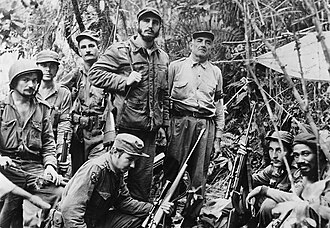
Cuban_Revolution
Cuban Revolution: Fulgencio Batista, dictator of Cuba, is overthrown by Fidel Castro's forces.
1955–1958 sociopolitical change in Cuba
The Cuban Revolution was the military and political movement that overthrew the dictatorship of Fulgencio Batista, who had ruled Cuba from 1952 to 1959. The revolution began after the 1952 Cuban coup d'état, in which Batista overthrew the emerging Cuban democracy and consolidated power. Among those who opposed the coup was Fidel Castro, then a young lawyer, who initially tried to challenge the takeover through legal means in the Cuban courts. When these efforts failed, Fidel Castro and his brother Raúl led an armed assault on the Moncada Barracks, a Cuban military post, on 26 July 1953.
1959
Cameroon
Cameroon achieves independence from France and the United Kingdom.
Country in Central Africa
Cameroon, officially the Republic of Cameroon, is a country in Central Africa. It shares boundaries with Nigeria to the west and north, Chad to the northeast, the Central African Republic to the east, and Equatorial Guinea, Gabon, and the Republic of the Congo to the south. Its coastline lies on the Bight of Biafra, part of the Gulf of Guinea, and the Atlantic Ocean. Due to its strategic position at the crossroads between West Africa and Central Africa, it has been categorized as being in both geostrategic locations. Cameroon's population of nearly 31 million people speak 250 native languages, in addition to the national tongues of English and French. The capital city of the country is Yaoundé.
1960
Territory_of_Western_Samoa
Western Samoa achieves independence from New Zealand; its name is changed to the Independent State of Western Samoa.
Western Samoa between 1920 and 1962
The Territory of Western Samoa was the civil administration of Western Samoa by New Zealand between 1920 and Samoan independence in 1962. In 1914, German Samoa was captured by the Samoa Expeditionary Force shortly after the outbreak of World War I, and was formally annexed as a League of Nations mandate in 1920 in the Treaty of Versailles. It was later transformed into a United Nations Trust Territory following the dissolution of the League of Nations in 1946.
1962
Federation_of_Rhodesia_and_Nyasaland
The Federation of Rhodesia and Nyasaland is divided into the independent republics of Zambia and Malawi, and the British-controlled Rhodesia.
British territory from 1953 to 1963
The Federation of Rhodesia and Nyasaland, also known as the Central African Federation (CAF), was a colonial federation that consisted of three southern African territories: the self-governing British colony of Southern Rhodesia and the British protectorates of Northern Rhodesia and Nyasaland. It existed between 1953 and 1963. Rhodesia and Nyasaland bordered Angola, Bechuanaland, Congo-Léopoldville, Mozambique, South Africa, South West Africa and Tanganyika.
1964
People's_Democratic_Party_of_Afghanistan
The People's Democratic Party of Afghanistan is founded in Kabul, Afghanistan.
Ruling party of Afghanistan from 1978 to 1992
The People's Democratic Party of Afghanistan, known as the Homeland Party after June 1990, was a Marxist–Leninist political party in Afghanistan established on 1 January 1965. Four members of the party won seats in the 1965 Afghan parliamentary election, reduced to two seats in 1969, albeit both before the party was fully legal. For most of its existence, the party was split between the hardline Khalq and moderate Parcham factions, each of which claimed to represent the "true" PDPA.
1965
Unix_time
The defined beginning of Unix time, at 00:00:00.
Date and time representation system widely used in computing
Unix time is a date and time representation widely used in computing. It measures time by the number of non-leap seconds that have elapsed since 00:00:00 UTC on 1 January 1970, the Unix epoch. For example, at midnight on 1 January 2010, Unix time was 1262304000.
1970
Cigarette
Cigarette advertisements are banned on American television.
Small roll of tobacco made to be smoked
A cigarette is a thin cylinder of smoking tobacco rolled in thin paper for smoking. The cigarette is ignited at one end, causing it to smolder, and the resulting smoke is orally inhaled via the opposite end. Cigarette smoking is the most common method of tobacco consumption. The term cigarette usually refers to a tobacco cigarette, but the word is sometimes used to refer to other substances, such as a cannabis cigarette or a herbal cigarette. A cigarette is distinguished from a cigar by its usually smaller size, use of processed leaf, different smoking method, and paper wrapping, which is typically white.
1971
Denmark
Denmark, Ireland and the United Kingdom are admitted into the European Economic Community.
Country in northern Europe
Denmark is a Nordic country in Northern Europe. It is the metropole and most populous constituent of the Kingdom of Denmark, also known as the Danish Realm, a constitutionally unitary state that includes the autonomous territories of the Faroe Islands and Greenland in the north Atlantic Ocean. Metropolitan Denmark, also called "continental Denmark" or "Denmark proper", consists of the northern Jutland peninsula and an archipelago of 406 islands. It is the southernmost of the Scandinavian countries, lying southwest of Sweden, south of Norway, and north of Germany, with which it shares a short border. Metropolitan Denmark is situated between the North Sea to the west and the Baltic Sea to the east.
1973
Middle_East_Airlines_Flight_438
A bomb explodes on board Middle East Airlines Flight 438 over Qaisumah, Saudi Arabia, killing all 81 people on board.
1976 airliner bombing
Middle East Airlines Flight 438 was an international passenger flight operated by a Boeing 720 from Beirut, Lebanon, to Muscat, Oman, with a stopover in Abu Dhabi, United Arab Emirates. On 1 January 1976, the aircraft operating the flight was destroyed at 11,300 feet by a bomb, killing all 81 people on board. The bombers were never identified.
1976
Air_India_Flight_855
Air India Flight 855, a Boeing 747, crashes into the Arabian Sea off the coast of Bombay, India, due to instrument failure, spatial disorientation, and pilot error, killing all 213 people on board.
1978 aviation accident in the Arabian Sea
Air India Flight 855 was a scheduled passenger flight from Bombay, India, to Dubai, United Arab Emirates. On 1 January 1978, the Boeing 747 operating the flight crashed into the Arabian Sea about 3 km off the coast of Bandra, less than two minutes after take-off, killing all 213 passengers and crew on board. An investigation into the crash determined the most likely probable cause was the captain becoming spatially disoriented and losing control of the aircraft after the failure of one of the flight instruments. It was Air India's deadliest air disaster until it was surpassed nearly 7 and a half years later by the bombing of Flight 182 and was the deadliest airliner accident in Indian history until it was surpassed nearly 19 years later by Charkhi Dadri mid-air collision.
1978
the Joint Communiqué on the Establishment of Diplomatic Relations and Taiwan Relations Act enter into force.
Through the Communiqué, the United States establishes normal diplomatic relations with China. Through the Act, the United States guarantees military support for Taiwan.
The Joint Communiqué on the Establishment of Diplomatic Relations on January 1, 1979 was announced on December 15, 1978, which established official relations between the United States and the People's Republic of China.
1979
Greece
Greece is admitted into the European Community.
Country in Southeastern Europe
Greece, officially the Hellenic Republic, is a country of 10 million people on the southern tip of the Balkan peninsula in Southeastern Europe. With nine regions and thousands of islands, it has the longest coastline on the Mediterranean. The Ionian Sea is west of the mainland, Albania northwest, and North Macedonia and Bulgaria north. Turkey is east both by land and the Aegean Sea. The capital, Athens, is the largest Greek city, followed by Thessaloniki and Patras.
1981
Peru
Peruvian Javier Pérez de Cuéllar becomes the first Latin American to hold the title of Secretary-General of the United Nations.
Country in South America
Peru, officially the Republic of Peru, is a country in western South America. It is bordered to the north by Ecuador and Colombia, to the east by Brazil, to the southeast by Bolivia, to the south by Chile, and to the south and west by the Pacific Ocean. Peru is a megadiverse country, with habitats ranging from the arid plains of the Pacific coastal region in the west, to the peaks of the Andes mountains extending from the north to the southeast of the country, to the tropical Amazon basin rainforest in the east with the Amazon River. Peru has a population of over 32 million, and its capital and largest city is Lima. At 1,285,216 km2 (496,225 sq mi), Peru is the 19th largest country in the world, and the third largest in South America.
1982
ARPANET
The ARPANET officially changes to using TCP/IP, the Internet Protocol, effectively creating the Internet.
Early packet switching network (1969–1990)
The Advanced Research Projects Agency Network (ARPANET) was the first wide-area packet-switched network with distributed control and one of the first computer networks to implement the TCP/IP protocol suite. Both technologies became the technical foundation of the Internet. The ARPANET was established by the Advanced Research Projects Agency of the United States Department of Defense.
1983
AT&T_Corporation
The original American Telephone & Telegraph Company is divested of its 22 Bell System companies as a result of the settlement of the 1974 United States Department of Justice antitrust suit against AT&T.
American telecommunications company (1885–2024)
AT&T Corporation, an abbreviation of its former name, the American Telephone and Telegraph Company, was an American telecommunications company that provided voice, video, data, and Internet telecommunications and professional services to businesses, consumers, and government agencies.
1984
Brunei
Brunei becomes independent of the United Kingdom.
Country in Southeast Asia
Brunei, officially Brunei Darussalam, is a country in Southeast Asia, situated on the northern coast of the island of Borneo. Apart from its coastline on the South China Sea, it is completely surrounded by the Malaysian state of Sarawak, with its territory bifurcated by the Sarawak district of Limbang. Brunei is the only sovereign state entirely on Borneo; the remainder of the island is divided between its multi-landmass neighbours of Malaysia and Indonesia. As of 2025, the country had a population of 466,330, of whom approximately 64,409 resided in the capital and largest city of Bandar Seri Begawan. Its official language is Malay, and Sunni Islam is the state religion of the country, although other religions are nominally tolerated. The government of Brunei is an absolute monarchy ruled by the Sultan, and it implements a fusion of English common law and jurisprudence inspired by Islam, including sharia.
1984
Mobile_phone
The first British mobile phone call is made by Michael Harrison to his father Sir Ernest Harrison, chairman of Vodafone.
Portable device to make telephone calls using a radio link
A mobile phone or cell phone is a portable wireless telephone that allows users to make and receive calls over a radio frequency link while moving within a designated telephone service area, unlike fixed-location phones. This radio frequency link connects to the switching systems of a mobile phone operator, providing access to the public switched telephone network (PSTN). Modern mobile telephony relies on a cellular network architecture, which is why mobile phones are often referred to as 'cell phones' in North America.
1985
Eastern_Air_Lines_Flight_980
Eastern Air Lines Flight 980 crashes into Mount Illimani in Bolivia, killing all 29 aboard.
1985 aviation accident in Bolivia
Eastern Air Lines Flight 980 was a scheduled international flight from Asunción, Paraguay, to Miami, Florida, United States. On January 1, 1985, while descending towards La Paz, Bolivia, for a scheduled stopover, the Boeing 727 jetliner struck Mount Illimani at an altitude of 19,600 feet (6,000 m), killing all 29 people on board.
1985
Pueblo_of_Isleta
The Isleta Pueblo tribe elect Verna Williamson to be their first female governor.
Federally recognized tribe in New Mexico, United States
Pueblo of Isleta is a federally recognized tribe and an unincorporated community in Bernalillo County, New Mexico, United States. The Tanoan pueblo was originally established in the c. 14th century.
1987
The Evangelical Lutheran Church in America comes into existence, creating the largest Lutheran denomination in the United States.
Largest Lutheran denomination in the United States
The Evangelical Lutheran Church in America (ELCA) is a Mainline Protestant church headquartered in Chicago, Illinois. The ELCA was officially formed on January 1, 1988, by the merging of three Lutheran church bodies. As of December 31, 2024, it has approximately 2.68 million baptized members in 8,386 congregations.
1988
Montreal_Protocol
The Montreal Protocol comes into force, stopping the use of chemicals contributing to ozone depletion.
1987 treaty to protect the ozone layer
The Montreal Protocol, officially the Montreal Protocol on Substances That Deplete the Ozone Layer, is an international treaty designed to protect the ozone layer by phasing out the production of numerous substances that are responsible for ozone depletion. It was agreed on 16 September 1987, and entered into force on 1 January 1989. Since then it has undergone several amendments and adjustments, with revisions agreed to in 1990 (London), 1992 (Copenhagen), 1995 (Vienna), 1997 (Montreal), 1999 (Beijing), 2007 (Montreal), 2016 (Kigali) and 2018 (Quito).
1989
David_Dinkins
David Dinkins is sworn in as New York City's first black mayor.
Mayor of New York City from 1990 to 1993
David Norman Dinkins was an American politician, lawyer, and author who served as the 107th mayor of New York City from 1990 to 1993.
1990
Dissolution_of_Czechoslovakia
Dissolution of Czechoslovakia: Czechoslovakia is divided into the Czech Republic and Slovak Republic.
1992 process that split Czechoslovakia into the Czech Republic and Slovakia
The dissolution of Czechoslovakia, which took effect on 31 December 1992, was the self-determined partition of the Czech and Slovak Federative Republic into the independent countries of the Czech Republic and Slovakia. Both mirrored the Czech Socialist Republic and the Slovak Socialist Republic, which had been created in 1969 as the constituent states of the Czechoslovak Socialist Republic until the end of 1989.
1993
Zapatista_Army_of_National_Liberation
The Zapatista Army of National Liberation initiates twelve days of armed conflict in the Mexican state of Chiapas.
Far-left political and militant group in southern Mexico
The Zapatista Army of National Liberation, often referred to as the Zapatistas, is a far-left political and militant organization that controls a substantial amount of territory in Chiapas, the southernmost state of Mexico.
1994
North_American_Free_Trade_Agreement
The North American Free Trade Agreement (NAFTA) comes into effect.
Trade bloc in North America (1994–2020)
The North American Free Trade Agreement, referred to colloquially in the Anglosphere as NAFTA, was an agreement signed by Canada, Mexico, and the United States that created a trilateral trade bloc in North America. The agreement came into force on January 1, 1994, and superseded the 1988 Canada–United States Free Trade Agreement between the United States and Canada. The NAFTA trade bloc formed one of the largest trade blocs in the world by gross domestic product.
1994
World_Trade_Organization
The World Trade Organization comes into being.
Intergovernmental trade organization
The World Trade Organization (WTO) is an intergovernmental organization that regulates and facilitates international trade. Established on 1 January 1995, pursuant to the 1994 Marrakesh Agreement, it succeeded the General Agreement on Tariffs and Trade (GATT), which was created in 1948. As the world's largest international economic organization, the WTO has 166 members, representing over 98% of global trade and global GDP. It is headquartered in Geneva, Switzerland.
1995
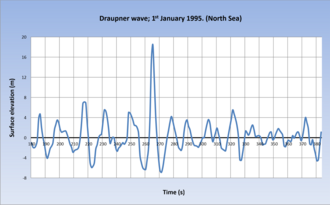
Draupner_wave
The Draupner wave in the North Sea in Norway is detected, confirming the existence of freak waves.
1995 freak wave
The Draupner wave, also known as the New Year's wave or Draupner freak wave, was a rare rogue wave that was the first to be detected by a measuring instrument. The wave, determined to be 25.6 m (84 ft) in height, was recorded on 1 January 1995 at Unit E of the Draupner platform, a gas pipeline support complex located in the North Sea about 160 km southwest from the southern tip of Norway.
1995
Austria
Austria, Finland and Sweden join the EU.
Country in Central Europe
Austria, formally the Republic of Austria, is a landlocked country in Central Europe, lying in the Eastern Alps. It is a federation of nine states, of which the capital Vienna is the most populous city and state. Austria is bordered by Germany to the northwest, the Czech Republic to the north, Slovakia to the northeast, Hungary to the east, Slovenia and Italy to the south, and Switzerland and Liechtenstein to the west. The country occupies an area of 83,879 km2 (32,386 sq mi) and has a population of about 9.2 million.
1995
Following a currency reform, Russia begins to circulate new rubles to stem inflation and promote confidence.
1998 Russian currency reform
Russia launched a monetary reform on January 1, 1998. Preparation started in August 1997. Replacement of the old banknotes occurred gradually, until 2002.
1998
Juan_Maldacena
Argentinian physicist Juan Maldacena publishes a landmark paper initiating the study of AdS/CFT correspondence, which links string theory and quantum gravity.
Argentine physicist (born 1968)
Juan Martín Maldacena is an Argentine theoretical physicist and the Carl P. Feinberg Professor in the School of Natural Sciences at the Institute for Advanced Study, Princeton. He has made significant contributions to the foundations of string theory and quantum gravity. His most famous discovery is the AdS/CFT correspondence, a realization of the holographic principle in string theory.
1998
Euro
The Euro currency is introduced in 11 member nations of the European Union (with the exception of the United Kingdom, Denmark, Greece and Sweden).
Currency of the European Union
The euro is the official currency of 21 of the 27 member states of the European Union. This group of states is officially known as the euro area, more commonly named the eurozone. The euro is divided into 100 euro cents.
1999
Greece
Greece adopts the Euro, becoming the 12th Eurozone country.
Country in Southeastern Europe
Greece, officially the Hellenic Republic, is a country of 10 million people on the southern tip of the Balkan peninsula in Southeastern Europe. With nine regions and thousands of islands, it has the longest coastline on the Mediterranean. The Ionian Sea is west of the mainland, Albania northwest, and North Macedonia and Bulgaria north. Turkey is east both by land and the Aegean Sea. The capital, Athens, is the largest Greek city, followed by Thessaloniki and Patras.
2001
In a vote of confidence, General Pervez Musharraf wins 658 out of 1,170 votes in the Electoral College of Pakistan, and according to Article 41(8) of the Constitution of Pakistan, is "deemed to be elected" to the office of President until October 2007.
Type of motion and vote in a legislative body
In a deliberative assembly, a motion of no confidence is a motion declaring that a government or an officer, typically a government executive, is not fit to hold office. A vote on such a motion is a vote of no confidence; the corresponding inverses are a motion and vote of confidence. The no-confidence vote is a defining constitutional element of a parliamentary system, in which the mandate of the government or its officers relies on the continued support, or at least non-opposition, of the majority in the legislature. Systems differ in whether the motion may be directed against the prime minister, the government as a whole, individual cabinet ministers, the cabinet as a whole, or some combination of these.
2004
Bulgaria
Bulgaria and Romania join the EU.
Country in Southeastern Europe
Bulgaria, officially the Republic of Bulgaria, is a country in Southeastern Europe. It is situated on the eastern portion of the Balkans directly south of the Danube river and west of the Black Sea. Bulgaria is bordered by Greece and Turkey to the south, Serbia and North Macedonia to the west, and Romania across the Danube river to the north. It covers a territory of 110,994 square kilometres (42,855 sq mi), making it the tenth largest within the European Union and the sixteenth-largest country in Europe by area. Sofia is the nation's capital and largest city; other major cities include Plovdiv, Varna, and Burgas.
2007
Adam_Air_Flight_574
Adam Air Flight 574 breaks apart in mid-air and crashes near the Makassar Strait, Indonesia, killing all 102 people on board.
2007 aviation accident in the Makassar Strait
Adam Air Flight 574 was a scheduled domestic passenger flight operated by an Adam Air Boeing 737-400 between the Indonesian cities of Jakarta, Surabaya, and Manado that crashed into the Makassar Strait near Polewali in Sulawesi on 1 January 2007. All 102 people on board were killed, making it the deadliest aviation accident involving a 737-400. After this, Adam Air faced intense scrutiny by the Indonesian government, which launched a national investigation into the disaster. The government's final report, released on 25 March 2008, concluded that the pilots lost control of the aircraft after they became preoccupied with troubleshooting the inertial navigation system and inadvertently disconnected the autopilot. Despite a series of safety incidents, which contributed to the shutdown of Adam Air in 2008, this was the only incident resulting in fatalities during the airline's 5-year existence.
2007
Santika_Club_fire
Sixty-six people die in a nightclub fire in Bangkok, Thailand.
2009 fire in Thailand
On 1 January 2009, a fireworks accident and nightclub fire occurred at the Santika Club in Ekkamai, Watthana, Bangkok, where New Year's celebrations were taking place. The fire killed 67 people and injured another 222 when it swept through the club during the New Year's celebration as the band "Burn" was playing.
2009
A suicide car bomber detonates at a volleyball tournament in Lakki Marwat, Pakistan, killing 105 and injuring 100 more.
2010 terror attack in Pakistan
The 2010 Lakki Marwat suicide bombing occurred on 1 January 2010, in the village of Shah Hassan Khel, Lakki Marwat District, in the Khyber-Pakhtunkhwa province of Pakistan. At least 105 people died and over 100 were injured, many of them critically, when the suicide bomber blew up his sport utility vehicle filled with explosives in the middle of a crowd that had gathered to watch a volleyball game.
2010
A bomb explodes as Coptic Christians in Alexandria, Egypt, leave a new year service, killing 23 people.
Attack on Coptic Christians in Egypt
Twenty-three people were killed and another ninety-seven were injured in a bombing attack targeting Coptic Christians in Alexandria, Egypt, on New Year's Day, 1 January 2011. The attack occurred as the Christian worshipers were leaving a church. The attack was the deadliest act of violence against Egypt's Coptic Christians in a decade, since the Kosheh massacre in 2000 left 20 Copts dead. The target of the bombing was the Saints Church, a Coptic church located across the street from the Masjid Sharq El-Madina mosque.
2011
Estonia
Estonia officially adopts the Euro currency and becomes the 17th Eurozone country.
Country in Northern Europe
Estonia, officially the Republic of Estonia, is a country in the Baltic region of Northern Europe. It is bordered to the north by the Gulf of Finland across from Finland, to the west by the Baltic Sea across from Sweden, to the south by Latvia, and to the east by Russia. The territory of Estonia consists of the mainland, the larger islands of Saaremaa and Hiiumaa, and over 2,300 other islands and islets on the east coast of the Baltic Sea. Its capital city of Tallinn, along with the city of Tartu, are the country's two largest urban areas. The Estonian language, of the Finnic family, is the official language and the first language of the majority of nearly 1.4 million people. Estonia is one of the least populous member states of the European Union.
2011
2013_Houphouët-Boigny_stampede
At least 60 people are killed and 200 injured in a stampede after celebrations at Félix Houphouët-Boigny Stadium in Abidjan, Ivory Coast.
2013 human crush at a stadium in Abidjan, Ivory Coast
The 2013 Houphouët-Boigny stampede was a crowd crush that occurred as crowds departed a New Year's Eve fireworks display in the early hours of 1 January 2013 near the Félix Houphouët-Boigny Stadium in Abidjan, Ivory Coast. It resulted in 61 deaths and over 200 injuries, mostly women and children. This was the second time in four years that a fatal crush incident occurred at the stadium.
2013
Eurasian_Economic_Union
The Eurasian Economic Union comes into effect, creating a political and economic union between Russia, Belarus, Armenia, Kazakhstan and Kyrgyzstan.
Trade bloc of five post-Soviet states
The Eurasian Economic Union is an economic union of five post-Soviet states located in Eurasia. The EAEU has an integrated single market. As of 2023, it consists of 183 million people and a gross domestic product of over $2.4 trillion.
2015
Istanbul_nightclub_shooting
An attack on a nightclub in Istanbul, Turkey, during New Year's celebrations, kills 39 people and injures 79 others.
2017 nightclub shooting in Ortaköy, Istanbul, Turkey
The Istanbul nightclub shooting was a mass shooting that occurred on 1 January 2017 around 01:15 local time, in which a terrorist shot and killed 39 people and wounded 79 others at the Reina nightclub in the Ortaköy neighborhood of Istanbul, Turkey, where hundreds had been celebrating New Year's Day. Uzbekistan-born Abdulkadir Masharipov was arrested in Istanbul on 17 January 2017. Islamic State claimed credit for his actions. The first hearing in the trial of Masharipov and 51 accused accomplices was held on 11 December 2017, and the next hearing was held on 26 March 2018.
2017
Croatia
Croatia officially adopts the Euro, becoming the 20th Eurozone country, and becomes the 27th member of the Schengen Area.
Country in Central and Southeast Europe
Croatia, officially the Republic of Croatia, is a country in Central and Southeast Europe, on the coast of the Adriatic Sea. It borders Slovenia to the northwest, Hungary to the northeast, Serbia to the east, Bosnia and Herzegovina and Montenegro to the southeast, and shares a maritime border with Italy to the west. The Croatian archipelago contains over 1,000 islands and islets, the largest overseas territory on the Adriatic Sea. Its capital, largest city and main cultural and economic centre is Zagreb. Major urban centers include Split, Rijeka, and Osijek. The country is composed of twenty counties spanning 56,594 square kilometres within four administrative regions. Croatia has a population of nearly 3.9 million as of 2026.
2023
2024_Noto_earthquake
A 7.5 Mww earthquake strikes the western coast of Japan, killing more than 500 people and injuring over 1,000 others.
A majority of direct deaths were due to collapsed homes.
On 1 January 2024, at 16:10:09 JST, a MJMA7.6 earthquake struck 6 km (3.7 mi) north-northeast of Suzu, located on the Noto Peninsula of Ishikawa Prefecture, Japan. The reverse-faulting shock achieved a maximum JMA seismic intensity of Shindo 7 and Modified Mercalli intensity of X–XI (Extreme). The shaking and accompanying tsunami caused widespread destruction on the Noto Peninsula, particularly in the towns of Suzu, Wajima, Noto and Anamizu. Damage was also recorded in Toyama and Niigata prefectures.
2024
Republic_of_Artsakh
Artsakh ceases to exist.
Breakaway state in the South Caucasus (1991–2023)
Artsakh, officially the Republic of Artsakh or the Republic of Nagorno-Karabakh, was a breakaway state in the South Caucasus whose territory was internationally recognised as part of Azerbaijan. Between 1991 and 2023, Artsakh controlled parts of the former Nagorno-Karabakh Autonomous Oblast of the Azerbaijani Soviet Socialist Republic, including its capital Stepanakert. It had been an enclave within Azerbaijan from the 2020 Nagorno-Karabakh war until the 2023 Azerbaijani offensive, when the Azerbaijani military took control over the remaining territory controlled by Artsakh, resulting in the effective expulsion of the entire population. Its only overland access route to Armenia after the 2020 war was via the five-kilometre-wide (3.1 mi) Lachin corridor, which was placed under the supervision of Russian peacekeeping forces.
2024
2025_New_Orleans_truck_attack
Fourteen people are killed and 57 others injured during a vehicle-ramming and shooting attack in New Orleans, Louisiana.
Terrorist attack in Louisiana, U.S.
On January 1, 2025, an Islamist domestic terrorist attack occurred when Shamsud-Din Jabbar, a 42-year-old African-American Muslim man, rammed a pickup truck into a crowd on Bourbon Street in New Orleans, Louisiana, then exited the truck and engaged in a shootout with police before being fatally shot. Fourteen victims were killed, plus the perpetrator, and at least fifty-seven others were injured, including two police officers who were shot. The attack occurred during New Year celebrations in the city, which was scheduled to host the 2025 Sugar Bowl later that day. The malfunctioning anti-ramming bollards had been removed for upgrades in preparation for Super Bowl LIX.
2025
Bulgaria
Bulgaria officially adopts the Euro, becoming the 21st Eurozone country.
Country in Southeastern Europe
Bulgaria, officially the Republic of Bulgaria, is a country in Southeastern Europe. It is situated on the eastern portion of the Balkans directly south of the Danube river and west of the Black Sea. Bulgaria is bordered by Greece and Turkey to the south, Serbia and North Macedonia to the west, and Romania across the Danube river to the north. It covers a territory of 110,994 square kilometres (42,855 sq mi), making it the tenth largest within the European Union and the sixteenth-largest country in Europe by area. Sofia is the nation's capital and largest city; other major cities include Plovdiv, Varna, and Burgas.
2026
2026_Crans-Montana_bar_fire
A fire at a bar during New Year's Eve celebrations in Crans-Montana, Switzerland, kills 41 people and injures 116 others.
Deadly nightclub fire in Switzerland
On 1 January 2026 at 01:26 (CET), during New Year celebrations, a fire broke out at Le Constellation bar in the ski-resort town of Crans-Montana, Valais, Switzerland. Forty-one people died in the fire, and 115 others were injured, with 83 initially being treated for severe burns. Intensive care units in Valais reached capacity, and victims were transported to hospitals in other parts of Switzerland and to other European countries. A national day of mourning was observed on 9 January 2026 in memory of the victims.
2026

History runs on facts, and this project runs on coffee!

Your support is incredibly helpful and genuinely appreciated.

Support with a coffee ☕