January 2 in History

The British Institution of Civil Engineers is founded by a group of six engineer

1818 — The British Institution of Civil Engineers is founded by a group of six engineers; Thomas Telford would later become its first president

January 2 spans 38 recorded events across recorded history, from 69 to 2024. Below is a curated digest of the most significant moments tied to this date.

By · Wikipedia

Historical Events 38 events 69 – 2024

More major events on January 2

The featured story and these ranked highlights form a quick summary. Every recorded event remains available in the chronology below.

  1. 1955 Following the assassination of the Panamanian president José Antonio Remón Cantera, his deputy, José Ramón Guizado, takes power, but is quickly deposed after his involvement in Cantera's death is discovered. Source
  2. 1959 Luna 1, the first spacecraft to reach the vicinity of the Moon and to orbit the Sun, is launched by the Soviet Union. Source
  3. 1949 Luis Muñoz Marín is inaugurated as the first democratically elected Governor of Puerto Rico. Source

Did you know

In 1818, The British Institution of Civil Engineers is founded by a group of six engineers; Thomas Telford would later become its first president. This featured entry focuses on the immediate decision and its direct historical impact.

Did you know

The Institution of Civil Engineers (ICE) is an independent professional association and learned society for civil engineers and a charitable body in the United Kingdom. This helps explain why the event mattered beyond the initial announcement.

Did you know

Based in London, the ICE has over 92,000 members, of whom three-quarters are located in the UK, while the rest are located in more than 150 other countries. This clarifies the institutional and public response around the event.

Did you know

The ICE aims to support the civil engineering profession by offering professional qualification, promoting education, maintaining professional ethics, and liaising with industry, academia and government. This shows how the event shaped policy and public communication in the same period.

Did you know

Under its commercial arm, it delivers training, recruitment, publishing and contract services. This helps explain why the event mattered beyond the initial announcement.

AD_69
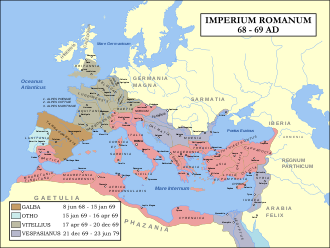
The Roman legions in Germania Superior refuse to swear loyalty to Galba.
They rebel and proclaim Vitellius as emperor.
AD 69 (LXIX) was a common year starting on Sunday of the Julian calendar. In the Roman Empire, it was known as the Year of the consulship of Galba and Vinius. The denomination AD 69 for this year has been used since the early medieval period, when the Anno Domini calendar era became the prevalent method in Europe for naming years.
69
Alemanni
The Alemanni cross the frozen Rhine in large numbers, invading the Roman Empire.
Germanic people
The Alemanni or Alamanni were a confederation of Germanic tribes on the Upper Rhine River during the 1st millennium. They are first mentioned by Cassius Dio in the context of the campaign of Roman emperor Caracalla of 213 AD, the Alemanni captured the Agri Decumates in 260 AD, and later expanded into present-day Alsace and northern Switzerland, leading to the establishment of the Old High German language in those regions, which by the 8th century were collectively referred to as Alamannia.
366
Mercurius becomes Pope John II, the first pope to adopt a new name upon elevation to the papacy.
Head of the Catholic Church from 533 to 535
Pope John II, born Mercurius, was the Bishop of Rome from 2 January 533 to his death on 8 May 535. As a priest at St. Clement's Basilica, he endowed that church with gifts and commissioned stone carvings for it. Mercurius became the first pope to adopt a new papal name upon his elevation to the office. During his pontificate, John II notably removed Bishop Contumeliosus of Riez from his office, convened a council on the readmission of Arian clergy, and approved an edict of emperor Justinian, promulgating doctrine opposed by his predecessor, Pope Hormisdas.
533
Battle_of_Kunovica
Christian forces defeat the Turks in the battle of Kunovica.
1444 battle in Serbia
The Battle of Kunovica or Battle at Kunovitsa was fought between crusaders led by John Hunyadi and the armies of the Ottoman Empire on 2 or 5 January 1444, near the mountain Kunovica between Pirot and Niš, in present-day Serbia. It was part of the Long Campaign.
1444
Reconquista
Reconquista: The Emirate of Granada, the last Moorish stronghold in Spain, surrenders.
Medieval Christian military campaigns
The Reconquista or the fall of al-Andalus was a series of military campaigns by northern Iberian Christian polities against Muslim-ruled al-Andalus, which had previously been part of the Visigothic Kingdom before the Muslim Conquest of 711. The Reconquista concluded in 1492 with the capture of Granada by the Catholic Monarchs of Spain, thereby ending the presence of any Muslim rule on the Iberian Peninsula.
1492
Trunajaya_rebellion
Trunajaya rebellion: Amangkurat II of Mataram and his bodyguards execute the rebel leader Trunajaya.
1674–80 failed revolt in Java
The Trunajaya Rebellion or Trunajaya War was a conflict in the 1670s led by the Madurese prince Trunajaya and Makassarese fighters against the Mataram Sultanate and the Dutch East India Company (VOC) in Java.
1680
Maria_Theresa
Empress Maria Theresa of Austria amends the Constitutio Criminalis Theresiana to include the abolition of torture throughout the Habsburg-ruled countries of Austria and Bohemia.
Habsburg monarch from 1740 to 1780
Maria Theresa was the ruler of the Habsburg monarchy from 1740 until her death in 1780, and the only woman to hold the position in her own right. She was the sovereign of Austria, Hungary, Croatia, Bohemia, Transylvania, Slavonia, Mantua, Milan, Moravia, Galicia and Lodomeria, Dalmatia, Austrian Netherlands, Carinthia, Carniola, Gorizia and Gradisca, Austrian Silesia, Tyrol, Styria, and Parma. By marriage, she was Duchess of Lorraine, Grand Duchess of Tuscany, and Holy Roman Empress.
1776
American_Revolutionary_War
American Revolutionary War: American forces under the command of General George Washington repulse a British attack led by General Charles Cornwallis at the Battle of the Assunpink Creek near Trenton, New Jersey.
1775–1783 conflict in North America
The American Revolutionary War, also known as the Revolutionary War or American War of Independence or simply the American Revolution, was the armed conflict that comprised the final eight years of the broader American Revolution, in which American Patriot forces organized as the Continental Army and commanded by George Washington defeated the British Army. The conflict was fought in North America, the Caribbean, and the Atlantic Ocean. The war's outcome seemed uncertain for most of the war, but Washington and the Continental Army's decisive victory in the Siege of Yorktown in 1781 led King George III and the Kingdom of Great Britain to negotiate an end to the war. In 1783, in the Treaty of Paris, the British monarchy acknowledged the independence of the Thirteen Colonies, leading to the establishment of the United States as an independent and sovereign nation.
1777
Georgia_(U.S._state)
Georgia becomes the fourth state to ratify the United States Constitution.
U.S. state
Georgia is a state in the Southeastern, South Atlantic, and Deep South regions of the United States. It borders Tennessee to the northwest, North Carolina and South Carolina to the northeast, the Atlantic Ocean to the east, Florida to the south, and Alabama to the west. Of the 50 U.S. states, Georgia is the 24th-largest by area and eighth-most populous. According to the U.S. Census Bureau, its 2025 estimated population was 11,302,748. Atlanta, a global city, is both the state's capital and its largest city. The Atlanta metropolitan area, with a population greater than 6.3 million people in 2023, is the eighth most populous metropolitan area in the United States and contains about 57% of Georgia's entire population. Other major metropolitan areas in the state include Augusta, Savannah, Columbus, and Macon.
1788
Northwest_Indian_War
Northwest Indian War: The Big Bottom massacre is committed by Lenape and Wyandot warriors in the Ohio Country, North America.
Part of the American Indian Wars (1786–1795)
The Northwest Indian War was an armed conflict for control of the Northwest Territory between the United States and a loose confederation of Native American peoples who called themselves the United Indian Nations but are better known today as the Northwestern Confederacy. The United States Army considers the conflict to be the first of the American Indian Wars.
1791
American_Civil_War
American Civil War: The three-day Battle of Stones River ends in a Union victory when the Confederate Army of Tennessee under General Braxton Bragg are repulsed for the final time by the Army of the Cumberland under General William S.
Rosecrans.
The American Civil War was a civil war in the United States between the Union and the Confederacy, which was formed in 1861 by states that had seceded from the Union to preserve slavery in the United States. The South saw slavery as threatened because of the election of Abraham Lincoln and the growing abolitionist movement in the North. The war ended with Union victory, the dissolution of the Confederacy and the abolition of slavery, freeing four million African Americans.
1863
Uruguayan_War
Uruguayan War: The Siege of Paysandú ends as the Brazilians and Coloradans capture Paysandú, Uruguay.
1864–1865 war between Brazil and Uruguay
The Uruguayan War was fought between Uruguay's governing Blanco Party and an alliance consisting of the Empire of Brazil and the Uruguayan Colorado Party, covertly supported by Argentina. Since its independence, Uruguay had been ravaged by intermittent struggles between the Colorado and Blanco factions, each attempting to seize and maintain power in turn. The Colorado leader Venancio Flores launched the Liberating Crusade in 1863, an insurrection aimed at toppling Bernardo Berro, who presided over a Colorado–Blanco coalition (fusionist) government. Flores was aided by Argentina, whose president Bartolomé Mitre provided him with supplies, Argentine volunteers and river transport for troops.
1865
John_Hay
American statesman and diplomat John Hay announces the Open Door Policy to promote trade with China.
American statesman (1838–1905)
John Milton Hay was an American statesman and official whose career in government stretched over almost half a century. Beginning as a private secretary for Abraham Lincoln, he became a diplomat. He served as United States Secretary of State under Presidents William McKinley and Theodore Roosevelt. Hay was also a biographer of Lincoln, and wrote poetry and other literature throughout his life.
1900
Chicago_Sanitary_and_Ship_Canal
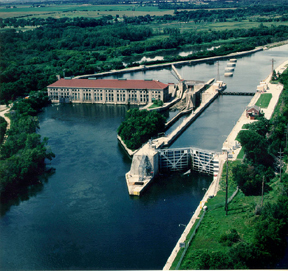
Chicago Canal opens.
Canal system in northeast Illinois
The Chicago Sanitary and Ship Canal, historically known as the Chicago Drainage Canal, is a 32-mile-long (51 km) canal system that connects the Chicago River to the Des Plaines River in Northeast Illinois, US. It reverses the direction of the Main Stem and the South Branch of the Chicago River, which now flows out of Lake Michigan rather than into it. The related Calumet-Sag Channel does the same for the Calumet River, 10 miles to the south, joining the Chicago canal about halfway along its route to the Des Plaines River.
1900
Palmer_raids
The second Palmer Raid, ordered by the US Department of Justice, results in 6,000 suspected communists and anarchists being arrested and held without trial.
United States government arrests of leftists, 1919–20
The Palmer raids were a series of raids conducted in November 1919 and January 1920 by the United States Department of Justice under the administration of President Woodrow Wilson to capture and arrest suspected socialists, especially anarchists and communists, and deport them from the United States. The raids particularly targeted Italian immigrants and Eastern European Jewish immigrants with alleged leftist ties, with particular focus on Italian anarchists and immigrant leftist labor activists. The raids and arrests occurred under the leadership of United States Attorney General A. Mitchell Palmer, with 6,000 people arrested across 36 cities. Though 556 foreign citizens were deported, including a number of prominent leftist leaders, Palmer's efforts were largely frustrated by officials at the U.S. Department of Labor, which had authority for deportations and objected to Palmer's methods.
1920
R.U.R.
World premiere of the science fiction play R.U.R.
by the Czech writer Karel Čapek in a theater in Hradec Králové.
R.U.R. is a 1920 science fiction play by the Czech writer Karel Čapek. "R.U.R." stands for Rossumovi Univerzální Roboti.
1921
The Young Brothers engaged in a gun battle resulting in the deaths of six law enforcement officers; the worst single killing of US police officers in the 20th century.
1932 gun battle in Missouri, US
The Young Brothers massacre was a gun battle that occurred outside of Brookline, Missouri in the Ozarks region on the afternoon of January 2, 1932, during the period known as the "Public Enemy Era". It resulted in the deaths of six law enforcement officers, making it the worst single killing of US police officers in the 20th century. In 2024, the property that was the site of the massacre was demolished.
1932
World_War_II
World War II: The Cardiff Blitz severely damages the cathedral in Cardiff, Wales.
Global conflict (1939–1945)
World War II, or the Second World War, was a global conflict between two coalitions: the Allies and the Axis powers. Nearly all of the world's countries participated, with many engaging in total war on an unprecedented scale. World War II was the deadliest conflict in history, causing the deaths of 60 to 75 million people, a majority of whom were civilians. Millions died as a result of massacres, starvation, disease, and genocides including the Holocaust. After the Allied victory, Germany, Austria, Japan, and Korea were occupied, and German and Japanese leaders were tried for war crimes.
1941
Federal_Bureau_of_Investigation
The Federal Bureau of Investigation (FBI) obtains the conviction of 33 members of a German spy ring headed by Fritz Joubert Duquesne in the largest espionage case in United States history; Also known as the Duquesne Spy Ring.
U.S. federal law enforcement agency
The Federal Bureau of Investigation (FBI) is the domestic intelligence and security service of the United States and its principal federal law enforcement agency. An agency of the United States Department of Justice, the FBI is a member of the U.S. Intelligence Community and reports to both the attorney general and the director of national intelligence. A leading American counterterrorism, counterintelligence, and criminal investigative organization, the FBI has jurisdiction over violations of more than 200 categories of federal crimes. The FBI maintains a list of its top 10 most wanted fugitives.
1942
Manila
World War II: Manila is captured by Japanese forces, enabling them to control the Philippines.
Capital of the Philippines
Manila, officially the City of Manila, is the capital and second-most populous city of the Philippines after Quezon City. According to the 2024 census, it has a population of 1,902,590 people. Located on the eastern shore of Manila Bay on the island of Luzon, it is classified as a highly urbanized city. With 44,935 inhabitants per square kilometer (116,380/sq mi), Manila is one of the world's most densely populated cities proper.
1942
Luis_Muñoz_Marín
Luis Muñoz Marín is inaugurated as the first democratically elected Governor of Puerto Rico.
First elected governor of Puerto Rico (1949–1965)
José Luis Alberto Muñoz Marín, most commonly known as Luis Muñoz Marín, was a Puerto Rican journalist, politician, and statesman who served as the first democratically elected governor of Puerto Rico from 1949 to 1965. He previously served as the fourth president of the Senate of Puerto Rico from 1941 to 1948.
1949
India
India establishes its highest civilian awards, the Bharat Ratna and the Padma Vibhushan.
Country in South Asia
India, officially the Republic of India, is a country in South Asia. It is the world's seventh-largest country by area and the largest by population. Bounded by the Indian Ocean on the south, the Arabian Sea on the southwest, and the Bay of Bengal on the southeast, it shares land borders with Pakistan to the west; China, Nepal and Bhutan to the north; and Bangladesh and Myanmar to the east. In the Indian Ocean, India is near Sri Lanka and the Maldives.
1954
Panama
Following the assassination of the Panamanian president José Antonio Remón Cantera, his deputy, José Ramón Guizado, takes power, but is quickly deposed after his involvement in Cantera's death is discovered.
Country in Central America
Panama, officially the Republic of Panama, is a country located at the southern end of Central America in North America, bordering South America. It is bordered by Costa Rica to the west, Colombia to the southeast, the Caribbean Sea to the north, and the Pacific Ocean to the south. Its capital and largest city is Panama City, whose metropolitan area is home to nearly half of the country's over 4 million inhabitants.
1955
Luna_1
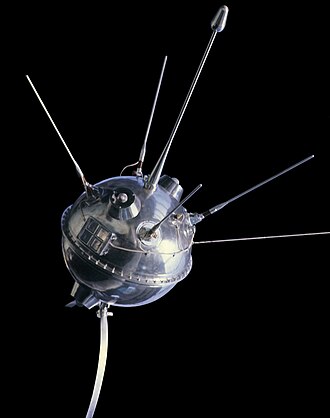
Luna 1, the first spacecraft to reach the vicinity of the Moon and to orbit the Sun, is launched by the Soviet Union.
Soviet spacecraft
Luna 1, also known as Mechta, E-1 No.4 and First Lunar Rover, was the first spacecraft to reach the vicinity of Earth's Moon, the first spacecraft to leave Earth's orbit, and the first to be placed in heliocentric orbit. Luna 1 was launched as part of the Soviet Luna programme in 1959.
1959
Vietnam_War
Vietnam War: The Viet Cong wins its first major victory, at the Battle of Ap Bac.
1955–1975 war in Southeast Asia
The Vietnam War was an armed conflict in Vietnam, Laos, and Cambodia fought between North Vietnam and South Vietnam and their allies. North Vietnam was supported by the Soviet Union and China, while South Vietnam was supported by the United States and other anti-communist nations. The conflict was the second of the Indochina wars and a proxy war of the Cold War. The Vietnam War was one of the postcolonial wars of national liberation, a theater in the Cold War, and a civil war, with civil warfare a defining feature from the outset. Direct US military involvement escalated from 1965 until US forces were withdrawn in 1973. The fighting spilled into the Laotian and Cambodian civil wars, which ended with all three countries becoming communist in 1975.
1963
Ronald_Reagan
Ronald Reagan, past movie actor and future President of the United States, is sworn in as Governor of California.
President of the United States from 1981 to 1989
Ronald Wilson Reagan was an American politician and actor who served as the 40th president of the United States from 1981 to 1989. A member of the Republican Party, he became an important figure in the American conservative movement. The period encompassing his presidency is known as the Reagan era.
1967
1971_Ibrox_disaster
The second Ibrox disaster kills 66 fans at a Rangers-Celtic association football match.
Crowd crush at a Glasgow football game
The 1971 Ibrox disaster, also known as the Second Ibrox Disaster, was a crush among the crowd at an Old Firm football game, which led to 66 deaths and more than 200 injuries. It happened on 2 January 1971 on an exit stairway at Ibrox Park in Glasgow, Scotland. It was the worst football disaster in Britain until the Hillsborough disaster in Sheffield, England, in 1989.
1971
Samastipur
At the opening of a new railway line, a bomb blast at Samastipur, Bihar, India, fatally wounds Lalit Narayan Mishra, Minister of Railways.
City and Municipal Corporation in Mithila region of Bihar, India
Samastipur is a city and a Municipal Corporation in Bihar, India. It is the headquarters of the Samastipur district and comes under Darbhanga division. The Burhi Gandak River flows through the city. It is one of the five railway divisions of ECR, Hajipur. The Samastipur Junction railway station is one of the busiest stations in North Bihar after Patna and Katihar.
1975
Gale_of_January_1976
The Gale of January 1976 begins, resulting in coastal flooding around the southern North Sea coasts, affecting countries from Ireland to Yugoslavia and causing at least 82 deaths and US$1.3 billion in damage.
Extratropical cyclone and storm surge
The Gale of January 1976, widely known as the "Capella" storm in Germany and the Ruisbroek flood in Belgium, was one in a series of extratropical cyclones and storm surges, which occurred over January 1976. The gale of 2–5 January 1976 resulted in severe wind damage across western and central Europe and coastal flooding around the southern North Sea coasts. At the time, this was the most severe storm of the century over the British Isles. Total fatalities reached 82 across Europe, although a figure of 100 is given by the World Meteorological Organization. Of these 24 were reported in Britain and 4 in Ireland. Overall losses of US$1.3 billion were incurred, with insured losses standing at US$500 million (1976).
1976
President_of_Pakistan
On the orders of the President of Pakistan, Muhammad Zia-ul-Haq, paramilitary forces opened fire on peaceful protesting workers in Multan, Pakistan; it is known as 1978 massacre at Multan Colony Textile Mills.
Head of state
The President of Pakistan is the head of state of the Islamic Republic of Pakistan. The president is the nominal head of the executive and the federal parliament, the first citizen of the country, and the supreme commander of the Pakistan Armed Forces. Serving as the ceremonial head of the federation, the president is bound to act on advice of the prime minister and the federal cabinet. Asif Ali Zardari is the 14th and current president, having assumed the presidency on 10 March 2024.
1978
United_Kingdom
One of the largest investigations by a British police force ends when serial killer Peter Sutcliffe, the "Yorkshire Ripper", is arrested in Sheffield, South Yorkshire.
Country in northwestern Europe
The United Kingdom of Great Britain and Northern Ireland, commonly known as the United Kingdom (UK) or Britain, is a country in northwestern Europe, off the coast of the continental mainland. It comprises England, Scotland, Wales and Northern Ireland, with a population of over 69 million in 2024. The UK includes the island of Great Britain, the north-eastern part of the island of Ireland, and most of the smaller islands within the British Isles, covering 94,354 square miles (244,376 km2). It shares a land border with the Republic of Ireland and is surrounded by the Atlantic Ocean, the North Sea, the English Channel, the Celtic Sea and the Irish Sea, while maintaining sovereignty over the Crown Dependencies and the British Overseas Territories. The capital and largest city of England and the UK is London; Edinburgh, Cardiff and Belfast are the national capitals of Scotland, Wales and Northern Ireland, respectively.
1981
Condor_Flugdienst_Flight_3782
Condor Flugdienst Flight 3782 crashes near Seferihisar, Turkey, killing 16 people.
1988 aviation accident
Condor Flugdienst Flight 3782 was an international charter flight from Stuttgart-Echterdingen Airport, West Germany to Adnan Menderes Airport, Turkey operated by a Boeing 737-200 that crashed near Seferihisar, Turkey on 2 January 1988. At the time, Condor was a subsidiary of Lufthansa.
1988
Sharon_Pratt
Sharon Pratt Dixon becomes the first African American woman mayor of a major city and first woman Mayor of the District of Columbia.
Mayor of the District of Columbia from 1991 to 1995
Sharon Pratt, formerly Sharon Pratt Dixon and Sharon Pratt Kelly, is an American attorney and politician who was the mayor of the District of Columbia from 1991 to 1995, the first mayor born in the District of Columbia since Richard Wallach who took office in 1861 and the first woman in that position.
1991
Sri_Lankan_civil_war
Sri Lankan Civil War: The Sri Lanka Navy kill 35–100 civilians on the Jaffna Lagoon.
1983–2009 Sri Lankan internal conflict
The Sri Lankan civil war was fought in Sri Lanka from 1983 to 2009. Beginning on 23 July 1983, it was an intermittent insurgency against the government by the Liberation Tigers of Tamil Eelam led by Velupillai Prabhakaran. The LTTE fought to create an independent Tamil state called Tamil Eelam in the north-east of the island in response to continuous discrimination and violent persecution against Sri Lankan Tamils by the predominantly Sinhalese government of Sri Lanka.
1993
Stardust_(spacecraft)
Stardust successfully flies past Comet Wild 2, collecting samples that are returned to Earth.
NASA sample-return mission to Comet 81P/Wild 2 (1999–2011)
Stardust was a 385-kilogram robotic space probe launched by NASA on 7 February 1999. Its primary mission was to collect dust samples from the coma of comet Wild 2, as well as samples of cosmic dust, and return them to Earth for analysis. It was the first sample return mission of its kind. En route to Comet Wild 2, it also flew by and studied the asteroid 5535 Annefrank. The primary mission was successfully completed on 15 January 2006 when the sample return capsule returned to Earth.
2004
2022_Kazakh_unrest
Massive nationwide protests and unrest break out in Kazakhstan over the sudden increase of liquefied petroleum gas prices, leading to 238 people dead and thousands injured by January 11.
Protests and unrest in Kazakhstan against the government
The 2022 Kazakh unrest, also known as January Events, Bloody January, or the January Tragedy, was a series of mass protests and civil unrest that began in Kazakhstan on 2 January 2022 after a sudden sharp increase in liquefied petroleum gas prices following the lifting of a government-enforced price cap on 1 January. The protests began peacefully in the oil-producing city of Zhanaozen and quickly spread to other cities in the country, especially the nation's largest city, Almaty, which saw its demonstrations turn into violent riots, fueled by rising dissatisfaction with the government and widespread poverty. During the week-long violent unrest and crackdowns, 227 people were killed and over 9,900 were arrested, according to Kazakh officials.
2022
2024_Haneda_Airport_runway_collision
Two aircraft collide on a runway at Haneda Airport in Tokyo, killing 5 and injuring 18.
Aircraft accident in Japan
On 2 January 2024, a runway collision occurred at Haneda Airport in Tokyo, Japan, involving an Airbus A350, operating as Japan Airlines Flight 516, and a De Havilland Canada Dash 8 operated by the Japan Coast Guard (JA722A). Flight 516 was a scheduled domestic passenger flight from New Chitose Airport near Sapporo, Japan, to Haneda Airport. The Coast Guard plane was scheduled to deliver relief supplies a day after the 2024 Noto earthquake.
2024

History runs on facts, and this project runs on coffee!

Your support is incredibly helpful and genuinely appreciated.

Support with a coffee ☕