January 31 in History

American Civil War: The United States Congress passes the Thirteenth Amendment t

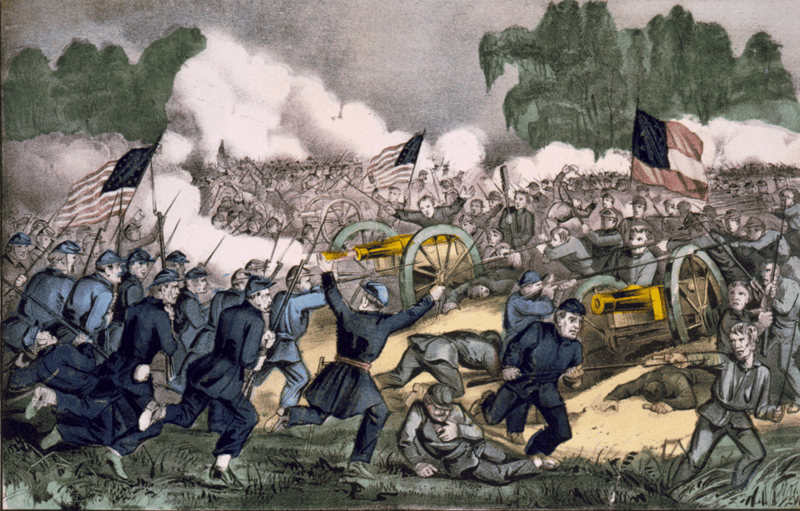
1865 — American Civil War: The United States Congress passes the Thirteenth Amendment to the United States Constitution, abolishing slavery, and submits it to the states for ratification

January 31 spans 57 recorded events across recorded history, from 314 to 2025. Below is a curated digest of the most significant moments tied to this date.

By · Wikipedia

Historical Events 57 events 314 – 2025

More major events on January 31

The featured story and these ranked highlights form a quick summary. Every recorded event remains available in the chronology below.

  1. 1946 Cold War: Yugoslavia's new constitution, modeling that of the Soviet Union, establishes six constituent republics (Bosnia and Herzegovina, Croatia, Macedonia, Montenegro, Serbia and Slovenia). Source
  2. 1978 The Crown of St. Stephen (also known as the Holy Crown of Hungary) goes on public display after being returned to Hungary from the United States, where it was held after World War II. Source
  3. 1504 The Treaty of Lyon ends the Italian War, confirming French domination of northern Italy, while Spain receives the Kingdom of Naples. Source

Did you know

In 1865, American Civil War: The United States Congress passes the Thirteenth Amendment to the United States Constitution, abolishing slavery, and submits it to the states for ratification. This featured entry focuses on the immediate decision and its direct historical impact.

Did you know

The Thirteenth Amendment to the United States Constitution made slavery and involuntary servitude illegal, except as punishment for a crime. This helps explain why the event mattered beyond the initial announcement.

Did you know

The amendment was passed by the Senate on April 8, 1864, by the House of Representatives on January 31, 1865, and ratified by the required 27 of the then 36 states on December 6, 1865, and proclaimed on December 18, 1865. This clarifies the institutional and public response around the event.

Did you know

It was the first of the three Reconstruction Amendments adopted following the American Civil War. This shows how the event shaped policy and public communication in the same period.

Did you know

In 1865, American Civil War: The United States Congress passes the Thirteenth Amendment to the United States Constitution, abolishing slavery, and submits it to the states for ratification had consequences that extended beyond the first headline. The key context is the institutions involved, the policy shift, and how the public response evolved afterward.


Pope_Sylvester_I
Pope Sylvester I is consecrated, as successor to the late Pope Miltiades.
Head of the Catholic Church from 314 to 335
Pope Sylvester I was the bishop of Rome from 31 January 314 until his death on 31 December 335. He filled the See of Rome at an important era in the history of the Western Church, though very little is known of his life.
314
Battle_of_Lena
The Battle of Lena takes place between King Sverker the Younger of Sweden and his rival, Prince Erik Knutsson, whose victory puts him on the throne as King Eric X.
Medieval battle over the throne of Sweden
The Battle of Lena occurred on 31 January 1208 and probably took place near Kungslena, in the Tidaholm Municipality in Västergötland, Sweden. It was an important battle between the Danish-backed King Sverker II of Sweden and Prince Eric. Eric's forces won a crushing victory; however, in July 1210, Sverker returned with a second army and was killed in the Battle of Gestilren.
1208
Mudéjar
The Mudéjar of Murcia, who had rebelled against the Crown of Castile during the Mudéjar revolt of 1264–1266, surrender the city to James I of Aragon after a siege lasting a month.
Muslims living under Christian rule on the Iberian Peninsula during the Reconquista
Mudéjar were Muslims who remained in Iberia in the late medieval period following the Christian reconquest. It is also a term for Mudéjar art, which was greatly influenced by Islamic art, but produced typically by Christian craftsmen for Christian patrons. Mudéjar was used in contrast to both Muslims in Muslim-ruled areas and Moriscos, who were often forcibly converted and may or may not have continued to secretly practice Islam. The corresponding term for Christians living under Muslim rule is Mozarabs.
1266
Italian_Wars_of_1499–1504
The Treaty of Lyon ends the Italian War, confirming French domination of northern Italy, while Spain receives the Kingdom of Naples.
Second and third phase of the Italian Wars (1499–1504)
The Italian Wars of 1499–1504 are divided into two connected, but distinct, phases: the Second Italian War (1499–1501), sometimes known as Louis XII's Italian War, and the Third Italian War (1502–1504) or War over Naples. The first phase was fought for control of the Duchy of Milan by an alliance of Louis XII of France and the Republic of Venice against Ludovico Sforza, the second between Louis and Ferdinand II of Aragon for possession of the Kingdom of Naples.
1504
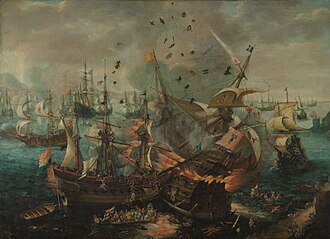
Eighty_Years'_War
Eighty Years' War and Anglo-Spanish War: The Battle of Gembloux is a victory for Spanish forces led by Don John of Austria over a rebel army of Dutch, Flemish, English, Scottish, German, French and Walloons.
c. 1566/1568–1648 war in Habsburg Netherlands
The Eighty Years' War or Dutch Revolt was an armed conflict in the Habsburg Netherlands between disparate groups of rebels and the Spanish government. The causes of the war included the Reformation, centralisation, excessive taxation, and the rights and privileges of the Dutch nobility and cities.
1578
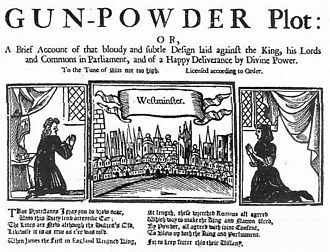
Gunpowder_Plot
Gunpowder Plot: Four of the conspirators, including Guy Fawkes, are executed for treason by hanging, drawing and quartering, for plotting against Parliament and King James.
1605 failed attempt to kill King James I of England
The Gunpowder Plot of 1605, in earlier centuries often called the Gunpowder Treason Plot or the Jesuit Treason, was an unsuccessful attempted regicide against King James VI of Scotland and I of England by a group of English Catholics, led by Robert Catesby.
1606
Bank_of_Amsterdam
Wisselbank of Amsterdam established
Early (Dutch) bank
The Bank of Amsterdam or Wisselbank was an early bank, vouched for by the city of Amsterdam, and established in 1609. It was the first public bank to offer accounts not directly convertible to coin. As such, it has been described by some as the first true central bank, even though that view is not uniformly shared. The Amsterdam Wisselbank was also active in the production of coins. For decades the assay master of the Bank sent out stocks of gold and silver to the various Mints in the United Netherlands to receive new coins in return.
1609
Forty-seven_rōnin
Forty-seven rōnin, under the command of Ōishi Kuranosuke, avenged the death of their master, by killing Kira Yoshinaka.
Samurai battle on 31 January 1703
The revenge of the forty-seven rōnin , also known as the Akō incident or Akō vendetta, was a historical event in Japan in which a band of rōnin avenged the death of their former master on 31 January 1703. The incident has since become legendary. It is among the three major vengeance incidents in Japan, along with the Revenge of the Soga Brothers and the Igagoe vendetta.
1703
Sexually_transmitted_infection
The first venereal diseases clinic opens at London Lock Hospital.
Infection transmitted through human sexual behavior
A sexually transmitted infection (STI), also known as a sexually transmitted disease (STD) or venereal disease (VD), is an infection that is spread by sexual activity, especially vaginal intercourse, anal sex, oral sex, or sometimes manual sex. STIs often do not initially cause symptoms, which results in a risk of transmitting them to others. The term sexually transmitted infection is generally preferred over sexually transmitted disease or venereal disease, as it includes cases with no symptomatic disease. Symptoms and signs of STIs may include vaginal discharge, penile discharge, ulcers on or around the genitals, and pelvic pain. Some STIs can cause infertility.
1747
Gervasio_Antonio_de_Posadas
Gervasio Antonio de Posadas becomes Supreme Director of the United Provinces of the Río de la Plata (present-day Argentina).
1st Supreme Director of the United Provinces of the Río de la Plata (1757–1833)
Gervasio Antonio de Posadas y Dávila was an Argentine lawyer and statesman who served as the first Supreme Director of the United Provinces of the Río de la Plata from 31 January 1814 to 9 January 1815, after having been a member of the Second Triumvirate in 1813–1814.
1814
Milwaukee_Bridge_War
After the Milwaukee Bridge War, the United States towns of Juneautown and Kilbourntown unify to create the City of Milwaukee.
1845 conflict among residents of present-day Milwaukee, Wis., US
The Milwaukee Bridge War, sometimes simply the Bridge War, was an 1845 conflict between people from different regions of what is now the city of Milwaukee, Wisconsin, over the construction of a bridge crossing the Milwaukee River.
1846
John_C._Frémont
John C.
Frémont is court-martialed for mutiny and disobeying orders.
Major-General John Charles Frémont was a United States Army officer, explorer, and politician. He was a United States senator from California and was the first Republican nominee for president of the U.S. and founder of the California Republican Party upon being nominated. Frémont lost the 1856 United States presidential election to Democrat James Buchanan.
1848
Alvan_Graham_Clark
Alvan Graham Clark discovers the white dwarf star Sirius B, a companion of Sirius, through an 18.5-inch (47 cm) telescope now located at Northwestern University.
19th-century American astronomer
Alvan Graham Clark was an American astronomer and telescope-maker.
1862
Confederate_States_of_America
American Civil War: Confederate General Robert E.
Lee becomes general-in-chief of all Confederate armies.
The Confederate States of America (CSA), also known as the Confederate States or the Confederacy, was a republic in the Southern United States from 1861 to 1865, unrecognized as a sovereign nation by either foreign governments or the United States. It was formed by seven states that had seceded from the Union and were later joined by four more. The original seven were South Carolina, Mississippi, Florida, Alabama, Georgia, Louisiana, Texas; the additional four were Virginia, Arkansas, Tennessee, and North Carolina. These states fought against the United States during the American Civil War in the wake of the 1860 election of Abraham Lincoln as president, with the principal aim of safeguarding slavery amid fears of northern abolitionist influence and federal interference in slave property. The South also feared that Lincoln's insistence that slavery not be permitted to expand into the Western territories would result in the admission of additional free states and the eventual demise of slavery.
1865
History_of_Portugal_(1834–1910)
History of Portugal: The first attempt at a Portuguese republican revolution breaks out in the northern city of Porto.
The Kingdom of Portugal under the House of Braganza was a constitutional monarchy from the end of the Liberal Civil War in 1834 to the Republican Revolution of 1910. The initial turmoil of coups d'état perpetrated by the victorious generals of the Civil War was followed by an unstable parliamentary system of governmental "rotation" marked by the growth of the Portuguese Republican Party. This was caused mainly by the inefficiency of the Portuguese monarchy as well as their lack of interest in governing the country and acceptance of the 1890 British Ultimatum, which forced the abandonment of the colonialist Pink Map attempt to unite the colonies of Angola and Mozambique.
1891
Mat_Salleh_Rebellion
Datu Muhammad Salleh is killed in Kampung Teboh, Tambunan, ending the Mat Salleh Rebellion.
Rebellion against British North Borneo Chartered Company in North Borneo
The Mat Salleh Rebellion was a series of major armed disturbances against the British North Borneo Chartered Company administration in North Borneo, now the Malaysian state of Sabah. It was instigated by Datu Muhammad Salleh, a local chief from the Lingkabo district and Sugut River. He led the rebellion between 1894 until his death in Tambunan in 1900. The rebellion then continued on for another five years until 1905.
1900
Anton_Chekhov
Anton Chekhov's Three Sisters premieres at Moscow Art Theatre in Russia.
Russian dramatist and author (1860–1904)
Anton Pavlovich Chekhov was a Russian playwright and short story writer. Widely considered one of the greatest writers of all time, his career as a playwright produced four classics, and his best short stories are held in high esteem by writers and critics. Along with Henrik Ibsen and August Strindberg, Chekhov is often referred to as one of the three seminal figures in the birth of early modernism in the theatre. Chekhov was a physician by profession. "Medicine is my lawful wife," he once said, "and literature is my mistress."
1901
World_War_I
World War I: Germany is the first to make large-scale use of poison gas in warfare in the Battle of Bolimów against Russia.
Global conflict from 1914 to 1918
World War I, or the First World War, also known as the Great War, was a global conflict between two coalitions: the Allies and the Central Powers. Major theatres of war included Europe and the Middle East, and well as parts of Africa and the Asia-Pacific. One of the deadliest conflicts in history, World War I resulted in an estimated 15 to 22 million deaths, including in mass war crimes against civilians and genocides. The conflict saw important developments in weaponry, including the first large-scale use of machine guns, artillery, aircraft, chemical weapons, and tanks, and was a major factor in the deadly Spanish flu pandemic.
1915
Wilhelm_II
World War I: Kaiser Wilhelm II orders the resumption of unrestricted submarine warfare.
German Emperor from 1888 to 1918
Wilhelm II was the last German Emperor from 1888 until his abdication in 1918. His fall from power marked the end of the German Empire as well as the Hohenzollern dynasty's 400-year rule over Prussia.
1917
Battle_of_May_Island
A series of accidental collisions due to poor visibility leads to the loss of two Royal Navy submarines with over a hundred lives, and damage to another five British warships.
British friendly-fire naval disaster
The Battle of May Island is the name given to the series of accidents that occurred during Operation E.C.1 in 1918. Named after the Isle of May, a nearby island in the Firth of Forth, the "battle" consisted of a disastrous series of accidents amongst Royal Navy vessels on their way from Rosyth, Scotland, to fleet exercises in the North Sea. On the misty night of 31 January–1 February 1918, five collisions occurred between eight vessels. Two K-class submarines were lost and four other submarines and a scout cruiser were damaged. 105 British sailors in total died in the accidents.
1918
Finnish_Civil_War
Finnish Civil War: The Suinula massacre, which changes the nature of the war in a more hostile direction, takes place in Kangasala.
1918 civil war in Finland
The Finnish Civil War was a civil war in 1918 fought for the leadership and control of recently independent Finland between White Finland and the Finnish Socialist Workers' Republic. The clashes took place in the context of the national, political, and social turmoil caused by World War I in Europe. The belligerents were the paramilitary Red Guards, led by a section of the Social Democratic Party with backup of the Russian bolsheviks, and the paramilitary White Guards of the senate. General C. G. E. Mannerheim led the White Guards with major assistance by both the Finnish Jäger Battalion trained in Germany and the German Imperial Army, along the German goal to control Fennoscandia and Petrograd of Russia. The Reds, composed of industrial and agrarian working class people, controlled the cities and industrial centres of southern Finland. The Whites, composed of land owners and the middle and upper class, controlled the rural central and northern Finland.
1918
Battle_of_George_Square
The Battle of George Square takes place in Glasgow, Scotland, during a campaign for shorter working hours.
1919 violent confrontation in Glasgow, Scotland
The Battle of George Square was a violent confrontation in Glasgow, Scotland between City of Glasgow Police and striking workers, centred around George Square. The "battle", also known as "Bloody Friday" or "Black Friday", took place on Friday 31 January 1919, shortly after the end of the First World War. During the riot, the Sheriff of Lanarkshire called for military aid, and government troops, supported by six tanks, were moved to key points in the city, though troops never clashed with the rioters. The strike leaders were arrested for inciting the riot. Although it is often stated that there were no fatalities, one police constable died several months later from injuries received during the rioting.
1919
Leon_Trotsky
Leon Trotsky is exiled to Alma-Ata.
Soviet politician and revolutionary (1879–1940)
Lev Davidovich Trotsky, better known as Leon Trotsky, was a Russian revolutionary, Soviet politician and political theorist. He was a key figure in the 1905 Revolution, the October Revolution of 1917, the Russian Civil War, and the establishment of the Soviet Union, from which he was exiled in 1929 before his assassination in 1940. Trotsky and Vladimir Lenin were widely considered the two most prominent figures in the Soviet state from 1917 until Lenin's death in 1924. Ideologically a Marxist and a Leninist, Trotsky's ideas and beliefs inspired a school of Marxism known as Trotskyism.
1928
World_War_II
World War II: Allied forces are defeated by the Japanese at the Battle of Malaya and retreat to Singapore.
Global conflict (1939–1945)
World War II, or the Second World War, was a global conflict between two coalitions: the Allies and the Axis powers. Nearly all of the world's countries participated, with many engaging in total war on an unprecedented scale. World War II was the deadliest conflict in history, causing the deaths of 60 to 75 million people, a majority of whom were civilians. Millions died as a result of massacres, starvation, disease, and genocides including the Holocaust. After the Allied victory, Germany, Austria, Japan, and Korea were occupied, and German and Japanese leaders were tried for war crimes.
1942
Friedrich_Paulus
World War II: German field marshal Friedrich Paulus surrenders to the Soviets at Stalingrad, followed two days later by the remainder of his Sixth Army, ending one of the war's fiercest battles.
German field marshal (1890–1957)
Friedrich Wilhelm Ernst Paulus was a German Generalfeldmarschall during World War II who is best known for his surrender of the German 6th Army during the Battle of Stalingrad. The battle ended in disaster for the Wehrmacht when Soviet forces encircled the Germans within the city, leading to the ultimate death or capture of most of the 265,000-strong 6th Army, their Axis allies, and collaborators.
1943
Kwajalein_Atoll
World War II: American forces land on Kwajalein Atoll and other islands in the Japanese-held Marshall Islands.
Atoll in the Marshall Islands
Kwajalein Atoll is part of the Republic of the Marshall Islands (RMI). The southernmost and largest island in the atoll is named Kwajalein Island, which its majority English-speaking residents often shorten to Kwaj. The total land area of the atoll is just over 6 square miles (16 km2). It lies in the Ralik Chain, 2,100 nautical miles southwest of Honolulu, Hawaii.
1944
Battle_of_Anzio
World War II: During the Anzio campaign, the 1st Ranger Battalion (Darby's Rangers) is destroyed behind enemy lines in a heavily outnumbered encounter at Battle of Cisterna, Italy.
1944 battle in Italy
The Battle of Anzio was a battle of the Italian Campaign of World War II that commenced 22 January 1944. The battle began with the Allied amphibious landing known as Operation Shingle, and ended on 4 June 1944, with the invasion of Rome. The operation was opposed by German and by Italian Repubblica Sociale Italiana (RSI) forces in the area of Anzio and Nettuno.
1944
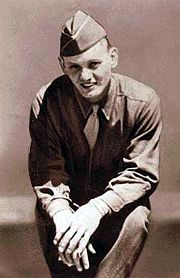
Eddie_Slovik
US Army private Eddie Slovik is executed for desertion, the first such execution of an American soldier since the Civil War.
American soldier (1920–1945)
Edward Donald Slovik was an American soldier who was court-martialed and executed for desertion during World War II. He was the only US serviceman to have met such a fate since the American Civil War, though in 1902, during the American-Philippine War, two American soldiers of the 9th Cavalry Regiment were executed for "desertion to the enemy". Although over 21,000 American servicemen were given varying sentences for desertion during World War II, including 49 death sentences, Slovik's death sentence was the only one that was carried out. The case was brought to public attention by the 1954 book The Execution of Private Slovik by William Bradford Huie, later made into an NBC 1974 television movie.
1945
Stutthof_concentration_camp
World War II: About 3,000 inmates from the Stutthof concentration camp are forcibly marched into the Baltic Sea at Palmnicken (now Yantarny, Russia) and executed.
Nazi concentration camp in Poland (1939–1945)
Stutthof was a Nazi concentration camp established by Nazi Germany in a secluded, marshy, and wooded area near the village of Stutthof 34 km (21 mi) east of the city of Danzig (Gdańsk) in the territory of the German-annexed Free City of Danzig. The camp was set up around existing structures after the invasion of Poland in World War II and initially used for the imprisonment of Polish leaders and intelligentsia. The actual barracks were built the following year by prisoners. Most of the infrastructure of the concentration camp was either destroyed or dismantled shortly after the war. In 1962, the former concentration camp with its remaining structures was turned into a memorial museum.
1945
Battle_of_Hill_170
World War II: The end of fighting in the Battle of Hill 170 during the Burma Campaign, in which the British 3 Commando Brigade repulsed a Japanese counterattack on their positions and precipitated a general retirement from the Arakan Peninsula.
Battle of World War II
The Battle of Hill 170 was a battle between the British 3rd Commando Brigade and the Japanese 54th Division during the Second World War. The battle was fought in January 1945, as part of the Burma Campaign.
1945
Cold_War
Cold War: Yugoslavia's new constitution, modeling that of the Soviet Union, establishes six constituent republics (Bosnia and Herzegovina, Croatia, Macedonia, Montenegro, Serbia and Slovenia).
1947–1991 geopolitical rivalry between US and USSR
The Cold War was a period of international geopolitical rivalry between the United States (US) and the Soviet Union (USSR) and their respective allies, the capitalist Western Bloc and communist Eastern Bloc. It began in the aftermath of the Second World War and ended with the dissolution of the Soviet Union in 1991. The term cold war is used because there was no direct fighting between the two superpowers, though each supported opposing sides in regional conflicts known as proxy wars. In addition to the struggle for ideological and economic influence and an arms race in both conventional and nuclear weapons, the Cold War was expressed through technological rivalries such as the Space Race, espionage, propaganda campaigns, embargoes, and sports diplomacy.
1946
North_Vietnam
The Democratic Republic of Vietnam introduces the đồng to replace the French Indochinese piastre at par.
Country in Southeast Asia (1945–1976)
The Democratic Republic of Viet Nam was a country in Southeast Asia from 1945 to 1976, with sovereignty recognized in July 1954, after which it became commonly known as North Vietnam. A member of the communist Eastern Bloc, it opposed the anti-communist, French-supported State of Vietnam and later the Western-allied Republic of Vietnam. North Vietnam launched a successful military offensive against South Vietnam in 1975 and ceased to exist the following year when it merged with the South to become the contemporary Socialist Republic of Vietnam.
1946
These Are My Children, the first television daytime soap opera, is broadcast by the NBC station in Chicago, United States.
1949 American soap opera, considered the first to be broadcast on television
These Are My Children is an American television soap opera, or novella, that ran on NBC from January 31 to March 4, 1949. The show was broadcast live from WNBQ in Chicago, Illinois, airing 15 minutes a day, five days a week, at 5 p.m. EST. It is widely credited as the first soap opera broadcast on television. It may be more accurately described as the first daytime drama or the first soap opera strip, as it was preceded by DuMont series Faraway Hill in 1946 and Highway to the Stars in 1947, both of which are described as soap operas but aired later in the evenings and broadcast only once a week; Guiding Light had also been in production for 12 years once These Are My Children debuted, but only as a radio series - its TV version did not debut until 1952.
1949
United_Nations_Security_Council_Resolution_90
United Nations Security Council Resolution 90 relating to the Korean War is adopted.
United Nations resolution adopted in 1951
The United Nations Security Council Resolution 90 was adopted by the United Nations Security Council (UNSC) on 31 January 1951. It resolved to remove the item "Complaint of aggression upon the Republic of Korea" from the list of matters of which the Council is seized.
1951
North_Sea_flood_of_1953
A North Sea flood causes over 1,800 deaths in the Netherlands and over 300 in the United Kingdom.
31 January–1 February storm surge
The North Sea flood of 1953, also known as the Big Flood or East Coast Flood or as the Flood Disaster, was a flood caused by a heavy storm surge in the North Sea that struck low-lying coastal areas of the Netherlands, Belgium, and the United Kingdom. More than 2,000 people were killed on land and hundreds more at sea. It was the worst natural disaster of the 20th century in the United Kingdom and the worst in the Netherlands since the Middle Ages.
1953
Pacoima,_Los_Angeles
Eight people (five total crew from two aircraft and three on the ground) in Pacoima, California are killed following the mid-air collision between a Douglas DC-7 airliner and a Northrop F-89 Scorpion fighter jet.
Neighborhood of Los Angeles in California, United States
Pacoima is a neighborhood in the northeast San Fernando Valley, within the city of Los Angeles, California. It is one of the oldest neighborhoods in the San Fernando Valley.
1957
Space_Race
Cold War: Space Race: The Explorer 1, the first successful American satellite, detects the Van Allen radiation belt.
US–USSR spaceflight capability rivalry
The Space Race was a 20th-century competition between the Cold War rivals, the United States and the Soviet Union, to achieve superior spaceflight capability. It had its origins in the ballistic missile-based nuclear arms race between the two nations following World War II and the onset of the Cold War. The technological advantage demonstrated by spaceflight achievement was seen as necessary for national security, particularly in regard to intercontinental ballistic missile and satellite reconnaissance capability, but also became part of the cultural symbolism and ideology of the time. The Space Race brought pioneering launches of artificial satellites, robotic landers to the Moon, Venus, and Mars, and human spaceflight in low Earth orbit and ultimately to the Moon.
1958
Project_Mercury
Project Mercury: Mercury-Redstone 2: The chimpanzee Ham travels into outer space.
Initial American crewed spaceflight program (1958–1963)
Project Mercury was the first human spaceflight program of the United States, running from 1958 through 1963. An early highlight of the Space Race, its goal was to put a man into Earth orbit and return him safely, ideally before the Soviet Union. Taken over from the US Air Force by the newly created civilian space agency NASA, it conducted 20 uncrewed developmental flights, and six successful flights by astronauts. The program, which took its name from Roman mythology, cost $2.83 billion. The astronauts were collectively known as the "Mercury Seven", and each spacecraft was given a name ending with a "7" by its pilot.
1961
Soviet_Union
The Soviet Union launches the unmanned Luna 9 spacecraft as part of the Luna program.
Country in Eurasia from 1922 to 1991
The Soviet Union, officially the Union of Soviet Socialist Republics (USSR), was a transcontinental country that spanned much of Eurasia from its formation in 1922 until its dissolution in 1991. It was the world's third-most populous country, the largest by area, and bordered twelve other countries. A diverse multinational state, it was organized as a federal union of national republics, with the largest and most populous being the Russian Soviet Federative Socialist Republic (SFSR). The world's flagship communist state, it was governed by the Communist Party under Marxism–Leninism, through soviet councils. The Soviet economy was also centrally planned. Its capital and largest city was Moscow.
1966
Vietnam_War
Vietnam War: Viet Cong guerrillas attack the United States embassy in Saigon, and other attacks, in the early morning hours, later grouped together as the Tet Offensive.
1955–1975 war in Southeast Asia
The Vietnam War was an armed conflict in Vietnam, Laos, and Cambodia fought between North Vietnam and South Vietnam and their allies. North Vietnam was supported by the Soviet Union and China, while South Vietnam was supported by the United States and other anti-communist nations. The conflict was the second of the Indochina wars and a proxy war of the Cold War. The Vietnam War was one of the postcolonial wars of national liberation, a theater in the Cold War, and a civil war, with civil warfare a defining feature from the outset. Direct US military involvement escalated from 1965 until US forces were withdrawn in 1973. The fighting spilled into the Laotian and Cambodian civil wars, which ended with all three countries becoming communist in 1975.
1968
Apollo_program
Apollo program: Apollo 14: Astronauts Alan Shepard, Stuart Roosa, and Edgar Mitchell, aboard a Saturn V, lift off for a mission to the Fra Mauro Highlands on the Moon.
1961–1972 American crewed lunar exploration program
The Apollo program, also known as Project Apollo, was the United States human spaceflight program led by NASA, which landed the first humans on the Moon in 1969. Apollo was conceived in 1960 in the Dwight D. Eisenhower presidency during Project Mercury and executed after Project Gemini. Apollo was later dedicated to President John F. Kennedy's national goal, "before this decade is out, of landing a man on the Moon and returning him safely to the Earth" in his address to the U.S. Congress on May 25, 1961.
1971
The Winter Soldier Investigation, organized by the Vietnam Veterans Against the War to publicize alleged war crimes and atrocities by Americans and allies in Vietnam, begins in Detroit.
1971 anti-Vietnam War event in Detroit, Michigan
The "Winter Soldier Investigation" was a media event sponsored by the Vietnam Veterans Against the War (VVAW) from January 31, 1971, to February 2, 1971. It was intended to publicize war crimes and atrocities by the United States Armed Forces and their allies in the Vietnam War. The VVAW challenged the morality and conduct of the war by showing the direct relationship between military policies and war crimes in Vietnam. The three-day gathering of 109 veterans and 16 civilians took place in Detroit, Michigan. Discharged servicemen from each branch of the armed forces, as well as civilian contractors, medical personnel and academics, all gave testimony about war crimes they had committed or witnessed during the years 1963–1970.
1971
Holy_Crown_of_Hungary
The Crown of St.
Stephen (also known as the Holy Crown of Hungary) goes on public display after being returned to Hungary from the United States, where it was held after World War II.
The Holy Crown of Hungary, also known as the Crown of Saint Stephen, named in honour of Saint Stephen I of Hungary, was the coronation crown used by the Kingdom of Hungary for most of its existence; kings were crowned with it from the 12th century on. The Crown symbolized the King's authority over the Lands of the Hungarian Crown, and it was a key mark of legitimacy. Through the history of Hungary, more than 50 kings were crowned with it, with the last being Charles IV in 1916. The only kings not crowned were Wladyslaw I, John Sigismund Zápolya, and Joseph II. The earliest contemporary written source concerning the elevation of Stephen to kingship is the chronicle of Thietmar of Merseburg, which records the event within the political and imperial context of the reign of Emperor Otto III. According to Thietmar, Stephen's elevation took place at imperial initiative, and the coronation was carried out together with an ecclesiastical blessing:"Imperatoris autem praedicti gratia et hortatu … coronam et benedictionem accepit."
1978
Doug_Williams_(quarterback)
Doug Williams becomes the first African American quarterback to play in a Super Bowl and leads the Washington Redskins to victory in Super Bowl XXII.
American football player, coach, and executive (born 1955)
Douglas Lee Williams is an American professional football executive and former quarterback and coach who is a senior advisor for the Washington Commanders of the National Football League (NFL). Williams was the first black quarterback to both start and win a Super Bowl, doing so with Washington in Super Bowl XXII when they were known as the Redskins. He was named Super Bowl MVP after throwing four touchdowns in a single quarter.
1988
Colombo_Central_Bank_bombing
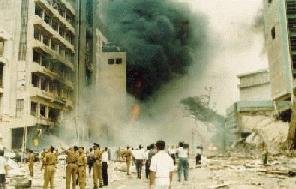
An explosives-filled truck rams into the gates of the Central Bank of Sri Lanka in Colombo, killing at least 86 people and injuring 1,400.
1996 terrorist attack in Sri Lanka
The Central Bank bombing was one of the deadliest attacks carried out by the Liberation Tigers of Tamil Eelam (LTTE) during the separatist civil war in Sri Lanka between the government and the Tamil Tigers.
1996
Alaska_Airlines_Flight_261
Alaska Airlines Flight 261 crash: An MD-83, experiencing horizontal stabilizer problems, crashes in the Pacific Ocean off the coast of Point Mugu, California, killing all 88 aboard.
2000 aviation accident in the Pacific Ocean
Alaska Airlines Flight 261 was a scheduled international passenger flight from Licenciado Gustavo Díaz Ordaz International Airport in Puerto Vallarta, Jalisco, Mexico, to Seattle–Tacoma International Airport near Seattle, Washington, United States, with an intermediate stop at San Francisco International Airport in San Francisco, California. On January 31, 2000, the McDonnell Douglas MD-83 operating the flight crashed into the Pacific Ocean roughly 2.7 miles north of Anacapa Island, California, following a catastrophic loss of pitch control, while attempting to divert to Los Angeles International Airport. The accident killed all 88 on board – two pilots, three cabin crew members, and 83 passengers.
2000
Libya
In the Netherlands, a Scottish court convicts Libyan Abdelbaset al-Megrahi and acquits another Libyan citizen for their part in the bombing of Pan Am Flight 103 over Lockerbie, Scotland in 1988.
Country in North Africa
Libya, officially the State of Libya, is a country in the Maghreb region of North Africa. It borders the Mediterranean Sea to the north, Egypt to the east, Sudan to the southeast, Chad to the south, Niger to the southwest, Algeria to the west, and Tunisia to the northwest. With an area of almost 1.8 million km2 (700,000 sq mi), Libya is the fourth-largest country in Africa and the Arab world, and the 16th-largest in the world. The country claims 32,000 square kilometres of southeastern Algeria, south of the Libyan town of Ghat. The capital and largest city is Tripoli, located in the northwest and containing over a million of Libya's seven million people.
2001
Japan_Airlines
Two Japan Airlines planes nearly collide over Suruga Bay in Japan.
Airline of Japan
Japan Airlines (JAL) is a major Japanese airline headquartered in Shinagawa, Tokyo. The airline's main hubs are Tokyo's Narita and Haneda airports, as well as secondary hubs in Osaka's Kansai and Itami airports. The JAL group comprises Japan Airlines, Hokkaido Air System, J-Air, Japan Air Commuter, Japan Transocean Air and Ryukyu Air Commuter for domestic feeder services, and JAL Cargo for cargo and mail services, as well as low-cost carriers Zipair Tokyo and Jetstar Japan.
2001
Waterfall_rail_accident
The Waterfall rail accident occurs near Waterfall, New South Wales, Australia.
2003 train crash in New South Wales, Australia
At approximately 7:15 am AEDT, on 31 January 2003, south of Waterfall, New South Wales, Australia, an Intercity Tangara G set derailed on a curve at high speeds when the driver had a heart attack, falling unconscious, and the deadman's brake failed. The incident killed seven people aboard, including the train driver, and injured 40. The accident is notably remembered by systems engineers due to the poorly designed safety systems.
2003
Aqua_Teen_Hunger_Force
Emergency officials in Boston mistakenly identify battery-powered LED placards depicting characters from Aqua Teen Hunger Force as Improvised explosive devices (IEDs), causing a panic.
American adult animated television series
Aqua Teen Hunger Force is an American adult animated television series created by Dave Willis and Matt Maiellaro for Cartoon Network's late night programming block Adult Swim. Produced by Williams Street, it documents the surreal adventures and antics of three anthropomorphic fast food items: Master Shake, Meatwad, and Frylock, who live together as roommates and frequently interact with their cranky human next-door neighbor, Carl.
2007
Kenya
At least 113 people are killed in Kenya and over 200 injured following an oil spillage ignition in Molo, days after a massive fire at a Nakumatt supermarket in Nairobi killed at least 25 people.
Country in East Africa
Kenya, officially the Republic of Kenya, is a country located in East Africa. With an estimated population of more than 54.2 million as of mid-2026, it is the 27th-most populous country in the world and the seventh-most populous in Africa. Kenya's capital and largest city is Nairobi. The second-largest and oldest city is Mombasa, a port city located on Mombasa Island. Other major cities within the country include Kisumu, Nakuru and Eldoret. Going clockwise, Kenya is bordered by South Sudan to the northwest, Ethiopia to the north, Somalia to the east, the Indian Ocean to the southeast, Tanzania to the southwest, and Lake Victoria and Uganda to the west. Its geography, climate and population vary. In western Rift Valley counties, the landscape includes cold, snow-capped mountaintops with surrounding forests, wildlife, and fertile agricultural regions in temperate climates. In other areas there are dry, arid, and semi-arid climates, as well as absolute deserts.
2009
Abdullah_of_Pahang
Abdullah of Pahang is sworn in as the 16th Yang di-Pertuan Agong of Malaysia.
King of Malaysia from 2019 to 2024
Tengku Abdullah ibni Tengku Ahmad Shah has been the sixth sultan of Pahang since ascending to the throne in 2019. He previously reigned as the King of Malaysia from 2019 until 2024.
2019
United_Kingdom
The United Kingdom's membership within the European Union ceases in accordance with Article 50, after 47 years of being a member state.
Country in northwestern Europe
The United Kingdom of Great Britain and Northern Ireland, commonly known as the United Kingdom (UK) or Britain, is a country in northwestern Europe, off the coast of the continental mainland. It comprises England, Scotland, Wales and Northern Ireland, with a population of over 69 million in 2024. The UK includes the island of Great Britain, the north-eastern part of the island of Ireland, and most of the smaller islands within the British Isles, covering 94,354 square miles (244,376 km2). It shares a land border with the Republic of Ireland and is surrounded by the Atlantic Ocean, the North Sea, the English Channel, the Celtic Sea and the Irish Sea, while maintaining sovereignty over the Crown Dependencies and the British Overseas Territories. The capital and largest city of England and the UK is London; Edinburgh, Cardiff and Belfast are the national capitals of Scotland, Wales and Northern Ireland, respectively.
2020
Sue_Gray,_Baroness_Gray_of_Tottenham
Sue Gray, a senior civil servant in the United Kingdom, publishes an initial version of her report on the Downing Street Partygate controversy.
British former civil servant (born 1957)
Susan Ann Gray, Baroness Gray of Tottenham, is a British politician, special adviser, and former civil servant who served as Downing Street Chief of Staff under Prime Minister Keir Starmer from July to October 2024, having previously served under Starmer as chief of staff to the Leader of the Opposition from 2023 to 2024.
2022
Boeing_747
The last Boeing 747, the first wide-body airliner, is delivered to Atlas Air and operated for ApexLogistics.
The aircraft was registered as N863GT and named "Empower".
The Boeing 747 is a long-range wide-body airliner designed and manufactured by Boeing Commercial Airplanes in the United States between 1968 and 2023. It was conceived in response to the demand of Pan Am for a jet 2+1⁄2 times the size of the 707, which had been introduced in October 1958, to reduce the airline's seat cost by 30%. The design team was led by Joe Sutter, who left the 737 development program in 1965 to design the 747. In April 1966, Pan Am ordered 25 Boeing 747-100 aircraft, and in late 1966, Pratt & Whitney agreed to develop the JT9D engine, a high-bypass turbofan. On September 30, 1968, the first 747 was rolled out of the purpose-built Everett Plant, the world's largest building by volume. The 747's first flight took place on February 9, 1969, and the 747 was certified in December 1969. It entered service with Pan Am on January 22, 1970. The 747 was the first airplane called a "Jumbo Jet" as the first wide-body airliner.
2023
Med_Jets_Flight_056
Med Jets Flight 056 crashes near Roosevelt Mall in Philadelphia, Pennsylvania, killing 8 people and injuring 23.
2025 aviation accident in Pennsylvania
Med Jets Flight 056 was a medevac flight from Northeast Philadelphia Airport to Tijuana International Airport with a planned refueling stop at Springfield–Branson National Airport, operated by Jet Rescue Air Ambulance. On January 31, 2025, a Learjet 55 operating that flight crashed in the Castor Gardens neighborhood of Philadelphia, Pennsylvania, shortly after takeoff, killing everyone on board and two people on the ground.
2025

History runs on facts, and this project runs on coffee!

Your support is incredibly helpful and genuinely appreciated.

Support with a coffee ☕