July 15 in History

Twitter, later one of the largest social media platforms in the world, is launch

2006 — Twitter, later one of the largest social media platforms in the world, is launched

July 15 spans 55 recorded events across recorded history, from 484 BC to 2018. Below is a curated digest of the most significant moments tied to this date.

By · Wikipedia

Historical Events 55 events 484 BC – 2018

More major events on July 15

The featured story and these ranked highlights form a quick summary. Every recorded event remains available in the chronology below.

  1. 1975 Space Race: Apollo–Soyuz Test Project features the dual launch of an Apollo spacecraft and a Soyuz spacecraft on the first Soviet-United States human-crewed flight. It was the last launch of both an Apollo spacecraft, and the Saturn family of rockets. Source
  2. 1955 Eighteen Nobel laureates sign the Mainau Declaration against nuclear weapons, later co-signed by thirty-four others. Source
  3. 1920 Aftermath of World War I: The Parliament of Poland establishes Silesian Voivodeship before the Polish-German plebiscite. Source

Did you know

Twitter was founded by Jack Dorsey, Evan Williams, Biz Stone, and Noah Glass.

Did you know

The first tweet was sent on March 21, 2006, by Jack Dorsey, and it read 'just setting up my twttr'.

Did you know

Social media platforms like Twitter have over 4.2 billion active users worldwide as of 2022.

Did you know

The term 'social media' was first used in 2004 by Chris Messina, an American developer.

Did you know

Twitter's initial prototype was called 'twttr', and it was inspired by SMS text messaging and instant messaging services.


Temple_of_Castor_and_Pollux
Dedication of the Temple of Castor and Pollux in ancient Rome.
Ancient temple in the Roman Forum in Rome, Italy
The Temple of Castor and Pollux was an ancient temple in the Roman Forum, Rome, Central Italy. It was originally built in gratitude for victory at the Battle of Lake Regillus. Castor and Pollux were the Dioscuri, the "twins" of Gemini, the twin sons of Zeus (Jupiter) and Leda. Their cult came to Rome from Greece via Magna Graecia and the Greek culture of Southern Italy.
-484
First Jewish–Roman War: Titus and his armies breach the walls of Jerusalem.
(17th of Tammuz in the Hebrew calendar).
AD 70 (LXX) was a common year starting on Monday of the Julian calendar. At the time, it was known as the Year of the Consulship of Vespasian and Titus. The denomination AD 70 for this year has been used since the early medieval period, when the Anno Domini calendar era became the prevalent method in Europe for naming years.
70
An_Lushan_rebellion
An Lushan Rebellion: Emperor Xuanzong of Tang is ordered by his Imperial Guards to execute chancellor Yang Guozhong by forcing him to commit suicide or face a mutiny.
General An Lushan has other members of the emperor's family killed.
The An Lushan rebellion was a civil war in China that lasted from 755 to 763, at the approximate midpoint of the Tang dynasty (618–907). It began as a commandery rebellion attempting to overthrow and replace the Tang government with the rogue Yan dynasty. The rebels succeeded in capturing the imperial capital Chang'an after the emperor had fled to Sichuan, but eventually succumbed to internal divisions and counterattacks by the Tang and their allies. The rebellion spanned the reigns of three Tang emperors: Xuanzong, Suzong, and Daizong.
756
First_Crusade
First Crusade: Christian soldiers take the Church of the Holy Sepulchre in Jerusalem after the final assault of a difficult siege.
1096–1099 Christian re-conquest of the Holy Land
The First Crusade (1096–1099) was the first of a series of religious wars, or Crusades, which were initiated, supported and at times directed by the Latin Church in the Middle Ages. Their aim was to return the Holy Land—which had been conquered by the Rashidun Caliphate in the 7th century—to Christian rule. By the 11th century, although Jerusalem had then been ruled by Muslims for hundreds of years, the practices of the Seljuk rulers in the region began to threaten local Christian populations, pilgrimages from the West and the Byzantine Empire itself. The earliest impetus for the First Crusade came in 1095 when Byzantine emperor Alexios I Komnenos sent ambassadors to the Council of Piacenza to request military support in the empire's conflict with the Seljuk-led Turks. This was followed later in the year by the Council of Clermont, at which Pope Urban II gave a speech supporting the Byzantine request and urging faithful Christians to undertake an armed pilgrimage to Jerusalem.
1099
Church_of_the_Holy_Sepulchre
The reconstructed Church of the Holy Sepulchre is consecrated in Jerusalem.
Church in Jerusalem
The Church of the Holy Sepulchre, also known as the Church of the Resurrection, is a fourth-century church in the Christian Quarter of the Old City of Jerusalem. The church is simultaneously the seat of the Armenian Patriarchate of Jerusalem, Greek Orthodox Patriarchate of Jerusalem, and the Catholic Latin Patriarchate of Jerusalem. It is the holiest site in Christianity and it has been an important pilgrimage site for Christians since the fourth century.
1149
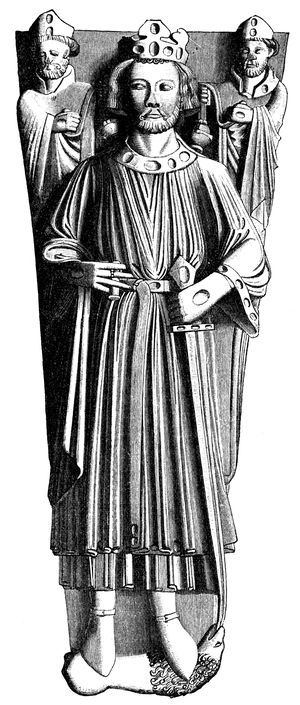
John,_King_of_England
King John of England expels Canterbury monks for supporting Archbishop Stephen Langton.
King of England from 1199 to 1216
John was King of England from 1199 until his death in 1216. He lost the Duchy of Normandy and most of his other French lands to King Philip II of France, resulting in the collapse of the Angevin Empire and contributing to the subsequent growth in power of the French Capetian dynasty during the 13th century. The baronial revolt at the end of John's reign led to the sealing of Magna Carta, a document considered a foundational milestone in English and later British constitutional history.
1207
Swedish–Novgorodian_Wars
Swedish–Novgorodian Wars: A Novgorodian army led by Alexander Nevsky defeats the Swedes in the Battle of the Neva.
Medieval conflicts in Baltic region
The Swedish–Novgorodian Wars were a series of armed conflicts in the 12th and 13th centuries between the Novgorod Republic and medieval Sweden over control of the Gulf of Finland. The area formed part of the trade route from the Varangians to the Greeks and was strategically important for commerce, later becoming significant to the Hanseatic League. The clashes between Catholic Swedes and Orthodox Novgorodians carried religious overtones, although no evidence exists of official crusade bulls being issued by the Pope before the 14th century.
1240
John_Ball_(priest)
John Ball, a leader in the Peasants' Revolt, is hanged, drawn and quartered in the presence of King Richard II of England.
English rebel and priest (c. 1338–1381)
John Ball was an English priest who took a prominent part in the Peasants' Revolt of 1381. Although he is often associated with John Wycliffe and the Lollard movement, Ball was actively preaching "articles contrary to the faith of the church" at least a decade before Wycliffe started attracting attention.
1381
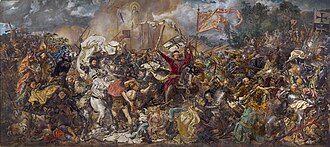
Polish–Lithuanian–Teutonic_War
Polish–Lithuanian–Teutonic War: Battle of Grunwald: The allied forces of the Kingdom of Poland and the Grand Duchy of Lithuania defeat the army of the Teutonic Order.
15th-century war in Northern Europe
The Polish–Lithuanian–Teutonic War, also known as the Great Teutonic War, occurred between 1409 and 1411 between the Teutonic Knights and the allied Kingdom of Poland and Grand Duchy of Lithuania. Inspired by the local Samogitian uprising, the war began with a Teutonic invasion of Poland in August 1409. As neither side was ready for a full-scale war, Wenceslaus IV of Bohemia brokered a nine-month truce.
1410
Muhammad_XI_of_Granada
Muhammad XI is crowned the twenty-second and last Nasrid king of Granada.
Ruler of the Emirate of Grenada (1460–1533)
Abu Abdallah Muhammad XI, known in Europe as Boabdil, was the 22nd and last Nasrid ruler of the Emirate of Granada in Iberia.
1482
Royal_Academy_of_Turku
The first university of Finland, the Royal Academy of Turku, is inaugurated in Turku.
University in Finland (1640 to 1828); now the University of Helsinki
The Royal Academy of Turku or the Royal Academy of Åbo was the first university in Finland, and the only Finnish university that was founded when the country still was a part of Sweden. It was founded in 1640. In 1809, after Finland became a grand duchy within the Russian Empire, it was renamed the Imperial Academy of Turku. In 1828, after the Great Fire of Turku, the institution was moved to Helsinki, in line with the relocation of the capital of the grand duchy. It was finally renamed the University of Helsinki when Finland declared independence in 1917.
1640
Baruch Laibov and Alexander Voznitsyn are burned alive in St.
Petersburg, Russia. Vonitzin had converted to Judaism with Laibov's help, with the consent of Empress Anna Ivanovna.
Baruch Leibov was a Jewish merchant who was burnt to death at the stake in St. Petersburg, Russia on July 15, 1738, for proselytizing.
1738
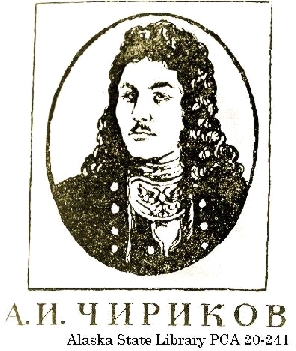
Aleksei_Chirikov
Aleksei Chirikov sights land in Southeast Alaska.
He sends men ashore in a longboat, making them the first Europeans to visit Alaska.
Aleksei Ilyich Chirikov was a Russian navigator and captain who, along with Vitus Bering, was the first Russian to reach the northwest coast of North America. He discovered and charted some of the Aleutian Islands while he was deputy to Vitus Bering during the Great Northern Expedition.
1741
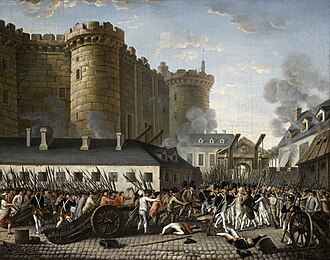
French_Revolution
French Revolution: Gilbert du Motier, Marquis de Lafayette, is named by acclamation Colonel General of the new National Guard of Paris.
1789–1799 sociopolitical change in France
The French Revolution was a period of political and societal change in France that began with the Estates General of 1789 and ended with the Coup of 18 Brumaire on 9 November 1799. Many of the revolution's ideas are considered fundamental principles of liberal democracy, and its values remain central to modern French political discourse. It was caused by a combination of social, political, and economic factors which the existing regime proved unable to manage.
1789
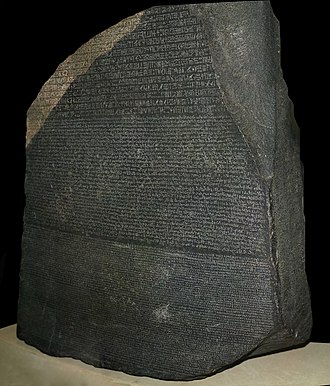
Rosetta_Stone
The Rosetta Stone is found in the Egyptian village of Rosetta by French Captain Pierre-François Bouchard during Napoleon's Egyptian Campaign.
Egyptian stele with three versions of a 196 BC decree
The Rosetta Stone is a stele of granodiorite inscribed with three versions of a decree issued in 196 BC during the Ptolemaic dynasty of Egypt, on behalf of King Ptolemy V Epiphanes. The top and middle texts are in Ancient Egyptian using hieroglyphic and Demotic scripts, respectively, while the bottom is in Ancient Greek. The decree has only minor differences across the three versions, making the Rosetta Stone key to deciphering the Egyptian scripts.
1799
Pike_Expedition
Pike Expedition: United States Army Lieutenant Zebulon Pike begins an expedition from Fort Bellefontaine near St.
Louis, Missouri, to explore the west.
The Pike Expedition was a military party sent out by President Thomas Jefferson and authorized by the United States government to explore the south and west of the recent Louisiana Purchase. It was led by United States Army Lieutenant Zebulon Pike, Jr. who was promoted to captain during the trip. It was the first official American effort to explore the western Great Plains and the Rocky Mountains in present-day Colorado. Pike contacted several Native American tribes during his travels and informed them that the U.S. now claimed their territory. The expedition documented the United States' discovery of Tava which was later renamed Pikes Peak in honor of Pike.
1806
Napoleonic_Wars
Napoleonic Wars: Napoleon Bonaparte surrenders aboard HMS Bellerophon.
1803–1815 series of wars led by Napoleon
The Napoleonic Wars (1803–15) were a global series of conflicts fought by a fluctuating array of European coalitions against the French First Republic (1803–04) under the First Consul followed by the First French Empire (1804–15) under the Emperor of the French, Napoleon. The wars originated in political forces arising from the French Revolution (1789–99) and French Revolutionary Wars (1792–1802) and produced a period of French domination over Continental Europe. The wars are categorised as seven conflicts, five named after the coalitions that fought Napoleon, plus two named for their respective theatres: the War of the Third Coalition, War of the Fourth Coalition, War of the Fifth Coalition, War of the Sixth Coalition, War of the Seventh Coalition, the Peninsular War, and the French invasion of Russia.
1815
Basilica_of_Saint_Paul_Outside_the_Walls
A fire destroys the ancient Basilica of Saint Paul Outside the Walls in Rome, Italy.
Roman Catholic basilica and landmark in Rome, Italy
The Papal Basilica of Saint Paul Outside the Walls is one of Rome's four major papal basilicas, along with the basilicas of Saint John in the Lateran, Saint Peter's, and Saint Mary Major, as well as one of the city's Seven Pilgrim Churches. The basilica is the conventual church of the adjacent Benedictine abbey. It lies within Italian territory, but the Holy See owns the basilica and it is part of the Vatican's extraterritoriality.
1823
Spanish_Inquisition
The Spanish Inquisition is officially disbanded after nearly 356 years.
System of tribunals enforcing Catholic doctrine
The Tribunal of the Holy Office of the Inquisition was authorized by Pope Sixtus IV in 1478 and the first inquisitors, Miguel de Morillo and Juan de San Martín, were appointed by the future Catholic Monarchs, King Ferdinand II of Aragon and Queen Isabella I of Castile, in 1480. Although its stated aim was to maintain Christian orthodoxy, it became an effective instrument of state power by replacing the Medieval Inquisition, which was under Papal control.
1834
Ralph_Waldo_Emerson
Ralph Waldo Emerson delivers the Divinity School Address at Harvard Divinity School, discounting Biblical miracles and declaring Jesus a great man, but not God.
The Protestant community reacts with outrage.
Ralph Waldo Emerson, who went by his middle name Waldo, was an American essayist, lecturer, philosopher, minister, abolitionist, and poet who led the Transcendentalist movement of the mid-19th century. He was seen as a champion of individualism and critical thinking, as well as a prescient critic of the countervailing pressures of society and conformity. The German philosopher Friedrich Nietzsche thought he was "the most gifted of the Americans", and Walt Whitman called Emerson his "master".
1838
European_balance_of_power
The Great Powers of Europe conclude the convention of London in order to stabilise the Near East.
International relations doctrine
The European balance of power is a tenet in international relations that no single power should be allowed to achieve hegemony over a substantial part of Europe. During much of the Modern Age, the balance was achieved by having a small number of ever-changing alliances contending for power, which culminated in the World Wars of the early 20th century.
1840
Airstrike
The first air raid in history occurs; Austria launches pilotless balloons against the city of Venice.
Offensive military operation
An airstrike, air strike, or air raid is an offensive operation against ground or sea surface targets carried out by aircraft, such as military balloons, airships, attack aircraft, bombers, gunships, attack helicopters and attack drones. The official definition of an airstrike includes all sorts of targets, including low-altitude air targets, but in popular usage the term is usually narrowed to a tactical (small-scale) strafing, missile strike or tactical bombing on a specific army, militia or naval position, as opposed to a larger, more generalized and indiscriminate attack against an entire area such as carpet bombing and strategic bombing.
1849
American_Civil_War
American Civil War: The CSS Arkansas, the most effective ironclad on the Mississippi River, battles with Union Navy ships commanded by Admiral David Farragut, severely damaging three ships and sustaining heavy damage herself.
1861–1865 conflict in the United States
The American Civil War was a civil war in the United States between the Union and the Confederacy, which was formed in 1861 by states that had seceded from the Union to preserve slavery in the United States. The South saw slavery as threatened because of the election of Abraham Lincoln and the growing abolitionist movement in the North. The war ended with Union victory, the dissolution of the Confederacy and the abolition of slavery, freeing four million African Americans.
1862
Reconstruction_era
Reconstruction Era of the United States: Georgia becomes the last of the former Confederate states to be readmitted to the Union.
Period after American Civil War (1865–1877)
The Reconstruction era, often simply called Reconstruction, was a period in United States history that followed the American Civil War (1861–1865) and was dominated by the legal, social, and political challenges of the abolition of slavery and federal control over, and reintegration of, the former Confederate States into the United States. Three amendments were added to the United States Constitution to grant citizenship and equal civil rights to the newly freed slaves. To circumvent these, former Confederate states imposed poll taxes and literacy tests and sought to intimidate and control the Black population and discourage or prevent them from voting.
1870
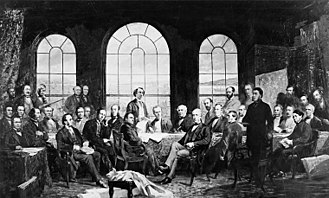
Canadian_Confederation
Canadian Confederation: Rupert's Land and the North-Western Territory are transferred to Canada from the Hudson's Bay Company, and the province of Manitoba and the Northwest Territories are established from these vast territories.
1867 unification of Province of Canada, Nova Scotia, and New Brunswick
Canadian Confederation was the process by which three British North American provinces—the Province of Canada, Nova Scotia, and New Brunswick—were united into one federation, called the Dominion of Canada, on July 1, 1867. This process occurred with the rising tide of Canadian nationalism that was then beginning to swell within these provinces and others. It reached fruition through the British North America Act, 1867 which had been based on resolutions agreed to by colonial delegates in the 1864 Quebec Conference, later finalized in the 1866 London Conference.
1870
Stratovolcano
The stratovolcano Mount Bandai erupts, killing approximately 500 people in Fukushima Prefecture, Japan.
Type of conical volcano composed of layers of lava and tephra
A stratovolcano, also known as a composite volcano, is a typically conical volcano built up by many alternating layers (strata) of hardened lava and tephra. Unlike shield volcanoes, stratovolcanoes are characterized by a steep profile with a summit crater and explosive eruptions. Some have collapsed summit craters called calderas. The lava flowing from stratovolcanoes typically cools and solidifies before spreading far, due to high viscosity. The magma forming this lava is often felsic, having high to intermediate levels of silica, with lesser amounts of less viscous mafic magma. Extensive felsic lava flows are uncommon, but can travel as far as 8 kilometres.
1888
Emil_Kraepelin
In his book Clinical Psychiatry, Emil Kraepelin gives a name to Alzheimer's disease, naming it after his colleague Alois Alzheimer.
German psychiatrist (1856–1926)
Emil Wilhelm Georg Magnus Kraepelin was a German psychiatrist. Fellow psychiatrist Hans Eysenck's Encyclopedia of Psychology identified him as partially responsible for laying the foundations of modern scientific psychiatry, psychopharmacology, and psychiatric genetics.
1910
Seattle
In Seattle, Washington, William Boeing and George Conrad Westervelt incorporate Pacific Aero Products (later renamed Boeing).
City in Washington, United States
Seattle is the most populous city in the U.S. state of Washington and the Pacific Northwest region of North America. It is the 18th-most populous city in the United States with a population of 784,777 in 2025, while the Seattle metropolitan area at over 4.15 million residents is the 15th-most populous metropolitan area in the nation. The city is the county seat of King County, the most populous county in Washington. Seattle's growth rate of 21.1% between 2010 and 2020 made it one of the country's fastest-growing large cities.
1916
World_War_I
World War I: The Second Battle of the Marne begins near the River Marne with a German attack.
Global conflict from 1914 to 1918
World War I, or the First World War, also known as the Great War, was a global conflict between two coalitions: the Allies and the Central Powers. Major theatres of war included Europe and the Middle East, and well as parts of Africa and the Asia-Pacific. One of the deadliest conflicts in history, World War I resulted in an estimated 15 to 22 million deaths, including in mass war crimes against civilians and genocides. The conflict saw important developments in weaponry, including the first large-scale use of machine guns, artillery, aircraft, chemical weapons, and tanks, and was a major factor in the deadly Spanish flu pandemic.
1918
Aftermath_of_World_War_I
Aftermath of World War I: The Parliament of Poland establishes Silesian Voivodeship before the Polish-German plebiscite.
Events after the end of the war in 1918
The aftermath of World War I saw far-reaching and wide-ranging cultural, economic, and social change across Europe, Asia, and Africa, and in areas outside those that were directly involved. Four empires collapsed due to the war, old countries were abolished, new ones were formed, boundaries were redrawn, international organizations were established, and many new and old ideologies took a firm hold in people's minds. Additionally, culture in the nations involved was greatly changed. World War I also had the effect of bringing political transformation to most of the principal parties involved in the conflict, transforming them into electoral democracies by bringing near-universal suffrage for the first time in history, as in Germany, the United Kingdom, and the United States.
1920
Japanese_Communist_Party
The Japanese Communist Party is established in Japan.
Japanese political party
The Japanese Communist Party is a major political party in Japan. Founded in 1922, it is the oldest active political party in the country. It had 250,000 members as of January 2024, making it one of the largest non-governing communist parties in the world. The party is chaired by Tomoko Tamura, who replaced longtime leader Kazuo Shii in January 2024.
1922
July_Revolt_of_1927
Massacre of July 15, 1927: Eighty-nine protesters are killed by Austrian police in Vienna.
Riots in Vienna, First Austrian Republic
The July Revolt of 1927 was a major riot starting on 15 July 1927 in the Austrian capital, Vienna. The revolt was sparked by the acquittal of three nationalist paramilitary members for the killing of two social democratic Republikanischer Schutzbund members and culminated with police forces firing into the outraged crowd and killing 89 protesters, and five policemen died. More than 600 protestors and around 600 policemen were injured.
1927
The_Holocaust
The Holocaust: Nazi Germany begins the deportation of 100,000 Jews from the occupied Netherlands to extermination camps.
Genocide of European Jews by Nazi Germany
The Holocaust, known in Hebrew as the Shoah, was the genocide of European Jews during World War II. From 1941 to 1945, Nazi Germany and its collaborators systematically murdered around six million Jews across German-occupied Europe, approximately two-thirds of Europe's Jewish population. The murders were committed primarily through mass shootings across Eastern Europe and poison gas chambers in extermination camps, chiefly Auschwitz-Birkenau, Treblinka, Belzec, Sobibor, Chełmno and Majdanek death camps in occupied Poland. Concurrent Nazi persecutions killed millions of other non-Jewish civilians and prisoners of war (POWs); the term Holocaust is sometimes used to include the murder and persecution of non-Jewish groups, such as the Romani and Soviet POWs.
1942
North_Borneo
The State of North Borneo, now Sabah, Malaysia, is annexed by the United Kingdom.
British protectorate in Asia from 1877 to 1946
North Borneo was a British protectorate in the northern part of the island of Borneo. The territory of North Borneo was originally established by concessions of the Sultanates of Brunei and Sulu in 1877 and 1878 to a German-born representative of Austria-Hungary, businessman and diplomat, Gustav Overbeck.
1946
Boeing_367-80
The Boeing 367-80, the prototype for both the Boeing 707 and C-135 series, takes its first flight.
1954 American quadjet prototype aircraft
The Boeing 367-80, also known as the Dash 80, is a retired American four-engined prototype jet aircraft by Boeing to demonstrate the advantages of jet propulsion for commercial aviation. It served as basis for the design of the KC-135 tanker and the 707 airliner.
1954
Nobel_Prize
Eighteen Nobel laureates sign the Mainau Declaration against nuclear weapons, later co-signed by thirty-four others.
Prizes established by Alfred Nobel in 1895
The Nobel Prizes are awards administered by the Nobel Foundation and granted in accordance with the principle of "for the greatest benefit to humankind". The prizes were first awarded in 1901, marking the fifth anniversary of Alfred Nobel's death. The original Nobel Prizes covered five fields: physics, chemistry, physiology or medicine, literature, and peace, specified in Nobel's will. A sixth prize, the Prize in Economic Sciences, was established in 1968 by Sveriges Riksbank in memory of Alfred Nobel. The Nobel Prizes are widely regarded as the most prestigious awards available in their respective fields.
1955
Vietnam_War
Vietnam War: The United States and South Vietnam begin Operation Hastings to push the North Vietnamese out of the Vietnamese Demilitarized Zone.
1955–1975 war in Southeast Asia
The Vietnam War was an armed conflict in Vietnam, Laos, and Cambodia fought between North Vietnam and South Vietnam and their allies. North Vietnam was supported by the Soviet Union and China, while South Vietnam was supported by the United States and other anti-communist nations. The conflict was the second of the Indochina wars and a proxy war of the Cold War. The Vietnam War was one of the postcolonial wars of national liberation, a theater in the Cold War, and a civil war, with civil warfare a defining feature from the outset. Direct US military involvement escalated from 1965 until US forces were withdrawn in 1973. The fighting spilled into the Laotian and Cambodian civil wars, which ended with all three countries becoming communist in 1975.
1966
The United Red Army is founded in Japan.
Revolutionary group in Japan
The United Red Army (URA) was a far-left militant organization that operated in Japan between July 1971 and March 1972. The URA was formed as the result of a merger that began on 13 July 1971 between two extremist groups, the Marxist–Leninist–Maoist Red Army Faction , led in 1971 by Tsuneo Mori, and the Reformed Marxist Revolutionary Left Wing group, Japanese Communist Party Kanagawa Prefecture Committee, also known as the Keihin Anti-Security Treaty Joint Struggle Group , led by Hiroko Nagata.
1971
Nicosia
In Nicosia, Cyprus, Greek junta-sponsored nationalists launch a coup d'état, deposing Makarios III and installing Nikos Sampson as the president of Cyprus.
Capital of the Republic of Cyprus
Nicosia, also known as Lefkosia or Lefkoşa, is the capital of Cyprus. It is the southeasternmost capital city among European Union member states. Its northern part is the de facto capital of Northern Cyprus.
1974
Space_Race
Space Race: Apollo–Soyuz Test Project features the dual launch of an Apollo spacecraft and a Soyuz spacecraft on the first Soviet-United States human-crewed flight.
It was the last launch of both an Apollo spacecraft, and the Saturn family of rockets.
The Space Race was a 20th-century competition between the Cold War rivals, the United States and the Soviet Union, to achieve superior spaceflight capability. It had its origins in the ballistic missile-based nuclear arms race between the two nations following World War II and the onset of the Cold War. The technological advantage demonstrated by spaceflight achievement was seen as necessary for national security, particularly in regard to intercontinental ballistic missile and satellite reconnaissance capability, but also became part of the cultural symbolism and ideology of the time. The Space Race brought pioneering launches of artificial satellites, robotic landers to the Moon, Venus, and Mars, and human spaceflight in low Earth orbit and ultimately to the Moon.
1975
President_of_the_United_States
U.S.
president Jimmy Carter gives his "malaise speech".
The president of the United States (POTUS) is the head of state and head of government of the United States. The president directs the executive branch of the federal government and is the commander-in-chief of the United States Armed Forces.
1979
An attack at Orly Airport in Paris is launched by Armenian militant organisation ASALA, leaving eight people dead and 55 injured.
Bombing in Orly airport by ASALA
The Orly Airport attack was the 15 July 1983 bombing of a Turkish Airlines check-in counter at Orly Airport in Paris, by the Armenian militant organization ASALA as part of its campaign for the recognition of and reparations for the Armenian genocide. The explosion killed eight people and injured 55.
1983
Nintendo
Nintendo and Sega enter the console market with the respective releases of the Famicom and SG-1000 in Japan.
Japanese video game company
Nintendo Co., Ltd. is a Japanese multinational video game company headquartered in Kyoto. It develops, publishes, and manufactures both video games and video game consoles.
1983
Belgian_Air_Force
A Belgian Air Force C-130 Hercules carrying the Royal Netherlands Army marching band crashes on landing at Eindhoven Airport.
Aviation branch of Belgian Armed Forces
The Belgian Air Force is the air arm of the Belgian Armed Forces. Between January 2002 and July 2024 it was known as Belgian Air Component. It was founded in 1909 and is one of the world's oldest air services.
1996
Sri_Lankan_civil_war
Sri Lankan Civil War: Sri Lankan Tamil MP S.
Shanmuganathan is killed by a claymore mine.
The Sri Lankan civil war was fought in Sri Lanka from 1983 to 2009. Beginning on 23 July 1983, it was an intermittent insurgency against the government by the Liberation Tigers of Tamil Eelam led by Velupillai Prabhakaran. The LTTE fought to create an independent Tamil state called Tamil Eelam in the north-east of the island in response to continuous discrimination and violent persecution against Sri Lankan Tamils by the predominantly Sinhalese government of Sri Lanka.
1998
Taliban
"American Taliban" John Walker Lindh pleads guilty to supplying aid to the enemy and possession of explosives during the commission of a felony.
Afghan Islamist militant organization
The Taliban, officially known as the Islamic Movement of Taliban, also referring to itself by the name of the government it operates, the Islamic Emirate of Afghanistan, is the ruling government and religious organization of Afghanistan, as well as a militant organization with an ideology comprising elements of the Deobandi movement of Islamic fundamentalism and Pashtun nationalism. It is the sole legal political force in the country, and rejects the principle of democratic participation in its decision making, considering political parties to be un-Islamic. It governs and operates centrally under a supreme leader with unlimited power who issues fatwas serving both as law and religious instruction. It ruled approximately 90% of Afghanistan from 1996 to 2001, before it was overthrown by an American-led invasion after the September 11 attacks carried out by the Taliban's ally al-Qaeda. Following a 20-year insurgency and the departure of coalition forces, the Taliban recaptured Kabul in August 2021, overthrowing the Islamic Republic, and now controls all of Afghanistan. The Taliban has been condemned for restricting human rights, including women's rights to work and have an education, and for the persecution of ethnic minorities. It is designated as a terrorist organization by several countries, and the Taliban government is largely unrecognized by the international community.
2002
The Anti-Terrorism Court of Pakistan sentences British-born Ahmed Omar Saeed Sheikh to death, and three others suspected of murdering The Wall Street Journal reporter Daniel Pearl to life.
Court dealing with cases of terrorism in Pakistan
The Anti-Terrorism Court of Pakistan was established in Pakistan in 1997, under Nawaz Sharif's government, to deal with terrorism cases. It is a parallel legal system to the judicial system in Pakistan.
2002
WarnerMedia
AOL Time Warner disbands Netscape.
The Mozilla Foundation is established on the same day.
Warner Media, LLC., founded as Time Warner Inc., was an American multinational entertainment and media conglomerate headquartered at 30 Hudson Yards in Manhattan, New York City. After being acquired by AT&T in June 2018, WarnerMedia was reorganized as a privately-owned subsidiary.
2003
Caspian_Airlines_Flight_7908
Caspian Airlines Flight 7908 crashes near Jannatabad, Qazvin, Iran, killing 168.
2009 aviation accident in Iran
Caspian Airlines Flight 7908 was a scheduled commercial flight from Tehran, Iran, to Yerevan, Armenia, that crashed near the village of Jannatabad, outside the city of Qazvin in north-western Iran, on 15 July 2009. All 153 passengers and 15 crew members on board died.
2009
Space_Shuttle_program
Space Shuttle program: Endeavour is launched on STS-127 to complete assembly of the International Space Station's Kibō module.
1972–2011 United States human spaceflight program
The Space Shuttle program was the fourth human spaceflight program carried out by the U.S. National Aeronautics and Space Administration (NASA), which accomplished routine transportation for Earth-to-orbit crew and cargo from 1981 to 2011. Its official program name was carried over from the 1969 plan for the Space Transportation System (STS) of reusable spacecraft. Only the shuttle and supporting rockets were funded for development; a proposed nuclear lunar shuttle in the plan was canceled in 1972. It flew 135 missions and carried 355 astronauts from 16 countries, many on multiple trips.
2009
Psy
South Korean rapper Psy releases his hit single Gangnam Style.
South Korean rapper and singer (born 1977)
Park Jae-sang, better known as Psy, is a South Korean rapper, singer, songwriter, and record producer. He has received numerous accolades, including an American Music Award, a World Music Award, 10 MAMA Awards. He is the founder of the talent agency P Nation.
2012
2014_Moscow_Metro_derailment
A train derails on the Moscow Metro, killing at least 24 and injuring more than 160 others.
Train accident in Russia
On 15 July 2014, at around 8:40 am MSK (UTC+03:00), an outbound Moscow Metro train derailed between Park Pobedy and Slavyansky Bulvar stations of the Arbatsko-Pokrovskaya Line. Casualties reported include 24 dead and 160 injured. Early reports suggested a power surge or a terrorist attack to be the cause of the derailment, but both were soon dismissed.
2014
Turkish_Armed_Forces
Factions of the Turkish Armed Forces attempt a coup.
Combined military forces of Turkey
The Turkish Armed Forces are the military forces of the Republic of Turkey. The TAF consist of the Land Forces, the Naval Forces and the Air Forces. The Chief of the General Staff is the Commander of the Armed Forces. In wartime, the Chief of the General Staff acts as the Commander-in-Chief on behalf of the President, who represents the Supreme Military Command of the TAF on behalf of the Grand National Assembly of Turkey. Coordinating the military relations of the TAF with other NATO member states and friendly states is the responsibility of the General Staff.
2016
France_national_football_team
France win their second World Cup title, defeating Croatia 4–2.
Men's association football team
The France national football team represents France in men's international football. It is overseen by the French Football Federation, the governing body for football in France. It is a member of UEFA in Europe and FIFA in global competitions. The team's colours and imagery reference two national symbols: the Flag of France and Gallic rooster. The team is colloquially known as Les Bleus. They play home matches at the Stade de France in Saint-Denis and train at Centre National du Football in Clairefontaine-en-Yvelines.
2018

History runs on facts, and this project runs on coffee!

Your support is incredibly helpful and genuinely appreciated.

Support with a coffee ☕