July 17 in History

Apollo–Soyuz Test Project: An American Apollo and a Soviet Soyuz spacecraft dock

1975 — Apollo–Soyuz Test Project: An American Apollo and a Soviet Soyuz spacecraft dock with each other in orbit marking the first such link-up between spacecraft from the two nations

July 17 spans 47 recorded events across recorded history, from 180 to 2015. Below is a curated digest of the most significant moments tied to this date.

By · Wikipedia

Historical Events 47 events 180 – 2015

More major events on July 17

The featured story and these ranked highlights form a quick summary. Every recorded event remains available in the chronology below.

  1. 1936 Spanish Civil War: An Armed Forces rebellion against the recently elected leftist Popular Front government of Spain starts the civil war. Read story Source
  2. 1867 Harvard School of Dental Medicine is established in Boston, Massachusetts. It is the first dental school in the U.S. that is affiliated with a university. Source
  3. 1945 World War II: The main three leaders of the Allied nations, Winston Churchill, Harry S. Truman and Joseph Stalin, hold the Potsdam Conference in the German city of Potsdam to decide the future of a defeated Germany. Source

Did you know

In 1975, Apollo–Soyuz Test Project: An American Apollo and a Soviet Soyuz spacecraft dock with each other in orbit marking the first such link-up between spacecraft from the two nations. This featured entry focuses on the immediate decision and its direct historical impact.

Did you know

Apollo–Soyuz was the first crewed international space mission, conducted jointly by the United States and the Soviet Union in July 1975. This helps explain why the event mattered beyond the initial announcement.

Did you know

Millions watched on television as an American Apollo spacecraft docked with a Soviet Soyuz capsule. This clarifies the institutional and public response around the event.

Did you know

The mission and its symbolic "handshake in space" became an emblem of détente during the Cold War. This shows how the event shaped policy and public communication in the same period.

Did you know

In 1975, Apollo–Soyuz Test Project: An American Apollo and a Soviet Soyuz spacecraft dock with each other in orbit marking the first such link-up between spacecraft from the two nations had consequences that extended beyond the first headline. The key context is the institutions involved, the policy shift, and how the public response evolved afterward.


Twelve inhabitants of Scillium (near Kasserine, modern-day Tunisia) in North Africa are executed for being Christians.
This is the earliest record of Christianity in that part of the world.
The Scillitan Martyrs were a group of early Christians of North Africa executed by the Roman Empire in Carthage, modern Tunisia, on 17 July 180 AD. The group takes its name from the nearby town of Scillium. They are venerated as martyrs in the Catholic and Eastern Orthodox churches. Their executions occurred at the end of a wave of persecution of Christians in the Roman Empire during the reign of Marcus Aurelius in 161–180.
180
Consecration of Pope John III following the death of Pope Pelagius I earlier that year.
Head of the Catholic Church from 561 to 574
Pope John III, born Catelinus, was the bishop of Rome from 17 July 561 to his death on 13 July 574.
561
Damasus II is elected pope, and dies 23 days later.
Head of the Catholic Church in 1048
Pope Damasus II was the Bishop of Rome and ruler of the Papal States from 17 July 1048 to his death on 9 August that same year. He was the second of the German pontiffs nominated by Emperor Henry III. A native of Bavaria, he was the third German to become pope and had one of the shortest papal reigns.
1048
Henry_IV,_Holy_Roman_Emperor
Four year-old Henry IV is crowned as king of Germany in Aachen.
Holy Roman Emperor from 1084 to 1105
Henry IV was Holy Roman Emperor (1084–1105), King of Germany (1054–1105), and King of Italy and Burgundy (1056–1105). A Salian ruler, he was the son of Henry III and Agnes of Poitou. After his father's death in 1056, his mother acted as regent, granting lands to secure aristocratic support. Unable to control papal elections, she witnessed the growing assertion of the "liberty of the Church", a principle central to the emerging Gregorian Reform. In 1062, Archbishop Anno II of Cologne kidnapped Henry and governed until he came of age in 1065.
1048
Fourth_Crusade
The Fourth Crusade assaults Constantinople.
The Byzantine emperor Alexios III Angelos flees from his capital into exile.
The Fourth Crusade (1202–1204) was a Latin Christian armed expedition called by Pope Innocent III. The stated intent of the expedition was to recapture the Muslim-controlled city of Jerusalem, by first defeating the powerful Egyptian Ayyubid Sultanate. However, a sequence of economic and political events culminated in the Crusader army's 1202 siege of Zara and the 1204 sack of Constantinople, rather than the conquest of Egypt as originally planned. This led to the partition of the Byzantine Empire by the Crusaders and their Venetian allies, leading to a period known as the Frankokratia.
1203
Zhu Di, better known by his era name as the Yongle Emperor, assumes the throne over the Ming dynasty of China.
Name chosen by a reigning monarch, different from their original secular name
A regnal name, regnant name, or reign name is the name used by monarchs and popes during their reigns and subsequently, historically. Since ancient times, some monarchs have chosen to use a different name from their original name when they accede to the monarchy.
1402
Hundred_Years'_War
Hundred Years' War: Charles VII of France is crowned the King of France in the Reims Cathedral after a successful campaign by Joan of Arc.
Medieval Anglo-French conflicts, 1337–1453
The Hundred Years' War was a conflict between the kingdoms of England and France and a civil war in France during the late Middle Ages. It emerged from feudal disputes over the Duchy of Aquitaine and was triggered by a claim to the French throne made by Edward III of England. The war grew into a broader military, economic, and political struggle involving factions from across Western Europe, fuelled by emerging nationalism on both sides. The periodisation of the war typically charts it as taking place over 116 years. However, it was an intermittent conflict which was frequently interrupted by external factors, such as the Black Death, and several years of truces.
1429
Battle_of_Castillon
Battle of Castillon: The last battle of the Hundred Years' War, the French under Jean Bureau defeat the English under the Earl of Shrewsbury, who is killed in the battle in Gascony.
1453 battle between France and England
The Battle of Castillon was a battle between the forces of England and France which took place on 17 July 1453 in Gascony near the town of Castillon-sur-Dordogne. On the day of the battle, the English commander, John Talbot, 1st Earl of Shrewsbury, mistakenly believing that the enemy was retreating, led a relatively small advance force of his army in an attack on a strongly fortified French encampment without waiting for reinforcements. Talbot then refused to withdraw even after realising the strength of the French position, allowing the French artillery to destroy his reinforcements piecemeal. Castillon was the first major European battle won through the extensive use of field artillery.
1453
Sikandar_Khan_Lodi
Sikandar Lodi succeeds Bahlul Khan Lodi as Sultan of Delhi.
Sultan of Delhi from 1489 to 1517
Sikandar Khan Lodi, born Nizam Khan also known as Sikandar II, was Sultan of the Delhi Sultanate between 1489 and 1517. He became ruler of the Lodi dynasty after the death of his father Bahlul Khan Lodi in July 1489. The second and most successful ruler of the Lodi dynasty of the Delhi Sultanate, he was also a poet of the Persian language and prepared a diwan of 9000 verses. He made an effort to recover the lost territories which once were a part of the Delhi Sultanate and was able to expand the territory controlled by the Lodi Dynasty.
1489
George_I_of_Great_Britain
King George I of Great Britain sails down the River Thames with a barge of 50 musicians, where George Frideric Handel's Water Music is premiered.
King of Great Britain and Ireland from 1714 to 1727
George I was King of Great Britain and Ireland from 1 August 1714 and ruler of the Electorate of Hanover within the Holy Roman Empire from 23 January 1698 until his death in 1727. He was the first British monarch of the House of Hanover.
1717
Peter_III_of_Russia
Former emperor Peter III of Russia is murdered.
Emperor of Russia in 1762
Peter III Fyodorovich was Emperor of Russia from 5 January 1762 until 9 July of the same year, when his wife, Catherine II, overthrew him in a palace coup d'état. He implemented many notable reforms during his reign, though he is criticised for undoing Russian gains in the Seven Years' War by forming an alliance with Prussia.
1762
Bloody_Falls_massacre
Bloody Falls massacre: Chipewyan chief Matonabbee, traveling as the guide to Samuel Hearne on his Arctic overland journey, massacres a group of unsuspecting Inuit.
Alleged 1771 incident in Canada
The Bloody Falls massacre was an incident that took place during Hudson's Bay Company employee Samuel Hearne's exploration of the Coppermine River for copper deposits near modern-day Kugluktuk, Nunavut, Canada on 17 July 1771. Hearne's original travelogue is now lost, and the narrative that became famous was published after Hearne's death with substantial editorializing. The narrative states that Chipewyan and "Copper Indian" Dene men led by Hearne's guide and companion Matonabbee attacked a group of Copper Inuit camped by rapids approximately 15 km (9.3 mi) upstream from the mouth of the Coppermine River.
1771
National_Guard_(France)
Members of the French National Guard under the command of General Lafayette open fire on a crowd of radical Jacobins at the Champ de Mars, Paris, during the French Revolution, killing scores of people.
French military and police reserve force
The National Guard is a French military, gendarmerie, and police reserve force, active in its current form since 2016 but originally founded in 1789 during the French Revolution. In 2016, France announced the reestablishment of the National Guard for the second time, in response to a series of terrorist attacks in the country.
1791
Carmelites
The 16 Carmelite Martyrs of Compiègne are executed ten days prior to the end of the French Revolution's Reign of Terror.
Catholic religious order
The Order of the Brothers of the Blessed Virgin Mary of Mount Carmel, known as the Carmelites or sometimes by synecdoche known simply as Carmel, is a mendicant order in the Catholic Church for both men and women. Historical records about its origin remain uncertain; it was probably founded in the 12th century on Mount Carmel in the Holy Land.
1794
Spain
The Kingdom of Spain cedes the territory of Florida to the United States.
Country in Southern and Western Europe
Spain, officially the Kingdom of Spain, is a country in Southern and Western Europe with territories in North Africa. Featuring the southernmost point of continental Europe, it is the largest country in Southern Europe and the fourth-most populous European Union (EU) member state. Spanning the majority of the Iberian Peninsula, its territory also includes the Canary Islands, in the Eastern Atlantic Ocean; the Balearic Islands, in the Western Mediterranean Sea; and the autonomous cities of Ceuta and Melilla, in mainland Africa. Peninsular Spain is bordered to the north by France, Andorra, and the Bay of Biscay; to the east and south by the Mediterranean Sea and Gibraltar and Morocco, through its exclaves in North Africa; and to the west by Portugal and the Atlantic Ocean. Spain's capital and largest city is Madrid; other major urban areas include Barcelona, Valencia, Seville, Zaragoza, Málaga, Murcia, and Palma de Mallorca.
1821
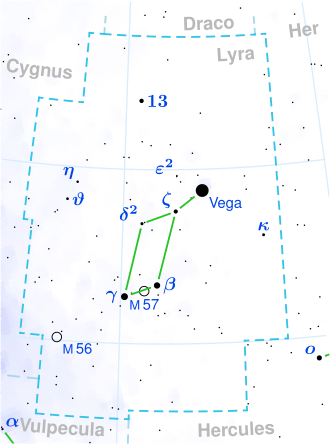
Vega
Vega becomes the first star (other than the Sun) to be photographed.
Brightest star in the constellation Lyra
Vega is the brightest star in the northern constellation of Lyra. It has the Bayer designation α Lyrae, which is Latinised to Alpha Lyrae and abbreviated Alpha Lyr or α Lyr. This star is relatively close to the Solar System, at only 25 light-years from the Sun, and one of the most luminous stars in the Sun's neighborhood, being intrinsically brighter than any star nearer to the Sun. It is the fifth-brightest star in the night sky, and the second-brightest star in the northern celestial hemisphere, after Arcturus.
1850
Harvard_School_of_Dental_Medicine
Harvard School of Dental Medicine is established in Boston, Massachusetts.
It is the first dental school in the U.S. that is affiliated with a university.
The Harvard School of Dental Medicine (HSDM) is the dental school of Harvard University. It is located in the Longwood Medical Area in Boston, Massachusetts. In addition to the DMD degree, HSDM offers specialty training programs, advanced training programs, and a PhD program through the Harvard Graduate School of Arts and Sciences. The program considers dentistry a specialty of medicine. Therefore, all students at HSDM experience dual citizenship between Harvard School of Dental Medicine and Harvard Medical School. Today, HSDM is the smallest school at Harvard University with a total student body of 280.
1867
NEC
NEC Corporation is organized as the first Japanese joint venture with foreign capital.
Japanese technology corporation
NEC Corporation is a Japanese multinational information technology corporation headquartered at the NEC Supertower in Minato, Tokyo, Japan. It sells IT and network services, including cloud computing, artificial intelligence (AI), Internet of Things (IoT) platform, and telecommunications equipment and software to business enterprises, communications services providers and to government agencies. It is one of the five largest defense contractors in Japan.
1899
Nicholas_II
Tsar Nicholas II of Russia and his immediate family and retainers are executed by Bolshevik Chekists at the Ipatiev House in Yekaterinburg, Russia.
Emperor of Russia from 1894 to 1917
Nicholas II was Emperor of Russia from 1 November 1894 until his abdication in 1917. He was the last Russian monarch before the Russian Revolution and oversaw the Russian Empire's participation in World War I. In 1918, the Romanovs were murdered, putting an end to the Romanov dynasty.
1918
RMS_Carpathia
The RMS Carpathia is sunk off Ireland by the German SM U-55; five lives are lost.
Ocean liner known for rescuing survivors of RMS Titanic
RMS Carpathia was a Cunard Line transatlantic passenger steamship built by C. S. Swan & Hunter in their shipyard in Wallsend, England.
1918
Finland
The form of government in the Republic of Finland is officially confirmed.
For this reason, July 17 is known as the Day of Democracy (Kansanvallan päivä) in Finland.
Finland, officially the Republic of Finland, is a Nordic country in Northern Europe. It borders Sweden to the northwest, Norway to the north, and Russia to the east, with the Gulf of Bothnia to the west and the Gulf of Finland to the south, opposite Estonia. Its capital and largest city is Helsinki. Finland has a population of 5.7 million. The official languages are Finnish and Swedish, the mother tongues of 83.5 percent and 5.0 percent of the population, respectively. Finland's climate varies from humid continental in the south to boreal in the north. Its land is predominantly covered by boreal forest, with over 180,000 recorded lakes.
1919
Altona Bloody Sunday: A riot between the Nazi Party paramilitary forces, the SS and SA, and the German Communist Party ensues.
1932 clash between Nazi and Communist demonstrators in Prussia
Altona Bloody Sunday is the name given to the events of 17 July 1932 when a recruitment march by the Nazi SA led to violent clashes between the police, the SA and supporters of the Communist Party of Germany (KPD) in Altona, which at the time belonged to the Prussian province of Schleswig-Holstein but is now part of Hamburg. Eighteen people were killed. The national government under Reich Chancellor Franz von Papen and Reich President Paul von Hindenburg used the incident as a rationale to depose the acting government of the Free State of Prussia by means of an emergency decree in what came to be known as the Prussian coup d'état of 20 July 1932.
1932
Spanish_Civil_War
Spanish Civil War: An Armed Forces rebellion against the recently elected leftist Popular Front government of Spain starts the civil war.
1936–1939 civil war in Spain
The Spanish Civil War was fought from 1936 to 1939 between the Republicans and the Nationalist rebels. Republicans loyal to the left-leaning Popular Front government of the Second Spanish Republic included socialists, anarchists, communists, and separatists, supported by the Soviet Union. The opposing Nationalists were an alliance of fascist Falangists, monarchists, conservatives, and traditionalists, supported by Nazi Germany and Fascist Italy. Initially led by a military junta, until General Francisco Franco was appointed supreme leader on 1 October 1936 of what he called the Spanish State. Due to the international political climate at the time, the war was variously viewed as class struggle, religious struggle, or struggle between republican democracy and dictatorship, revolution and counterrevolution, or between fascism and communism. The Nationalists won the war in early 1939, and ruled Spain until Franco's death in November 1975.
1936
Douglas_Corrigan
Douglas Corrigan takes off from Brooklyn to fly the "wrong way" to Ireland and becomes known as "Wrong Way" Corrigan.
American aviator (1907–1995)
Douglas Corrigan was an American aviator, nicknamed "Wrong Way" in 1938. After a transcontinental flight in July from Long Beach, California, to New York City, he then flew from Floyd Bennett Field in Brooklyn to Ireland, although his flight plan was filed to return to Long Beach.
1938
Port_Chicago_disaster
Port Chicago disaster: Near the San Francisco Bay, two ships laden with ammunition for the war explode in Port Chicago, California, killing 320.
1944 munitions ship explosion in California
The Port Chicago disaster was a deadly munitions explosion of the ship SS E. A. Bryan on July 17, 1944, at the Port Chicago Naval Magazine in Port Chicago, California, United States. Munitions being loaded onto a cargo vessel bound for the Pacific Theater of Operations detonated, killing 320 sailors and civilians and injuring at least 390 others.
1944
Allies_of_World_War_II
World War II: The main three leaders of the Allied nations, Winston Churchill, Harry S.
Truman and Joseph Stalin, hold the Potsdam Conference in the German city of Potsdam to decide the future of a defeated Germany.
The Allies, or Allied powers, formally referred to as the United Nations from 1942, were an international military coalition formed during World War II (1939–1945) to oppose the Axis powers. Its principal members were the "Big Four"—the United Kingdom, the Soviet Union, the United States, and China.
1945
The largest number of United States midshipman casualties in a single event results from an aircraft crash in Florida, killing 44.
Officer cadet
A midshipman is an officer of the lowest rank in the Royal Navy, United States Navy, and many Commonwealth navies. Commonwealth countries which use the rank include Canada, Australia, Bangladesh, Namibia, New Zealand, South Africa, India, Pakistan, Singapore, Sri Lanka, and Kenya.
1953
First_Indochina_War
First Indochina War: Viet Minh troops successfully ambush the armoured French column 'G.M. 42' in the Battle of Chu Dreh Pass in the Central Highlands.
It is the last battle of the war.
The First Indochina War, known alternatively internationally as the French Indochina War, was fought in French Indochina between France and the Viet Minh and their respective allies, from 19 December 1946 until 11 August 1954. Most of the engagements of this conflict occurred in Vietnam.
1954
Nuclear_weapons_testing
Nuclear weapons testing: The "Small Boy" test shot Little Feller I becomes the last atmospheric test detonation at the Nevada National Security Site.
Controlled detonation of nuclear weapons for scientific or political purposes
Nuclear weapons tests are experiments carried out to determine the performance of nuclear weapons and the effects of their explosion. Over 2,000 nuclear weapons tests have been carried out since 1945. Nuclear testing is a sensitive political issue. Governments have often performed tests to signal strength. Because of their destruction and fallout, testing has seen opposition by civilians as well as governments, with international bans having been agreed on. Thousands of tests have been performed, with most in the second half of the 20th century.
1962
Abdul_Rahman_Arif
Abdul Rahman Arif is overthrown and the Ba'ath Party is installed as the governing power in Iraq with Ahmed Hassan al-Bakr as the new Iraqi President.
President of Iraq from 1966 to 1968
Abdul Rahman Mohammed ʿArif al-Jumayli, better known as Abdul Rahman Arif, was an Iraqi military officer and politician who served as the third president of Iraq from 16 April 1966 to 17 July 1968. He was the older brother of the second president of Iraq, Abdul Salam Arif, whom he succeeded after his brother died in an airplane crash in 1966.
1968
Mohammad_Zahir_Shah
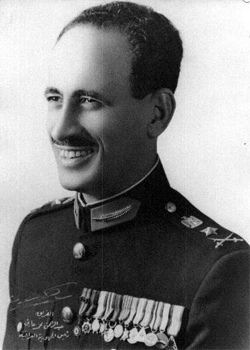
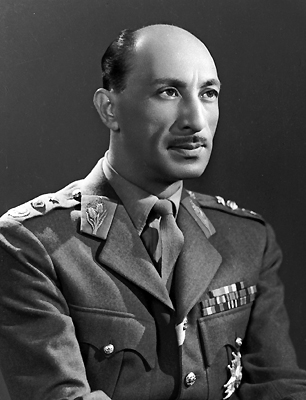
King Mohammed Zahir Shah of Afghanistan, while having surgery in Italy, is deposed by his cousin Mohammed Daoud Khan.
King of Afghanistan from 1933 to 1973
Mohammad Zahir Shah was the last king of Afghanistan, reigning from 8 November 1933 until he was deposed on 17 July 1973. Ruling for almost 40 years, Zahir Shah was the longest-serving ruler of Afghanistan since the foundation of the Durrani Empire in the 18th century.
1973
Timor-Leste
East Timor is annexed and becomes the 27th province of Indonesia.
Country in Southeast Asia
Timor-Leste, also known as East Timor, officially the Democratic Republic of Timor-Leste, is a country in Southeast Asia. It comprises the eastern half of the island of Timor, the coastal exclave of Oecusse in the island's northwest, and the islands of Atauro and Jaco, for a total land area of 15,007 square kilometres (5,794 sq mi). Timor-Leste shares a land border with Indonesia to the west; Australia is the country's southern neighbour, across the Timor Sea. Dili, on the north coast of Timor, is its capital and largest city.
1976
1976_Summer_Olympics
The opening of the Summer Olympics in Montreal is marred by 25 African teams boycotting the games because of New Zealand's participation.
Contrary to rulings by other international sports organizations, the IOC had declined to exclude New Zealand because of their participation in South African sporting events during apartheid.
The 1976 Summer Olympics, officially known as the Games of the XXI Olympiad and officially branded as Montreal 1976, were an international multi-sport event held from July 17 to August 1, 1976, in Montreal, Quebec, Canada. Montreal was awarded the rights to the 1976 Games at the 69th IOC Session in Amsterdam on May 12, 1970, over the bids of Moscow and Los Angeles. It is the only Summer Olympic Games to be held in Canada. Toronto hosted the 1976 Summer Paralympics the same year as the Montreal Olympics, also the only Summer Paralympics to be held in Canada. Calgary and Vancouver later hosted the Winter Olympic Games in 1988 and 2010, respectively. This was the first of two consecutive Olympic games held in North America, followed by the 1980 Winter Olympics in Lake Placid.
1976
Hyatt_Regency_walkway_collapse
A structural failure leads to the collapse of a walkway at the Hyatt Regency in Kansas City, Missouri, killing 114 people and injuring more than 200.
1981 structural collapse in Kansas City, Missouri
On July 17, 1981, two overhead walkways in the Hyatt Regency Hotel in Kansas City, Missouri, collapsed, killing 114 people and injuring 216. Loaded with partygoers, the concrete and glass platforms crashed onto a tea dance in the lobby. The collapse resulted in billions of dollars of insurance claims, legal investigations, and city government reforms.
1981
Brazil_national_football_team
Brazil win their fourth World Cup title, defeating Italy 3–2 on penalties.
Men's association football team
The Brazil national football team, nicknamed Canarinho, represents Brazil in men's international football and is administered by the Brazilian Football Confederation, the governing body of football in Brazil. It has been a member of FIFA since 1923 and was a founding member of CONMEBOL in 1916. It was also a member of PFC, the unified confederation of the Americas, from 1946 to 1961.
1994
TWA_Flight_800
TWA Flight 800: Off the coast of Long Island, New York, a Paris-bound TWA Boeing 747 explodes, killing all 230 on board.
1996 aviation accident in the Atlantic Ocean
TWA Flight 800 was a regularly scheduled international passenger flight from John F. Kennedy International Airport in New York City, United States, to Fiumicino Airport in Rome, Italy, with a stopover at Charles de Gaulle Airport in Paris, France. On July 17, 1996, at approximately 8:31 p.m. EDT, twelve minutes after takeoff, the Boeing 747-100 performing this flight exploded and crashed into the Atlantic Ocean near East Moriches, New York.
1996
Husein_Sastranegara_Airport
After takeoff from Husein Sastranegara International Airport, Sempati Air Flight 304 crashes into a residential neighborhood in Bandung, killing 28 people.
Airport in Bandung, West Java, Indonesia
Husein Sastranegara Airport is a domestic airport serving Bandung, the capital of West Java, Indonesia. It is located within the city, approximately 3.5 km from Bandung's city center. The airport is named after Husein Sastranegara, an Indonesian Air Force officer who died during the Indonesian National Revolution when his aircraft crashed in Yogyakarta. Prior to the opening of Kertajati International Airport, the airport served as an international gateway and the primary air entry point to Bandung and its surrounding regions. It handled domestic flights to major Indonesian cities such as Denpasar, Surabaya, and Yogyakarta, as well as international routes to Kuala Lumpur and Singapore. However, following the inauguration of Kertajati Airport, most flights were relocated, leading to the suspension of international services and the revocation of its international status. As of May 2026, Husein Sastranegara Airport functions as a secondary airport for Bandung, handling only very limited commercial operations, with Susi Air serving as its sole airline operator.
1997
The 7.0 Mw Papua New Guinea earthquake triggers a tsunami that destroys ten villages in Papua New Guinea, killing up to 2,700 people, and leaving several thousand injured.
Severe earthquake and tsunami near Papua New Guinea
The 1998 Papua New Guinea earthquake occurred on July 17 with a moment magnitude of 7.0 and a maximum Mercalli intensity of VIII (Severe). The event occurred on a reverse fault near the north coast region of Papua New Guinea, 25 km (16 mi) from the coast near Aitape and caused a large submarine landslide which caused a tsunami that hit the coast, killing between at least 2,183 and 2,700 people and injuring thousands.
1998
Rome_Statute
A diplomatic conference adopts the Rome Statute of the International Criminal Court, establishing the permanent international court in The Hague, to prosecute individuals for genocide, crimes against humanity, war crimes, and the crime of aggression.
1998 international treaty establishing the International Criminal Court
The Rome Statute of the International Criminal Court is the treaty that established the International Criminal Court (ICC). It was adopted at a diplomatic conference in Rome, Italy on 17 July 1998 and entered into force on 1 July 2002. As of January 2025, 125 states are party to the statute. Among other things, it establishes court function, jurisdiction and structure.
1998
Jay_Prakash_Narayan_Airport
During approach to Lok Nayak Jayaprakash Airport, Alliance Air Flight 7412 suddenly crashes into a residential neighborhood in Patna, India, killing 60 people.
Airport serving Patna, Bihar, India
Jay Prakash Narayan Airport is a customs airport serving Patna, the capital of Bihar, India. Named after the independence activist and political leader Jayprakash Narayan, it is the 20th-busiest airport in India. To cater to burgeoning demand, the Airports Authority of India (AAI) initiated a project to expand and modernise the airport infrastructure, including the construction of a new two-level passenger terminal, which was inaugurated on 29 May 2025.
2000
2006_Pangandaran_earthquake_and_tsunami
The 7.7 Mw Pangandaran tsunami earthquake severely affects the Indonesian island of Java, killing 668 people, and leaving more than 9,000 injured.
Destructive tsunami earthquake south of Java Island
An earthquake occurred on July 17, 2006, at 15:19:27 local time along a subduction zone off the coast of west and central Java, a large and densely populated island in the Indonesian archipelago. The shock had a moment magnitude of 7.7 and a maximum perceived intensity of IV (Light) in Jakarta, the capital and largest city of Indonesia. There were no direct effects of the earthquake's shaking due to its low intensity, and the large loss of life from the event was due to the resulting tsunami, which inundated a 300 km (190 mi) portion of the Java coast that had been unaffected by the earlier 2004 Indian Ocean earthquake and tsunami that was off the coast of Sumatra. The July 2006 earthquake was also centered in the Indian Ocean, 180 kilometers (110 mi) from the coast of Java, and had a duration of more than three minutes.
2006
TAM_Airlines_Flight_3054
TAM Airlines Flight 3054, an Airbus A320, crashes into a warehouse after landing too fast and missing the end of the São Paulo–Congonhas Airport runway, killing 199 people.
2007 aviation accident in Brazil
TAM Airlines Flight 3054 was a regularly scheduled domestic passenger flight operated by TAM Airlines from Porto Alegre to São Paulo, Brazil. On the evening of 17 July 2007, the Airbus A320 serving the flight from Porto Alegre overran runway 35L at São Paulo's Congonhas Airport after touching down during moderate rain and crashed into a nearby TAM Express warehouse adjacent to a gas station. The aircraft exploded on impact, killing all 187 passengers and crew on board, as well as 12 people on the ground. An additional 27 people in the warehouse were injured. The accident remains the deadliest aviation disaster in Brazilian and South American history, and was the deadliest involving the Airbus A320 series until the bombing of Metrojet Flight 9268 in 2015 killing 224 people. It was the last major fatal aviation accident in Brazil until 2024, when Voepass Linhas Aéreas Flight 2283 crashed near São Paulo killing 62 people.
2007
Malaysia_Airlines_Flight_17
Malaysia Airlines Flight 17, a Boeing 777, crashes near the border of Ukraine and Russia after being shot down.
All 298 people on board are killed.
Malaysia Airlines Flight 17 was a scheduled passenger flight from Amsterdam to Kuala Lumpur that was shot down by Russian-backed forces with a Buk 9M38 surface-to-air missile on 17 July 2014, while flying over eastern Ukraine. All 283 passengers and 15 crew were killed. Contact with the aircraft, a Boeing 777-200ER, was lost when it was about 50 kilometres from the Ukraine–Russia border, and wreckage from the aircraft landed near Hrabove in Donetsk Oblast, Ukraine, 40 km from the border. The shoot-down occurred during the war in Donbas over territory controlled by Russian separatist forces in Ukraine.
2014
Transport_express_régional
A French regional train on the Pau-Bayonne line crashes into a high-speed train near the town of Denguin, resulting in at least 25 injuries.
French commuter rail
Transport express régional is the brand name used by the SNCF, the French national railway company, to denote rail service run by the regional councils of France, specifically their organised transport authorities. The network serves French regions; Île-de-France (Transilien) and Corsica (CFC) have their own specific transport systems. Every day, over 800,000 passengers are carried on 5,700 TER-branded trains.
2014
Killing_of_Eric_Garner
Eric Garner is killed by police officer Daniel Pantaleo in New York City, after the latter put him in a prohibited chokehold while arresting him.
2014 police killing of a black man in New York City
On July 17, 2014, Eric Garner, an 43-year-old African American man, was killed in the New York City borough of Staten Island by Daniel Pantaleo, a New York City Police Department (NYPD) officer, after putting him in a prohibited chokehold while arresting him. Video footage of the incident generated widespread national attention and raised questions about the use of force by law enforcement.
2014
At least 120 people are killed and 130 injured by a suicide bombing in Diyala Governorate, Iraq.
Terrorist suicide bombing in Diyala, Iraq
A suicide car bombing occurred on 17 July 2015 in the Iraqi city of Khan Bani Saad, targeting a local marketplace. As of 19 July 2015 approximately 130 people were killed in the bombing, with a similar number of injured. Several people were killed by collapsed buildings. The bomb was hidden under an ice truck in an attempt to attract more people amid the heat. Responsibility for the attack was claimed by the Islamic State (IS).
2015

History runs on facts, and this project runs on coffee!

Your support is incredibly helpful and genuinely appreciated.

Support with a coffee ☕