June 28 in History

American Revolution: Thomas Jefferson and the Committee of Five present the draf

1776 — American Revolution: Thomas Jefferson and the Committee of Five present the draft of the United States Declaration of Independence to the Second Continental Congress, which orders it to "lie on the table" for further edits by the assembly

June 28 spans 61 recorded events across recorded history, from 1098 to 2016. Below is a curated digest of the most significant moments tied to this date.

By · Wikipedia

Historical Events 61 events 1098 – 2016

More major events on June 28

The featured story and these ranked highlights form a quick summary. Every recorded event remains available in the chronology below.

  1. 2009 Honduran president Manuel Zelaya is ousted by a local military coup following a failed request to hold a referendum to rewrite the Honduran Constitution. This was the start of the 2009 Honduran constitutional crisis. Source
  2. 1919 The Treaty of Versailles is signed, ending the state of war between Germany and the Allies of World War I. Read story Source
  3. 1098 Fighters of the First Crusade defeat Kerbogha of Mosul at the battle of Antioch. Source

Did you know

In 1776, American Revolution: Thomas Jefferson and the Committee of Five present the draft of the United States Declaration of Independence to the Second Continental Congress, which orders it to "lie on the table" for further edits by the assembly. This featured entry focuses on the immediate decision and its direct historical impact.

Did you know

The Declaration of Independence, headed The unanimous Declaration of the thirteen united States of America on the document directed to be engrossed by Congress on July 19, 1776, is the founding document of the United States. This helps explain why the event mattered beyond the initial announcement.

Did you know

On July 4, 1776, it was adopted unanimously by the Second Continental Congress, who were convened at the Pennsylvania State House, later renamed Independence Hall, in Philadelphia. This clarifies the institutional and public response around the event.

Did you know

These delegates became known as the nation's Founding Fathers. This shows how the event shaped policy and public communication in the same period.

Did you know

The Declaration explains why the Thirteen Colonies regarded themselves as independent sovereign states no longer subject to British colonial rule, and has become one of the most circulated, reprinted, and influential documents in history. This helps explain why the event mattered beyond the initial announcement.


First_Crusade
Fighters of the First Crusade defeat Kerbogha of Mosul at the battle of Antioch.
1096–1099 Christian re-conquest of the Holy Land
The First Crusade (1096–1099) was the first of a series of religious wars, or Crusades, which were initiated, supported and at times directed by the Latin Church in the Middle Ages. Their aim was to return the Holy Land—which had been conquered by the Rashidun Caliphate in the 7th century—to Christian rule. By the 11th century, although Jerusalem had then been ruled by Muslims for hundreds of years, the practices of the Seljuk rulers in the region began to threaten local Christian populations, pilgrimages from the West and the Byzantine Empire itself. The earliest impetus for the First Crusade came in 1095 when Byzantine emperor Alexios I Komnenos sent ambassadors to the Council of Piacenza to request military support in the empire's conflict with the Seljuk-led Turks. This was followed later in the year by the Council of Clermont, at which Pope Urban II gave a speech supporting the Byzantine request and urging faithful Christians to undertake an armed pilgrimage to Jerusalem.
1098
Muhammed VI becomes the tenth Nasrid king of Granada after killing his brother-in-law Ismail II.
Sultan of Granada (1332–1362)
Abu Abdullah Muhammad VI ibn Ismail, also known by his Castilian nickname el Bermejo, and the regnal names al-Ghālib bi 'llāh and al-Mutawakkil ʿalā 'llāh, was the tenth Sultan of the Emirate of Granada. A member of the Nasrid dynasty, he ruled for a brief period between June or July 1360 and April 1362.
1360
Edward_IV
Edward, Earl of March, is crowned King Edward IV of England.
King of England (1461–70; 1471–83)
Edward IV was King of England from 4 March 1461 to 3 October 1470, then again from 11 April 1471 until he died in 1483. A member of the House of York, he was a central figure in the Wars of the Roses, a series of civil wars in England fought between the Yorkist and Lancastrian factions between 1455 and 1487.
1461
Battle_of_Seminara
A French force heavily defeats a much larger Neapolitan and Spanish army at the battle of Seminara, leading to the creation of the Tercios by Gonzalo de Córdoba.
Battle in the Italian Wars (1495)
The Battle of Seminara, part of the First Italian War, was fought in Calabria on 28 June 1495 between a French garrison in recently conquered Southern Italy and the allied forces of Spain and Naples which were attempting to reconquer these territories. Against the redoubtable combination of gendarmes and Swiss mercenary pikemen in the French force, the allies had only Neapolitan troops of indifferent quality and a small corps of lightly armed Spanish soldiers, accustomed to fighting the Moors of Spain. The result was a rout, and much of the fighting centered on delaying actions to permit the fleeing allied force to escape.
1495
Charles_V,_Holy_Roman_Emperor
Charles V is elected Emperor of the Holy Roman Empire.
Holy Roman Emperor from 1519 to 1556
Charles V was Holy Roman Emperor and Archduke of Austria from 1519 to 1556, King of Spain from 1516 to 1556, King of Sicily and Naples from 1516 to 1554, and also Lord of the Netherlands and titular Duke of Burgundy from 1506 to 1555. He was heir to and then head of the rising House of Habsburg. His dominions in Europe included the Holy Roman Empire, extending from Germany to northern Italy with rule over the Austrian hereditary lands and Burgundian Low Countries, and Spain with its possessions of the southern Italian kingdoms of Sicily, Naples, and Sardinia. In the Americas, he oversaw the continuation of Spanish colonisation and a short-lived German colonisation. The personal union of the European and American territories he ruled was the first collection of realms labelled "the empire on which the sun never sets".
1519
Sengoku_period
Sengoku period of Japan: The combined forces of Oda Nobunaga and Tokugawa Ieyasu are victorious in the Battle of Nagashino.
Period of Japanese history from 1467 to 1615
The Sengoku period was the period in Japanese history in which civil wars and social upheavals took place almost continuously in the 15th and 16th centuries. The Kyōtoku incident (1454), Ōnin War (1467), or Meiō incident (1493) are generally chosen as the period's start date, but there are many competing historiographies for its end date, ranging from 1568, the date of Oda Nobunaga's march on Kyoto, to the suppression of the Shimabara Rebellion in 1638, deep into what was traditionally considered the Edo period. Regardless of the dates chosen, the Sengoku period overlaps substantially with the Muromachi period (1336–1573).
1575
Guadeloupe
Guadeloupe becomes a French colony.
Overseas department and region of France
Guadeloupe is an overseas department and region of the French Republic in the Caribbean. It consists of six inhabited islands—Basse-Terre, Grande-Terre, Marie-Galante, La Désirade, and two Îles des Saintes—and 30 uninhabited islets and 3 inhabited islets. It is south of Antigua and Barbuda and Montserrat and north of Dominica. The capital city is Basse-Terre, on the southern west coast of Basse-Terre Island; the most populous city is Les Abymes and the main centre of business is neighbouring Pointe-à-Pitre, both on Grande-Terre Island. It had a population of 395,726 in 2024.
1635
Battle_of_Berestechko
The Battle of Berestechko between Poland and Ukraine starts.
1651 battle of the Khmelnytsky Uprising
The Battle of Berestechko was fought between the Cossack Hetmanate and Crimean Khanate against the Polish–Lithuanian Commonwealth as a part of the Khmelnytsky Uprising. Near the site of the present-day city of Berestechko in Ukraine forces of the Zaporozhian Cossacks and Crimean Tatars under the command of Hetman Bohdan Khmelnytsky, Otaman Tymofiy Khmelnytsky, Colonels Ivan Bohun and Fylon Dzhalaliy with Khan İslâm III Giray and Tugay Bey, who was killed in the battle, were defeated by the Polish–Lithuanian Commonwealth's forces under the command of the Polish King John II Casimir, Prince Jeremi Wiśniowiecki, Hetmans Marcin Kalinowski and Stanisław Lanckoroński. It is considered to have been among the largest European land battles of the 17th century.
1651
New_England
A New England colonial army captures the French fortifications at Louisbourg (New Style).
Region in the Northeastern United States
New England is a region consisting of six states in the Northeastern United States: Connecticut, Maine, Massachusetts, New Hampshire, Rhode Island, and Vermont. It is bordered by the state of New York to the west and by the Canadian provinces of New Brunswick to the northeast and Quebec to the north. The Gulf of Maine and Atlantic Ocean are to the east and southeast, and Long Island Sound is to the southwest. Boston is New England's largest city and the capital of Massachusetts. Greater Boston, comprising the Boston–Worcester–Providence Combined Statistical Area, houses more than half of the region's total population. The Greater Boston area includes Worcester, Massachusetts, the second-largest city in New England; Manchester, New Hampshire, the largest city in New Hampshire; and Providence, Rhode Island, the capital of and largest city in Rhode Island. In 1620, the Pilgrims established Plymouth Colony, the second successful settlement in British America after the Jamestown Settlement in Virginia, founded in 1607. Ten years later, Puritans established Massachusetts Bay Colony north of Plymouth Colony. Over the next 126 years, people in the region fought in four French and Indian Wars until the English colonists and their Iroquois allies defeated the French and their Algonquian allies.
1745
American_Revolutionary_War
American Revolutionary War: The Battle of Sullivan's Island ends with the American victory, leading to the commemoration of Carolina Day.
1775–1783 conflict in North America
The American Revolutionary War, also known as the Revolutionary War or American War of Independence or simply the American Revolution, was the armed conflict that comprised the final eight years of the broader American Revolution, in which American Patriot forces organized as the Continental Army and commanded by George Washington defeated the British Army. The conflict was fought in North America, the Caribbean, and the Atlantic Ocean. The war's outcome seemed uncertain for most of the war, but Washington and the Continental Army's decisive victory in the Siege of Yorktown in 1781 led King George III and the Kingdom of Great Britain to negotiate an end to the war. In 1783, in the Treaty of Paris, the British monarchy acknowledged the independence of the Thirteen Colonies, leading to the establishment of the United States as an independent and sovereign nation.
1776
American Revolutionary War: Thomas Hickey, Continental Army private and bodyguard to General George Washington, is hanged for mutiny and sedition.
Irish-born soldier
Thomas Hickey was an Irish-born soldier who served in the French and Indian War and American Revolutionary War, and was the first Continental Army soldier to be executed for "mutiny, sedition, and treachery". Born in Ireland, Thomas Hickey came to America as a British Army soldier and fought as a combat field servant to Major-general William Johnson in the French and Indian War. He later joined the Continental army when the Revolutionary War broke out, and became part of the Commander-in-Chief's Guard, which protected General George Washington, his staff, and the Continental Army's payroll. Hickey was briefly jailed for passing counterfeit money; during this incarceration, he told another prisoner he was part of a conspiracy. He was later tried and executed for mutiny and sedition against the Continental Army. Plausible, but unverified, reports suggest that he may have been involved in an assassination plot against Washington in 1776.
1776
Continental_Army
American Revolutionary War: The American Continentals engage the British in the Battle of Monmouth Courthouse resulting in standstill and British withdrawal under cover of darkness.
Colonial army during the American Revolutionary War
The Continental Army was the army of the United Colonies representing the Thirteen Colonies and later the United States during the American Revolutionary War. It was formed on June 14, 1775, by a resolution passed by the Second Continental Congress, meeting in Philadelphia after the war's outbreak at the Battles of Lexington and Concord on April 19, 1775. As a result, the U.S. Army Birthday is celebrated on June 14.
1778
Corfu
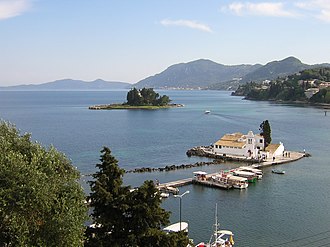
French troops disembark in Corfu, beginning the French rule in the Ionian Islands.
Greek island in the Ionian Sea
Corfu or Kerkyra is one of the Ionian Islands in western Greece, and the northernmost island on Greece's west coast except for its satellite Diapontian Islands, which are also the westernmost point of all Greece. Corfu and the Diapontian Islands mark the International Hydrographic Organization border between the Ionian Sea to the south and the Adriatic Sea to the north. Within the Ionian Islands region, the regional unit of Corfu extends as far south as the Paxoi. The capital and largest city of the regional unit is also named Corfu.
1797
British_invasions_of_the_River_Plate
Second British invasion of the Río de la Plata; John Whitelocke lands at Ensenada on an attempt to recapture Buenos Aires and is defeated by the locals.
Battles during the Anglo-Spanish War of 1796–1808
The British invasions of the River Plate were two unsuccessful British attempts to seize control of the Spanish colony of the Viceroyalty of the Río de la Plata, located around the Río de la Plata in South America – in present-day Argentina and Uruguay. The invasions took place between 1806 and 1807, as part of the Napoleonic Wars, War of the Third Coalition at a time when Spain was an ally of Napoleonic France. In Argentine historiography, the two successive defeats of the British expeditionary forces are known collectively as the Reconquista and the Defensa, respectively.
1807
Coronation_of_Queen_Victoria
Coronation of Queen Victoria of the United Kingdom.
1838 coronation in the United Kingdom
The coronation of Victoria as queen of the United Kingdom took place on Thursday, 28 June 1838, just over a year after she succeeded to the throne of the United Kingdom at the age of 18. The ceremony was held in Westminster Abbey after a public procession through the streets from Buckingham Palace, to which the Queen returned later as part of a second procession.
1838
Paris_Opera_Ballet
The Paris Opera Ballet premieres Giselle in the Salle Le Peletier.
French ballet company
The Paris Opera Ballet is a French ballet company that is an integral part of the Paris Opera. It is the oldest national ballet company, and many European and international ballet companies can trace their origins to it. It is still regarded as one of the most prominent ballet companies in the world, together with the Bolshoi Ballet in Moscow and the Royal Ballet in London.
1841
Sigma_Chi
Sigma Chi fraternity is founded in North America.
North American collegiate fraternity
Sigma Chi (ΣΧ) is one of the largest North American social fraternities. The fraternity has 244 active undergraduate chapters and 152 alumni chapters in the United States and Canada and has initiated over 350,000 members. It was founded on June 28, 1855, at Miami University in Oxford, Ohio, by members who split from the Delta Kappa Epsilon fraternity.
1855
Dog_show
The first conformation dog show is held in Newcastle upon Tyne, England.
Competitive exhibition of dogs
A dog show is an animal show; it is an event where dogs are exhibited. A conformation show, also referred to as a breed show, is a kind of dog show in which a judge, familiar with a specific dog breed, evaluates individual purebred dogs for how well the dogs conform to the established breed type for their breed, as described in a breed's individual breed standard.
1859
Army_of_the_Potomac
The Army of the Potomac is disbanded.
Principal Union army in the eastern theatre of the American Civil War
The Army of the Potomac was the primary field army of the Union army in the Eastern Theater of the American Civil War. It was created in July 1861 shortly after the First Battle of Bull Run and was disbanded in June 1865 following the surrender of the Confederate Army of Northern Virginia in April.
1865
The US Congress establishes the first federal holidays (New Year Day, July 4th, Thanksgiving, and Christmas).
1870
Bushranger
Australian bushranger Ned Kelly is captured at Glenrowan.
Australian outlaws active during the 19th century
Bushrangers were armed robbers and outlaws who resided in the Australian bush between the 1780s and the early 20th century. The original use of the term dates back to the early years of the British colonisation of Australia, and applied to transported convicts who had escaped into the bush to hide from the authorities. By the 1820s, the term had evolved to refer to those who took up "robbery under arms" as a way of life, using the bush as their base.
1880
Austro-Serbian_alliance_of_1881
The Austro–Serbian Alliance of 1881 is secretly signed.
1881 secret bilateral treaty between Austria-Hungary and the Principality of Serbia
The Austro-Serbian Convention of 1881 was a secret bilateral treaty that was signed in Belgrade on 28 June 1881 by Gabriel Freiherr Herbert-Rathkeal on behalf of Austria-Hungary and by Čedomilj Mijatović on behalf of the Principality of Serbia. The convention effectively turned Serbia into a protectorate state of Austria-Hungary, which meant its accession by proxy to the subsequent Triple Alliance (1882). Serbia then received Austrian support during the Serbo-Bulgarian War.
1881
The Anglo-French Convention of 1882 marks the territorial boundaries between Guinea and Sierra Leone.
1882 territorial settlement between the British and French colonies in West Africa
The Anglo-French Convention of 1882 was signed on 28 June 1882 between Great Britain and France. It confirmed the territorial boundaries between Guinea and Sierra Leone around Conakry and Freetown. However, it was never fully ratified by the French Chamber of Deputies although it was officially recognised by the British Foreign Office.
1882
Labor_Day
Labor Day becomes an official US holiday.
Federal holiday in the United States
Labor Day is a federal holiday in the United States celebrated on the first Monday of September to honor and recognize the American labor movement and the works and contributions of laborers to the development and achievements in the United States.
1894
United_States_Court_of_Private_Land_Claims
The United States Court of Private Land Claims rules James Reavis's claim to Barony of Arizona is "wholly fictitious and fraudulent."
Court created to resolve land claims in the western U.S. (1891–1904)
The United States Court of Private Land Claims (1891–1904) was an ad-hoc court created to decide land claims guaranteed by the Treaty of Guadalupe Hidalgo, in the territories of New Mexico, Arizona, and Utah, and in the states of Nevada, Colorado, and Wyoming.
1895
Twin_Shaft_disaster
An explosion in the Newton Coal Company's Twin Shaft Mine in Pittston, Pennsylvania results in a massive cave-in that kills 58 miners.
1896 coal mine cave-in in Pittston, Pennsylvania, United States
The Twin Shaft disaster occurred in the Newton Coal Company's Twin Shaft Colliery in Pittston, Pennsylvania, United States, on June 28, 1896, when a massive cave-in killed fifty-eight miners.
1896
United_States_Congress
The U.S.
Congress passes the Spooner Act, authorizing President Theodore Roosevelt to acquire rights from Colombia for the Panama Canal.
The United States Congress is the legislative branch of the federal government of the United States. It is a bicameral legislature, including a lower body, the U.S. House of Representatives, and an upper body, the U.S. Senate. They both meet in the United States Capitol in Washington, D.C.
1902
SS_Norge
The SS Norge runs aground on Hasselwood Rock in the North Atlantic 430 kilometres (270 mi) northwest of Ireland.
More than 635 people die during the sinking.
SS Norge was a transatlantic ocean liner that was launched in 1881 in Scotland, and was lost in 1904 off Rockall with great loss of life. Her final voyage was from Copenhagen, Kristiania and Kristiansand, bound for New York, carrying passengers many of whom were emigrants. It was the biggest civilian maritime disaster in the Atlantic Ocean until the sinking of Titanic eight years later, and is still the largest loss of life from a Danish merchant ship.
1904
Nakhla_meteorite
The Nakhla meteorite, the first one to suggest signs of aqueous processes on Mars, falls to Earth, landing in Egypt.
Martian meteorite which landed in Egypt in 1911
Nakhla is a Martian meteorite which fell in Egypt in 1911. It was the first meteorite reported from Egypt, the first one to suggest signs of aqueous processes on Mars, and the prototype for Nakhlite type of meteorites.
1911
Causes_of_World_War_I
Causes of World War I: Archduke Franz Ferdinand of Austria and his wife Sophie are assassinated in Sarajevo, beginning the July Crisis and providing the casus belli of World War I.
Identifying the causes of World War I remains a debated issue. World War I began in the Balkans on 28 July 1914, and hostilities ended on 11 November 1918, leaving 17 million dead and 25 million wounded. Moreover, the Russian Civil War can in many ways be considered a continuation of World War I, as can various other conflicts in the direct aftermath of 1918.
1914
Greece_during_World_War_I
World War I: Greece joins the Allied powers.
Period of Greek history from 1914 to 1918
At the outbreak of World War I in August 1914, the Kingdom of Greece remained neutral. Nonetheless, in October 1914, Greek forces once more occupied Northern Epirus, from where they had retreated after the end of the Balkan Wars. The disagreement between King Constantine, who favoured neutrality, and the pro-Allied Prime Minister Eleftherios Venizelos led to the National Schism, the division of the state between two rival governments. Finally, Greece united and joined the Allies in the summer of 1917.
1917
Treaty_of_Versailles
The Treaty of Versailles is signed, ending the state of war between Germany and the Allies of World War I.
One of the treaties that ended World War I
The Treaty of Versailles was a peace treaty signed on 28 June 1919. As the most important treaty of World War I, it ended the state of war between Germany and most of the Allied Powers. It was signed in the Palace of Versailles, exactly five years after the assassination of Archduke Franz Ferdinand, the proximate cause of the war. The other Central Powers on the German side signed separate treaties. Although the armistice of 11 November 1918 ended the actual fighting, and agreed certain principles and conditions including the payment of reparations, it took six months of Allied negotiations at the Paris Peace Conference to conclude the peace treaty. Germany was not allowed to participate in the negotiations before signing the treaty.
1919
Alexander_I_of_Yugoslavia
Serbian King Alexander I proclaims the new constitution of the Kingdom of Serbs, Croats and Slovenes, known thereafter as the Vidovdan Constitution.
King of Yugoslavia from 1921 to 1934
Alexander I Karađorđević was King of the Serbs, Croats and Slovenes from 16 August 1921 to 3 October 1929 and King of Yugoslavia from 3 October 1929 until his assassination. His thirteen-year reign was the longest of the kingdom's three monarchs.
1921
Irish_Civil_War
The Irish Civil War begins with the shelling of the Four Courts in Dublin by Free State forces.
1922–1923 conflict between factions of the IRA
The Irish Civil War was a conflict that followed the Irish War of Independence and accompanied the establishment of the Irish Free State, an entity independent from the United Kingdom but within the British Empire.
1922
Mercedes-Benz
Mercedes-Benz is formed by Gottlieb Daimler and Karl Benz merging their two companies.
German luxury automotive brand
Mercedes-Benz, commonly referred to simply as Mercedes and occasionally as Benz, is a German automotive brand that was founded in 1926. Mercedes-Benz AG is based in Stuttgart, Baden-Württemberg, Germany. Mercedes-Benz AG manufactures luxury vehicles and light commercial vehicles, all branded under the Mercedes-Benz name. From November 2019 onwards, the production of Mercedes-Benz-branded heavy commercial vehicles has been managed by Daimler Truck, which separated from the Mercedes-Benz Group to form an independent entity at the end of 2021.
1926
Mengjiang
The Japanese puppet state of Mengjiang is formed in northern China.
Wang Jingwei regime autonomous zone
Mengjiang, also known as Mengkiang, officially the Mengjiang United Autonomous Government, was an autonomous zone of the Wang Jingwei regime in Inner Mongolia. It was formed in 1939 as its own puppet state of the Empire of Japan, and from 1940 was placed under the sovereignty of the Wang Jingwei regime, which was itself a puppet government. It consisted of the previously Chinese provinces of Chahar and Suiyuan, corresponding to the central part of modern Inner Mongolia. It has also been called Mongukuo or Mengguguo. The capital was Kalgan, from where it was under the nominal rule of Mongol nobleman Demchugdongrub. The territory returned to Chinese control after the defeat of the Japanese Empire in 1945.
1936
Kingdom_of_Romania
Romania cedes Bessarabia and Northern Bukovina to the Soviet Union after facing an ultimatum.
Kingdom in Europe between 1881 and 1947
The Kingdom of Romania was a constitutional monarchy that existed from 25 March [O.S. 13 March] 1881 with the crowning of prince Karl of Hohenzollern-Sigmaringen as King Carol I, until 30 December 1947 with the abdication of King Michael I and the Romanian Parliament proclamation of the Romanian People's Republic.
1940
World_War_II
World War II: Nazi Germany starts its strategic summer offensive against the Soviet Union, codenamed Case Blue.
Global conflict (1939–1945)
World War II, or the Second World War, was a global conflict between two coalitions: the Allies and the Axis powers. Nearly all of the world's countries participated, with many engaging in total war on an unprecedented scale. World War II was the deadliest conflict in history, causing the deaths of 60 to 75 million people, a majority of whom were civilians. Millions died as a result of massacres, starvation, disease, and genocides including the Holocaust. After the Allied victory, Germany, Austria, Japan, and Korea were occupied, and German and Japanese leaders were tried for war crimes.
1942
Poland's Soviet-allied Provisional Government of National Unity is formed over a month after V-E Day.
Government of Poland from 1945 to 1947
The Provisional Government of National Unity was a provisional government formed by the decree of the State National Council on 28 June 1945 as a result of reshuffling the Soviet-backed Provisional Government of the Republic of Poland established by the Polish Workers' Party through inclusion of politicians from the close political sphere of Stanisław Mikołajczyk, the former prime minister of the Polish government-in-exile based in London. Inclusion of the latter group provided an excuse for the Western allies to approve the fait accompli of Poland tacitly becoming part of the Soviet sphere of influence, and to legitimise the Warsaw government while withdrawing their recognition of the Polish government-in-exile. The puppet government became known as the "Lublin Committee" or the "Lublin Poles" or the "Lublin Government", and it garnered the recognition of all Allied governments at the time.
1945
Cold_War
Cold War: The Tito–Stalin Split results in the expulsion of the League of Communists of Yugoslavia from the Cominform.
1947–1991 geopolitical rivalry between US and USSR
The Cold War was a period of international geopolitical rivalry between the United States (US) and the Soviet Union (USSR) and their respective allies, the capitalist Western Bloc and communist Eastern Bloc. It began in the aftermath of the Second World War and ended with the dissolution of the Soviet Union in 1991. The term cold war is used because there was no direct fighting between the two superpowers, though each supported opposing sides in regional conflicts known as proxy wars. In addition to the struggle for ideological and economic influence and an arms race in both conventional and nuclear weapons, the Cold War was expressed through technological rivalries such as the Space Race, espionage, propaganda campaigns, embargoes, and sports diplomacy.
1948
Boxer Dick Turpin beats Vince Hawkins at Villa Park in Birmingham to become the first black British boxing champion in the modern era.
English boxer (1920–1990)
Lionel "Dick" Turpin was an English middleweight boxer. He was British and Commonwealth middleweight champion, reputedly being the first black fighter to win a British boxing title. He was elder brother and trainer of the more famous Randolph Turpin, who became world middleweight champion after beating Sugar Ray Robinson in 1951.
1948
Korean_War
Korean War: Suspected communist sympathizers (between 60,000 and 200,000) are executed in the Bodo League massacre.
1950–1953 conflict on the Korean Peninsula
The Korean War was an armed conflict fought on the Korean Peninsula between North Korea and South Korea and their allies. North Korea was supported by China and the Soviet Union, while South Korea was supported by the United Nations led by the United States under the auspices of the United Nations Command (UNC).
1950
Hangang_Bridge_bombing
Korean War: Packed with its own refugees fleeing Seoul and leaving their 5th Division stranded, South Korean forces blow up the Hangang Bridge in an attempt to slow North Korea's offensive.
The city falls later that day.
The Hangang Bridge bombing was a demolition operation conducted by the South Korean Army to destroy the Hangang Bridge in Seoul, South Korea, on 28 June 1950, to delay the rapid North Korean Army advance towards the Southern part of Seoul.
1950
Korean_People's_Army
Korean War: The Korean People's Army kills almost a thousand doctors, nurses, inpatient civilians and wounded soldiers in the Seoul National University Hospital massacre.
Combined military forces of North Korea
The Korean People's Army encompasses the combined military forces of North Korea and the armed wing of the Workers' Party of Korea (WPK). The KPA consists of five branches: the Ground Force, the Naval Force, the Air Force, the Strategic Force, and the Special Operations Forces. It is commanded by the WPK Central Military Commission, which is chaired by the WPK general secretary, and the president of the State Affairs; both posts are currently headed by Kim Jong Un.
1950
Poznań
In Poznań, workers from HCP factory go to the streets, sparking one of the first major protests against communist government both in Poland and Europe.
City in Greater Poland Voivodeship, Poland
Poznań is a city on the River Warta in west Poland, within the Greater Poland region. The city is an important cultural and business center and one of Poland's most populous regions with many regional customs such as Saint John's Fair, traditional Saint Martin's croissants and a local dialect. Among its most important heritage sites are the Renaissance Old Town, Town Hall and Poznań Cathedral.
1956
Malcolm_X
Malcolm X forms the Organization of Afro-American Unity.
American civil rights activist (1925–1965)
Malcolm X was an American civil rights activist and Muslim minister who came from a background of poverty, family disruption, and criminal activity to a prominent figure during the civil rights movement until his assassination in 1965. He discovered the new religious movement the Nation of Islam while in prison and served as its spokesperson from 1952 until he transitioned to Sunni Islam in 1964. He is often regarded as one of the most significant Muslim figures in the United States. A controversial figure accused of preaching violence, Malcolm X is also a celebrated figure within the African American community for his pursuit of racial justice.
1964
Stonewall_riots
Stonewall riots begin in New York City, marking the start of the Gay Rights Movement.
1969 LGBTQ uprising in the US
The Stonewall riots were a series of spontaneous riots and demonstrations against a police raid that took place in the early morning of June 28, 1969, at the Stonewall Inn, in the Greenwich Village neighborhood of Lower Manhattan in New York City. Although the demonstrations were not the first time American LGBTQ people fought back against government-sponsored persecution of sexual minorities, the Stonewall riots marked a new beginning for the gay rights movement in the United States and around the world.
1969
Northern_Ireland_Assembly_(1973)
Elections are held for the Northern Ireland Assembly, which will lead to power-sharing between unionists and nationalists in Northern Ireland for the first time.
Legislature of Northern Ireland 1973–1974
The Northern Ireland Assembly was a legislative assembly set up by the Government of the United Kingdom on 3 May 1973 to restore devolved government to Northern Ireland with the power-sharing Northern Ireland Executive made up of unionists and nationalists. It was dissolved in March 1975.
1973
Angola
The Angolan court sentences US and UK mercenaries to death sentences and prison terms in the Luanda Trial.
Country in Southern Africa
Angola, officially the Republic of Angola, is a country on the western coast of Southern Africa. It is the second-largest Portuguese-speaking (Lusophone) country after Brazil in both total area and population and is the seventh-largest country in Africa. It is bordered by Namibia to the south, the Democratic Republic of the Congo to the north, Zambia to the east, and the Atlantic Ocean to the west. Angola has an exclave province, the province of Cabinda, that borders the Republic of the Congo and the Democratic Republic of the Congo. The capital and most populous city is Luanda.
1976
Supreme_Court_of_the_United_States
The United States Supreme Court, in Regents of the University of California v.
Bakke, bars quota systems in college admissions.
The Supreme Court of the United States (SCOTUS) is the highest court in the federal judiciary of the United States. It has ultimate appellate jurisdiction over all U.S. federal court cases, and over state court cases that turn on questions of U.S. constitutional or federal law. It also has original jurisdiction over a narrow range of cases, specifically "all Cases affecting Ambassadors, other public Ministers and Consuls, and those in which a State shall be Party". In 1803, the court asserted itself the power of judicial review, the ability to invalidate a statute for violating a provision of the Constitution. It is also able to strike down presidential directives for violating either the Constitution or statutory law.
1978
Haft-e_Tir_bombing
A powerful bomb explodes in Tehran, killing 73 officials of the Islamic Republican Party.
1981 attack on the Islamic Republican Party headquarters in Tehran, Iran
On 28 June 1981, a powerful bomb went off at the headquarters of the Islamic Republican Party (IRP) in Tehran, while a meeting of party leaders was in progress. Seventy-four leading officials of the Islamic Republic of Iran were killed, including Chief Justice Ayatollah Mohammad Beheshti, who was the second most powerful figure in the Iranian Revolution.
1981
Aeroflot_Flight_8641
Aeroflot Flight 8641 crashes in Mazyr, Belarus, killing 132 people.
1982 aviation accident
Aeroflot Flight 8641 was a Yakovlev Yak-42 airliner on a domestic scheduled passenger flight from Leningrad to Kiev. On 28 June 1982, the flight crashed south of Mazyr, Byelorussian SSR, killing all 132 people on board. The accident was both the first and deadliest crash of a Yakovlev Yak-42, and remains the deadliest aviation accident in Belarus.
1982
Mustard_gas
For the first time in military history, a civilian population is targeted for chemical attack when Iraqi warplanes bomb the Iranian town of Sardasht.
Chemical warfare agent
Mustard gas or sulfur mustard are names commonly used for the organosulfur chemical compound bis(2-chloroethyl) sulfide, which has the chemical structure S(CH2CH2Cl)2, as well as other species. In the wider sense, compounds with the substituents −SCH2CH2X or −N(CH2CH2X)2 are known as sulfur mustards or nitrogen mustards, respectively, where X = Cl or Br. Such compounds are potent alkylating agents, making mustard gas acutely and severely toxic. Mustard gas is a carcinogen. There is no preventive agent against mustard gas, with protection depending entirely on skin and airways protection, and no antidote exists for mustard poisoning.
1987
Battle_of_Kosovo
On the 600th anniversary of the Battle of Kosovo, Slobodan Milošević delivers the Gazimestan speech at the site of the historic battle.
1389 battle between Serbian-led forces and the Ottoman Empire
The Battle of Kosovo took place on 15 June 1389 between an army led by the Serbian Prince Lazar Hrebeljanović and an invading army of the Ottoman Empire under the command of Sultan Murad I. It was one of the largest battles of the Late Middle Ages.
1989
Evander_Holyfield_vs._Mike_Tyson_II
Holyfield–Tyson II: Mike Tyson is disqualified in the third round for biting a piece off Evander Holyfield's ear.
Boxing competition
Evander Holyfield vs. Mike Tyson II, billed as The Sound and the Fury and afterwards infamously referred to as The Bite Fight, was a professional boxing match contested between the champion Evander Holyfield and the challenger Mike Tyson on June 28, 1997, for the WBA World Heavyweight Championship. It achieved notoriety as one of the most bizarre fights in boxing history after Tyson bit off a part of Holyfield's ear. Tyson was disqualified from the match and lost his boxing license, though it was later reinstated. When asked why he bit off Holyfield's ear, his response was "I just wanted to kill him". Tyson admitted that the two bites were in retaliation from the head butt Tyson took in their previous fight.
1997
Slobodan_Milošević
Slobodan Milošević is extradited to the ICTY in The Hague to stand trial.
Yugoslav and Serbian politician (1941–2006)
Slobodan Milošević was a Yugoslav and Serbian politician who was the president of Serbia between 1989 and 1997 and president of the Federal Republic of Yugoslavia from 1997 until his overthrow in 2000. Milošević played a major role in the Yugoslav Wars and became the first sitting head of state charged with war crimes, as well as the first former head of state charged with crimes against humanity and genocide.
2001
Iraq_War
Iraq War: Sovereign power is handed to the interim government of Iraq by the Coalition Provisional Authority, ending the U.S.-led rule of that nation.
2003–2011 conflict in Iraq
The Iraq War, also referred to as the Second Gulf War, was a protracted armed conflict in Iraq from 2003 to 2011. It began with the invasion by a United States–led coalition, which resulted in the overthrow of the Ba'athist government of Saddam Hussein. During the US occupation of Iraq, the conflict persisted as an insurgency that arose against coalition forces and the newly established Iraqi government. US forces were officially withdrawn in 2011. In 2014, the US became re-engaged in Iraq, leading a new coalition under Combined Joint Task Force – Operation Inherent Resolve, as the conflict evolved into the ongoing Islamic State insurgency.
2004
Honduras
Honduran president Manuel Zelaya is ousted by a local military coup following a failed request to hold a referendum to rewrite the Honduran Constitution.
This was the start of the 2009 Honduran constitutional crisis.
Honduras, officially the Republic of Honduras, is a country in Central America. It is bordered to the west by Guatemala, to the southwest by El Salvador, to the southeast by Nicaragua, to the south by the Pacific Ocean at the Gulf of Fonseca, and to the north by the Gulf of Honduras, a large inlet of the Caribbean Sea. Its capital and largest city is Tegucigalpa.
2009
Supreme_Court_of_the_United_States
The United States Supreme Court upholds the constitutionality of the Affordable Care Act's individual mandate in National Federation of Independent Business v.
Sebelius.
The Supreme Court of the United States (SCOTUS) is the highest court in the federal judiciary of the United States. It has ultimate appellate jurisdiction over all U.S. federal court cases, and over state court cases that turn on questions of U.S. constitutional or federal law. It also has original jurisdiction over a narrow range of cases, specifically "all Cases affecting Ambassadors, other public Ministers and Consuls, and those in which a State shall be Party". In 1803, the court asserted itself the power of judicial review, the ability to invalidate a statute for violating a provision of the Constitution. It is also able to strike down presidential directives for violating either the Constitution or statutory law.
2012
2016_Atatürk_Airport_attack
A terrorist attack in Turkey's Istanbul Atatürk Airport kills 42 people and injures more than 230 others.
Terrorist attacks in Istanbul, Turkey
The Atatürk Airport attack, consisting of shootings and suicide bombings, occurred on 28 June 2016 at Atatürk Airport in Istanbul, Turkey. Gunmen armed with automatic weapons and explosive belts staged a simultaneous attack at the international terminal of Terminal 2. Three attackers and forty-five other people were killed, with more than 230 people injured. Monitoring group Turkey Blocks identified widespread internet restrictions on incoming and outgoing media affecting the entire country in the aftermath of the attack.
2016

History runs on facts, and this project runs on coffee!

Your support is incredibly helpful and genuinely appreciated.

Support with a coffee ☕