October 30 in History

World War I: Lands of the Crown of Saint Stephen, a state union of Kingdom of Hu

1918 — World War I: Lands of the Crown of Saint Stephen, a state union of Kingdom of Hungary and Triune Kingdom of Croatia, Slavonia and Dalmatia is abolished with decisions of Croatian and Hungarian parliaments

October 30 spans 48 recorded events across recorded history, from 130 to 2023. Below is a curated digest of the most significant moments tied to this date.

By · Wikipedia

Historical Events 48 events 130 – 2023

More major events on October 30

The featured story and these ranked highlights form a quick summary. Every recorded event remains available in the chronology below.

  1. 1831 Nat Turner is arrested for leading the bloodiest slave rebellion in United States history. Source
  2. 1983 The first democratic elections in Argentina, after seven years of military rule, are held. Source
  3. 1864 Second War of Schleswig: The Treaty of Vienna is signed, by which Denmark relinquishes one province each to Prussia and Austria. Source

Did you know

In 1918, World War I: Lands of the Crown of Saint Stephen, a state union of Kingdom of Hungary and Triune Kingdom of Croatia, Slavonia and Dalmatia is abolished with decisions of Croatian and Hungarian parliaments. This featured entry focuses on the immediate decision and its direct historical impact.
Did you know

The Lands of the Crown of Saint Stephen, informally Transleithania, were the Hungarian territories of Austria-Hungary, throughout the latter's entire existence, and which disintegrated following its dissolution. This helps explain why the event mattered beyond the initial announcement.

Did you know

The name referenced the historic coronation crown of Hungary, known as the Crown of Saint Stephen of Hungary, which had a symbolic importance to the Kingdom of Hungary. This clarifies the institutional and public response around the event.

Did you know

In 1918, World War I: Lands of the Crown of Saint Stephen, a state union of Kingdom of Hungary and Triune Kingdom of Croatia, Slavonia and Dalmatia is abolished with decisions of Croatian and Hungarian parliaments had consequences that extended beyond the first headline. The key context is the institutions involved, the policy shift, and how the public response evolved afterward.

Did you know

In 1918, World War I: Lands of the Crown of Saint Stephen, a state union of Kingdom of Hungary and Triune Kingdom of Croatia, Slavonia and Dalmatia is abolished with decisions of Croatian and Hungarian parliaments had consequences that extended beyond the first headline. The key context is the institutions involved, the policy shift, and how the public response evolved afterward.


Emperor Hadrian establishes the city of Antinoöpolis on the Nile in honour of his companion Antinous, creating a new Hellenizing foundation in Roman Egypt.
Calendar year
Year 130 (CXXX) was a common year starting on Saturday of the Julian calendar. At the time, it was known as the Year of the Consulship of Catullinus and Aper. The denomination 130 for this year has been used since the early medieval period, when the Anno Domini calendar era became the prevalent method in Europe for naming years.
130
Arab–Byzantine_wars
Arab–Byzantine wars: Antioch surrenders to the Rashidun Caliphate after the Battle of the Iron Bridge.
Series of wars between the 7th and 11th centuries
The Arab–Byzantine wars or Muslim–Byzantine wars were a series of wars from the 7th to 11th centuries between the successive Islamic caliphates and the Byzantine Empire. Following the Byzantine defeat at the Battle of the Yarmuk, Muslim armies conquered most Byzantine territory in the Levant, Egypt and North Africa within decades. Arab expansion subsequently slowed to a more gradual rate, following two failed sieges of the Byzantine capital of Constantinople in the late 7th and early 8th centuries. By the mid-9th century, the Byzantines had partially recovered and proceeded to recapture some of their lost territory in Anatolia in the following decades.
637
Guangzhou
Guangzhou is sacked by Arab and Persian pirates.
Capital of Guangdong, China
Guangzhou, also known as Canton, is the capital and largest city of Guangdong in southern China. Located on the Pearl River, about 120 kilometres (75 mi) northwest of Hong Kong and 145 kilometres (90 mi) north of Macau, Guangzhou has a history of over 2,200 years and was a major terminus of the Silk Road.
758
Ranulf of Apulia defeats Roger II of Sicily at the Battle of Rignano, securing his position as duke until his death two years later.
12th-century Italo-Norman nobleman
Ranulf II was the count of Alife and Caiazzo, and duke of Apulia. He was a member of the Italo-Norman Drengot family which ruled the Principality of Capua for most of the century between 1050 and 1150. Ranulf's wife, Matilda, was the sister of King Roger II of Sicily.
1137
Eighth_Crusade
The Eighth Crusade ends by an agreement between Charles I of Anjou (replacing his deceased brother King Louis IX of France) and the Hafsid dynasty of Tunis, Tunisia.
Crusade against Ifriqiya in 1270
The Eighth Crusade was the second Crusade launched by Louis IX of France, this one against the Hafsid dynasty in Tunisia in 1270. It is also known as the Crusade of Louis IX Against Tunis or the Second Crusade of Louis. The Crusade did not see any significant fighting as Louis died of dysentery shortly after arriving on the shores of Tunisia. The Treaty of Tunis was negotiated between the Crusaders and the Hafsids. No changes in territory occurred, though there were commercial and some political rights granted to the Christians. The Crusaders withdrew back to Europe soon after.
1270
Reconquista
Reconquista: Portuguese and Castilian forces halt a Muslim invasion at the Battle of Río Salado.
Medieval Christian military campaigns
The Reconquista or the fall of al-Andalus was a series of military campaigns by northern Iberian Christian polities against Muslim-ruled al-Andalus, which had previously been part of the Visigothic Kingdom before the Muslim Conquest of 711. The Reconquista concluded in 1492 with the capture of Granada by the Catholic Monarchs of Spain, thereby ending the presence of any Muslim rule on the Iberian Peninsula.
1340
Anglo-Spanish_War_(1654–1660)
Anglo-Spanish War: Spanish forces fail to retake Jamaica at the Battle of Ocho Rios.
War between the Commonwealth of England and Spain
The Anglo-Spanish War of 1654–1660 was fought between the Commonwealth of England and Habsburg Spain. It was driven by the economic and religious rivalry between the two countries, with each side attacking the other's commercial and colonial interests in various ways, such as privateering and naval expeditions.
1657
War_of_the_Fourth_Coalition
War of the Fourth Coalition: Convinced that he is facing a much larger force, Prussian General von Romberg, commanding 5,300 men, surrenders the city of Stettin to 800 French soldiers.
1806–1807 conflict of the Napoleonic Wars
The War of the Fourth Coalition was a war spanning 1806–1807 that saw a multinational coalition fight against Napoleon's French Empire, subsequently being defeated. The main coalition partners were Prussia and Russia with Saxony, Sweden, and Great Britain also contributing. Excluding Prussia, some members of the coalition had previously been fighting France as part of the Third Coalition, and there was no intervening period of general peace. On 9 October 1806, Prussia declared war on France and joined a renewed coalition, fearing the rise in French power after the defeat of Austria and establishment of the French-sponsored Confederation of the Rhine in addition to having learned of French plans to cede Prussian-desired Hanover to Britain in exchange for peace. Prussia and Russia mobilized for a fresh campaign with France, massing troops in Saxony.
1806
Simón_Bolívar
Simón Bolívar becomes President of the Third Republic of Venezuela.
Venezuelan statesman and military officer (1783–1830)
Simón José Antonio de la Santísima Trinidad Bolívar Palacios Ponte y Blanco was a Venezuelan military officer and statesman who led what are currently the countries of Bolivia, Colombia, Ecuador, Panama, Peru, and Venezuela to independence from the Spanish Empire. He is known colloquially as El Libertador, "the Liberator," of America.
1817
Nat_Turner
Nat Turner is arrested for leading the bloodiest slave rebellion in United States history.
American slave rebellion leader (1800–1831)
Nat Turner was an enslaved Black carpenter and preacher who led a four-day rebellion of both slave and free Black people in Southampton County, Virginia, in August 1831.
1831
Napoleon_III
Louis Napoleon launches the unsuccessful Strasbourg Coup to overthrow the July Monarchy in France
Emperor of the French from 1852 to 1870
Napoleon III was President of France from 1848 to 1852 and then Emperor of the French from 1852 until his deposition in 1870. He was the first elected president, second emperor, and last monarch of France. He created the Second French Empire in 1852, which began a period of rapid industrialization and expansion of infrastructure in France and saw the rise of French influence in world politics after several decades of instability. As head of state of France for 22 years, he was the longest-reigning French head of state since the end of the ancien régime.
1836
Bradford
Approximately 20 people die in Bradford, England, UK, after being poisoned from ingesting sweets that had been accidentally adulterated with arsenic trioxide.
City in West Yorkshire, England
Bradford is a city in West Yorkshire, England. It became a municipal borough in 1847, received a city charter in 1897 and, since the 1974 reform, the city status has belonged to the larger City of Bradford metropolitan borough. In the 2021 census, the city itself had a population of 352,317, making it the second-largest subdivision of the West Yorkshire Built-up Area after Leeds, which is approximately 9 mi (14 km) to the east. The wider metropolitan borough had a population of 546,976 at the same census, making it one of the most populous districts in England.
1858
George_I_of_Greece
Danish Prince Vilhelm arrives in Athens to assume his throne as George I, King of the Hellenes.
King of Greece from 1863 to 1913
George I was King of Greece from 30 March 1863 until his assassination on 18 March 1913.
1863
Second_Schleswig_War
Second War of Schleswig: The Treaty of Vienna is signed, by which Denmark relinquishes one province each to Prussia and Austria.
War between Denmark, Prussia, and Austria in 1864
The Second Schleswig War, also sometimes known as the Dano-Prussian War or Prusso-Danish War, was the second military conflict over the Schleswig–Holstein question of the 19th century. The war began on 1 February 1864, when Prussian and Austrian forces crossed the border into the Danish fief Schleswig. Denmark fought troops of the Kingdom of Prussia and the Austrian Empire representing the German Confederation.
1864
Rudd_Concession
The Rudd Concession is granted by Matabeleland to agents of Cecil Rhodes.
1888 written concession for mining rights in what is now Zimbabwe
The Rudd Concession, a written concession for exclusive mining rights in Matabeleland, Mashonaland and other adjoining territories in what is today Zimbabwe, was granted by King Lobengula of Matabeleland to Charles Rudd, James Rochfort Maguire and Francis Thompson, three agents acting on behalf of the South African–based politician and businessman Cecil Rhodes, on 30 October 1888. Despite Lobengula's retrospective attempts to disavow it, it proved the foundation for the royal charter granted by the United Kingdom to Rhodes's British South Africa Company in October 1889, and thereafter for the Pioneer Column's occupation of Mashonaland in 1890, which marked the beginning of white settlement, administration and development in the country that eventually became Rhodesia, named after Rhodes, in 1895.
1888
Nicholas_II
Tsar Nicholas II issues the October Manifesto, nominally granting the Russian peoples basic civil liberties and the right to form a duma.
(October 17 in the Julian calendar)
Nicholas II was Emperor of Russia from 1 November 1894 until his abdication in 1917. He was the last Russian monarch before the Russian Revolution and oversaw the Russian Empire's participation in World War I. In 1918, the Romanovs were murdered, putting an end to the Romanov dynasty.
1905
World_War_I
World War I: The Ottoman Empire signs the Armistice of Mudros with the Allies.
Global conflict from 1914 to 1918
World War I, or the First World War, also known as the Great War, was a global conflict between two coalitions: the Allies and the Central Powers. Major theatres of war included Europe and the Middle East, and well as parts of Africa and the Asia-Pacific. One of the deadliest conflicts in history, World War I resulted in an estimated 15 to 22 million deaths, including in mass war crimes against civilians and genocides. The conflict saw important developments in weaponry, including the first large-scale use of machine guns, artillery, aircraft, chemical weapons, and tanks, and was a major factor in the deadly Spanish flu pandemic.
1918
Communist_Party_of_Australia
The Communist Party of Australia is founded in Sydney.
Political party in Australia (1920–1991)
The Communist Party of Australia (CPA), known as the Australian Communist Party (ACP) from 1944 to 1951, was an Australian communist party founded in 1920. The party existed until roughly 1991, with its membership and influence having been in a steady decline since its peak in 1945. Like most communist parties in the West, the party was heavily involved in the labour movement and the trade unions. Its membership, popularity and influence grew significantly during most of the interwar period before reaching its climax in 1945, where the party achieved a membership of slightly above 22,000 members. At its peak it was the largest communist party in the Anglophone countries on a population basis, and held industrial strength greater than the parties of "India, Latin America, and most of Western Europe".
1920
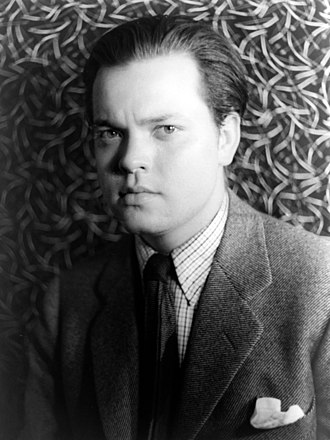
Orson_Welles
Orson Welles broadcasts a radio adaptation of H.
G. Wells's The War of the Worlds, causing a massive panic in some of the audience in the United States.
George Orson Welles was an American actor and filmmaker. Remembered for his innovative work in film, radio, and theatre, he is considered among the greatest and most influential filmmakers of all time.
1938
Franklin_D._Roosevelt
President Roosevelt approves $1 billion in Lend-Lease aid to the Allied nations.
President of the United States from 1933 to 1945
Franklin Delano Roosevelt, also known as FDR, was the 32nd president of the United States, serving from 1933 until his death in 1945. He is the longest-serving US president and the only one to have served more than two terms. His first two terms were centered on combating the Great Depression, while his third and fourth focused on US involvement in World War II. A member of the Democratic Party, Roosevelt served in the New York State Senate from 1911 to 1913 and as the 44th governor of New York from 1929 to 1932.
1941
The_Holocaust
Holocaust: Fifteen hundred Jews from Pidhaytsi are sent by Nazis to Bełżec extermination camp.
Genocide of European Jews by Nazi Germany
The Holocaust, known in Hebrew as the Shoah, was the genocide of European Jews during World War II. From 1941 to 1945, Nazi Germany and its collaborators systematically murdered around six million Jews across German-occupied Europe, approximately two-thirds of Europe's Jewish population. The murders were committed primarily through mass shootings across Eastern Europe and poison gas chambers in extermination camps, chiefly Auschwitz-Birkenau, Treblinka, Belzec, Sobibor, Chełmno and Majdanek death camps in occupied Poland. Concurrent Nazi persecutions killed millions of other non-Jewish civilians and prisoners of war (POWs); the term Holocaust is sometimes used to include the murder and persecution of non-Jewish groups, such as the Romani and Soviet POWs.
1941
World_War_II
World War II: Lt.
Tony Fasson and Able Seaman Colin Grazier drown while taking code books from the sinking German submarine U-559.
World War II, or the Second World War, was a global conflict between two coalitions: the Allies and the Axis powers. Nearly all of the world's countries participated, with many engaging in total war on an unprecedented scale. World War II was the deadliest conflict in history, causing the deaths of 60 to 75 million people, a majority of whom were civilians. Millions died as a result of massacres, starvation, disease, and genocides including the Holocaust. After the Allied victory, Germany, Austria, Japan, and Korea were occupied, and German and Japanese leaders were tried for war crimes.
1942
Anne_Frank
Holocaust: Anne and Margot Frank are deported from Auschwitz to the Bergen-Belsen concentration camp, where they die from disease the following year, shortly before the end of WWII.
German-born diarist and Holocaust victim (1929–1945)
Annelies Marie Frank was a German-born Jewish diarist and Holocaust victim. She gained worldwide notability posthumously for keeping a diary documenting her life in hiding during the German occupation of the Netherlands. In the diary, she regularly described her family's everyday life in their hiding place in a secret annex in Amsterdam from 1942 until their arrest in 1944.
1944
The General Agreement on Tariffs and Trade (GATT), the foundation of the World Trade Organization (WTO), is founded.
1947–1995 multilateral trade agreement
The General Agreement on Tariffs and Trade (GATT) is a legal agreement between many countries, whose overall purpose was to promote international trade by reducing or eliminating trade barriers such as tariffs or quotas. According to its preamble, its purpose was the "substantial reduction of tariffs and other trade barriers and the elimination of preferences, on a reciprocal and mutually advantageous basis".
1947
Luzzu
A luzzu fishing boat overloaded with passengers capsizes and sinks in the Gozo Channel off Qala, Gozo, Malta, killing 23 of the 27 people on board.
Maltese traditional fishing boat
A luzzu is a traditional fishing boat from the Maltese islands. This type of boat developed in the early 20th century, although it is very similar to much older traditional Maltese boats such as the ferilla. They are usually painted in bright colours, while the bow has a pair of eyes.
1948
Dwight_D._Eisenhower
President Eisenhower approves the top-secret document NSC 162/2 concerning the maintenance of a strong nuclear deterrent force against the Soviet Union.
World War II general, U.S. president from 1953 to 1961
Dwight David Eisenhower, also known as Ike, was the 34th president of the United States from 1953 to 1961. In his previous military career, he led the Allied Expeditionary Force during the Second World War, launched decisive campaigns in North Africa and Normandy and became a General of the Army.
1953
Hungarian_Revolution_of_1956
Hungarian Revolution: The government of Imre Nagy recognizes newly established revolutionary workers' councils.
Army officer Béla Király leads anti-Soviet militias in an attack on the headquarters of the Hungarian Working People's Party.
The Hungarian Revolution of 1956, also known as the Hungarian Uprising, was an attempted countrywide revolution against the government of the Hungarian People's Republic (1949–1989) and the policies caused by the government's subordination to the Union of Soviet Socialist Republics (USSR). The uprising lasted 15 days before being crushed by Soviet tanks and troops on 7 November 1956. Thousands were killed or wounded, and nearly a quarter of a million Hungarians fled the country.
1956
Piedmont_Airlines_Flight_349
Piedmont Airlines Flight 349 crashes on approach to Charlottesville–Albemarle Airport in Albemarle County, Virginia, killing 26 of the 27 on board.
1959 aviation accident
On October 30, 1959, Piedmont Airlines Flight 349, a Douglas DC-3, crashed on Bucks Elbow Mountain near Crozet, Virginia, killing the crew of three and all but one of its twenty-four passengers. The sole survivor was seriously injured and lay on the ground near the wreckage, still strapped in his seat.
1959
Soviet_Union
The Soviet Union detonates the Tsar Bomba, the most powerful explosive device ever detonated.
Country in Eurasia from 1922 to 1991
The Soviet Union, officially the Union of Soviet Socialist Republics (USSR), was a transcontinental country that spanned much of Eurasia from its formation in 1922 until its dissolution in 1991. It was the world's third-most populous country, the largest by area, and bordered twelve other countries. A diverse multinational state, it was organized as a federal union of national republics, with the largest and most populous being the Russian Soviet Federative Socialist Republic (SFSR). The world's flagship communist state, it was governed by the Communist Party under Marxism–Leninism, through soviet councils. The Soviet economy was also centrally planned. Its capital and largest city was Moscow.
1961
Korean_People's_Army
A squad of 120 North Korean Army commandos land in boats along a 25-mile long section of the eastern coast of South Korea in a failed attempt to overthrow the dictatorship of Park Chung Hee and bring about the reunification of Korea.
Combined military forces of North Korea
The Korean People's Army encompasses the combined military forces of North Korea and the armed wing of the Workers' Party of Korea (WPK). The KPA consists of five branches: the Ground Force, the Naval Force, the Air Force, the Strategic Force, and the Special Operations Forces. It is commanded by the WPK Central Military Commission, which is chaired by the WPK general secretary, and the president of the State Affairs; both posts are currently headed by Kim Jong Un.
1968
Bosphorus_Bridge
The Bosphorus Bridge in Turkey is completed, connecting the continents of Europe and Asia over the Bosphorus for the second time.
Bridge spanning the Bosphorus strait in Istanbul, Turkey
The Bosphorus Bridge, known officially as the 15 July Martyrs Bridge and colloquially as the First Bridge, is the oldest and southernmost of the three suspension bridges spanning the Bosphorus strait in Istanbul, Turkey, thus connecting Europe and Asia. The bridge extends between Ortaköy and Beylerbeyi.
1973
Juan_Carlos_I
Prince Juan Carlos I of Spain becomes acting head of state, taking over for the country's ailing dictator, Gen.
Francisco Franco.
Juan Carlos I is a member of the Spanish royal family who reigned as King of Spain from 22 November 1975 until his abdication on 19 June 2014. In Spain, since his abdication, Juan Carlos has usually been referred to as the rey emérito by the press.
1975
Inex-Adria_Aviopromet_Flight_450
Forty-five people are killed when Inex-Adria Aviopromet Flight 450 crashes into Suchdol, Prague, while on approach to Prague Ruzyně Airport (now Václav Havel Airport Prague) in Czechoslovakia (present-day Czech Republic).
1975 aviation accident
Inex-Adria Aviopromet Flight 450, JP 450, was an international charter flight from Tivat in the Socialist Federal Republic of Yugoslavia to Prague, Czechoslovakia which crashed in the Prague suburb of Suchdol on 30 October 1975, at 09:20 AM. The McDonnell Douglas DC-9-32 with 115 passengers and 5 crew on board descended, under Instrument Meteorological Conditions (IMC), below defined Minimum Descent Altitude (MDA) during the final approach to Prague Ruzyně Airport RWY 25, entered a gorge above Vltava river, and was unable to outclimb the rising terrain. 75 of the 120 occupants died during the crash itself while 4 others died later in hospital. The accident remains the worst aviation disaster on the territory of today's Czech Republic.
1975
El_Salvador
El Salvador and Honduras agree to put the border dispute fought over in 1969's Football War before the International Court of Justice.
Country in Central America
El Salvador, officially the Republic of El Salvador, is a country in Central America. It is bordered on the northeast by Honduras, on the northwest by Guatemala, and on the south by the Pacific Ocean. El Salvador's capital and largest city is San Salvador. El Salvador's population in 2024 was 6 million.
1980
1983_Argentine_general_election
The first democratic elections in Argentina, after seven years of military rule, are held.
General elections were held in Argentina on 30 October 1983, marking the return of constitutional rule following the self-styled National Reorganization Process dictatorship installed in 1976. Voters fully chose the president, governors, mayors, and their respective national, province and town legislators, with a turnout of 85.6%.
1983
1983_Erzurum_earthquake
A magnitude 6.6 earthquake in the Turkish provinces of Erzurum and Kars leaves approximately 1,340 people dead.
Earthquake in eastern Turkey
The 1983 Erzurum earthquake occurred in northeastern Turkey on 30 October 1983 at 07:12 local time. It had a moment magnitude of 6.6 and a maximum Mercalli intensity of IX (Violent). Reuters reports that about 1,340 people have died and 50 settlements in the provinces of Erzurum and Kars have been demolished by the earthquake.
1983
Space_Shuttle_Challenger
Space Shuttle Challenger lifts off for mission STS-61-A, its final successful mission.
Space Shuttle orbiter (1983–1986)
Space Shuttle Challenger (OV-099) was a Space Shuttle orbiter manufactured by Rockwell International and operated by NASA. Named after the commanding ship of a nineteenth-century scientific expedition that traveled the world, Challenger was the second Space Shuttle orbiter to fly into space after Columbia, and launched on its maiden flight in April 1983. It was destroyed in January 1986 soon after launch in a disaster that killed all seven crewmembers aboard.
1985
Israeli–Palestinian_conflict
The Israeli-Palestinian conflict: The Madrid Conference commences in an effort to revive peace negotiations between Israel and Palestine.
Ongoing military and political conflict in West Asia
Israel and the Palestinians are engaged in an ongoing military and political conflict about land and self-determination within the former territory of Mandatory Palestine. Key aspects of the conflict have included Palestinian refugees, the Israeli occupation of the West Bank and Gaza Strip, the status of Jerusalem, Israeli settlements, borders, security, water rights, the permit regime in the West Bank and in the Gaza Strip, Palestinian freedom of movement, and the Palestinian right of return.
1991
Quebec
Quebec citizens narrowly vote (50.58% to 49.42%) in favour of remaining a province of Canada in their second referendum on national sovereignty.
Province of Canada
Quebec is Canada's largest province by area. Located in Central Canada, it is the only Francophone-majority province in the country, being home to Québécois French. It shares borders with the provinces of Ontario to the west, Newfoundland and Labrador to the northeast, New Brunswick to the southeast and a coastal border with the territory of Nunavut. In the south, it shares a border with the United States. Quebec has a population of around eight million, making it Canada's second-most populous province behind Ontario.
1995
Frauenkirche,_Dresden
The rebuilt Dresden Frauenkirche (destroyed in the firebombing of Dresden during World War II) is reconsecrated after a thirteen-year rebuilding project.
Lutheran church in Dresden, Germany
The Frauenkirche is a Lutheran church in Dresden, the capital of the German state of Saxony. Destroyed during the Allied firebombing of Dresden towards the end of World War II, the church was reconstructed between 1994 and 2005.
2005
2013_Mahabubnagar_bus_accident
Forty-five people are killed and seven injured after a bus catches fire in Mahabubnagar district, Andhra Pradesh (present-day Telangana), India.
Motor vehicle incident in India
The 2013 Mahabubnagar bus accident occurred on 30 October when a private Volvo bus on the way from Bangalore to Hyderabad caught fire after hitting a culvert while overtaking a car, killing 45 people and injuring another seven. The accident took place at Palem village, Mahbubnagar district, then in Indian state of Andhra Pradesh at 5.30 AM.
2013
European_Union
Sweden becomes the first European Union member state to officially recognize Palestine as an independent and sovereign state.
Supranational political and economic union
The European Union (EU) is a political and economic union of 27 member states that are located primarily in Europe. A supranational union with a total area of 4,233,255 km2 (1,634,469 sq mi) and an estimated population of just under 452 million as of 2026, its member states generated a nominal gross domestic product (GDP) of around €18.802 trillion in 2025, accounting for approximately one sixth of global economic output. The EU is often described as a sui generis political entity combining characteristics of both a federation and a confederation.
2014
Beechcraft_Super_King_Air
Four people are killed when a Beechcraft Super King Air crashes at Wichita Dwight D.
Eisenhower National Airport in Wichita, Kansas.
The Beechcraft Super King Air family is part of a line of twin-turboprop aircraft produced by Beechcraft. The Model 200 and Model 300 series were originally marketed as the "Super King Air" family; the "Super" designation was dropped in 1996. They form the King Air line together with the King Air Model 90 and 100 series.
2014
Colectiv_nightclub_fire
A fire in a nightclub in the Romanian capital of Bucharest kills sixty-four people and leaves more than 147 injured.
2015 fire in Bucharest, Romania
On 30 October 2015, a nightclub fire which occurred in Bucharest, Romania, killed 64 people and injured 146 others. The fire was caused by a fireworks accident and is the deadliest such incident in Romanian history. It occurred during a free concert performed by the metalcore band Goodbye to Gravity to celebrate the release of their new album, Mantras of War. The band's pyrotechnics, consisting of sparkler firework candles, ignited the club's flammable polyurethane acoustic foam, and the fire spread rapidly. Most of the victims were poisoned by toxins released from the burning foam. Overwhelmed by the high number of victims, Romanian authorities transferred some of the seriously injured to hospitals in Israel, the Netherlands, Belgium, Austria, the United Kingdom, Norway, Germany and France. Mass protests over the corruption linked to the fire led to the resignation of Prime Minister Victor Ponta.
2015
2020_Aegean_Sea_earthquake
A magnitude 7.0 earthquake strikes the Aegean Sea between Greece and Turkey, triggering a tsunami.
At least 119 people die mainly due to collapsed buildings.
An earthquake with a moment magnitude of 7.0 occurred on 30 October 2020 about 14 km (8.7 mi) northeast of the Greek island of Samos. Although Samos was closest to the epicentre, it was the large Turkish city İzmir, 70 km (43 mi) northeast that was heavily affected—more than 700 residential and commercial structures were seriously damaged or destroyed. One hundred and seventeen people died in İzmir Province while an additional 1,034 were injured. In Greece, there were two fatalities and 19 injured. The earthquake is the deadliest in the year 2020, and the third major earthquake to strike Turkey that year. It generated an unusually large tsunami. The event is called the Samos earthquake by the International Seismological Centre.
2020
2022_Morbi_bridge_collapse
A pedestrian suspension bridge collapses in the city of Morbi, Gujarat, leading to the deaths of at least 135 people.
Bridge collapse in Gujarat, India
On 30 October 2022, a pedestrian suspension bridge over the Machchhu River in the city of Morbi in Gujarat, India, collapsed, causing the deaths of at least 141 people and injuries to more than 180 others.
2022
Rescue_of_Ori_Megidish
First rescue of a prisoner during the Israeli invasion of Gaza.
Hostage rescue during the Gaza war
The rescue of Ori Megidish was an Israel Defense Forces military operation on 30 October 2023 during the Gaza war that led to the rescue of Israeli soldier Ori Magidish from Hamas imprisonment in Gaza to Israel. Megidish was rescued in a joint operation between the IDF and the Israeli Shin Bet, based on specific intelligence of her whereabouts. Two Hamas militants were killed during the operation.
2023

History runs on facts, and this project runs on coffee!

Your support is incredibly helpful and genuinely appreciated.

Support with a coffee ☕