September 17 in History

American abolitionist Harriet Tubman makes her first attempt to escape from slav

1849 — American abolitionist Harriet Tubman makes her first attempt to escape from slavery

September 17 spans 71 recorded events across recorded history, from 1111 to 2025. Below is a curated digest of the most significant moments tied to this date.

By · Wikipedia

Historical Events 71 events 1111 – 2025

More major events on September 17

The featured story and these ranked highlights form a quick summary. Every recorded event remains available in the chronology below.

  1. 1787 The United States Constitution is signed at Independence Hall in Philadelphia, bringing the Constitutional Convention to an end. Source
  2. 1778 The Treaty of Fort Pitt is signed. It is the first formal treaty between the United States and a Native American tribe. Source
  3. 1543 The first Finnish-language book, the Abckiria by Mikael Agricola, is published in Stockholm. Source

Did you know

Harriet Tubman was born into slavery in Dorchester County, Maryland, around 1822.

Did you know

The Underground Railroad, a network of secret routes and safe houses, helped Tubman and many others escape slavery.

Did you know

Tubman's work as a conductor on the Underground Railroad earned her the nickname 'Moses' among abolitionists.

Did you know

In 1863, Tubman became the first woman to lead a military expedition in the United States during the American Civil War.

Did you know

Tubman died on March 10, 1913, in Auburn, New York, and was buried with military honors in Fort Hill Cemetery.


Kingdom_of_Galicia
Highest Galician nobility led by Pedro Fróilaz de Traba and the bishop Diego Gelmírez crown Alfonso VII as "King of Galicia".
Kingdom in Iberia from 910 to 1833
The Kingdom of Galicia was a political entity located in southwestern Europe, which, at its territorial zenith, occupied the entire northwest of the Iberian Peninsula. In the early 10th century, the Kingdom of Galicia was formed following the division of the Kingdom of Asturias after the death of Alfonso III in 910. His sons split the kingdom, with Ordoño II inheriting Galicia. While Galicia became a distinct political entity, it remained closely tied to the Leonese and Asturian realms through dynastic connections. Later, Ordoño II integrated Galicia into the Kingdom of León when he inherited the latter. Though the Kingdom of Galicia had moments of semi-independence, it was typically seen as part of the Kingdom of León. Compostela became the capital of Galicia in the 11th century, while the independence of Portugal (1128) determined its southern boundary. The accession of Castilian King Ferdinand III to the Leonese kingdom in 1230 brought Galicia under the control of the Crown of Castile.
1111
Battle_of_Myriokephalon
The Battle of Myriokephalon is the last attempt by the Byzantine Empire to recover central Anatolia from the Seljuk Turks.
1176 battle between the Byzantine Empire and the Seljuk Turks
The Battle of Myriokephalon was a battle between the Byzantine Empire and the Seljuk Turks in the mountains west of Iconium (Konya) in west-central Anatolia on 17 September 1176. The battle was a strategic reverse for the Byzantine forces, who were ambushed when moving through a mountain pass.
1176
Louis_I_of_Hungary
Louis the Great's daughter, Mary, is crowned "king" of Hungary.
King of Hungary and Croatia from 1342 to 1382
Louis I of Hungary, also known as Louis the Great or Louis the Hungarian, was King of Hungary and Croatia from 1342 and King of Poland from 1370 until his death in 1382. He was the first child of Charles I of Hungary and his wife, Elizabeth of Poland, to survive infancy. A 1338 treaty between his father and Casimir III of Poland, Louis's maternal uncle, confirmed Louis's right to inherit the Kingdom of Poland if his uncle died without a son. In exchange, Louis was obliged to assist his uncle in reoccupying the lands that Poland had lost in previous decades. He bore the title Duke of Transylvania between 1339 and 1342 but did not administer the province.
1382
Thirteen_Years'_War_(1454–1466)
Thirteen Years' War: A Polish army under Piotr Dunin decisively defeats the Teutonic Order at the Battle of Świecino.
Conflict between the Prussian Confederation, Poland, and the Teutonic Order
The Thirteen Years' War, also called the War of the Cities, was a conflict fought in 1454–1466 between the Prussian Confederation, allied with the Crown of the Kingdom of Poland, and the State of the Teutonic Order.
1462
Finnish_language
The first Finnish-language book, the Abckiria by Mikael Agricola, is published in Stockholm.
Finnic language
Finnish is a Finnic language of the Uralic language family, spoken by the majority of the population in Finland and by ethnic Finns outside of Finland. Finnish is one of the two official languages of Finland, alongside Swedish. In Sweden, both Finnish and Meänkieli are official minority languages. Kven, which like Meänkieli is mutually intelligible with Finnish, is spoken in the Norwegian counties of Troms and Finnmark by a minority of Finnish descent. However, these are recognized as independent languages in their relative countries for sociohistorical reasons.
1543
The Treaty of Bergerac is signed between King Henry III of France and the Huguenots.
1577 treaty between France and the Huguenots
The Treaty of Bergerac was signed at Bergerac on 14 September 1577 between Henry III of France and Huguenot princes, and later ratified by the Edict of Poitiers on 17 September. This accord was developed after the sixth phase of the French Wars of Religion. The treaty replaced the Edict of Beaulieu, which was deemed by the Catholic League as too favorable to Protestants. Based on the terms of the treaty, Huguenots were only allowed to practice their faith in the suburbs of one town in each judicial district. In Vivarais, the treaty was recognized in late October 1577.
1577
Polish–Ottoman_War_(1620–1621)
Polish–Ottoman War: The Ottoman Empire defeats the Polish–Lithuanian Commonwealth during the Battle of Cecora.
1620–21 conflict between Poland–Lithuania and the Ottoman Empire
The Polish–Ottoman War (1620–1621) was a conflict between the Polish–Lithuanian Commonwealth and the Ottoman Empire over the control of Moldavia. It ended with the Commonwealth withdrawing its claims on Moldavia and led to the eventual demise of the Sultan Osman II.
1620
Boston
The city of Boston, Massachusetts, is founded in North America.
Capital and largest city in Massachusetts, United States
Boston is the capital and most populous city of the U.S. state of Massachusetts. It serves as a cultural and financial center of New England, a region of the Northeastern United States. Boston has an area of 48.4 square miles (125 km2) and a population of 675,647 as of the 2020 census, making it the third-most populous city in the Northeastern United States after New York City and Philadelphia. The larger Greater Boston metropolitan statistical area had a population of 4.9 million in 2023, making it the largest metropolis in New England and the eleventh-largest in the United States.
1630
Battle_of_Breitenfeld_(1631)
Sweden wins a major victory at the Battle of Breitenfeld against the Holy Roman Empire during the Thirty Years' War.
Part of the Thirty Years' War
The Battle of Breitenfeld, 17 September 1631, took place during the Thirty Years' War outside Breitenfeld, Leipzig, in modern Saxony. In one of the most significant battles of the war, a combined Swedish-Saxon force defeated an army made up of Imperial and Catholic League troops.
1631
The Battle of Vilanova is fought between Portugal and Spain during the Portuguese Restoration War.
1658 Portuguese Restoration War battle
The Battle of Vilanova took place on 17 September 1658 during the Portuguese Restoration War near the Fort of São Luis de Gonzaga, located downstream from Tui on the southern bank of the Minho River. A Spanish army commanded by the Governor of Galicia, Rodrigo Pimentel, Marquis of Viana, entered Portuguese territory and confronted a Portuguese army led by João Rodrigues de Vasconcelos e Sousa, 2nd Count of Castelo Melhor. The Spanish were victorious and proceeded over the following months to capture Monção, Salvaterra de Miño and other Portuguese strongholds.
1658
Antonie_van_Leeuwenhoek
Antonie van Leeuwenhoek writes a letter to the Royal Society describing "animalcules", later known as protozoa.
Dutch microbiologist (1632–1723)
Antonie Philips van Leeuwenhoek was a Dutch microbiologist and microscopist in the Golden Age of Dutch art, science and technology. A largely self-taught man in science, he is commonly known as "the Father of Microbiology", and one of the first microscopists and microbiologists. Van Leeuwenhoek is best known for his pioneering work in microscopy and for his contributions toward the establishment of microbiology as a scientific discipline.
1683
American_Revolutionary_War
American Revolutionary War: The invasion of Quebec by the Continental Army begins with the Siege of Fort St.
Jean.
The American Revolutionary War, also known as the Revolutionary War or American War of Independence or simply the American Revolution, was the armed conflict that comprised the final eight years of the broader American Revolution, in which American Patriot forces organized as the Continental Army and commanded by George Washington defeated the British Army. The conflict was fought in North America, the Caribbean, and the Atlantic Ocean. The war's outcome seemed uncertain for most of the war, but Washington and the Continental Army's decisive victory in the Siege of Yorktown in 1781 led King George III and the Kingdom of Great Britain to negotiate an end to the war. In 1783, in the Treaty of Paris, the British monarchy acknowledged the independence of the Thirteen Colonies, leading to the establishment of the United States as an independent and sovereign nation.
1775
Presidio_of_San_Francisco
The Presidio of San Francisco is founded in New Spain.
Historic site and park in California, United States
The Presidio of San Francisco is a park and former U.S. Army post on the northern tip of the San Francisco Peninsula in San Francisco, California, and is part of the Golden Gate National Recreation Area.
1776
Treaty_of_Fort_Pitt
The Treaty of Fort Pitt is signed.
It is the first formal treaty between the United States and a Native American tribe.
The Treaty of Fort Pitt, also known as the Treaty With the Delawares, the Delaware Treaty, or the Fourth Treaty of Pittsburgh, was signed on September 17, 1778; it was the first formal treaty between the new United States of America and any Native American groups, in this case the Lenape, called the Delaware by white settlers. Although there were informal agreements between Native Americans and the Americans during the American Revolutionary War, the first one that resulted in a formal document was signed at Fort Pitt, Pennsylvania, now the site of Downtown Pittsburgh. It was essentially a treaty of military alliance between the Lenape Nation and the United States.
1778
Constitution_of_the_United_States
The United States Constitution is signed at Independence Hall in Philadelphia, bringing the Constitutional Convention to an end.
Supreme law of the United States
The Constitution of the United States is the supreme law of the United States of America. It superseded the Articles of Confederation, the nation's first constitution, on March 4, 1789. Originally including seven articles, the Constitution defined the foundational structure of the federal government.
1787
War_of_the_Pyrenees
War of the Pyrenees: France defeats a Spanish force at the Battle of Peyrestortes.
1793–95 French Revolutionary war against Spain and Portugal
The War of the Pyrenees, also known as War of Roussillon or War of the Convention, was the Pyrenean front of the First Coalition's war against the First French Republic. It pitted Revolutionary France against the kingdoms of Spain and Portugal from March 1793 to July 1795 during the French Revolutionary Wars.
1793
Low_Countries_theatre_of_the_War_of_the_First_Coalition
Flanders Campaign: France completes its conquest of the Austrian Netherlands at the Battle of Sprimont.
1792–95 campaign of the War of the First Coalition
The Low Countries theatre of the War of the First Coalition, also known as the Flanders campaign, was a series of campaigns in the Low Countries conducted from 20 April 1792 to 7 June 1795 during the first years of the War of the First Coalition. As the French Revolution radicalised, the revolutionary National Convention and its predecessors broke the Catholic Church's power (1790), abolished the monarchy (1792) and even executed the deposed king Louis XVI (1793), vying to spread the Revolution beyond the new French Republic's borders, by violent means if necessary. The First Coalition, an alliance of reactionary states representing the Ancien Régime in Central and Western Europe – Habsburg Austria, Prussia, Great Britain, the Dutch Republic, Hanover and Hesse-Kassel – mobilised military forces along all the French frontiers, threatening to invade Revolutionary France and violently restore the monarchy. The subsequent combat operations along the French borders with the Low Countries and Germany became the primary theatre of the War of the First Coalition until March 1796, when Napoleon took over French command on the Italian front.
1794
Finnish_War
Peace between Sweden and Russia in the Finnish War; the territory that will become Finland is ceded to Russia by the Treaty of Fredrikshamn.
1808–1809 war between Russia and Sweden
The Finnish War was fought between the Kingdom of Sweden and the Russian Empire from 21 February 1808 to 17 September 1809 as part of the Napoleonic Wars. As a result of the war, the eastern third of Sweden was established as the autonomous Grand Duchy of Finland within the Russian Empire. Other notable effects were the Swedish parliament's adoption of a new constitution and the establishment of the House of Bernadotte, the new Swedish royal house, in 1818.
1809
Emperor_Norton
Joshua A.
Norton declares himself "Norton I, Emperor of the United States".
Joshua Abraham Norton was a resident of San Francisco, California, who in 1859 declared himself "Emperor of these United States" in a proclamation that he signed "Norton I., Emperor of the United States". Commonly known as Emperor Norton, he took the secondary title "Protector of Mexico" in 1866.
1859
Argentine_Civil_Wars
Argentine Civil Wars: The State of Buenos Aires defeats the Argentine Confederation at the Battle of Pavón.
Conflicts within Argentina from 1814 to 1880
The Argentine Civil Wars were a series of civil conflicts of varying intensity that took place from 1814 to 1853 in the territories of Argentina. Beginning concurrently with the Argentine War of Independence, the conflicts prevented the formation of a stable governing body until the signing of the Argentine Constitution of 1853, followed by low-frequency skirmishes that ended with the Federalization of Buenos Aires in 1880.
1861
American_Civil_War
American Civil War: George B.
McClellan's Army of the Potomac halts the first invasion of the North by Robert E. Lee and his Army of Northern Virginia in the single-day Battle of Antietam, the bloodiest day in American military history.
The American Civil War was a civil war in the United States between the Union and the Confederacy, which was formed in 1861 by states that had seceded from the Union to preserve slavery in the United States. The South saw slavery as threatened because of the election of Abraham Lincoln and the growing abolitionist movement in the North. The war ended with Union victory, the dissolution of the Confederacy and the abolition of slavery, freeing four million African Americans.
1862
Allegheny_Arsenal
American Civil War: The Allegheny Arsenal explosion in Lawrenceville, Pennsylvania results in the single largest civilian disaster during the war.
Supply center for the Union Army during the American Civil War in Lawrenceville, PA
The Allegheny Arsenal, established in 1814, was an important supply and manufacturing center for the Union Army during the American Civil War, and the site of the single largest civilian disaster during the war. It was located in the community of Lawrenceville, Pennsylvania, which was annexed by the city of Pittsburgh in 1868.
1862
Battle_of_the_Yalu_River_(1894)
Battle of the Yalu River, the largest naval engagement of the First Sino-Japanese War.
Naval battle of the First Sino-Japanese War
The Battle of the Yalu River was the largest naval engagement of the First Sino-Japanese War, and took place on 17 September 1894, the day after the Japanese victory at the land Battle of Pyongyang. The Imperial Japanese Navy defeated the Chinese Beiyang Fleet.
1894
Philippine–American_War
Philippine–American War: Filipinos under Juan Cailles defeat Americans under Colonel Benjamin F.
Cheatham Jr. at Mabitac.
The Philippine–American War, known alternatively as the Filipino–American War, Philippine Insurrection, or Tagalog Insurgency, emerged in early 1899 following the United States' annexation of the former Spanish colony of the Philippine Islands under the terms of the December 1898 Treaty of Paris following the Spanish–American War. Philippine nationalists had proclaimed independence in June 1898 and constituted the First Philippine Republic in January 1899. The United States did not recognize either event as legitimate, and tensions escalated until fighting commenced on February 4, 1899, in the Battle of Manila.
1900
Second_Boer_War
Second Boer War: A Boer column defeats a British force at the Battle of Blood River Poort.
1899–1902 war in South Africa
The Second Boer War was a conflict fought between the British Empire and the Boer republics over Britain's influence in Southern Africa.
1901
Battle_of_Elands_River_(1901)
Second Boer War: Boers capture a squadron of the 17th Lancers at the Battle of Elands River.
Battle of the Second Boer War
The Battle of Elands River took place near the Elands River Poort mountain pass on 17 September 1901 during the Second Boer War. During the battle a Boer raiding force under Jan Smuts destroyed a British cavalry squadron led by Captain Sandeman, a cousin of Winston Churchill, on the Modderfontein farm. This battle is therefore also known as the Battle of Modderfontein.
1901
Wright_Flyer
The Wright Flyer flown by Orville Wright, with Lieutenant Thomas Selfridge as passenger, crashes, killing Selfridge, who becomes the first airplane fatality.
First powered aircraft built by the Wright brothers
The Wright Flyer made the first sustained flight by a manned heavier-than-air powered and controlled aircraft on December 17, 1903. Invented and flown by brothers Orville and Wilbur Wright, it marked the beginning of the pioneer era of aviation.
1908
Andrew_Fisher
Andrew Fisher becomes Prime Minister of Australia for the third time.
Australian prime minister (1862–1928)
Andrew Fisher was an Australian politician and trade unionist who served as the fifth prime minister of Australia from 1908 to 1909, 1910 to 1913 and 1914 to 1915. He held office as the leader of the Australian Labor Party (ALP), and was particularly notable for leading the party to its first federal election victory and first majority government at the 1910 federal election.
1914
World_War_I
World War I: The Race to the Sea begins.
Global conflict from 1914 to 1918
World War I, or the First World War, also known as the Great War, was a global conflict between two coalitions: the Allies and the Central Powers. Major theatres of war included Europe and the Middle East, and well as parts of Africa and the Asia-Pacific. One of the deadliest conflicts in history, World War I resulted in an estimated 15 to 22 million deaths, including in mass war crimes against civilians and genocides. The conflict saw important developments in weaponry, including the first large-scale use of machine guns, artillery, aircraft, chemical weapons, and tanks, and was a major factor in the deadly Spanish flu pandemic.
1914
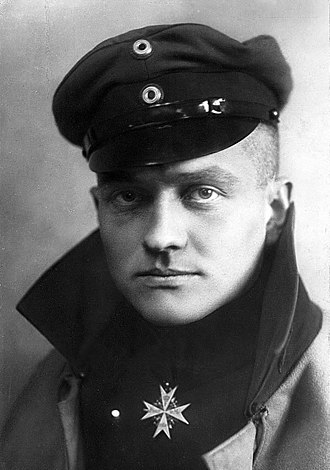
Manfred_von_Richthofen
World War I: Manfred von Richthofen ("The Red Baron"), a flying ace of the German Luftstreitkräfte, wins his first aerial combat near Cambrai, France.
German World War I flying ace (1892–1918)
Rittmeister Manfred Albrecht Freiherr von Richthofen, known in English as Baron von Richthofen or the Red Baron, was a German fighter pilot with the German Air Force during World War I. He is considered the ace-of-aces of the war, being officially credited with 80 air combat victories.
1916
National_Football_League
The National Football League is organized as the American Professional Football Association in Canton, Ohio.
Professional American football league
The National Football League (NFL) is a professional American football league in the United States. Composed of 32 teams, it is divided equally between the American Football Conference (AFC) and the National Football Conference (NFC). The NFL is one of the major professional sports leagues in the United States and Canada and the highest professional level of American football in the world. Each NFL season begins annually with a three-week preseason in August, followed by an 18-week regular season, which runs from early September to early January, with each team playing 17 games and having one bye week. Seven teams from each conference, including the four division winners and three wild card teams, then advance to the playoffs, a single-elimination tournament, which culminates in the Super Bowl, played in early February between the winners of the AFC and NFC championship games. The NFL is headquartered in New York City.
1920
Border_Protection_Corps
The Border Protection Corps is established in the Second Polish Republic for the defence of the eastern border against armed Soviet raids and local bandits.
Polish military division on the USSR border (1924–39)
The Border Protection Corps was a military formation of the Second Polish Republic that was created in 1924 to defend the country's eastern borders against armed Soviet incursions and local bandits. Other borders were under the jurisdiction of a separate, regular Border Guard state security agency.
1924
1928_Okeechobee_hurricane
The Okeechobee hurricane strikes southeastern Florida, killing more than 2,500 people.
Category 5 Atlantic hurricane
The Okeechobee hurricane of 1928, also known as the San Felipe Segundo hurricane and Florida's Forgotten Storm, was one of the deadliest hurricanes in the recorded history of the North Atlantic basin, and the fourth deadliest hurricane in the United States, only behind the 1900 Galveston hurricane, 1899 San Ciriaco hurricane, and Hurricane Maria in 2017. The hurricane killed an estimated 2,500 people in the United States; most of the fatalities occurred in the state of Florida, particularly around Lake Okeechobee. It was the fourth tropical cyclone, third hurricane, and only major hurricane of the 1928 Atlantic hurricane season, and remains the deadliest disaster in Florida's history to date. It developed off the west coast of Africa on September 6 as a tropical depression, but it strengthened into a tropical storm later that day, shortly before passing south of the Cape Verde islands. Further intensification was slow and halted late on September 7. About 48 hours later, the storm strengthened and became a Category 1 hurricane on the Saffir–Simpson hurricane wind scale. Still moving westward, the system reached Category 4 intensity before striking Guadeloupe on September 12, where it brought great destruction and resulted in 1,200 deaths. The islands of Martinique, Montserrat, and Nevis also reported damage and fatalities, but not nearly as severe as in Guadeloupe.
1928
Ararat_rebellion
The Kurdish Ararat rebellion is suppressed by the Turks.
1930 Kurdish uprising in eastern Turkey
The Ararat rebellion, also known as the Ağrı rebellion, was a 1930 uprising by the Kurds of Ağrı Province, in eastern Turkey, against the Turkish government. The leader of the guerrilla forces during the rebellion was Ihsan Nuri of the Jibran branch of the Jalali tribe.
1930
Laureano_Gómez
A speech by Laureano Gómez leads to the escalation of the Leticia Incident.
President of Colombia from 1950 to 1953
Laureano Eleuterio Gómez Castro was a Colombian politician and civil engineer who served as President of Colombia from 1950 to 1953. In November 1951 poor health led him to cede presidential power to Roberto Urdaneta Arbeláez. On 13 June 1953, when he tried to resume his presidency, he was overthrown in a military coup led by Gustavo Rojas Pinilla.
1932
Niagara_Gorge_Railroad
The Niagara Gorge Railroad ceases operations after a rockslide.
Railway line in New York state, 1895–1935
The Niagara Gorge Railroad was an interurban railway which ran at the bottom of the Niagara Gorge from Niagara Falls, New York to Lewiston, New York.
1935
World_War_II
World War II: The Soviet invasion of Poland begins.
Global conflict (1939–1945)
World War II, or the Second World War, was a global conflict between two coalitions: the Allies and the Axis powers. Nearly all of the world's countries participated, with many engaging in total war on an unprecedented scale. World War II was the deadliest conflict in history, causing the deaths of 60 to 75 million people, a majority of whom were civilians. Millions died as a result of massacres, starvation, disease, and genocides including the Holocaust. After the Allied victory, Germany, Austria, Japan, and Korea were occupied, and German and Japanese leaders were tried for war crimes.
1939
German_submarine_U-29_(1936)
World War II: German submarine U-29 sinks the British aircraft carrier HMS Courageous.
German World War II submarine
German submarine U-29 was a Type VIIA U-boat of Nazi Germany's Kriegsmarine during World War II.
1939
Battle_of_Britain
World War II: Due to setbacks in the Battle of Britain and approaching autumn weather, Hitler postpones Operation Sea Lion.
1940 WWII air battle
The Battle of Britain was a military campaign of the Second World War, in which the Royal Air Force (RAF) and the Fleet Air Arm (FAA) of the Royal Navy defended the United Kingdom against large-scale attacks by Nazi Germany's air force, the Luftwaffe. It was the first major military campaign fought entirely by air forces. It takes its name from the speech given by Prime Minister Winston Churchill to the House of Commons on 18 June, 1940: "What General Weygand called the 'Battle of France' is over. I expect that the Battle of Britain is about to begin."
1940
Vsevobuch
World War II: A decree of the Soviet State Committee of Defense restores compulsory military training.
System of compulsory military training in the Russian SFSR
Vsevobuch, a portmanteau for "Universal Military Training", was a system of compulsory military training for men practiced in the Russian SFSR governed by the Chief Administration of Universal Military Training of the People's Commissariat of Military Affairs.
1941
Anglo-Soviet_invasion_of_Iran
World War II: Soviet forces enter Tehran during the Anglo-Soviet invasion of Iran.
1941 conflict of World War II
The Anglo-Soviet invasion of Iran, also known as the Anglo-Soviet invasion of Persia or the Allied invasion of Iran, was the joint invasion of the officially neutral Imperial State of Iran by the United Kingdom and the Soviet Union in August 1941. The two powers announced that they would stay until six months after the end of the war with their mutual enemy, Nazi Germany, which turned out to be 2 March 1946. On that date the British began to withdraw, while the Soviet Union delayed until May, initially citing "threats to Soviet security", followed by the Iran crisis of 1946.
1941
Operation_Market_Garden
World War II: Allied airborne troops parachute into the Netherlands as the "Market" half of Operation Market Garden and British XXX Corps advances into the Netherlands as the "Garden" half of the Operation.
1944 World War II military operation
Operation Market Garden was an Allied military operation during the Second World War fought in the German-occupied Netherlands from 17 to 25 September 1944. Its objective was to create a salient spanning 62 miles (100 km) into German territory with a bridgehead over the Nederrijn, creating an Allied invasion route into northern Germany. This was to be achieved by two sub-operations: seizing nine bridges with combined American, British and Polish airborne forces ("Market") followed by British land forces swiftly following over the bridges ("Garden").
1944
World War II: Soviet troops launch the Tallinn Offensive against Germany and pro-independence Estonian units.
Strategic offensive during WWII
The Tallinn offensive was a strategic offensive by the Red Army's 2nd Shock Army and 8th Army and the Baltic Fleet against the German Army Detachment Narwa and Estonian units in mainland Estonia on the Eastern Front of World War II on 17–26 September 1944. Its German counterpart was the abandonment of the Estonian territory in a retreat codenamed Operation Aster.
1944
Battle_of_San_Marino
World War II: German forces are attacked by the Allies in the Battle of San Marino.
WWII battle
The Battle of San Marino was an engagement on 17–20 September 1944 during the Italian Campaign of the Second World War, in which German Army forces occupied the neutral Republic of San Marino and were then attacked by Allied forces. It is also sometimes known as the Battle of Monte Pulito.
1944
Lehi_(militant_group)
The Lehi (also known as the Stern gang) assassinates Count Folke Bernadotte, who was appointed by the United Nations to mediate between the Arab nations and Israel.
Zionist paramilitary organization (1940–1948)
Lehi, officially the Fighters for the Freedom of Israel and often known pejoratively as the Stern Gang, was a Zionist paramilitary militant organization founded by Avraham ("Yair") Stern in Mandatory Palestine in 1940. Its avowed aim was to evict the British authorities from Palestine by use of violence, allowing unrestricted immigration of Jews and the formation of a Jewish state. It was initially called the National Military Organization in Israel, upon being founded in August 1940, and considered its actions as necessary for achieving its national aims.
1948
Nizam_of_Hyderabad
The Nizam of Hyderabad surrenders his sovereignty over the Hyderabad State and joins the Indian Union.
Historic monarch of the Hyderabad State of India
Nizam of Hyderabad was the title of the ruler of Hyderabad State. Nizam is a shortened form of Niẓām ul-Mulk, and was the title bestowed upon Asaf Jah I when he was appointed Viceroy of the Deccan by the Mughal emperor Farrukhsiyar. In addition to being the Mughal viceroy (Naib) of the Deccan, Asaf Jah I was also the premier courtier of the Mughal Empire until 1724, when he established an independent realm based in Hyderabad, but in practice, continued to recognise the nominal authority of the emperor.
1948
SS_Noronic
The Canadian steamship SS Noronic burns in Toronto Harbour with the loss of over 118 lives.
Canadian passenger steamship; destroyed by fire in Toronto Harbour (1949)
SS Noronic was a Canadian passenger ship that was destroyed by fire in Toronto Harbour in September 1949 with the loss of at least 118 lives.
1949
People's_Liberation_Army_Air_Force_Airborne_Corps
The People's Liberation Army Air Force Airborne Corps (Then known as the PLAAF 1st Ground Forces Brigade) is founded.
Airborne corps of the People's Liberation Army Air Force
The People's Liberation Army Air Force Airborne Corps is a corps grade airborne and air assault force subordinated to People's Liberation Army Air Force (PLAAF) headquarters. Before April 2017, the Airborne Corps was called the PLAAF 15th Airborne Corps.
1950
India
The Republic of India formally recognised the State of Israel.
Country in South Asia
India, officially the Republic of India, is a country in South Asia. It is the seventh-largest country by area, the most populous country in the world and, since its independence in 1947, the world's most populous democracy. Bounded by the Indian Ocean on the south, the Arabian Sea on the southwest, and the Bay of Bengal on the southeast, it shares land borders with Pakistan to the west; China, Nepal and Bhutan to the north; Bangladesh and Myanmar to the east. In the Indian Ocean, India is near Sri Lanka and the Maldives. Its Andaman and Nicobar Islands share a maritime border with Myanmar, Thailand and Indonesia.
1950
Civic_Arena_(Pittsburgh)
The world's first retractable roof stadium, the Civic Arena, opens in Pittsburgh, Pennsylvania.
Arena in Pittsburgh
The Civic Arena, formerly the Civic Auditorium and later Mellon Arena, was an arena located in Downtown Pittsburgh, Pennsylvania. The Civic Arena primarily served as the home to the Pittsburgh Penguins, the city's National Hockey League (NHL) franchise, from 1967 to 2010.
1961
Northwest_Orient_Airlines_Flight_706
Northwest Orient Airlines Flight 706 crashes during takeoff from O'Hare International Airport in Chicago, Illinois, killing all 37 people on board.
1961 aviation accident
Northwest Orient Airlines Flight 706 was a Lockheed L-188 Electra aircraft, registration N137US, which crashed on take-off from Chicago's O'Hare International Airport September 17, 1961. All 37 on board were killed in the accident.
1961
Battle_of_Chawinda
The Battle of Chawinda is fought between Pakistan and India.
Battle in the Indo–Pakistani War of 1965
The Battle of Chawinda was a major engagement between Pakistan and India during the Indo-Pakistani war of 1965 as part of the Sialkot campaign. It is well known as being one of the largest tank battles in history since the Battle of Kursk, which was fought between the Soviet Union and Nazi Germany in World War II.
1965
Bangladesh
Bangladesh, Grenada and Guinea-Bissau join the United Nations.
Country in South Asia
Bangladesh, officially the People's Republic of Bangladesh, is a country in South Asia. It is the eighth-most populous country in the world and among the most densely populated with a population of almost 176 million within an area of 148,461 square kilometres (57,321 sq mi). Bangladesh shares land borders with India to the north, west, and east, and Myanmar to the southeast. It has a coastline along the Bay of Bengal to its south and is separated from Bhutan and Nepal by the Siliguri Corridor, and from China by the Indian state of Sikkim to its north. Dhaka, the capital and largest city, is the nation's political, financial, and cultural centre. Chittagong is the second-largest city and the busiest port of the country.
1974
Space_Shuttle_Enterprise
The Space Shuttle Enterprise is unveiled by NASA.
Space Shuttle test vehicle, used for glide tests
Space Shuttle Enterprise is the first orbiter of the Space Shuttle system. Rolled out on September 17, 1976, it was built for NASA as part of the Space Shuttle program to perform atmospheric test flights after being launched from a modified Boeing 747. It was constructed without engines or a functional heat shield. As a result, it was not capable of spaceflight.
1976
Camp_David_Accords
The Camp David Accords are signed by Israel and Egypt.
1978 political agreement between Egypt and Israel
The Camp David Accords were a pair of political agreements signed by Egyptian president Anwar Sadat and Israeli prime minister Menachem Begin on 17 September 1978, following twelve days of secret negotiations at Camp David, the country retreat of the president of the United States in Maryland. The two framework agreements were signed at the White House and were witnessed by President Jimmy Carter. The second of these frameworks led directly to the 1979 Egypt–Israel peace treaty. Due to the agreement, Sadat and Begin received the shared 1978 Nobel Peace Prize. The first framework, which dealt with the Palestinian territories, was written without participation of the Palestinians and was condemned by the United Nations.
1978
Gdańsk_Shipyard
After weeks of strikes at the Lenin Shipyard in Gdańsk, Poland, the nationwide independent trade union Solidarity is established.
Historic shipyard in Gdańsk, Poland
The Gdańsk Shipyard is a large Polish shipyard, located in the city of Gdańsk, northern Poland. The yard gained international fame when Polish trade union Solidarity was founded there in September 1980. It is situated on the western side of Martwa Wisła and on Ostrów Island.
1980
Anastasio_Somoza_Debayle
Former Nicaraguan President Anastasio Somoza Debayle is killed in Asunción, Paraguay.
President of Nicaragua (1967–72; 1974–79)
Anastasio "Tachito" Somoza Debayle was a Nicaraguan politician, military officer, hydraulic engineer, and dictator who served as the 53rd President of Nicaragua from 1967 to 1972 and again from 1974 until his fall in 1979. As head of the National Guard, he was de facto ruler of the country between 1967 and 1979, even during the period when he was not the de jure ruler.
1980
Vanessa_Williams
Vanessa Williams becomes the first black Miss America.
American singer, actress and former Miss America (born 1963)
Vanessa Lynn Williams is an American singer, actress, model, producer and dancer. She gained recognition as the first black woman to win the Miss America title when she was crowned Miss America 1984. She would later resign her title amid a media controversy surrounding nude photographs published in Penthouse magazine. 32 years later, Williams was offered a public apology during the Miss America 2016 pageant for the events.
1983
Estonia
Estonia, North Korea, South Korea, Latvia, Lithuania, the Marshall Islands and Micronesia join the United Nations.
Country in Northern Europe
Estonia, officially the Republic of Estonia, is a country in the Baltic region of Northern Europe. It is bordered to the north by the Gulf of Finland across from Finland, to the west by the Baltic Sea across from Sweden, to the south by Latvia, and to the east by Russia. The territory of Estonia consists of the mainland, the larger islands of Saaremaa and Hiiumaa, and over 2,300 other islands and islets on the east coast of the Baltic Sea. Its capital city of Tallinn, along with the city of Tartu, are the country's two largest urban areas. The Estonian language, of the Finnic family, is the official language and the first language of the majority of nearly 1.4 million people. Estonia is one of the least populous member states of the European Union.
1991
Linux
The first version of the Linux kernel (0.01) is released to the Internet.
Family of Unix-like operating systems that use the Linux kernel
Linux is a family of free and open-source software Unix-like operating systems based on the Linux kernel, which was first released on 17 September 1991 by Linus Torvalds. Some members of the family are typically packaged as a distribution, which includes the kernel alongside supporting system software and libraries developed by third parties—such as GNU, Red Hat, and X.Org—to create a complete operating system; however, not all Linux-based operating systems are considered distros, with Android being an example. Linux was originally designed as a clone of Unix and is distributed under the copyleft GPL license.
1991
Mykonos_restaurant_assassinations
An Iranian Kurdish leader and his two joiners are assassinated by political militants in Berlin.
1992 assassinations of Iranian-Kurdish opposition leaders in Berlin, Germany
In the Mykonos restaurant assassinations, Iranian-Kurdish opposition leaders Sadegh Sharafkandi, Fattah Abdoli, Homayoun Ardalan and their translator Nouri Dehkordi, were assassinated at the Mykonos Greek restaurant in Berlin, Germany on 17 September 1992. The assassination took place during the KDPI insurgency (1989–96), as part of the general Kurdish separatism in Iran. The assassins were believed by German courts to have links to Iranian intelligence. Kazem Darabi, an Iranian intelligence service employee, was tried and sentenced to life imprisonment by the Berlin Supreme Court.
1992
New_York_Stock_Exchange
The New York Stock Exchange reopens for trading after the September 11 attacks, the longest closure since the Great Depression.
American stock exchange
The New York Stock Exchange is an American stock exchange headquartered at the New York Stock Exchange Building in the Financial District of Lower Manhattan in New York City. It is the largest stock exchange in the world by market capitalization, exceeding $44 trillion in January 2026. The NYSE is owned by Intercontinental Exchange, an American holding company that it also lists. Previously, it was part of NYSE Euronext (NYX), which was formed by the NYSE's 2007 merger with Euronext. According to a Gallup poll conducted in 2022, approximately 58% of American adults reported having money invested in the stock market, either through individual stocks, mutual funds, or retirement accounts.
2001
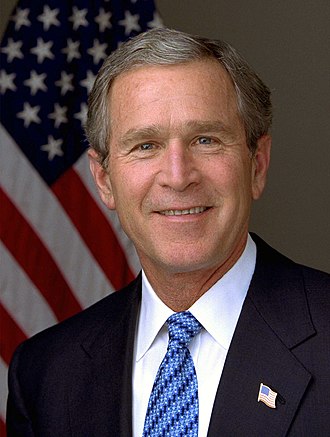
George_W._Bush
George W.
Bush, president of the United States, delivers remarks at the Islamic Center of Washington praising Muslim Americans and condemning Islamophobia in the aftermath of the September 11 attacks.
George Walker Bush is an American former politician, businessman, and former United States Air Force officer who was the 43rd president of the United States, serving from 2001 to 2009. A member of the Republican Party, he served as the governor of Texas from 1995 to 2000. He is the eldest son of George H. W. Bush, the 41st president of the United States.
2001
Fourpeaked_Mountain
Fourpeaked Mountain in Alaska erupts, marking the first eruption for the volcano in at least 10,000 years.
Active volcano in Alaska, U.S.
Fourpeaked Mountain, also known as Fourpeaked Volcano, is an active stratovolcano located in the U.S. state of Alaska within Katmai National Park and Preserve. The volcano is nearly completely covered by Fourpeaked Glacier.
2006
Őszöd_speech
An audio tape of a private speech by Hungarian Prime Minister Ferenc Gyurcsány is leaked to the public, in which he confessed that his Hungarian Socialist Party had lied to win the 2006 election, sparking widespread protests across the country.
2006 speech by Hungarian Prime Minister Ferenc Gyurcsány
The Őszöd speech was a speech Hungarian Prime Minister Ferenc Gyurcsány delivered to the 2006 Hungarian Socialist Party (MSZP) congress in Balatonőszöd. Though the May congress was confidential, Gyurcsány's address was leaked and broadcast by Magyar Rádió on Sunday, 17 September 2006, igniting a nationwide political crisis.
2006
Occupy_Wall_Street
Occupy Wall Street movement begins in Zuccotti Park, New York City.
2011 American protest movement
Occupy Wall Street (OWS) was a left-wing populist and progressive movement against economic inequality, capitalism, corporate greed, big finance, and the influence of money in politics. It began in Zuccotti Park, located in New York City's Financial District, and lasted for fifty-nine days—from September 17 to November 15, 2011.
2011
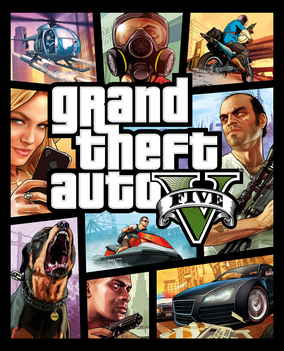
Grand_Theft_Auto_V
Grand Theft Auto V earns more than half a billion dollars on its first day of release.
2013 video game
Grand Theft Auto V is a 2013 action-adventure game developed by Rockstar North and published by Rockstar Games. It is the seventh main entry in the Grand Theft Auto series, following 2008's Grand Theft Auto IV, and the fifteenth instalment overall. Set within the fictional state of San Andreas, based on Southern California, the single-player story follows three protagonists—retired bank robber Michael De Santa, street gangster Franklin Clinton, and drug dealer and gunrunner Trevor Philips —and their attempts to commit heists while under pressure from a corrupt government agency and powerful criminals. Players freely roam San Andreas's open world countryside and fictional city of Los Santos, based on Los Angeles.
2013
2016_New_York_and_New_Jersey_bombings
Two bombs explode in Seaside Park, New Jersey, and Manhattan.
Thirty-one people are injured in the Manhattan bombing.
On September 17–19, 2016, a series of three constructed bombs exploded, and several unexploded devices were discovered in the New York metropolitan area followed by a subsequent shooting in Linden, New Jersey during a nationwide manhunt for the perpetrator. The bombings and additional shootout left 33 people wounded, but no fatalities were reported. Federal investigators determined these explosive devices were deliberately set and identified them as part of a terrorist act.
2016
A Russian reconnaissance aircraft carrying 15 people on board is brought down by a Syrian surface-to-air missile over the Mediterranean Sea.
Israeli strikes during the Syrian Civil War
On 17 September 2018, the Israeli Air Force (IAF) conducted missile strikes against multiple targets in government-controlled western Syria. Syrian air defences responded to the Israeli fighter jets, accidentally shooting a Russian military Il-20, killing 15 crew aboard. Russia blamed Israel for the loss of its plane, accusing the IAF of "hiding behind the Russian aircraft", thereby putting it in the line of fire. The Israel Defense Forces acknowledged striking a Syrian weapons facility, and expressed sorrow for the loss of lives due to Syrian fire. The strikes occurred a few hours after a Russo-Turkish agreement to create a demilitarized zone around Idlib Governorate was achieved, which postponed an imminent offensive operation by Syria's forces and its allies.
2018
Strategic_Mutual_Defence_Agreement
Saudi Arabia and Pakistan sign the Strategic Mutual Defence Agreement.
2025 Pakistan–Saudi Arabia treaty
The Strategic Mutual Defence Agreement (SMDA) is a security and defence pact between the countries of Pakistan and Saudi Arabia. Under this agreement, both countries have committed to treating any act of aggression against one as an act against both.
2025

History runs on facts, and this project runs on coffee!

Your support is incredibly helpful and genuinely appreciated.

Support with a coffee ☕